How Do You Choose the Right Commercial Insulation for Arlington, WA Properties?
Melissa Grant
August 20th, 2026
Choosing the right commercial insulation for properties in Arlington, WA comes down to matching your building type, climate zone requirements, moisture exposure, and long-term energy goals with the correct material. Arlington sits in the Pacific Northwest marine climate zone, where cold, wet winters and moderate summers create specific demands on the building envelope. Everything About Commercial Insulation covers how commercial buildings here must meet or exceed the insulation standards set by ASHRAE 90.1, the national energy standard for commercial buildings, while also managing the high humidity and airborne moisture that define the region. The right choice balances R-value performance, air sealing, moisture resistance, and code compliance, and it varies depending on whether you are insulating a warehouse, office building, retail space, or metal building.
TL;DR
Arlington, WA falls within a cold marine climate zone (IECC Zone 4C), requiring substantial wall and roof insulation to meet commercial energy code minimums.
ASHRAE 90.1 governs commercial insulation requirements in Washington state, setting prescriptive R-value and continuous insulation minimums for walls, roofs, and floors.
Spray foam insulation excels in the Pacific Northwest because it simultaneously air seals and insulates, reducing the moisture infiltration that leads to mold and structural damage.
Closed-cell spray foam delivers R-5 to R-6.5 per inch, making it one of the highest-performing options where cavity depth is limited.
Fiberglass and mineral wool batts remain common and cost-effective for commercial wall cavities but rely on separate air sealing measures to perform at their rated R-value.
Rigid foam board used as continuous insulation on commercial exteriors eliminates thermal bridging through steel and wood framing.
Around 40% of building energy consumption goes toward heating and cooling, making insulation one of the most impactful investments for reducing operating costs.
The Federal Trade Commission’s R-Value Rule requires insulation manufacturers and installers to disclose verified R-value data, giving commercial buyers a reliable basis for comparing products.
Understanding Arlington’s Climate Zone and Code Requirements
Arlington, WA experiences a marine-influenced climate with cool, wet winters and dry, mild summers. This places the area in IECC Climate Zone 4C, which has specific implications for how commercial buildings must be insulated. According to ENERGY STAR guidelines, climate-specific strategies are essential for efficiency. The ASHRAE 90.1 standard sets minimum prescriptive requirements for building envelope insulation based on climate zone. In Zone 4C, commercial wood-framed walls typically require cavity insulation of R-13 plus continuous exterior insulation, while steel-framed walls demand even higher performance due to the thermal bridging that occurs through metal studs.
The building envelope, which includes walls, roof, floors, windows, and doors, is where the majority of unwanted heat loss and gain occurs. As noted in documentation regarding building insulation, approximately 40% of energy consumption in buildings is attributed to heating and cooling, making the envelope a primary target for efficiency improvements. In Arlington’s climate, reducing heat loss during the wet, cold months is the dominant priority, but summer cooling loads also matter for commercial buildings with large window areas or heat-generating equipment.
Washington state adopts and enforces commercial energy codes based on ASHRAE 90.1, and local jurisdictions in Snohomish County may have additional requirements. Before selecting insulation, verify the current code cycle and any local amendments with the City of Arlington or Snohomish County building department.
Commercial Insulation Types: How They Compare
Commercial properties in Arlington have several insulation options, each with distinct advantages and trade-offs. The table below compares the most common types used in commercial construction.
Why Spray Foam Insulation Fits the Pacific Northwest
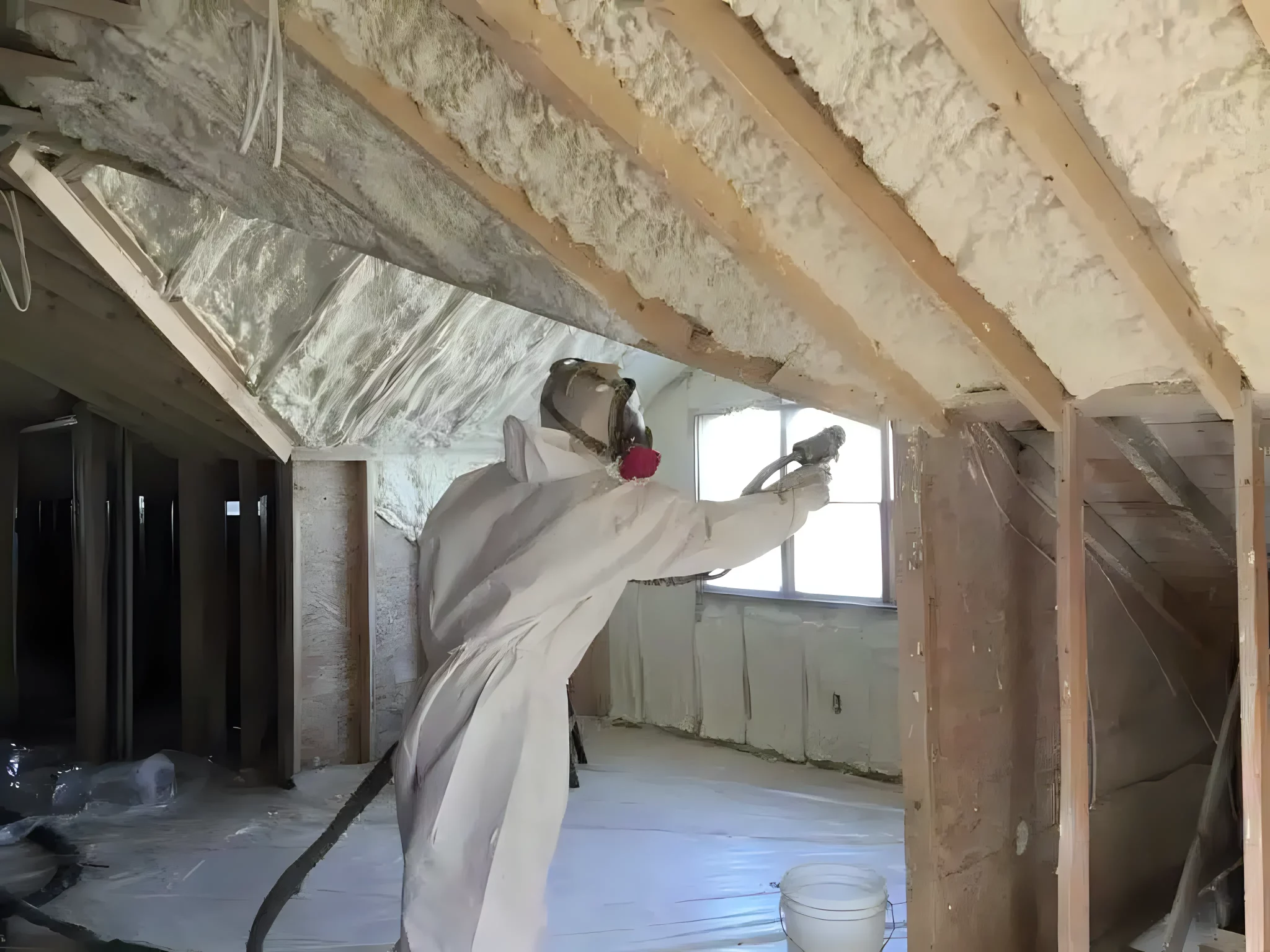
For commercial buildings in Arlington, the combination of cold temperatures and persistent moisture makes spray foam insulation a strong fit. According to documentation on building insulation materials, spray foam offers several properties that address the specific challenges of the Pacific Northwest marine climate.
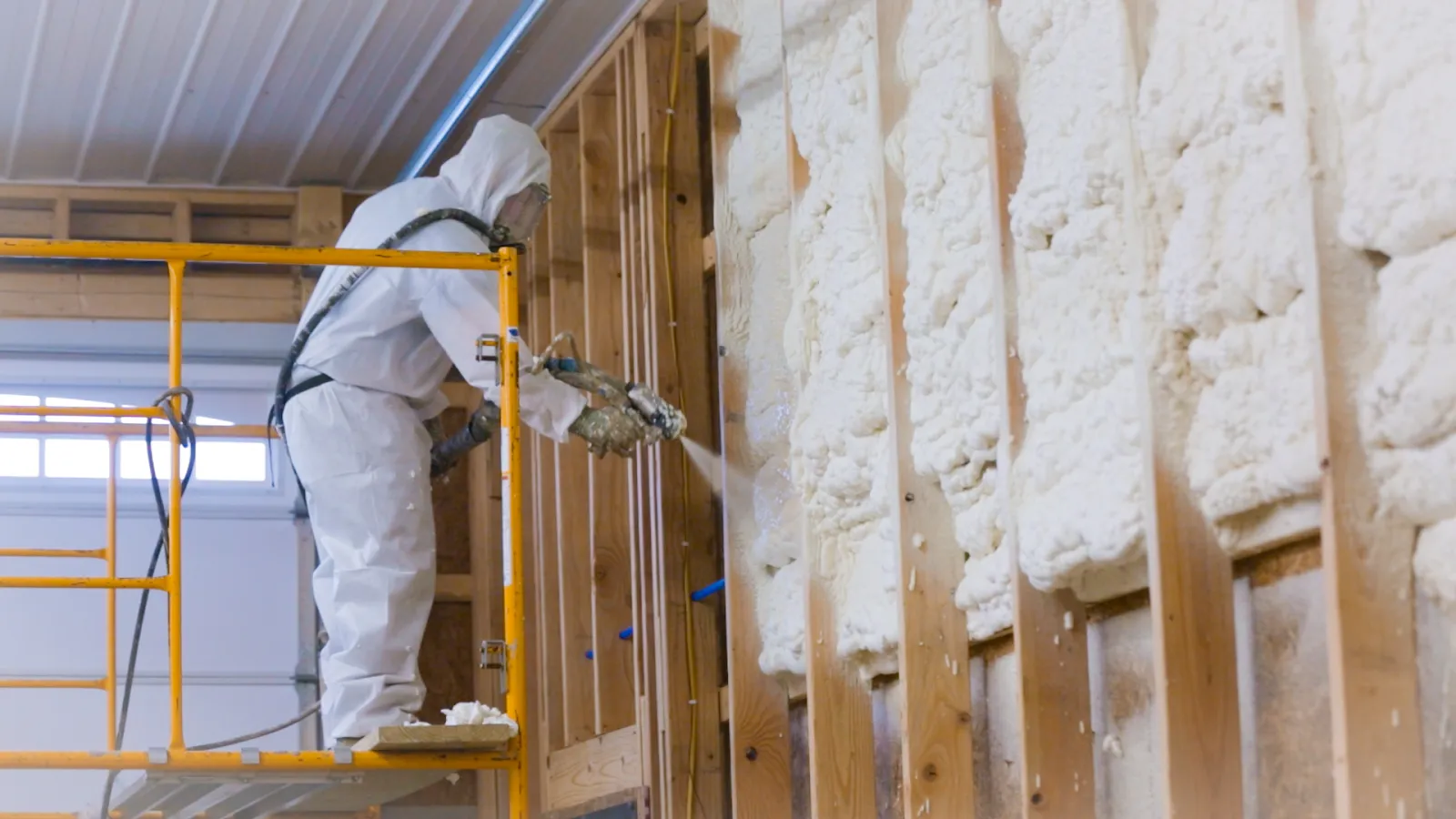
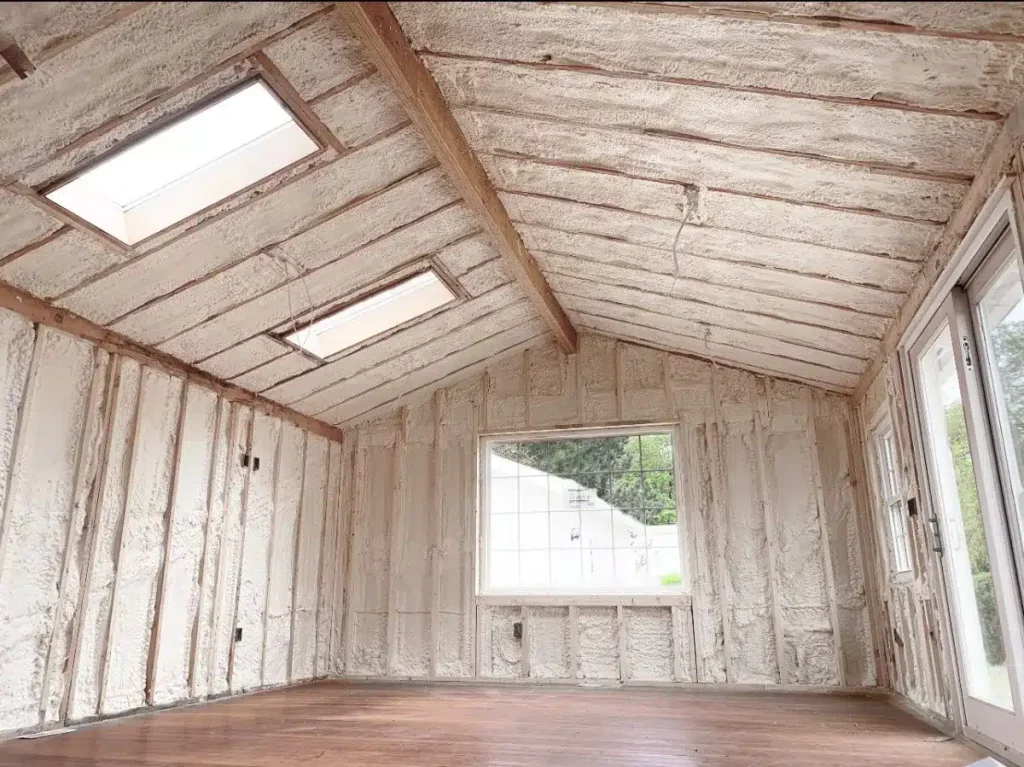
Closed-cell spray foam delivers R-5 to R-6.5 per inch, which means you can achieve higher thermal resistance in thinner applications. This matters in commercial buildings where wall cavity depth may be limited by structural framing or existing conditions. Beyond its R-value, closed-cell foam expands to fill gaps, cracks, and penetrations in the building envelope, creating an airtight seal that blocks the air leakage responsible for a significant portion of energy loss. In a region where humid air carries moisture into wall assemblies, this air sealing also reduces the risk of condensation forming inside cavities, which can lead to mold growth, wood rot, and structural damage.
Closed-cell spray foam also acts as a vapor retarder, limiting the movement of water vapor through the assembly. In Arlington’s climate, where the difference between indoor and outdoor vapor pressure drives moisture into walls during winter, this property helps keep the building envelope dry. Closed-cell foam adds structural rigidity to the wall assembly as well, which is a secondary benefit in commercial construction.
Open-cell spray foam provides lower R-value per inch (approximately R-3.6 to R-3.8) but offers superior sound-dampening properties, making it a good option for interior partitions between commercial spaces. Best Commercial Insulation for Different Buildings depends on the assembly, as open-cell foam is vapor permeable, allowing moisture to pass through rather than trapping it, which can be appropriate in certain wall assemblies when paired with the correct vapor barrier strategy.
Fiberglass and Mineral Wool: When They Make Sense
Fiberglass batts and mineral wool remain widely used in commercial construction because they are familiar, readily available, and well-suited to standard wall cavities in offices, retail spaces, and light commercial buildings.
Fiberglass delivers R-3.1 to R-4.3 per inch and is nonflammable. However, it is susceptible to moisture damage and air infiltration if not installed with meticulous attention to air sealing. Gaps, compression, and voids around electrical boxes and plumbing can significantly reduce its effective performance. In commercial buildings where budgets are tight and wall cavities are standard, fiberglass remains a practical choice, but it should always be paired with a dedicated air barrier system.
Mineral wool, made from basalt or slag, offers similar R-value per inch (R-3.0 to R-3.85) but has notable advantages in commercial applications. It is naturally fire resistant without added chemical treatments, making it a preferred choice for fire-rated wall assemblies. It is also denser and more resistant to airflow than fiberglass, which means it performs better at blocking convective heat loss within wall cavities. Mineral wool is hydrophobic and repels water, retaining its insulating properties even when exposed to damp conditions.
The Role of Continuous Insulation in Commercial Construction
One of the most important concepts in commercial insulation is continuous insulation, sometimes called “ci.” Unlike cavity insulation that fits between studs, continuous insulation is applied in a continuous layer across the exterior of the building, typically as rigid foam board. This layer interrupts thermal bridging, the path of heat flow through framing members such as steel studs, wood studs, and joists that bypass cavity insulation entirely.
In commercial buildings, particularly those with steel framing, thermal bridging can account for a substantial percentage of total heat loss. Steel conducts heat far more efficiently than wood or insulation, so even a well-insulated steel-stud wall can underperform if the studs create unbroken thermal bridges. Rigid foam board installed over the exterior sheathing eliminates this problem by wrapping the entire building in a layer of insulation with no breaks.
ASHRAE 90.1 requires continuous insulation for commercial buildings in many climate zones, and the requirements increase for steel-framed walls. For Arlington properties, the code will dictate minimum continuous insulation R-values based on the specific wall type and construction method. Common materials for continuous insulation include extruded polystyrene (XPS), expanded polystyrene (EPS), and polyisocyanurate, all of which offer different R-values and moisture resistance profiles.
Matching Insulation to Your Commercial Property Type
Not every Arlington commercial property has the same insulation needs. The building type, usage pattern, and construction method all factor into the right approach.
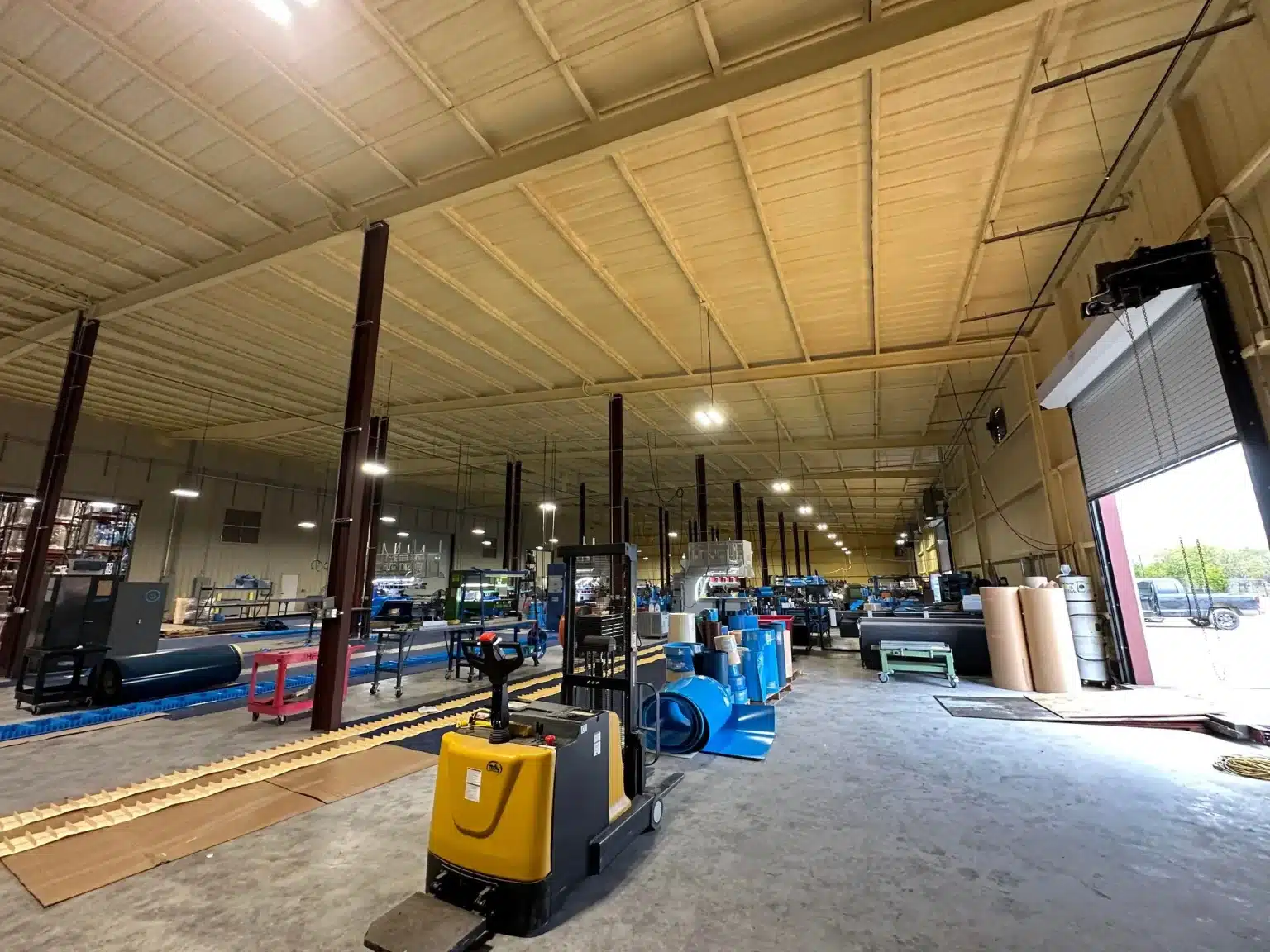
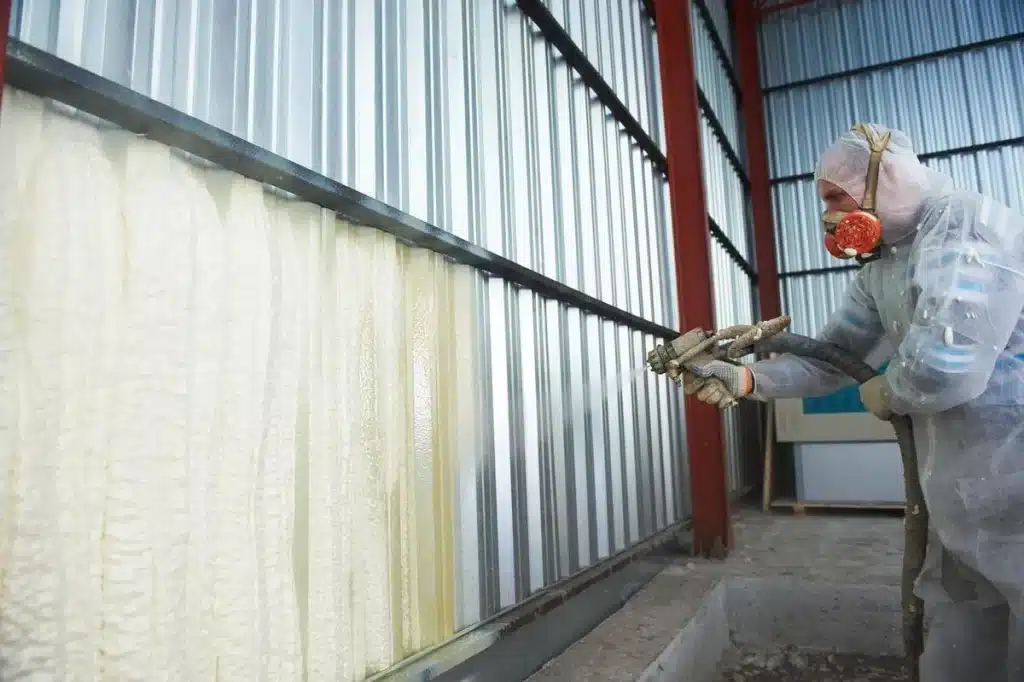
Warehouses and Metal Buildings: These structures present the most challenging insulation scenarios due to large roof areas, exposed metal framing, and minimal wall insulation capacity. Spray foam applied directly to metal roof panels and walls provides both insulation and condensation control. Fiberglass blanket insulation is also used in metal buildings but requires careful installation to prevent moisture buildup.
Office Buildings and Retail Spaces: Standard wood or light-gauge steel framing allows for cavity insulation with fiberglass or mineral wool, supplemented by continuous exterior insulation. Spray foam in key areas such as band joists, rim joists, and around penetrations adds air sealing where it matters most.
Restaurants and Food Service: These buildings have high interior moisture loads from cooking and dishwashing. Closed-cell spray foam is particularly effective in managing moisture infiltration in walls and ceilings, and its air sealing properties help prevent warm, humid air from reaching cold surfaces where condensation forms.
Industrial and Manufacturing Facilities: These buildings often have high ceilings, large door openings, and process-generated heat. Insulation priorities focus on the roof and upper walls, with spray foam or rigid board providing the best performance-to-thickness ratio for metal panels and high-bay construction.
Signs You Have Chosen the Right Insulation Partner
Selecting the correct material is only part of the equation. The installer you work with will determine whether the insulation performs as rated or falls short. Look for these indicators when evaluating an insulation provider for your Arlington commercial property:
Code knowledge: The team understands ASHRAE 90.1 requirements and can demonstrate how their proposed assembly meets or exceeds local energy code for Snohomish County.
Moisture awareness: They account for Arlington’s marine climate in their recommendations, including vapor barrier placement and condensation risk management, rather than applying a one-size-fits-all approach.
Air sealing integration: They treat air sealing as part of the insulation system, not an afterthought, and can explain how their installation reduces air leakage in addition to adding R-value.
Product transparency: They provide documented R-values based on standardized testing, consistent with industry requirements that govern insulation labeling and advertising claims.
Commercial experience: They have a track record with commercial buildings similar to yours, including warehouses, offices, and mixed-use properties in the Pacific Northwest climate zone.
Get Started with Cascadia Spray Foam
Cascadia Spray Foam serves commercial property owners and managers throughout Arlington, WA and the surrounding Snohomish County area with professional spray foam insulation installations tailored to the Pacific Northwest marine climate. Our team evaluates each building’s unique envelope, code requirements, and moisture exposure before recommending the right insulation system for lasting performance. Whether you are constructing a new commercial building, retrofitting an existing property, or solving a condensation or energy loss problem, we provide the expertise and precision your project demands.
Frequently Asked Questions About Commercial Insulation
What R-value do commercial buildings need in Arlington, WA?
Commercial buildings in Arlington fall under IECC Climate Zone 4C, which requires wood-framed walls to meet cavity insulation of R-13 plus continuous exterior insulation, and steel-framed walls require even higher values due to thermal bridging. Roof insulation requirements are typically R-30 or higher depending on the assembly type, as specified by ASHRAE 90.1.
Is spray foam worth it for commercial buildings?
Spray foam insulation delivers higher R-value per inch than most alternatives and simultaneously air seals the building envelope. For commercial buildings in the Pacific Northwest where moisture management is a priority, spray foam reduces both energy costs and the risk of condensation damage, making it a strong long-term investment.
How does moisture affect insulation performance in the Pacific Northwest?
When insulation absorbs moisture, its thermal conductivity increases, meaning it loses insulating effectiveness. In Arlington’s marine climate, where airborne moisture is abundant for much of the year, selecting materials with appropriate moisture resistance and ensuring proper vapor barrier placement are essential for maintaining rated performance over time.
What is continuous insulation and why does it matter for commercial buildings?
Continuous insulation is a layer of insulating material installed on the exterior of the building, uninterrupted by framing members. It eliminates thermal bridging through studs and structural elements, which is a major source of heat loss in commercial construction, particularly in steel-framed buildings common in the area.
Can insulation help with condensation problems in commercial properties?
Insulation alone does not solve condensation, but air sealing combined with the correct insulation strategy can prevent warm, humid indoor air from reaching cold surfaces where condensation forms. Closed-cell spray foam is particularly effective because it both insulates and acts as a vapor retarder, addressing the root causes of condensation in commercial building envelopes.
Sources
Building Insulation – Wikipedia – Comprehensive reference on building insulation types, climate-specific strategies, thermal bridging, and the role of the building envelope in energy conservation.
R-value (insulation) – Wikipedia – Detailed technical reference on R-value measurement, per-inch values by insulation type, and the relationship between R-value and building energy performance.
Building Insulation Materials – Wikipedia – In-depth material on spray foam insulation types, fiberglass, mineral wool, rigid panels, and their respective advantages and limitations in commercial applications.
I’m Melissa Grant, owner of Cascadia Spray Foam Insulation, with over 10 years of hands-on spray foam experience. I focus on durable insulation solutions, improved comfort and energy efficiency, and excellent customer service.
Selecting the right commercial insulation for warehouses comes down to five considerations: thermal performance matched to your climate zone, air sealing, moisture and vapor control, code compliance, and installation quality.…
Residential insulation addresses heat transfer through attic assemblies by slowing all three ways heat moves: conduction through framing and drywall, convection through air leaks, and radiation from a hot roof…
Open-cell spray foam provides useful coverage across irregular areas wherever a cavity is too deep, too uneven, or too cluttered with framing, wiring, and pipes for batts or rigid boards…