What Are the Best Commercial Insulation Options for Different Buildings?
Melissa Grant
August 18th, 2026
The best commercial insulation option for your building depends on climate zone, construction type, fire code requirements, acoustic needs, and whether the project is new construction or a retrofit. There is no single “best” material for every scenario. Instead, commercial building owners and facility managers need to match the insulation type to the demands of the specific structure, whether that is a steel-framed office complex, a masonry warehouse, a metal building retail space, or a multi-story mixed-use facility. The leading options include spray foam, fiberglass, mineral wool, rigid foam boards (polyiso, XPS, and EPS), and cellulose, each offering distinct advantages for thermal performance, air sealing, fire resistance, and moisture management. Commercial Insulation Guide helps you understand these tradeoffs and make the right choice for your building and budget.
TL;DR
All insulation types perform equally well when properly installed and air sealed, according to the Building Sciences Corporation, so the goal is maximizing R-value per dollar spent.
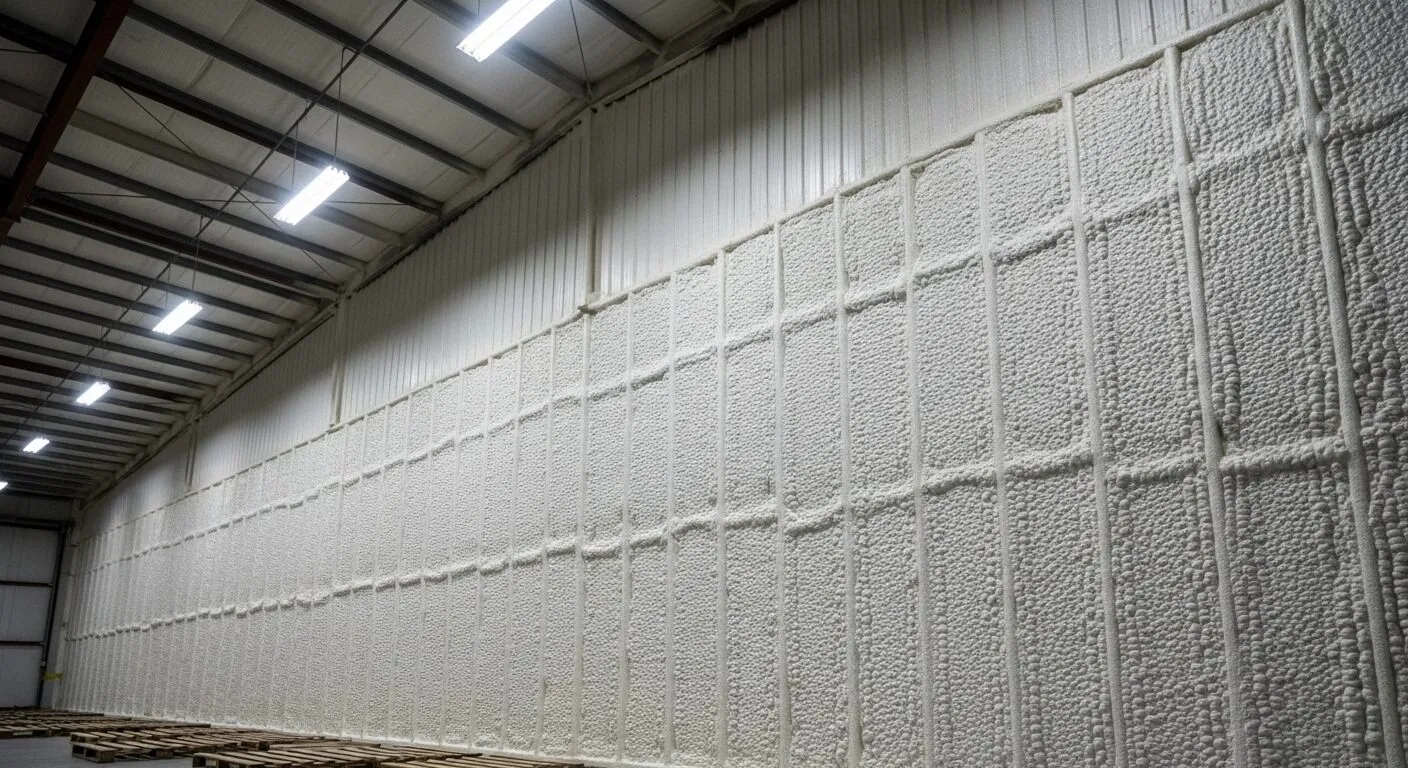
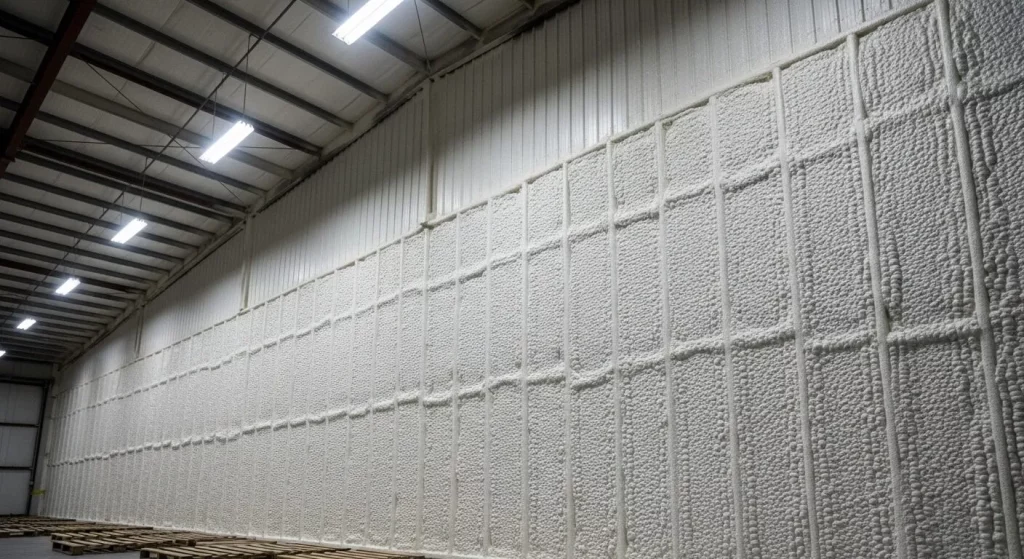
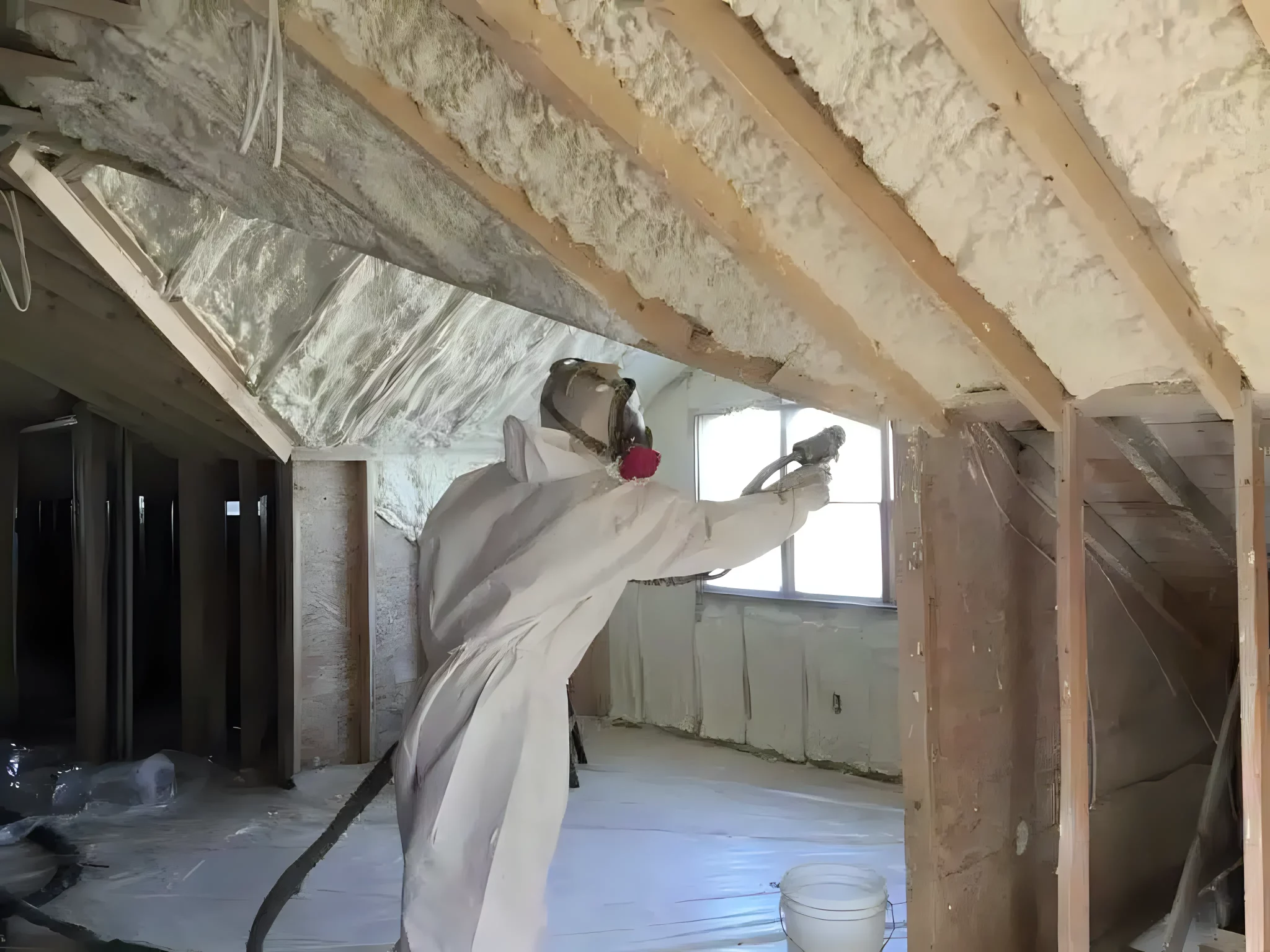
Spray foam excels at air sealing and delivers the highest R-value per inch, making it ideal for metal buildings, irregular cavities, and retrofit projects where condensation control is a priority.
Fiberglass and mineral wool are naturally non-combustible and can be installed without evacuating other trades, making them practical choices for large commercial new construction.
Continuous insulation is required on steel-framed walls across most U.S. climate zones under ASHRAE 90.1, which makes rigid foam boards a frequent choice for commercial envelope design.
Buildings account for roughly 40% of primary energy consumption in the U.S., and adding insulation to existing structures is one of the most cost-effective energy reduction strategies available.
EPA estimates that proper air sealing combined with insulation can save an average of 15% on heating and cooling costs.
Fire resistance, acoustic performance, and moisture tolerance should carry as much weight in material selection as R-value, especially in commercial settings with strict code requirements.
How Commercial Insulation Differs from Residential
Commercial buildings face stricter fire codes, higher occupancy loads, and more demanding structural requirements than residential properties. The insulation material chosen for a commercial project must satisfy ASHRAE 90.1 energy standards, which set prescriptive R-value minimums for walls, roofs, and floors based on climate zone, while also meeting fire safety ratings and often acoustic performance targets.
According to Wikipedia’s building insulation reference, ASHRAE 90.1 considers multiple compliance paths including prescriptive, building envelope types, and energy cost budget, and all requirements are divided by climate zone. That means a commercial building in climate zone 5 (which includes parts of the Pacific Northwest) has different insulation minimums than the same building type in climate zone 2.
Commercial projects also tend to use continuous insulation more aggressively than residential builds. As the ASHRAE data shows, steel-framed walls in most U.S. climate zones require a combination of cavity insulation plus a continuous insulation layer, because steel framing creates thermal bridging that significantly reduces effective R-value if only cavity insulation is used.
Comparing the Main Commercial Insulation Types
Each insulation material has strengths and tradeoffs. The Insulation Institute provides detailed comparisons across thermal performance, fire protection, sound control, and health impacts. Here is a breakdown of the leading commercial options.
Spray Foam Insulation (Open-Cell and Closed-Cell)
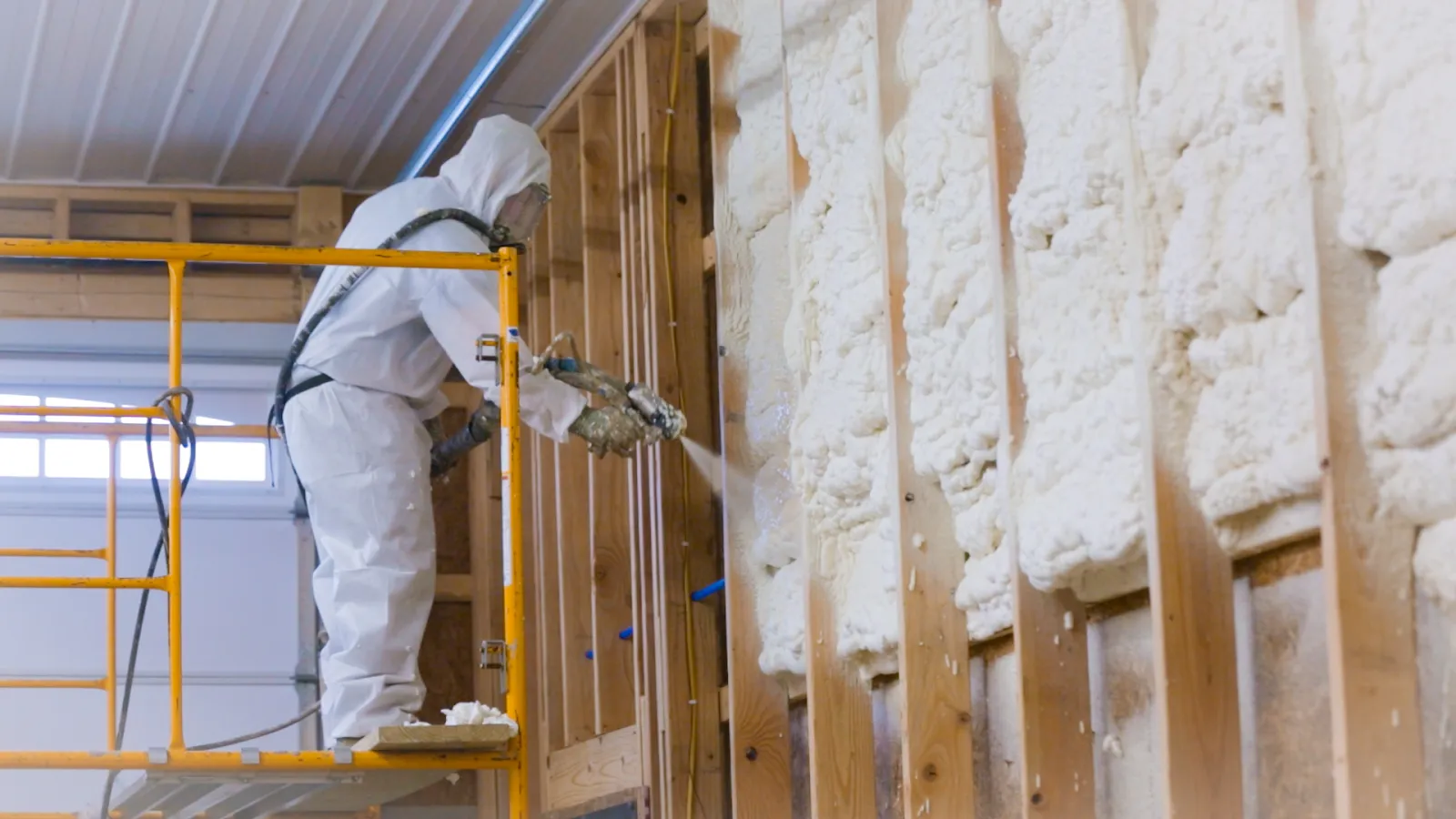
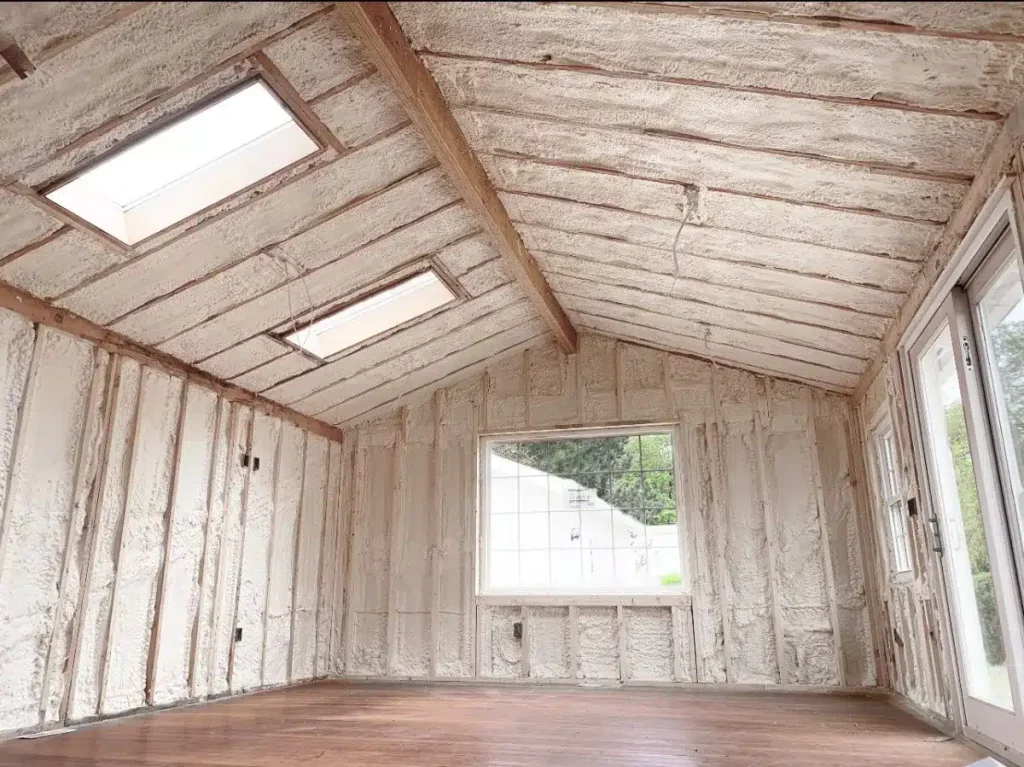
Spray foam is applied as a liquid that expands to fill cavities, cracks, and gaps. Closed-cell spray foam offers R-values between 5.7 and 7.0 per inch, while open-cell foam delivers roughly 3.5 to 3.8 per inch.
Advantages for commercial buildings:
Superior air sealing capability that eliminates gaps and penetrations
High R-value per inch, which matters where cavity depth is limited
Acts as a vapor barrier (closed-cell), reducing condensation risk in metal buildings and cold storage
Effective for irregular spaces, retrofits, and hard-to-reach areas
Considerations:
Contains isocyanates that may cause asthma and sensitization, requiring full evacuation of other trades during installation
Ignitable at 700 degrees Fahrenheit, requiring a thermal barrier per fire code
Susceptible to UV degradation if left exposed
Fiberglass Insulation
Fiberglass is one of the most widely used insulation materials in commercial construction, available in batts, rolls, and loose-fill forms. R-values typically range from 2.2 to 4.3 per inch depending on the product and installation method.
Advantages for commercial buildings:
Naturally non-combustible and does not require added fire retardants
Can be installed without evacuating other trades from the building
UV stable with no performance degradation from sunlight exposure
Contains 40 to 60% recycled content
Low moisture absorption (less than 1% of its weight)
Considerations:
Lower R-value per inch than foam-based products, requiring greater thickness
Requires careful air sealing practices to achieve rated thermal performance
Mineral Wool Insulation
Mineral wool, made from basalt or slag, delivers R-values between 3.0 and 4.5 per inch and is available in batts, boards, and loose-fill.
Advantages for commercial buildings:
Naturally non-combustible with excellent fire resistance
Superior acoustic performance with STC ratings reaching 43 in standard wall assemblies
Noise Reduction Coefficient (NRC) of up to 1.00, making it the top choice for sound control between offices, conference rooms, and manufacturing areas
Dimensionally stable and does not settle over time
Reusable at end of building life
Considerations:
Heavier than fiberglass, which can add to structural considerations
Higher material cost than fiberglass in many markets
Rigid Foam Boards (Polyiso, XPS, EPS)
Rigid foam boards provide continuous insulation and are widely used in commercial wall assemblies, roofing systems, and below-grade applications.
Board Type
R-Value Per Inch
Best Application
Key Trait
Polyiso
5.5 to 7.0
Commercial roofing, steel-framed walls
Highest R-value per inch of common rigid boards
XPS
4.5 to 5.6
Below-grade, foundation walls
High moisture resistance
EPS
3.6 to 4.2
Exterior sheathing, cavity fill
Lightweight, versatile, good for geofoam applications
Advantages for commercial buildings:
Provides continuous insulation outboard of framing, eliminating thermal bridging
Meets ASHRAE 90.1 continuous insulation requirements for steel-framed and mass walls
Available in large panels for fast installation on large commercial envelopes
Considerations:
Some foam products experience thermal drift over time (reduced R-value as blowing agents age)
Requires proper detailing at joints and penetrations to maintain air barrier continuity
Cellulose Insulation
Cellulose is made from recycled paper fiber treated with fire retardants. R-values range from 2.9 to 4.0 per inch.
Advantages for commercial buildings:
High recycled content
Effective at filling voids and irregular cavities when blown in
Good air-flow resistance when densely packed
Considerations:
Absorbs 5 to 20% of its weight in moisture, which can promote mold in humid environments
Requires fire retardant treatment, and the Consumer Products Safety Commission requires manufacturers to warn that cellulose products present a fire hazard
Can settle over time, reducing effective R-value
Matching Insulation to Building Type
Different commercial structures present different insulation challenges. Here is how the options align with common building types.
Building Type
Primary Insulation Recommendation
Why It Works
Office buildings
Mineral wool batts + rigid foam continuous insulation
Sound control between offices, fire resistance, code compliance
Warehouses and distribution centers
Spray foam + reflective/radiant barrier
Air sealing large roof areas, condensation control, solar heat reduction
Metal buildings
Closed-cell spray foam or insulated metal panels
Seals gaps in metal joints, prevents condensation on steel surfaces
Retail spaces
Fiberglass or mineral wool cavity fill + polyiso CI
Balanced thermal and acoustic performance, fire code compliance
Healthcare facilities
Mineral wool + spray foam joint sealing
Strict fire codes, infection control (no mold-friendly materials), sound privacy
Multi-story mixed-use
Combination of spray foam (air barrier) + mineral wool (fire/acoustic)
Meets residential and commercial code sections simultaneously
The Role of Climate Zone in Material Selection
The U.S. Department of Energy’s 2021 IECC guidelines divide the country into climate zones with specific R-value minimums for ceilings, walls, and other envelope components. While the IECC table is residential-focused, the same climate zone logic applies to commercial structures under ASHRAE 90.1.
In cooler climate zones (4 through 8), the R-value requirements for walls and roofs increase substantially. Steel-framed commercial walls in zone 5, for example, require R-10 continuous insulation plus R-13 cavity insulation. This makes materials with high R-value per inch, such as spray foam and polyiso, especially valuable where wall assembly depth is limited.
In warmer zones (1 through 3), requirements are lower but condensation control and solar heat gain become dominant concerns. Radiant barriers and closed-cell spray foam that blocks moisture vapor flow are particularly effective in these climates.
Why Air Sealing Matters as Much as Insulation
The Oak Ridge National Laboratory Insulation Fact Sheet states that insulation works by limiting air movement within the space it occupies, but it will not reduce air movement through cracks between building parts. Heat flows through leaks around foundations, window frames, wall joists, and pipe penetrations, and these gaps can account for a significant share of energy loss even in a well-insulated building.
ENERGY STAR estimates that homeowners can save an average of 15% on heating and cooling costs (or 11% on total energy costs) by combining air sealing with insulation upgrades. In commercial buildings, where the envelope area is much larger, the percentage savings from proper air sealing can be even more significant.
Spray foam provides built-in air sealing as part of its application, expanding to fill gaps and cracks. With other insulation types, separate air sealing steps, including caulk, gaskets, tape, and spray foam at penetrations, are essential to achieve the rated thermal performance.
Recommendations by Project Type
New Construction
For new commercial builds, a layered insulation system delivers the best results. Use mineral wool or fiberglass in wall cavities for fire resistance and acoustic control, pair it with rigid foam continuous insulation to meet ASHRAE 90.1 prescriptive requirements, and rely on spray foam at transitions, penetrations, and complex junctions for air sealing.
Retrofit Projects
Existing commercial buildings often have wall assemblies that are difficult to open up. Spray foam is the most practical retrofit option for walls because it can be applied through small access holes and expands to fill the cavity completely. For roof retrofits, adding a layer of polyiso rigid board insulation on top of the existing roof assembly is a common and effective approach.
Buildings with High Fire Code Requirements
Hospitals, schools, and high-rise commercial buildings often have strict fire rating requirements. Mineral wool is the leading choice in these applications because it is naturally non-combustible and also provides the best acoustic performance for sound isolation between occupied spaces.
Signs You Have Chosen the Right Insulation Contractor
They perform a thorough assessment of your building envelope before recommending materials, including identifying climate zone, construction type, and existing conditions.
They explain the difference between nominal and effective R-value and how thermal bridging affects your specific wall assembly.
They discuss air sealing as part of the insulation strategy, not as an optional add-on.
They provide documentation showing the insulation products meet applicable fire codes and ASTM standards.
They coordinate installation around other trades and building occupancy requirements.
Get a Commercial Insulation Quote from Cascadia Spray Foam
Selecting the right commercial insulation requires an experienced team that understands building science, energy codes, and material performance across different structure types. At Cascadia Spray Foam, we assess every commercial project individually, matching the insulation system to your building’s construction, climate zone, and performance goals. Whether you need spray foam for a metal building retrofit, mineral wool for an office fit-out, or a combination system for a new build, our professionals deliver code-compliant, high-performance installations.
How do I determine the right R-value for my commercial building?
R-value requirements are based on your climate zone, wall type, and the energy code your jurisdiction has adopted. ASHRAE 90.1 provides prescriptive minimums for commercial walls, roofs, and floors by climate zone. Start by identifying your zone, then consult the applicable code edition.
Is spray foam worth the higher initial investment for commercial buildings?
Spray foam offers the highest R-value per inch and provides air sealing as part of the application, which can reduce HVAC sizing requirements and lower long-term operating costs. It is particularly effective for metal buildings, retrofit projects, and structures with condensation concerns.
Can different insulation types be used together in the same building?
Yes, and combining materials is common practice. For example, fiberglass or mineral wool in wall cavities paired with rigid foam continuous insulation on the exterior meets both fire code requirements and ASHRAE 90.1 prescriptive paths for steel-framed commercial walls.
How does insulation affect fire safety in commercial buildings?
Some materials like fiberglass and mineral wool are naturally non-combustible, while spray foam requires a thermal barrier (such as gypsum board) because it ignites at approximately 700 degrees Fahrenheit. Material selection should always account for local fire codes and occupancy type.
What role does air sealing play in commercial insulation performance?
Air sealing is as important as the insulation itself. Gaps, penetrations, and construction joints allow conditioned air to escape, reducing the effective R-value of any insulation installed. Spray foam provides built-in air sealing, while other materials require separate caulk, gaskets, and tape at joints and penetrations.
Sources
Insulation Institute – Comparing Insulation Types – Detailed comparison of fiberglass, mineral wool, spray foam, and cellulose for commercial buildings covering thermal performance, fire protection, sound control, moisture resistance, and health impacts.
Wikipedia – Building Insulation – Comprehensive reference on building insulation materials, ASHRAE 90.1 prescriptive R-value requirements for commercial buildings by climate zone, and international insulation standards.
ENERGY STAR – Why Seal and Insulate – EPA data on energy savings from air sealing and insulation, including the 15% heating and cooling savings estimate and building envelope performance guidance.
Oak Ridge National Laboratory – Insulation Fact Sheet – DOE-funded reference document covering insulation types, R-value fundamentals, installation methods, thermal bridging, moisture control, and air sealing best practices.
I’m Melissa Grant, owner of Cascadia Spray Foam Insulation, with over 10 years of hands-on spray foam experience. I focus on durable insulation solutions, improved comfort and energy efficiency, and excellent customer service.
Selecting the right commercial insulation for warehouses comes down to five considerations: thermal performance matched to your climate zone, air sealing, moisture and vapor control, code compliance, and installation quality.…
Residential insulation addresses heat transfer through attic assemblies by slowing all three ways heat moves: conduction through framing and drywall, convection through air leaks, and radiation from a hot roof…
Open-cell spray foam provides useful coverage across irregular areas wherever a cavity is too deep, too uneven, or too cluttered with framing, wiring, and pipes for batts or rigid boards…