What Should Property Owners Consider When Selecting Commercial Insulation for Warehouses?
admin_cascadiaspray
September 23rd, 2026
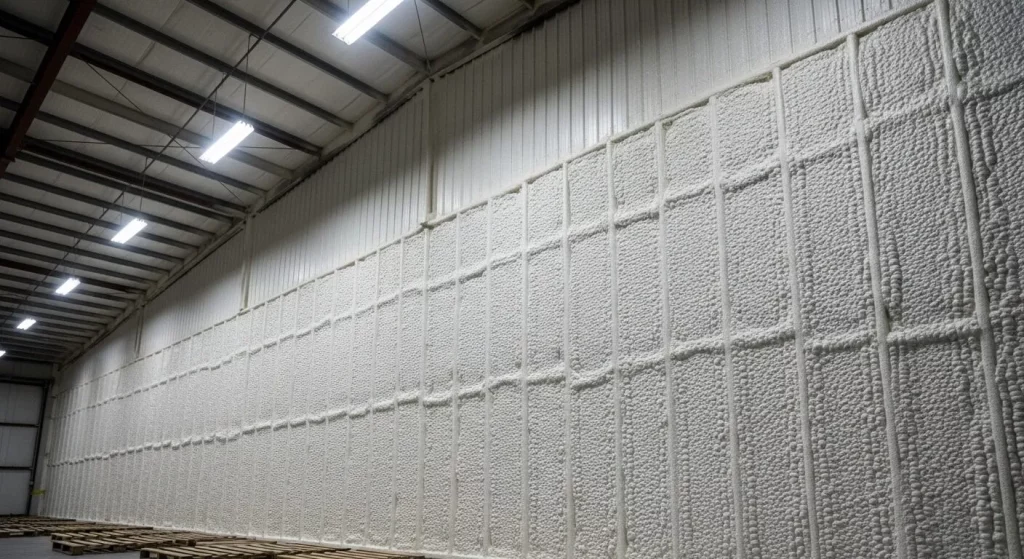
Selecting the right commercial insulation for warehouses comes down to five considerations: thermal performance matched to your climate zone, air sealing, moisture and vapor control, code compliance, and installation quality. The right material depends on your building type and operating goals. Everything about commercial insulation comes down to selecting the appropriate system: closed-cell spray foam delivers high R-value per inch plus air and vapor control in a single application, fiberglass and mineral wool batts suit large open spans on a budget, rigid foam board provides continuous coverage that fights thermal bridging, and reflective systems help metal buildings manage radiant heat. This guide breaks down each factor, compares the leading materials side by side, and shows you how to match an insulation strategy to your facility so you can move forward with a clear plan instead of guesswork.
TL;DR
R-value is the baseline metric. The higher the R-value, the greater the resistance to heat flow, so set targets by climate zone before comparing materials.
Closed-cell spray foam leads on density. It delivers roughly R-5.5 to R-6.5 per inch and acts as an air and vapor barrier at proper thickness.
Air leakage is the silent budget drain. U.S. Department of Energy studies attribute up to 40 percent of a building’s energy loss to air infiltration through the envelope.
Thermal bridging erodes performance. Steel framing and purlins conduct heat around batts, so continuous insulation or spray-applied foam matters in metal warehouses.
Moisture causes real damage. Building damage reports attribute 12.7 to 14 percent of building damage to mold problems, most of it traceable to condensation inside the envelope.
Codes are zone-based, not one-size-fits-all. ASHRAE 90.1, the U.S. energy standard for commercial buildings, sets minimum requirements by climate zone.
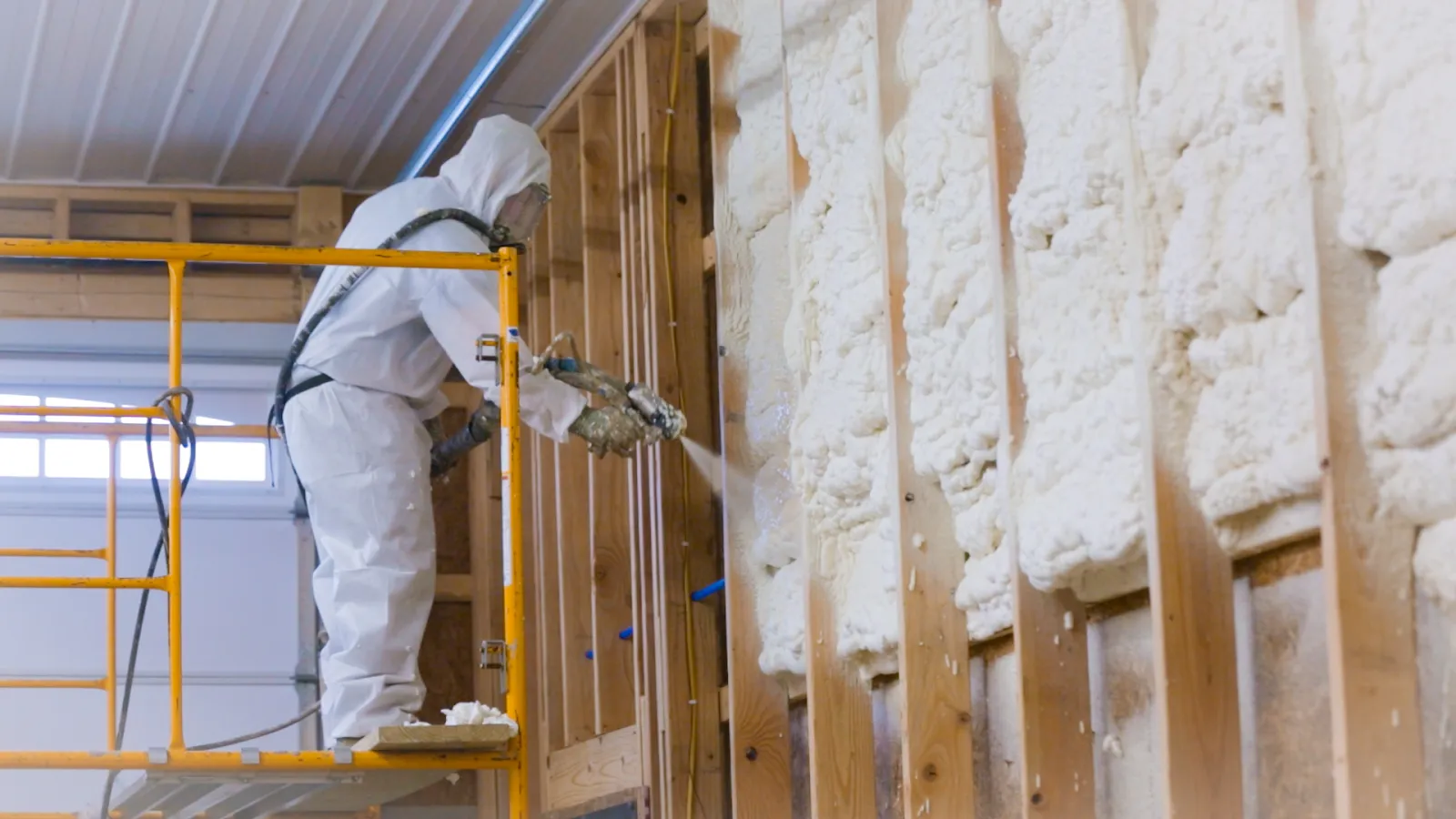
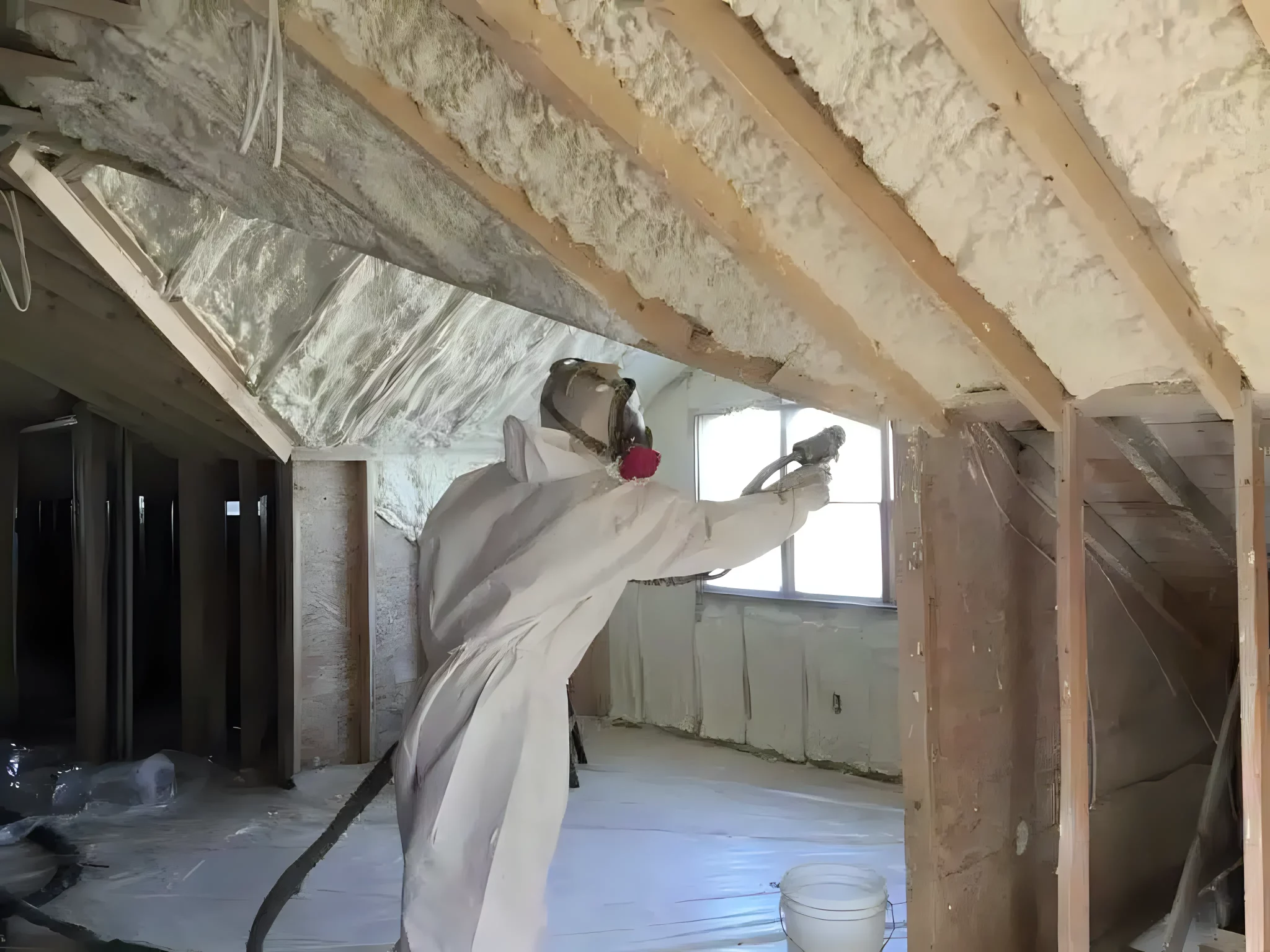
Installer credentials protect everyone. Spray foam chemistry involves isocyanates, and OSHA links exposure to occupational asthma, so trained application is non-negotiable.
R-Value First: Set a Thermal Target Before Choosing a Material
R-value measures how well a two-dimensional barrier resists conductive heat flow. Higher numbers mean better insulation, and R-values add up across layers. Before you compare products, establish the target for your roof, walls, and slab based on your climate zone and how the space will be conditioned. The R-value (insulation) reference on Wikipedia notes that manufacturers report per-inch values that can vary with thickness, temperature, and age, so compare whole-assembly performance rather than marketing numbers.
Here is how the common warehouse materials stack up per inch:
Material
Approx. R-Value per Inch
Standout Trait
Closed-cell spray polyurethane foam
R-5.5 to R-6.5
Air, vapor, and thermal barrier in one
Open-cell spray foam
~R-3.6 to R-3.8
Sound absorption, fills irregular voids
Polyiso rigid board (foil-faced)
R-5.5 to R-6.8 initial
High R in thin profile
XPS or EPS rigid board
R-3.6 to R-5.4
Continuous exterior coverage
Fiberglass batts
R-3.1 to R-4.3
Wide availability, fast install
Mineral wool batts
R-3.0 to R-3.85
Fire resistance and dimensional stability
For calibration on how targets scale with climate, Energy Star’s recommended insulation R-values range from R-30 for attics in the warmest zone to R-60 in the coldest zones, based on the 2021 International Energy Conservation Code. Commercial projects follow ASHRAE 90.1, which the building insulation literature identifies as the U.S. energy standard for commercial construction, with requirements divided by climate zone and expressed in both cavity and continuous insulation R-values.
Air Sealing: The Overlooked Half of the Equation
R-value only tells you how slowly heat moves through a material. It says nothing about how much conditioned air leaks out of the building. According to studies cited in the spray foam overview on Wikipedia, U.S. Department of Energy research shows that about 40 percent of a home’s energy is lost to air infiltration through walls, windows, and doorways, and warehouses with large door openings and metal panel joints are especially prone to uncontrolled airflow.
Spray foam earns its keep here because it adheres directly to the substrate and closes the gaps that batts and boards leave behind. The same source reports that buildings treated with spray foam can insulate as much as 50 percent better than traditional insulation products, largely because of airtightness rather than R-value alone. When you compare bids, ask how each option addresses the joints, penetrations, and dock doors where air actually escapes.
Moisture, Condensation, and Vapor Control
Metal-clad warehouses create a classic condensation scenario: warm, humid interior air meets cold steel panels and moisture condenses inside the wall or roof assembly. Wet insulation loses performance, and trapped moisture invites mold. Building damage reports attribute between 12.7 and 14 percent of building damage to mold problems, so vapor strategy deserves the same weight as thermal strategy.
Consider these moisture questions for your facility:
Does your building house humidity-sensitive inventory or require temperature control?
Will the insulation sit on the warm side or cold side of the assembly?
Does the material itself manage vapor, or does it need a separate barrier?
Closed-cell spray foam functions as both a vapor barrier and an air barrier when installed at its required minimum thickness, which is why it is frequently specified for roofs, walls, and metal substrates where condensation is a concern. Fiberglass and cellulose do not manage vapor on their own and depend on correct barrier placement within the assembly.
Thermal Bridging and Building Structure
Heat follows the path of least resistance, and in a steel-framed warehouse that path is the framing itself. Thermal bridges form wherever conductive materials create a continuous route across a temperature difference, and metal is a poor insulator at roughly R-0.02 per inch of common steel thickness. Batts tucked between purlins still bleed energy through every fastener and flange they touch.
Two structural realities should shape your choice:
Continuous insulation wins on paper and in practice. A continuous layer of rigid board or spray-applied foam over the structure interrupts bridging in a way cavity-only insulation cannot.
Metal buildings benefit from hybrid systems. Reflective insulation and radiant barriers address radiant heat across an air gap and are most effective against downward heat flow, so they complement rather than replace bulk insulation.
Safety, Codes, and Installer Credentials
Spray polyurethane foam is formed from isocyanates and polyol resin reacting at the nozzle. OSHA’s isocyanates resource identifies foam-blowing and insulation work as jobs involving exposure and warns that hazardous exposure primarily causes occupational asthma and other lung problems, plus eye, nose, throat, and skin irritation. Workers can become sensitized, meaning future exposures trigger reactions at lower levels. This is a strong argument for hiring a crew with documented training, proper respiratory protection, and clear re-entry and cure-time protocols rather than simply the lowest bid.
On the code side, building codes set minimum standards for fire safety and energy efficiency, and commercial energy compliance runs through ASHRAE 90.1. Commercial insulation services must also address applicable flame and thermal barrier requirements, so ask any bidder how the proposed assembly meets the requirements for your occupancy type, and get the answer in writing.
Matching the Strategy to Your Facility
Warehouse Scenario
Recommended Approach
Why It Works
Cold storage or climate-sensitive goods
Closed-cell spray foam roof and walls
Highest R per inch plus built-in vapor control
Metal-clad bulk storage in a mixed climate
Hybrid: spray foam at the deck, rigid board over framing
Stops infiltration and bridging together
Large, simple spans with exposed structure
Batts or liner systems with continuous exterior board
Fast coverage where the interior finish allows it
Hot climate with heavy solar gain
Reflective layer plus bulk insulation
Radiant barriers excel against downward heat flow
Flex or multi-tenant space with offices
Open-cell foam in interior walls
Adds sound control alongside thermal value
Questions to Ask Before You Commit
What R-value does the whole assembly achieve, not just the material alone?
Will aged or long-term thermal resistance be honored, since closed-cell polyurethane foams can lose R-value as blowing agents diffuse out over time?
How are penetrations, transitions, and door openings sealed?
Who applies the material, and what training or certification do they hold?
How does the design satisfy fire and thermal barrier requirements for this occupancy?
Signs You’ve Found the Right Approach
The proposal specifies R-values per assembly, not vague promises about “premium material.”
The contractor explains trade-offs honestly, including where a cheaper option would serve fine and where it would fail.
Moisture and condensation risks for your specific building type are addressed without prompting.
Safety protocols for foam application, ventilation, and re-entry are described in detail.
The scope, schedule, and cure times are documented before work begins.
Get a Warehouse Insulation Plan From Cascadia Spray Foam
Choosing commercial insulation for a warehouse is a building science decision, and our team treats it that way. Cascadia Spray Foam helps property owners and facility managers evaluate R-value targets, moisture risks, and material options, then installs spray foam systems engineered for the demands of large commercial structures. Request a detailed quote by emailing [email protected] or calling (425) 386-3500, and let’s scope the right system for your building.
Talk with our team before you commit to a material, and invest in an envelope that pays you back every operating month.
Frequently Asked Questions
What R-value should a warehouse target?
Start with your climate zone and conditioning level, then confirm minimums under ASHRAE 90.1. Roof decks generally warrant the highest target, and colder zones push attic-equivalent recommendations toward R-60.
Is spray foam a good fit for metal warehouse buildings?
Yes, particularly closed-cell foam, which adheres directly to steel, seals panel joints, resists condensation, and delivers high R-value per inch where cavity depth is limited.
How does insulation affect condensation on steel panels?
Properly installed insulation keeps the steel surface above the dew point, and a vapor barrier prevents humid interior air from reaching the cold metal. Closed-cell foam combines both functions in one layer.
How long does commercial insulation keep its rated performance?
It varies by material. Long-term testing cited in building science literature found fiberglass and XPS retained over 97 percent of initial R-value, while closed-cell polyurethane lost about 27.5 percent as blowing agents diffused out.
Can a large warehouse be insulated in phases?
Yes. Many owners start with the roof deck, where heat loss is greatest, then phase walls and doors across budget cycles. A written phasing plan keeps each stage code-compliant and effective on its own.
Sources
Building insulation – Wikipedia – Overview of bulk and reflective insulation, ASHRAE 90.1 commercial requirements by climate zone, thermal bridging, and moisture-related building damage statistics.
R-value (insulation) – Wikipedia – Definitions of thermal resistance, per-inch R-value comparisons for spray foam, batts, and rigid boards, FTC R-value disclosure rules, and long-term R-value degradation research.
Spray foam – Wikipedia – Open-cell versus closed-cell spray polyurethane foam properties, air sealing benefits, Department of Energy infiltration findings, and vapor barrier performance at minimum thickness.
OSHA – Isocyanates – Occupational Safety and Health Administration guidance on isocyanate exposure in foam-blowing and insulation work, including health effects and occupational asthma risks.
admin_cascadiaspray
September 23, 2026 No Comments
Selecting the right commercial insulation for warehouses comes down to five considerations: thermal performance matched to your climate zone, air sealing, moisture and vapor control, code compliance, and installation quality.…
admin_cascadiaspray
September 15, 2026 No Comments
Residential insulation addresses heat transfer through attic assemblies by slowing all three ways heat moves: conduction through framing and drywall, convection through air leaks, and radiation from a hot roof…
admin_cascadiaspray
September 15, 2026 No Comments
Open-cell spray foam provides useful coverage across irregular areas wherever a cavity is too deep, too uneven, or too cluttered with framing, wiring, and pipes for batts or rigid boards…