Where Does Open-Cell Spray Foam Provide Useful Coverage Across Irregular Areas?
admin_cascadiaspray
September 15th, 2026
Open-cell spray foam provides useful coverage across irregular areas wherever a cavity is too deep, too uneven, or too cluttered with framing, wiring, and pipes for batts or rigid boards to fit tightly. Applied as a liquid that expands up to 30 to 60 times its original volume, the open-cell spray foam guide explains how it fills cracks, crevices, and voids, then adheres to irregular surfaces to form a continuous air-sealing layer.The right insulation choice for a given space depends on depth, moisture exposure, and performance goals: open-cell suits interior framing, attics, and sound-control work, while closed-cell handles damp or space-constrained assemblies. Below, we map out exactly where open-cell earns its keep, where it does not, and how to specify it correctly.
TL;DR
Open-cell foam expands during application and adheres to irregular substrates, making it the most forgiving insulation for odd geometries that batts leave with gaps.
It delivers roughly R-3.6 to R-3.8 per inch and functions as an air barrier at 5.5 inches of installed depth or more.
Best-fit areas include wall cavities, joist and rafter bays, cathedral ceilings, interior sound partitions, knee walls, and drill-and-fill retrofits of finished walls.
For acoustics, open-cell offers about twice the sound resistance of closed-cell foam in normal frequency ranges.
Poor-fit areas include damp crawl spaces, below-grade assemblies, exterior applications, and any detail that needs a vapor barrier from a thin layer.
ENERGY STAR targets R-49 to R-60 attic levels depending on climate zone, so coverage depth must be planned assembly by assembly.
Federal rules require insulation installers to disclose R-value based on standard testing, so ask every contractor for documentation before work begins.
Why Open-Cell Conforms Where Other Insulation Fails
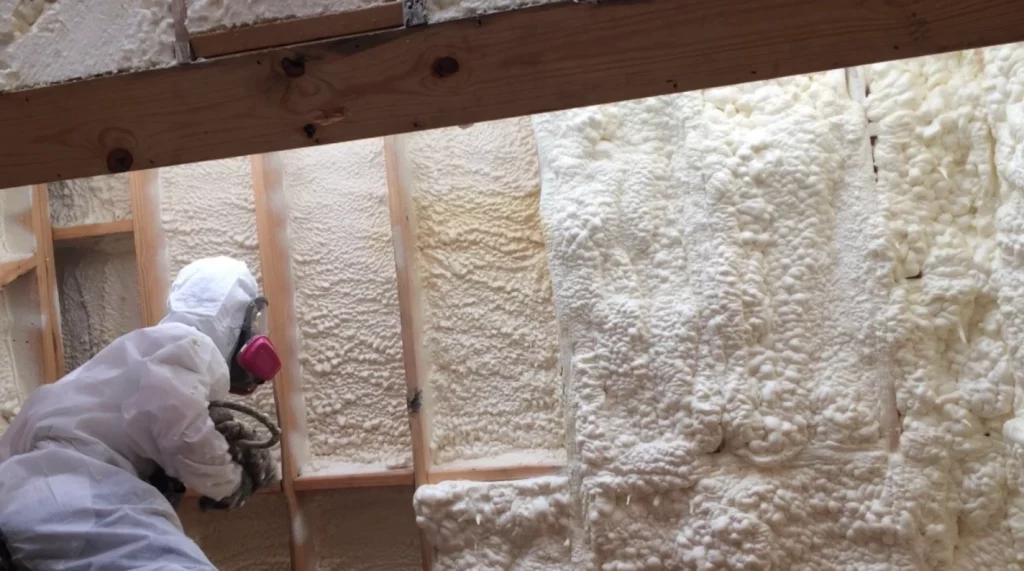
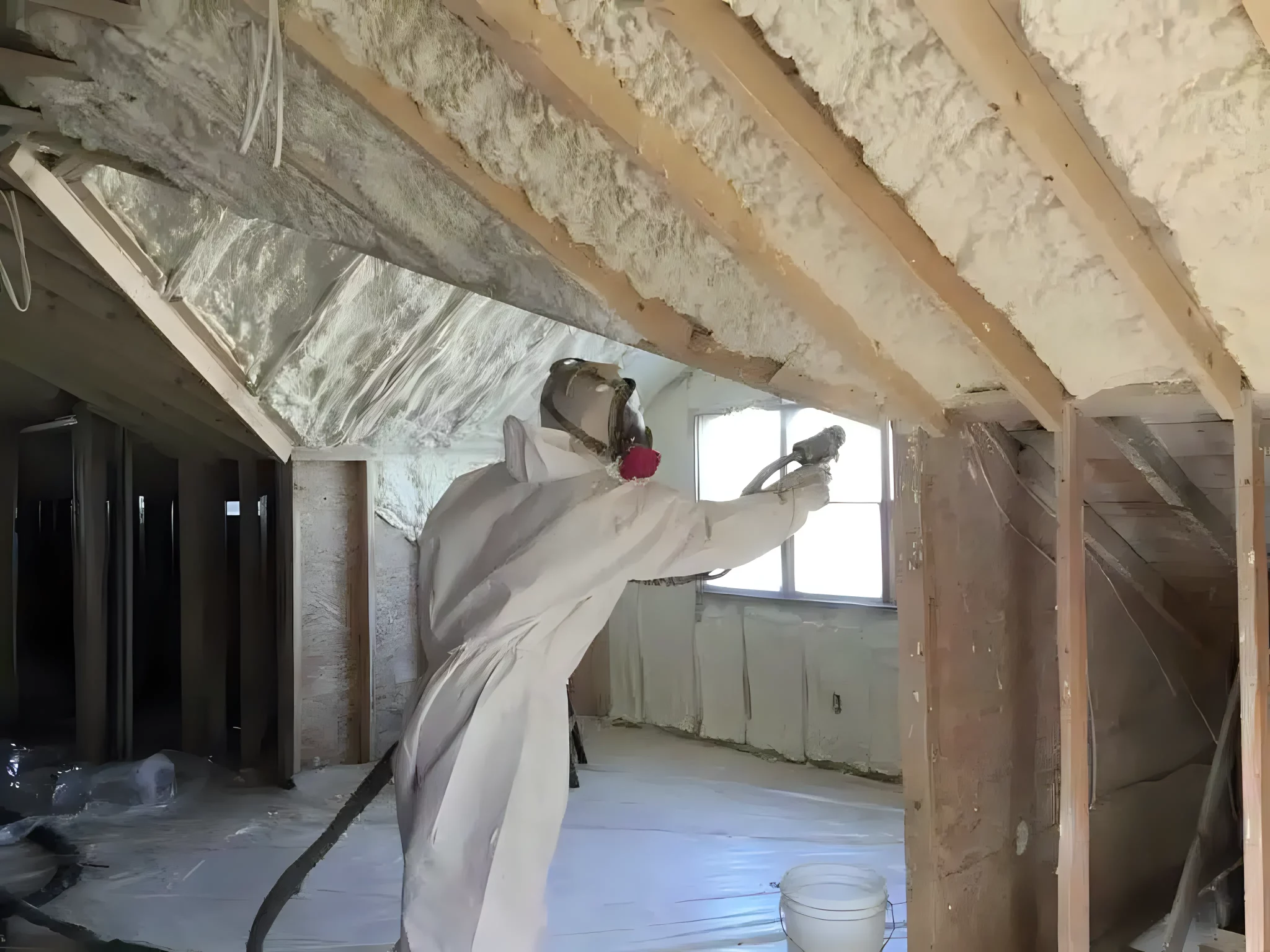
The physics of the material explain its fit in irregular areas. Open-cell spray polyurethane foam, often called half-pound foam, is a light-density, semi-rigid material with a sponge-like structure that expands as it is sprayed. Because it starts as a liquid, an open-cell spray foam contractor can apply it around wiring, plumbing, and blocking before it cures, filling bypasses that batts and blankets simply cannot reach. Studies cited by the U.S. Department of Energy attribute roughly 40 percent of a home’s energy loss to air infiltration through walls, windows, and doorways, which is why that void-filling behavior matters as much as R-value itself (Wikipedia – Spray foam).
Compare that to conventional batts. When installers cut fiberglass around electrical boxes and other obstructions, air gains a free path through the cavity, and gaps between batts become sites of infiltration and condensation. These weak points show up in predictable places: building corners, penetrations for plumbing, and boxes for outlets and switches (Wikipedia – Building insulation). Open-cell foam eliminates those bypasses by growing into them, then gets trimmed flush once it cures.
Where Open-Cell Spray Foam Provides Useful Coverage
Area
Why the Geometry Is Difficult
How Open-Cell Performs
Framed wall cavities (2×4, 2×6)
Studs, electrical boxes, and blocking interrupt any sheet or batt
Expands into every void and air-seals the bay in one pass
Floor and ceiling joist bays
Uneven depths, pipes, ducts, and sheathing nails
Works well in tight spaces where loose-fill cannot stay in place
Rafter bays and cathedral ceilings
Sloped, deep, and often uneven cavities
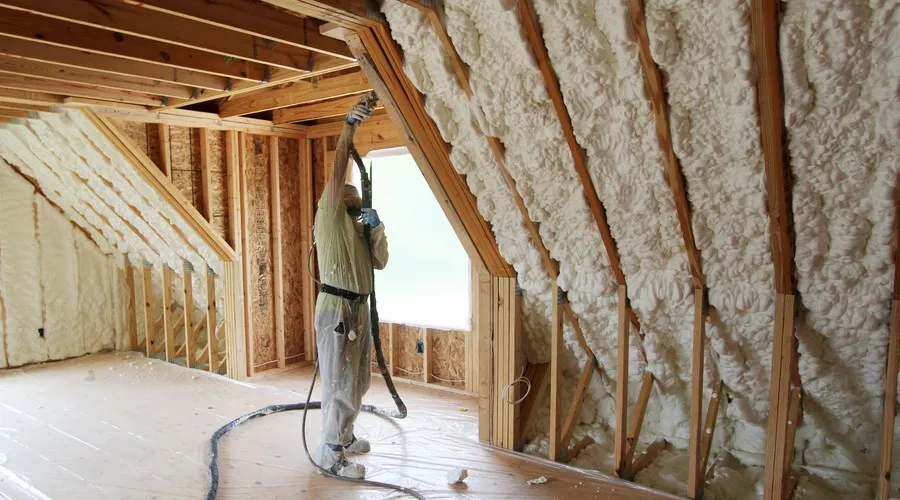
Fills deep, angled bays and cures flush for clean drywall
Interior partitions
Noise transfer through hollow cavities
Absorbs air movement and delivers about twice the sound resistance of closed-cell
Knee walls, bay windows, cantilevers
Angled and off-pattern framing
Adheres directly to irregular substrates with no cutting waste
Finished walls (retrofit)
No access without demolition
Applied through small drilled holes, filling the cavity from the outside
Spray-applied foam can be placed onto slabs, into open wall cavities, against sheathing, or through drilled holes into finished walls, and it can be used where loose-fill cannot, such as between joists and rafters (Wikipedia – Building insulation material). One added benefit for wired and plumbed bays: open-cell chemistry runs a low exothermic reaction temperature, so it will not damage coatings on electrical wiring or plumbing during curing.
Open-Cell vs. Alternatives in Irregular Geometry
Factor
Open-Cell Foam
Closed-Cell Foam
Batts / Loose-Fill
Conformance in odd bays
Excellent, self-conforming
Good, but rigid and thickness-sensitive
Prone to gaps and bypasses
Typical R per inch
About 3.6 to 3.8
About 5.5 to 6.5
About 2.5 to 4
Air barrier performance
Yes at 5.5 inches or more
Yes, even in thinner layers
No, separate air sealing needed
Moisture behavior
Permeable, vapor-open
Acts as a vapor barrier
Needs a separate vapor retarder
Acoustic performance
Highest of the three
Moderate
Moderate
Access through finished surfaces
Yes, drill-and-fill
Difficult to retrofit
Possible but settling-prone
A defining strength of spray-applied foam is its ability to create an airtight seal directly against the substrate, reducing the effects of air leakage that degrade other insulation types (Wikipedia – R-value (insulation)). That seal is the reason coverage quality in irregular areas often matters more than the R-value printed on the label.
Where Open-Cell Is Not the Right Fit
Honesty about limits protects your building envelope. Open-cell foam is vapor-open, so thin layers do not control moisture, and it is usually recommended for indoor applications only. Keep it out of these situations:
Damp crawl spaces or below-grade assemblies, where vapor permeability works against you.
Exterior exposures, where sunlight and weather require closed-cell or board products.
Assemblies needing a vapor barrier at minimal thickness, where a rigid foam board delivers more performance per inch.
Very shallow cavities, where the R-value per inch of a denser foam does more work.
Because open-cell expands and cures soft, it also requires trimming after installation and disposal of the shave waste, a labor step worth discussing with any installer before the project starts.
How to Specify Depth, R-Value, and Air-Sealing
Three numbers should anchor every proposal. First, plan at least 5.5 inches of open-cell depth in conditioned assemblies, the point at which it functions as an air barrier. Second, match depth to code-level targets: ENERGY STAR recommends R-49 to R-60 attic insulation and R-13 to R-38 floor levels depending on climate zone, guidance based on the 2021 International Energy Conservation Code (ENERGY STAR – Recommended Home Insulation R-Values). Third, request documentation: the FTC R-Value Rule requires manufacturers, professional installers, and new home sellers to disclose R-value based on standard tests, so any proposal should state the tested R-value for the installed thickness (FTC – R-Value Rule).
Durability is one less worry. Because half-pound open-cell foams are water-blown and contain no trapped gases, their R-value does not drop significantly with age the way older gas-blown foams can.
Recommendations by Audience
Audience / Context
Recommended Approach
Key Notes
New construction builders
Open-cell in exterior walls, attic slopes, and sound partitions
Plan 5.5-inch minimum depth before drywall scheduling
Remodelers and retrofitters
Drill-and-fill finished wall cavities
Small access holes, cavity filled without demolition
Homeowners with noise concerns
Open-cell in interior partitions and home office walls
Roughly twice the sound resistance of closed-cell
Attic conversions and bonus rooms
Rafter bays, knee walls, and sloped ceilings
Verify cured depth against zone R-value targets
Property managers
Joist bays and framing transitions across units
Pair with closed-cell only at known damp zones
Signs You’ve Found the Right Approach
The proposal states tested R-value and installed thickness for each assembly, not a vague per-inch claim.
Depth targets match your climate zone’s attic and floor requirements rather than a one-size figure.
The crew verifies substrate dryness and temperature before spraying, since cold or damp surfaces cause shrinkage.
Moisture strategy is explained plainly: where the foam is vapor-open and where a closed-cell detail is added.
Trimming, waste removal, and ventilation during curing are part of the written scope.
Let’s Map Your Irregular Areas Together
At Cascadia Spray Foam, our team measures every cavity before we spray, then specifies open-cell depth to match each assembly’s R-value and air-barrier targets across the Pacific Northwest. From cathedral ceilings to drill-and-fill retrofits, we document thickness, sound performance, and air-sealing so you know exactly what your envelope gained. Call us at (425) 386-3500 or email [email protected] to get started, and close the gaps your batts never could.
Frequently Asked Questions
Can open-cell foam fill odd framing details like bay windows and cantilevers?
Yes. Because it sprays as a liquid and expands in place, it adheres to irregular substrates and fills angled cavities that batts cannot fit.
How thick does open-cell spray foam need to be?
At least 5.5 inches to act as an air barrier in walls and ceilings. Attics in colder zones may need more depth to hit R-49 to R-60 targets.
Is open-cell foam safe around wiring and plumbing?
Yes. Its low exothermic reaction temperature will not harm coatings on electrical wiring or building plumbing as it cures.
Can open-cell foam be added to existing finished walls?
Yes. Installers drill small holes between studs and inject the foam, filling the cavity without tearing out drywall.
Does open-cell foam lose R-value over the years?
No meaningful loss. Water-blown half-pound foams contain no trapped gases, so their R-value stays stable rather than declining like older gas-blown foams.
Sources
Wikipedia – Spray foam – Overview of spray foam chemistry, open-cell vs. closed-cell properties, expansion behavior, R-values, and air infiltration research from the U.S. Department of Energy.
Wikipedia – Building insulation – Building science on thermal bridges, common insulation gaps at corners, electrical boxes, and penetrations, and thermal envelope fundamentals.
Wikipedia – Building insulation material – Detailed advantages of spray foam in tight spaces and between joists and rafters, plus open-cell vs. closed-cell comparisons for acoustics and vapor performance.
admin_cascadiaspray
September 15, 2026 No Comments
Open-cell spray foam provides useful coverage across irregular areas wherever a cavity is too deep, too uneven, or too cluttered with framing, wiring, and pipes for batts or rigid boards…
admin_cascadiaspray
September 15, 2026 No Comments
Yes, open-cell spray foam is a strong fit for sound-sensitive rooms in Mukilteo, WA, especially when the problem is airborne noise such as voices, traffic along the Mukilteo Speedway, or…
admin_cascadiaspray
September 11, 2026 No Comments
Closed-cell spray foam improves sealing around complex building gaps because it starts as a liquid, expands 30 to 60 times its original volume, and bonds to irregular surfaces that batts…