Why Residential Insulation is Vital for a Quiet Home Library in Edmonds, WA?
Melissa Grant
June 18th, 2026
A home library in Edmonds, WA, demands more than beautiful shelving and comfortable seating. Without proper residential insulation, external noise from traffic on Highway 99, marine fog horns from the Puget Sound shoreline, and seasonal rain against windows can make focused reading or deep work nearly impossible. Residential insulation serves a dual purpose here: it thermally protects your space in a Climate Zone 4C marine environment while creating the acoustic barrier necessary for genuine silence. The right insulation strategy depends on whether you are building new, retrofitting an existing room, or simply upgrading a space that was never designed for quiet. Each approach, from dense-pack fiberglass to spray foam, targets different aspects of sound transmission and thermal performance, and the best results come from understanding how those factors overlap in our specific Pacific Northwest climate.
TL;DR
Edmonds falls within Climate Zone 4C (marine), which requires R-60 attic insulation and R-20 plus R-5 continuous insulation for wood-frame walls under the 2021 Washington State Energy Code
Sound Transmission Class (STC) ratings measure how well building assemblies block airborne noise; a dedicated quiet room should target STC 50 or higher
Air sealing is as important as insulation material itself because gaps and cracks are the primary pathways for both heat loss and sound transmission
Open-cell spray foam excels at absorbing mid-range frequencies common in home environments, including voices, foot traffic, and appliance noise
According to ENERGY STAR, 9 out of 10 American homes are under-insulated, meaning most existing libraries lack adequate acoustic and thermal protection
Interior wall insulation, often skipped during original construction, is the single most impactful upgrade for blocking sound between your library and adjacent rooms
Combined air sealing and insulation can reduce heating and cooling costs by an average of 15% while simultaneously reducing exterior noise intrusion
How Noise Travels Through Your Home and Why Insulation Stops It
Sound moves through buildings in two primary ways: airborne transmission and structure-borne vibration. Airborne noise includes conversations, television audio, traffic, and rain hitting the roof. Structure-borne noise travels through the framing itself, like footsteps on hardwood floors vibrating through wall studs into the next room.
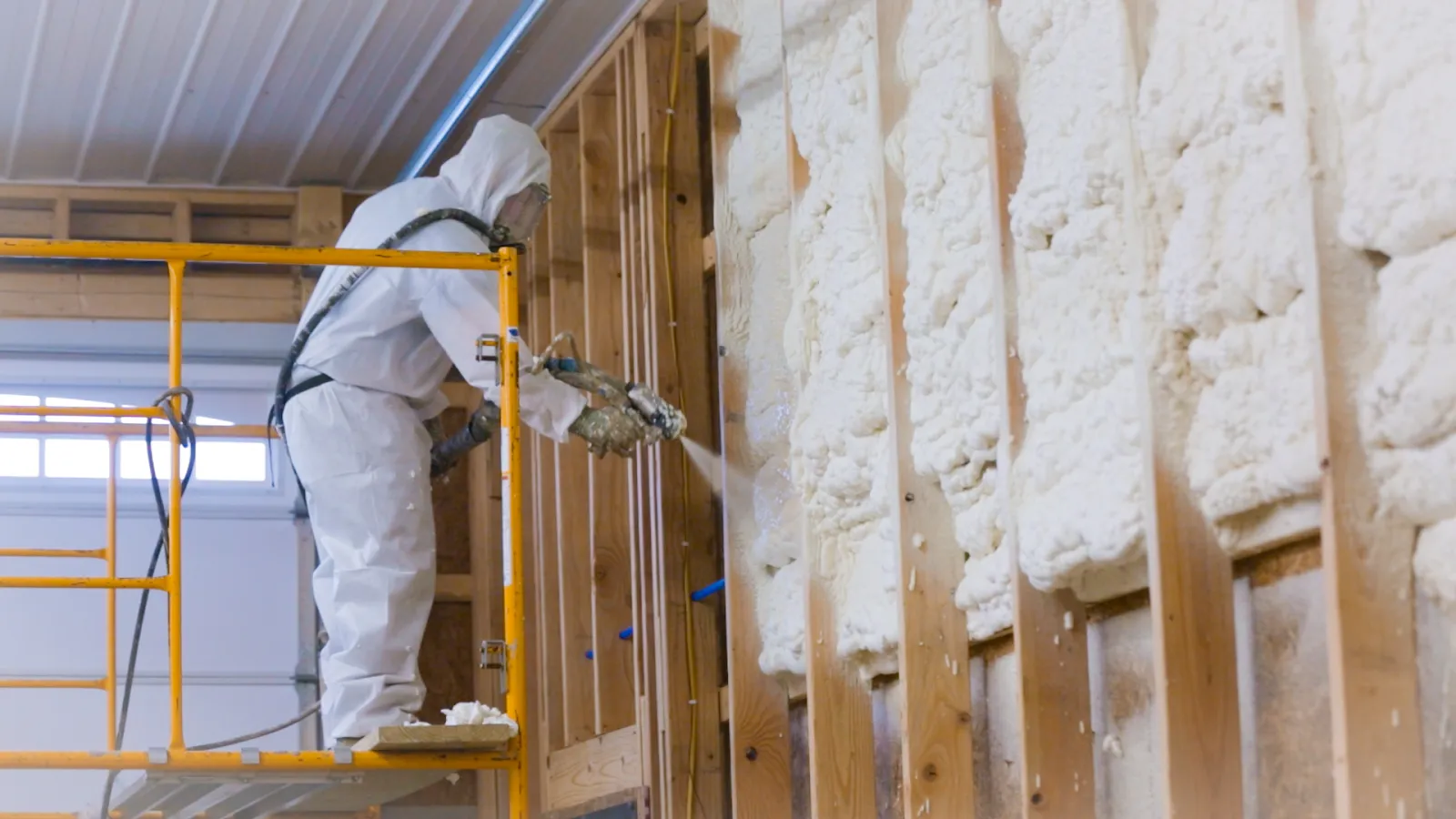
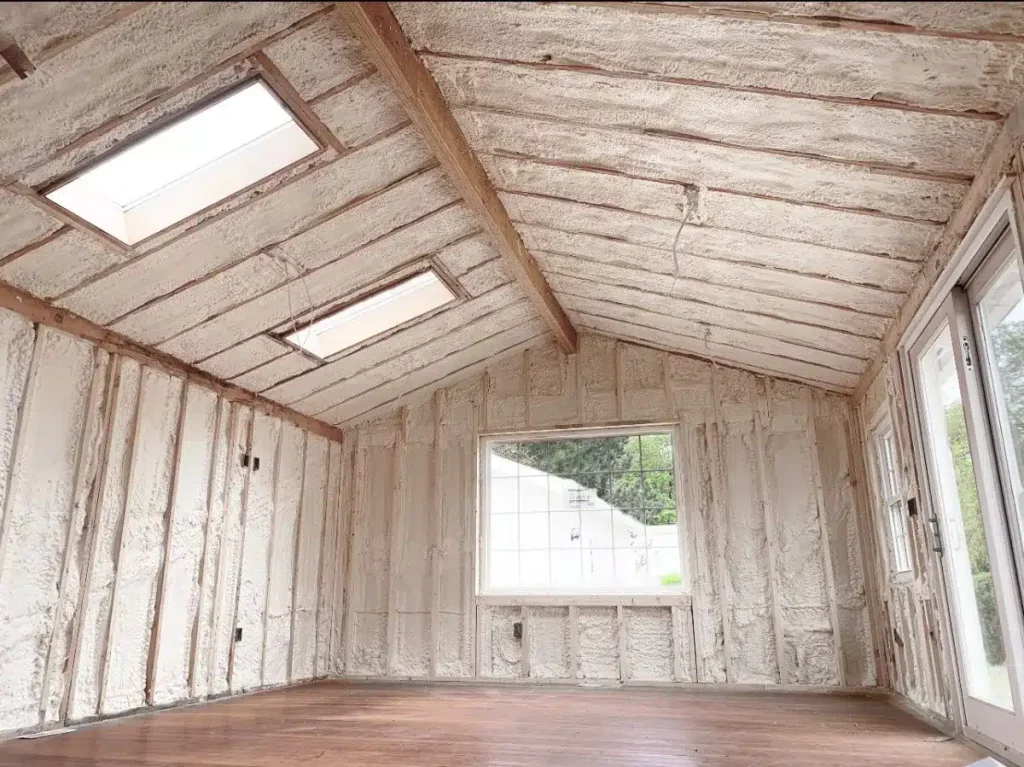
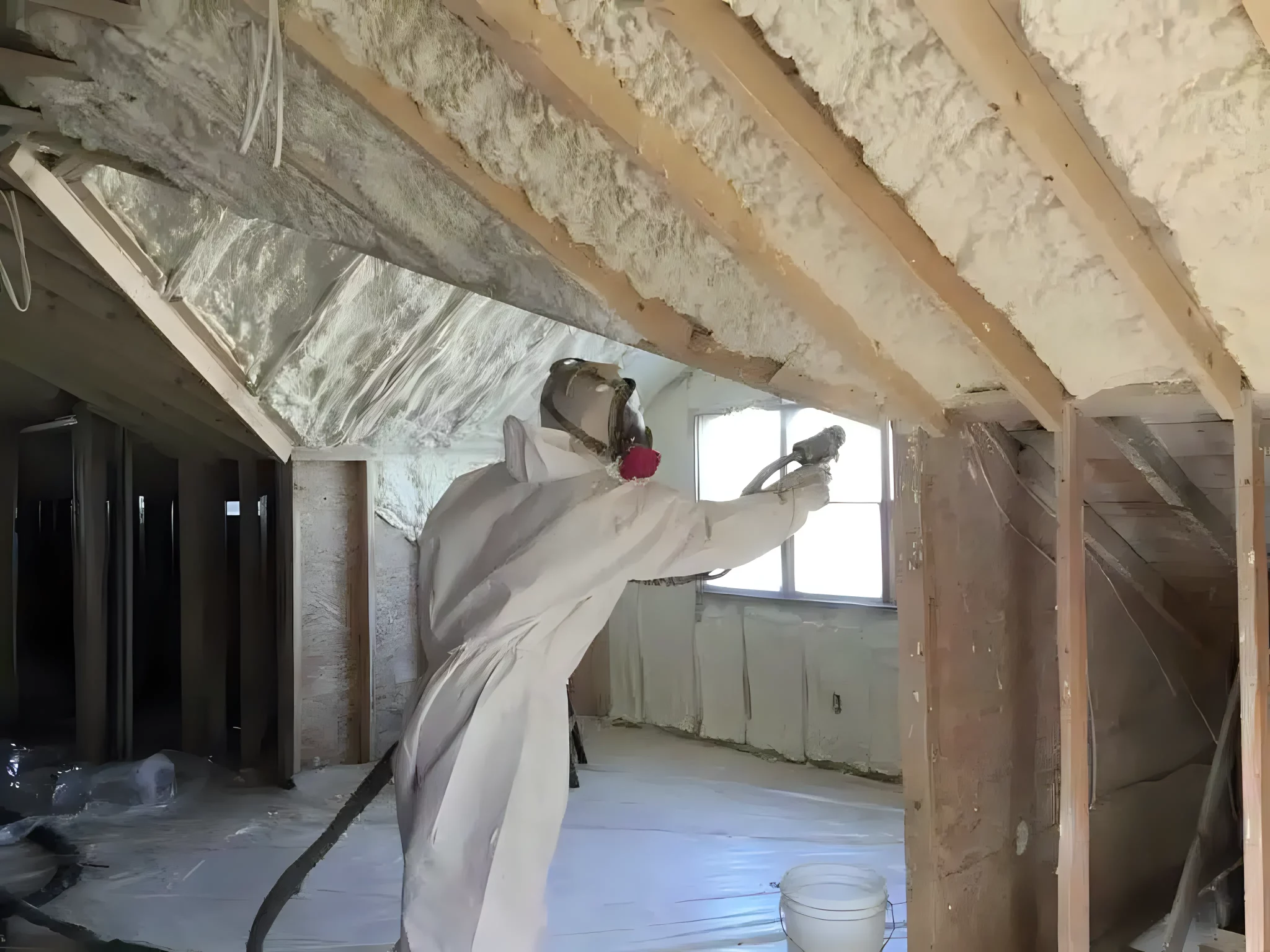
Insulation addresses both paths, but in different ways. Fibrous materials like fiberglass and mineral wool absorb sound energy by converting it into minuscule amounts of heat through friction as sound waves pass through the material. Spray foam insulation works by filling every gap and void in a wall cavity, eliminating the air pathways that sound relies on to travel. When combined with proper air sealing, as described by the U.S. Department of Energy, insulation that fills building cavities reduces airflow and leakage, which means fewer channels for both temperature fluctuations and acoustic energy to pass through.
The U.S. Department of Energy recommends reducing air leakage as much as possible before adding insulation, because even a fully insulated wall with unsealed gaps will transmit significant noise. Sound behaves like water: it follows the path of least resistance. A small crack around a window frame, an unsealed electrical outlet, or a gap where plumbing enters the wall can undermine the acoustic performance of an otherwise well-insulated assembly.
Edmonds Building Requirements and What They Mean for Your Library
The City of Edmonds has adopted the 2021 Washington State Energy Code, which went into effect on March 15, 2024. For our marine climate zone, the code mandates substantial insulation levels. The city also publishes specific design criteria that affect building performance: a winter design temperature of 27 degrees Fahrenheit, a mean annual temperature of 50 degrees Fahrenheit, and a wind speed rating of 98 miles per hour.
These local conditions directly influence how your home library performs acoustically and thermally. Cold winter temperatures mean your heating system works harder, and the thermal envelope of your home, including the library walls, needs strong resistance to conductive heat flow. High wind speeds drive rain and exterior noise against your exterior walls with more force. A poorly insulated library wall will not only lose heat but will also transmit that wind-driven noise directly into your reading space.
Properly insulated attics, walls, and ceilings help maintain consistent indoor temperatures, reduce energy waste, and improve year-round comfort. Residential Insulation Helps Solve Heat Loss Problems by creating an effective thermal barrier throughout your home. The energy code requires R-60 for attics and R-20 plus R-5 continuous insulation for wood-frame walls in our climate zone, helping reduce heat transfer and improve overall energy efficiency.
Insulation Types and Their Acoustic Performance
Not all insulation performs equally when it comes to sound control. The table below breaks down the most common residential insulation materials and how they perform acoustically.
Insulation Type
Sound Absorption
Air Sealing
Thermal R-Value Per Inch
Best Application for a Library
Open-cell spray foam
Excellent (NRC 0.70-0.90)
Excellent
R-3.7
Interior partition walls, ceilings between floors
Closed-cell spray foam
Good (NRC 0.50-0.70)
Excellent
R-6.5
Exterior walls, rim joists, band joists
Fiberglass batts
Moderate (NRC 0.90 at 3.5″)
Poor without sealing
R-3.2
Existing cavities with proper air sealing prep
Mineral wool batts
Very Good (NRC 0.95 at 3.5″)
Moderate
R-3.3
Interior walls, ceilings, retrofit projects
Blown-in cellulose
Good (NRC 0.80+ at full density)
Good when dense-packed
R-3.5
Existing wall cavities, attic floors
Open-cell spray foam stands out for library applications because its open-cell structure allows sound waves to enter the material and get absorbed rather than reflected. The Noise Reduction Coefficient (NRC) measures absorption from 0 (total reflection) to 1 (total absorption), and open-cell spray foam consistently scores between 0.70 and 0.90. This means it absorbs 70 to 90 percent of the sound energy that reaches it across mid-range frequencies, which is exactly the range where human speech, music, and most household noise lives.
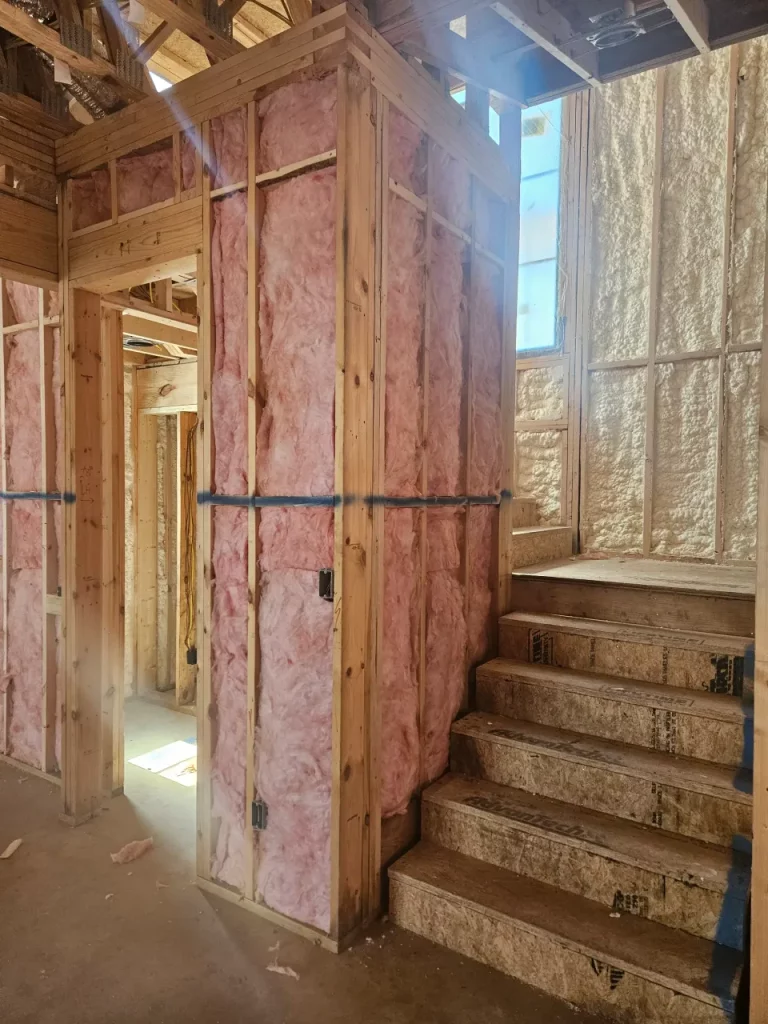
Closed-cell spray foam provides a denser barrier and higher R-value per inch, making it the better choice for exterior walls where you need maximum thermal resistance alongside noise reduction from outside sources. For a home library that shares an exterior wall with a busy street, combining closed-cell foam in the exterior wall and open-cell foam in interior partitions gives you comprehensive coverage.
Where to Insulate for Maximum Library Quiet
Targeting the right areas of your home makes the difference between a noticeable improvement and a genuinely silent space. Prioritize these locations in order of acoustic impact:
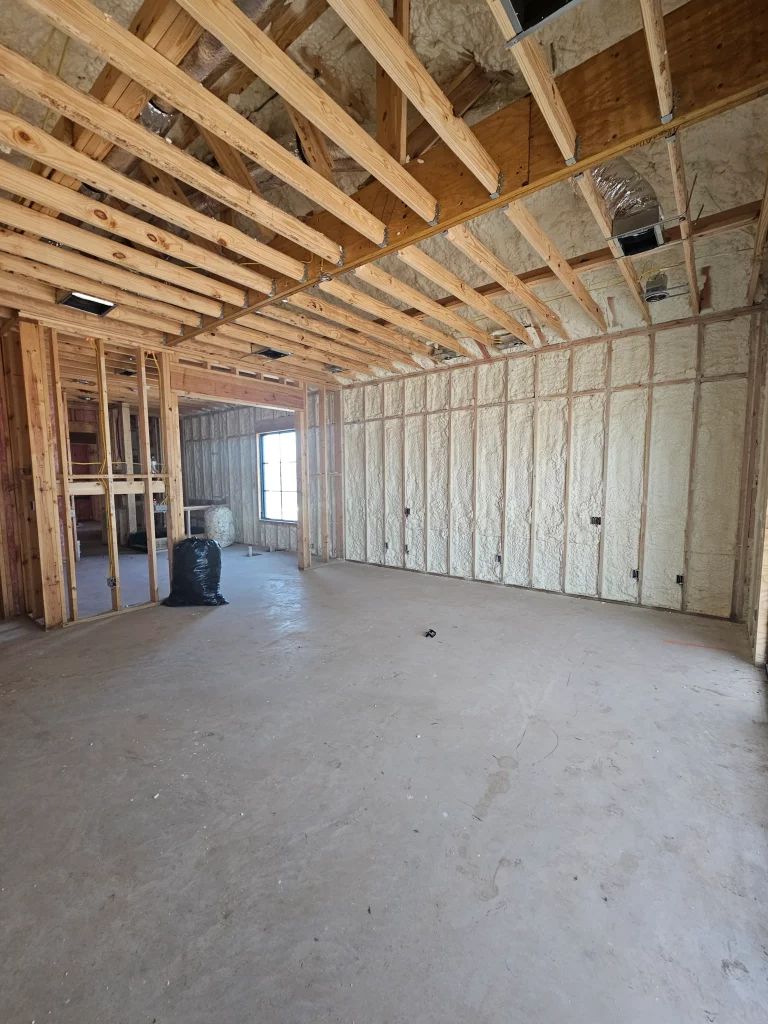
Shared interior walls. If your library shares a wall with a living room, hallway, or bedroom, this is the single highest-impact insulation project. Most homes in Edmonds were built with empty cavities in interior walls, offering zero sound resistance. Filling these cavities with dense-packed insulation or spray foam can raise the STC rating of the wall assembly from around 33 (normal speech clearly audible) to 50 or above (loud speech barely detectable).
Ceiling and floor assemblies. Foot traffic from the floor above or below is one of the most disruptive noises in a home library. Insulating between floor joists, combined with resilient channel and additional drywall, dramatically cuts structure-borne vibration. If your library is on the second floor, insulating the ceiling cavity above it helps contain noise from the attic, which can include wind noise, HVAC equipment, and plumbing.
Exterior walls. Exterior walls already have some insulation in most homes, but upgrading to a higher R-value and ensuring complete air sealing reduces both traffic noise and thermal discomfort. Edmonds homeowners near major corridors like Highway 99, I-5, or the railroad tracks will notice the biggest difference from exterior wall upgrades.
Windows and doors. Even the best wall insulation will not help if sound is pouring through single-pane windows or gaps around door frames. While replacing windows is a separate project, sealing the gaps around existing frames with low-expansion spray foam is a fast, effective complement to your wall insulation.
Recommendations by Homeowner Situation
Your Situation
Recommended Approach
Key Considerations
Building a new home or addition
Full spray foam package: closed-cell on exterior walls, open-cell on interior partitions and ceilings
Work with your builder to specify STC targets alongside R-values; this is the most cost-effective time to add acoustic insulation
Retrofitting an existing room
Dense-pack mineral wool or open-cell spray foam in interior partition walls, air seal around windows and doors
May require removing and replacing drywall on one side of shared walls; check local permit requirements with the City of Edmonds
Upgrading an older home (pre-1980)
Blown-in cellulose or spray foam in exterior walls plus dedicated interior wall treatment
Older homes typically have no insulation in interior walls and minimal exterior wall insulation; both need attention
Soundproofing a second-floor library
Open-cell spray foam in ceiling cavity, resilient channel under drywall, mineral wool in shared walls
Structure-borne noise from foot traffic is the primary concern; decoupling the ceiling drywall from framing adds significant STC performance
Signs You Have Found the Right Insulation Approach for Your Library
A well-planned insulation project for a home library should feel comprehensive, not piecemeal. Here are the indicators that your approach is on track:
The proposal addresses air sealing first. Any insulation plan that skips air sealing will underperform acoustically. Gaps around windows, doors, electrical boxes, and plumbing penetrations must be sealed before or during insulation installation.
STC targets are discussed alongside R-values. If the conversation only covers thermal performance, the acoustic goals of your library are not being taken seriously. A qualified approach will address both thermal resistance and sound transmission.
Interior walls are included in the scope. Skipping interior partition walls is the most common mistake homeowners make. If your library shares walls with active living spaces, insulating those shared walls is non-negotiable for real quiet.
The material recommendation matches the application. Using closed-cell foam everywhere when open-cell would perform better acoustically on interior walls suggests a one-size-fits-all approach. Different walls have different needs.
Moisture and ventilation are addressed. In Edmonds’ marine climate, moisture management is essential. The right plan considers how insulation affects condensation risk and whether additional ventilation may be needed in the newly sealed space.
How to Get Started with Your Home Library Insulation Project
The process begins with a thorough assessment of your existing insulation, air sealing, and the specific noise challenges in your home. Identifying which walls, ceilings, and penetrations need attention allows us to build a targeted plan that addresses both thermal and acoustic performance. Residential insulation across Edmonds, WA helps improve comfort and reduce unwanted noise. Whether you are converting a spare bedroom into a library or upgrading an existing space that never got quiet enough, the right insulation strategy makes the difference between a room that looks like a library and one that actually functions like one.
Request Your Insulation Assessment
At Cascadia Spray Foam, we specialize in helping Edmonds homeowners create comfortable, quiet living spaces through expert insulation installation. Our team understands the local building code requirements, our marine climate challenges, and the specific acoustic demands of dedicated rooms like home libraries. We evaluate your space, recommend the right materials for each wall and ceiling assembly, and install with precision to deliver both thermal efficiency and the silence your library deserves.
Will adding insulation to my home library walls really make a noticeable difference in noise?
Yes, filling empty wall cavities with sound-absorbing insulation can raise a wall’s STC rating from roughly 33 to 50 or higher, which is the difference between clearly hearing a normal conversation through the wall and barely detecting loud speech.
Does spray foam insulation work better than fiberglass for soundproofing a library?
Spray foam provides superior air sealing, which eliminates the gaps that allow sound to bypass insulation, while fiberglass relies on density alone. Both absorb sound, but spray foam paired with proper sealing delivers more consistent acoustic performance.
Do I need a permit to add insulation to interior walls in Edmonds?
According to the Edmonds Community Development Code, adding new insulation with no drywall removal is exempt from permit requirements, but any project involving wall or ceiling modifications should be verified with the city’s Building Division.
Can I insulate my library walls without tearing open the drywall?
Blown-in insulation can be installed through small holes drilled into wall cavities, but spray foam typically requires an open cavity. The best approach depends on your existing construction and acoustic goals.
How does insulation in the attic help with noise in a second-floor library?
Attic insulation reduces noise from outside sources like wind, rain, aircraft, and road traffic that would otherwise transmit through the ceiling. It also blocks noise from HVAC equipment and ductwork that runs through the attic space.
Sources
ENERGY STAR – Why Seal and Insulate – EPA-backed resource on the energy savings, comfort improvements, and noise reduction benefits of air sealing and adding insulation to residential homes.
U.S. Department of Energy – Insulation – Comprehensive guide on how insulation works, R-value ratings by climate zone, and the relationship between insulation, air leakage, and thermal performance.
Washington State Building Code Council – Energy Code – Official state resource listing all current and historical Washington State Energy Code editions, including the 2021 residential provisions effective March 15, 2024.
City of Edmonds – Building Codes and Design Info – Edmonds municipal resource listing adopted building codes, local amendments, and design criteria including winter design temperature, wind speed, and snow load requirements.
I’m Melissa Grant, owner of Cascadia Spray Foam Insulation, with over 10 years of hands-on spray foam experience. I focus on durable insulation solutions, improved comfort and energy efficiency, and excellent customer service.
Selecting the right commercial insulation for warehouses comes down to five considerations: thermal performance matched to your climate zone, air sealing, moisture and vapor control, code compliance, and installation quality.…
Residential insulation addresses heat transfer through attic assemblies by slowing all three ways heat moves: conduction through framing and drywall, convection through air leaks, and radiation from a hot roof…
Open-cell spray foam provides useful coverage across irregular areas wherever a cavity is too deep, too uneven, or too cluttered with framing, wiring, and pipes for batts or rigid boards…