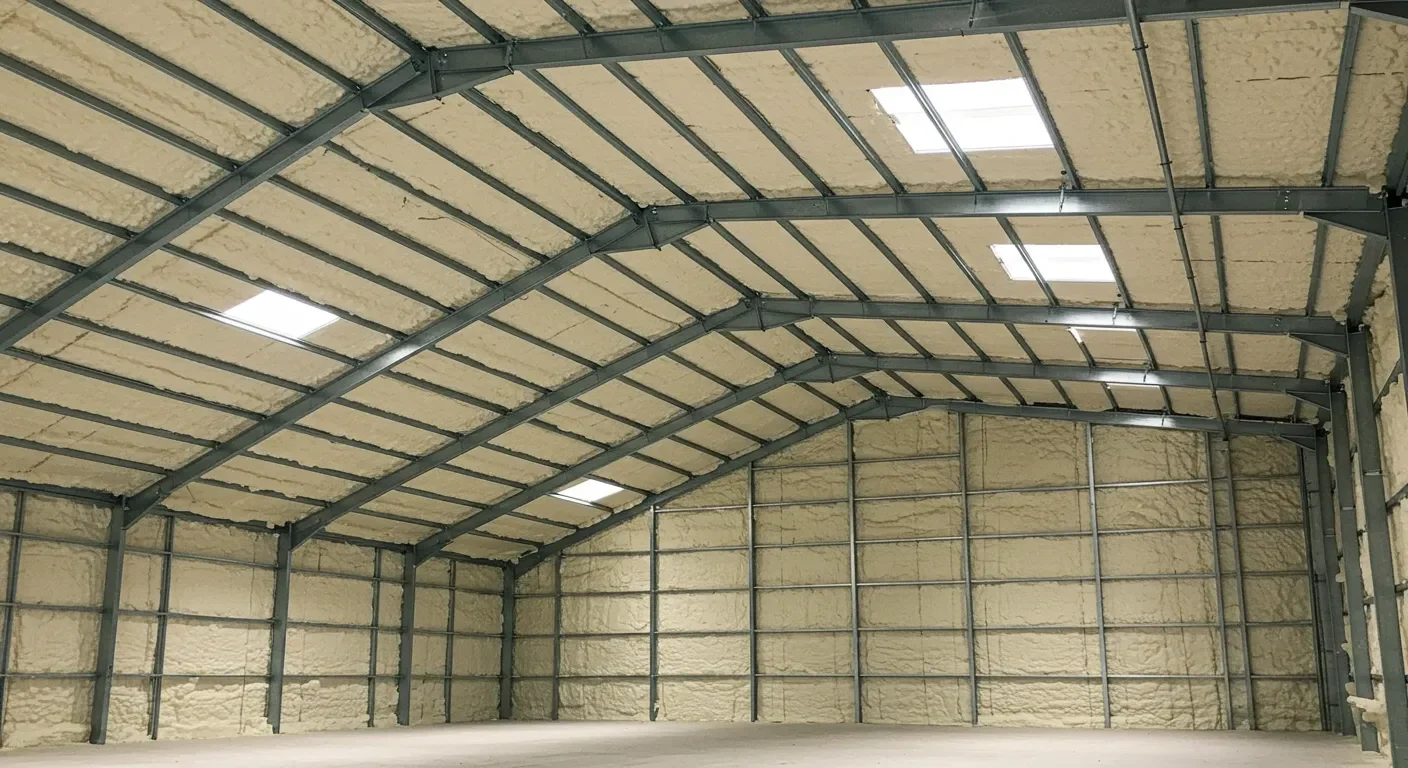
How Residential Insulation Helps Solve Heat Loss Problems in Your Home
Melissa Grant
April 27th, 2026
Heat loss is one of the most significant sources of wasted energy and money in residential homes. When your heating system works overtime to compensate for heat escaping through walls, attics, floors, and foundations, you pay the price on every utility bill. Residential insulation provides the resistance your home needs to slow conductive and convective heat flow, maintaining comfortable indoor temperatures while dramatically reducing energy consumption. Properly installed insulation creates a continuous thermal envelope that addresses heat loss at every vulnerable area of your home, from the attic down to the rim joist and everything in between.
TL;DR
Heat flows through your home via conduction, convection, and radiation until temperature equilibrium is reached, meaning heated air constantly escapes to unconditioned spaces
The attic is responsible for up to 25% of total heat loss in most homes, making it the highest-priority area for insulation upgrades
Closed-cell spray foam delivers R-6.5 to R-7 per inch and also functions as a vapor barrier, making it the superior choice for cold climates
Homeowners can save an average of 15% on heating and cooling costs by air sealing and adding insulation, according to EPA estimates
Insulation that fills building cavities reduces airflow leakage, which provides energy savings beyond what R-value alone predicts
Uninsulated rim joists account for 15% to 20% of total heat loss in typical homes, yet this critical area is often overlooked
Fiberglass batt insulation provides only R-3 to R-4 per inch and cannot air seal, while spray foam can reduce heating costs by 25% to 40%
Understanding Heat Flow in Your Home
To effectively solve heat loss problems, you need to understand how heat moves through your home. According to the Department of Energy, heat flow occurs through three basic mechanisms: conduction, convection, and radiation. Conduction transfers heat through materials themselves, such as when a hot coffee mug conducts warmth through its handle to your hand. Convection moves heat through liquids and gases, which is why warmer air rises and cooler air sinks in your living spaces. Radiant heat travels in straight lines and heats anything solid that absorbs its energy. For more information on R-values and climate recommendations, visit the Department of Energy website.
During winter months, heat flows directly from all heated living spaces to adjacent unheated attics, garages, basements, and the outdoors. Heat also moves indirectly through interior ceilings, walls, and floors wherever temperature differences exist. This constant thermal migration forces your heating system to work continuously, replacing the lost heat around the clock. Without proper insulation acting as a thermal barrier, your home becomes a sieve through which your heating dollars literally leak into the atmosphere.
Where Heat Escapes: Primary Problem Areas
Understanding the specific locations where heat escapes allows you to prioritize insulation improvements for maximum impact. Building science research consistently identifies several critical areas that demand attention.
The Attic: Your Biggest Heat Loss Culprit
The attic represents the single largest source of heat loss in most homes. According to the Department of Energy, a poorly insulated attic can result in 25% of your average heating costs going toward energy that does not even heat your living space. Heat rises naturally, and without adequate insulation between your living areas and the attic, your heating system battles a constant upward flow of escaped warmth.
In climate zones 6 and 7, which include much of the northern United States, the DOE recommends R-60 attic insulation, while zones 4 and 5 require a minimum of R-49 to R-60. Many existing homes have only R-19 to R-38 installed, leaving substantial room for improvement and energy waste.
Walls and Cavities
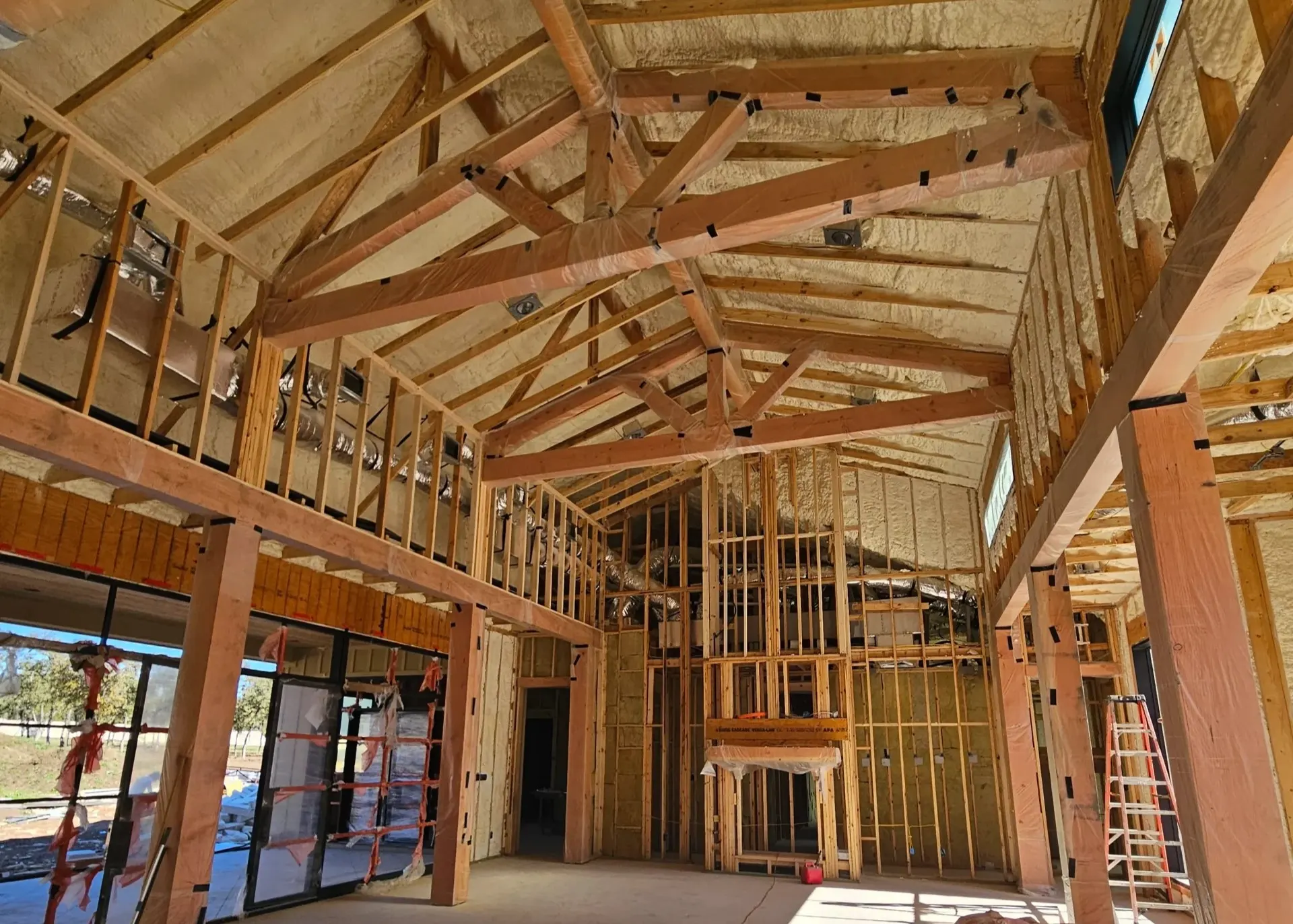
Wall assemblies contain the framing members, sheathing, and cavity insulation that collectively determine thermal performance. Thermal bridging occurs when heat flows more readily through studs, joists, and other Residential insulation building materials than through the insulation itself. This effect can reduce the overall wall R-value by 15% to 40%, depending on framing spacing and configuration.
Rim Joist and Sill Plate
The rim joist, also called the band joist, sits at the intersection of your floor framing and foundation wall. Energy auditors consistently find that uninsulated rim joists account for 15% to 20% of total heat loss in homes, according to research cited by North Dakota State University Extension. This area combines wood framing, concrete foundation, and multiple air leakage paths, making it one of the most significant yet often overlooked sources of energy loss.
Floors Over Unconditioned Spaces
Floors above unconditioned crawl spaces, garages, or unheated basements represent another major thermal weakness. Heat flows downward through these assemblies, cooling your living spaces and warming the areas beneath them. Insulating these floors to R-30 or higher creates a thermal break that keeps your heated air where it belongs.
Comparing Insulation Types: What Works Best
Not all insulation performs equally when it comes to solving heat loss problems. The choice between insulation types affects both thermal performance and air sealing capability.
Spray Foam Insulation
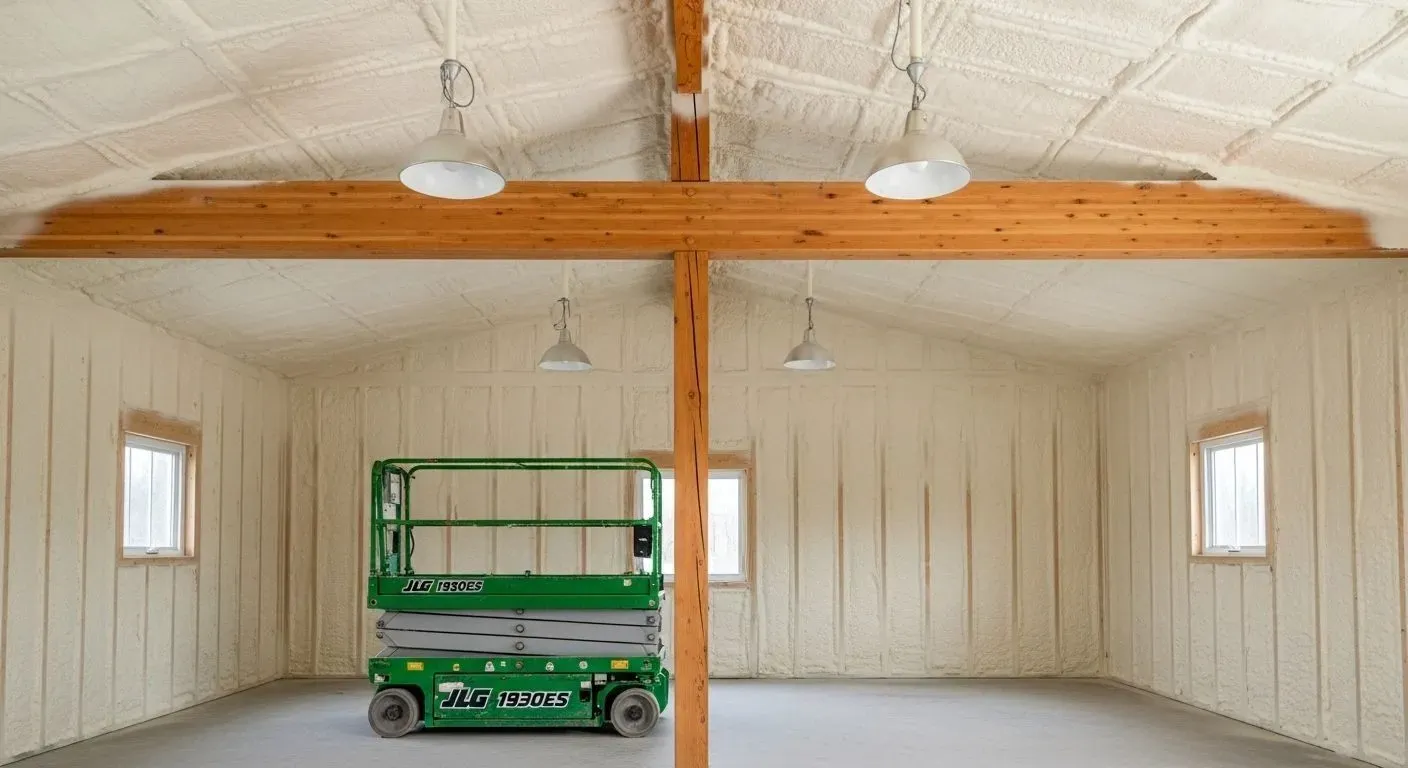
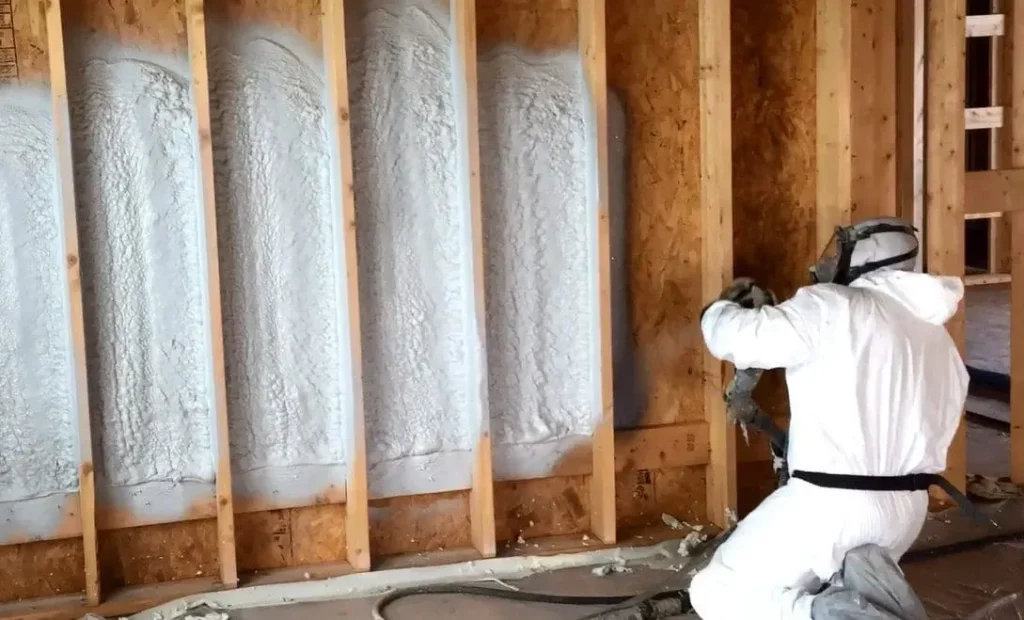
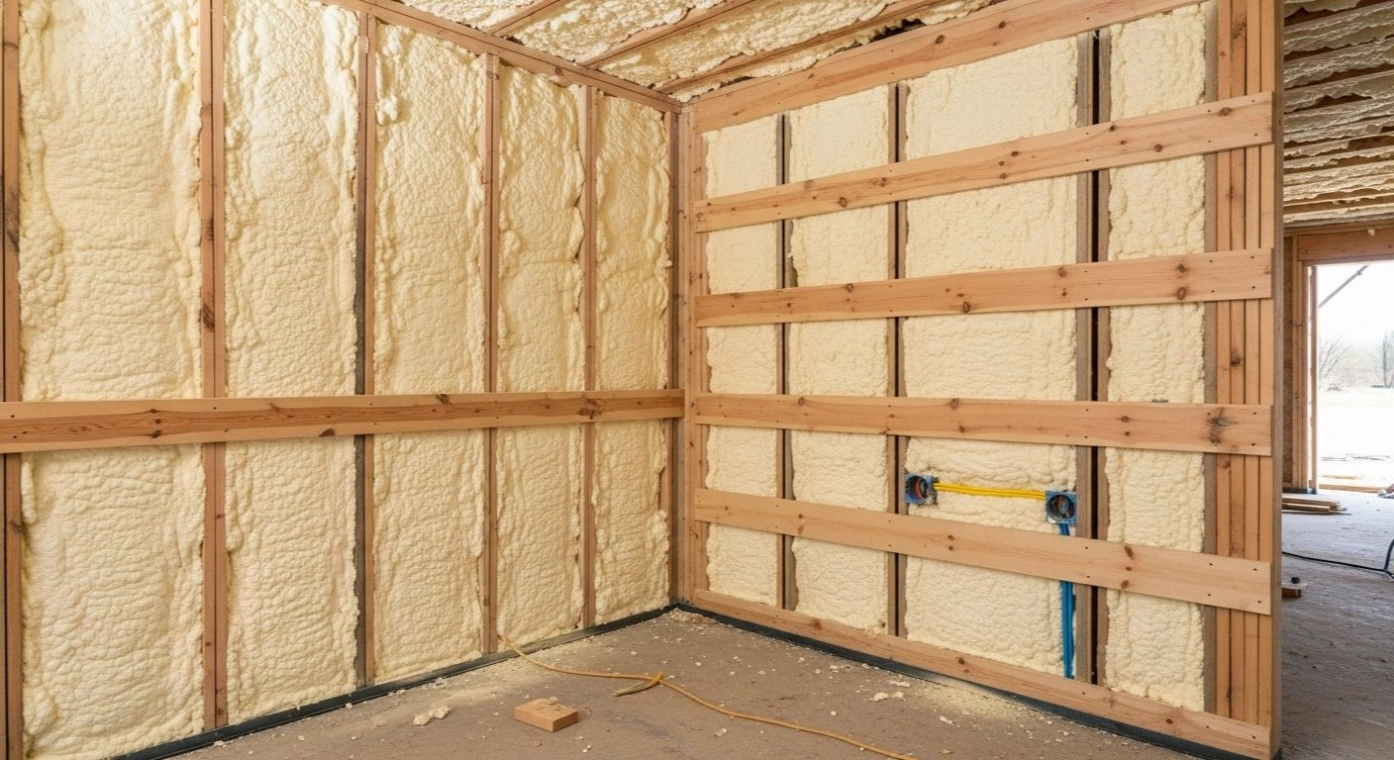
Spray polyurethane foam (SPF) comes in two formulations that perform very differently. Closed-cell spray foam achieves an R-value of R-6.5 to R-7 per inch, while open-cell foam provides R-3.5 to R-3.7 per inch. According to research from the U.S. Department of Energy’s Building America Program, structures with spray foam insulation experience around 35% to 40% better energy efficiency compared to homes with traditional insulation.
The superior performance of closed-cell spray foam stems from multiple factors. First, its higher R-value per inch means more thermal resistance in less thickness. Second, closed-cell foam expands upon application, filling gaps, cracks, and voids that fibrous insulation cannot reach. Third, closed-cell foam with a minimum 2-inch thickness acts as a vapor barrier, eliminating the need for separate moisture control in cold climates.
Fiberglass Batt Insulation
Fiberglass batt insulation remains the most common residential insulation type due to its lower upfront cost. However, it provides only R-3 to R-4 per inch and cannot air seal on its own. Gaps around electrical boxes, plumbing penetrations, and framing members create pathways for air leakage that bypass the insulation entirely. Even when installed carefully, batt insulation leaves thermal bridges where studs and joists penetrate the insulation layer.
Performance Comparison
Insulation Type
R-Value per Inch
Air Barrier
Vapor Barrier
Best Applications
Closed-Cell Spray Foam
R-6.5 to R-7
Yes
Yes (at 2″+ thickness)
Attics, walls, rim joist, crawl spaces
Open-Cell Spray Foam
R-3.5 to R-3.7
Yes
No (vapor permeable)
Interior wall cavities, roof decks
Fiberglass Batt
R-3 to R-4
No
No
Stud bays in conditioned spaces
Blown Fiberglass/Cellulose
R-2 to R-3.5
Partial
No
Wall cavities, attic floor
Why Closed-Cell Foam Excels in Cold Climates
For homes in northern climates, closed-cell spray foam offers distinct advantages that go beyond thermal resistance. Cold climates present specific building science challenges that closed-cell foam addresses comprehensively.
Vapor Barrier Performance
In heating-dominated climates, warm, moist interior air can migrate through wall assemblies and condense within the insulation or sheathing, leading to moisture accumulation, mold growth, and structural damage. The Department of Energy notes that closed-cell SPF of at least 2 inches is not vapor permeable, which means in cold climates, a separate vapor retarder is not needed. This dual performance simplifies construction while providing superior moisture protection.
Structural Reinforcement
Closed-cell foam bonds directly to sheathing and framing, adding structural rigidity to wall and roof assemblies. This characteristic proves particularly valuable in high-wind regions and seismic zones, where building envelope integrity affects overall structural performance.
Space Efficiency
Because closed-cell foam provides a higher R-value per inch, you achieve the target thermal performance with less thickness. This advantage matters in rim joist applications where space constraints limit how much insulation can fit. In attic applications, less thickness means maintaining clearance for ventilation paths or storage.
Real-World Performance Results
Contractors across the country document consistent results when homeowners upgrade to proper insulation levels.
High heating costs, inconsistent room temperatures
Open-cell foam in exterior walls
25% total energy savings, uniform comfort
Montana new construction
Custom home
Meeting strict energy codes
Closed-cell foam entire envelope
Achieved net-zero energy performance
Actionable Strategies for Insulation Contractors
Step 1: Conduct a Comprehensive Energy Assessment
Before recommending solutions, perform a thorough evaluation of the home’s thermal envelope. Use thermal imaging to identify hidden heat loss areas, air leakage pathways, and insulation gaps. Focus first on the attic, then the rim joist, then the walls, and finally the floors based on priority.
Step 2: Prioritize Air Sealing
Air leakage often accounts for more energy loss than inadequate insulation R-value alone. According to EPA estimates, homeowners can save an average of 15% on heating and cooling costs by air sealing their homes. Address the building envelope systematically, starting with the most significant leakage points: ceiling penetrations, rim joist connections, and foundation entries.
Step 3: Specify Proper Insulation Depths
Match insulation products to climate zone requirements from the Department of Energy. For climate zones 6 through 8, specify closed-cell spray foam for rim joist and exterior wall applications. In attic floor applications, blown-in fiberglass or cellulose can achieve the required R-values cost-effectively when paired with proper air sealing.
Step 4: Address Thermal Bridging
Design assemblies that minimize thermal bridging through framing members. Continuous insulation applied to the exterior of wall sheathing, combined with cavity insulation, provides the most complete thermal break. When budget constraints limit continuous exterior insulation, closed-cell foam at interior framing locations reduces bridging effects.
Step 5: Verify Installation Quality
Spray foam applications require proper substrate temperature, moisture content, and mixing ratios to achieve rated performance. Train crews on manufacturer specifications and verify results with post-installation inspection. Fibrous insulation requires careful fitting around obstructions, proper support to prevent settling, and complete coverage without voids or compression.
Factors That Influence Insulation Performance
Multiple variables affect how well insulation performs in actual applications. Understanding these factors helps you set realistic expectations and avoid common pitfalls.
Installation Quality
The most expensive insulation product delivers poor results when installed incorrectly. Gaps, voids, compression, and moisture contamination all reduce the effective R-value. Spray foam must fully cure and bond to substrates. Fibrous insulation must completely fill cavities without excessive packing that reduces loft and R-value.
Moisture Accumulation
Insulation performance degrades when moisture accumulates within or on the material. Wet insulation conducts heat more readily than dry material, and sustained moisture promotes mold growth and wood decay. Vapor barriers and proper ventilation prevent moisture-related performance degradation in most climate conditions.
Temperature and Aging
Most insulation materials experience slight R-value decreases at very cold temperatures and as they age. Spray foam maintains its performance characteristics well over time, while some blown-in fibrous insulations may settle or compact, reducing thickness and thermal resistance.
Thermal Bridging
As discussed earlier, structural framing members that penetrate insulation layers create thermal shortcuts. The overall R-value of an assembly will be somewhat different from the R-value of the insulation itself because heat flows more readily through studs, joists, and other building materials. Continuous exterior insulation reduces this effect significantly.
The Long-Term Value of Proper Insulation
While spray foam insulation carries higher upfront costs than traditional fiberglass, the long-term returns justify the investment for most homeowners. Energy savings of 25% to 40% on heating costs, combined with improved comfort, better air quality, and reduced HVAC wear, deliver payback periods of 5 to 10 years depending on climate and utility rates.
Beyond financial returns, properly insulated homes contribute to environmental sustainability by reducing energy consumption and associated emissions. The Department of Energy estimates that adding insulation to attics, floors, and crawl spaces can save up to 20% on heating and cooling costs or up to 10% on total annual energy bills.
Ready to Solve Your Home’s Heat Loss Problems?
Heat loss through an inadequate thermal envelope costs homeowners hundreds of dollars every year in wasted energy. Our team at Cascadia Spray Foam specializes in comprehensive insulation solutions that address heat loss at every critical area of your home. From attic insulation to rim joist sealing, we provide professional installation that maximizes thermal performance and energy savings.
Contact our experienced team today for a consultation. We will assess your home’s insulation needs and recommend the most effective solutions for your climate, budget, and performance goals. Call (425) 386-3500 or email [email protected] to schedule your assessment.
Frequently Asked Questions
How do I know if my home needs more insulation?
Signs that your home needs additional insulation include high heating and cooling bills, cold floors, drafty rooms, uneven temperatures between rooms, ice dams on the roof in winter, and visible gaps or uncompressed insulation in attic access areas. A professional energy audit with thermal imaging can identify specific deficiency areas.
What R-value do I need for my attic?
Required attic insulation R-values depend on your climate zone. For Climate Zones 4 and 5, target R-49 to R-60. For Zones 6 and 7, aim for R-60. Zone 8 requires R-60 minimum. These levels significantly exceed the R-19 to R-38 found in many under-insulated homes.
Can I add insulation to my walls without removing drywall?
Yes, blown-in insulation can be installed in existing walls through small holes drilled in the exterior sheathing or interior drywall. This approach works best for homes with uninsulated wall cavities. If your walls already contain insulation, removing and replacing it requires drywall access.
Why is closed-cell spray foam better than open-cell for rim joist applications?
Closed-cell spray foam provides a higher R-value per inch (R-6.5 to R-7 versus R-3.5 to R-3.7), acts as a vapor barrier, and bonds directly to substrates to seal air leakage paths. These characteristics make it ideal for rim joist applications where space is limited and moisture protection is critical.
How long does spray foam insulation last?
Spray foam insulation installed properly can last the lifetime of your home. Unlike fibrous insulation, spray foam does not settle, compress, or degrade significantly over time. It maintains its R-value and air-sealing performance for decades when protected from UV exposure and physical damage.
Sources
Department of Energy – Insulation – Government resource explaining how insulation works, R-values, and climate zone recommendations for residential insulation.
ENERGY STAR – Seal and Insulate – EPA program data on energy savings from air sealing and insulation upgrades, including methodology for estimated savings.
I’m Melissa Grant, owner of Cascadia Spray Foam Insulation, with over 10 years of hands-on spray foam experience. I focus on durable insulation solutions, improved comfort and energy efficiency, and excellent customer service.
Spray foam insulation seals building gaps because the foam expands, bonds to the framing, and cures into one airtight layer that follows every angle. Batts and boards can’t hug odd…
Insulation-based temperature control comes down to one job: slowing heat flow so every room gains or loses heat at about the same pace. Fill the weak spots with the right…
Quick answer: Cutting commercial insulation heat loss on a large building means treating the whole envelope as one system. Insulation slows heat moving through walls, roofs, and ceilings. Air sealing…