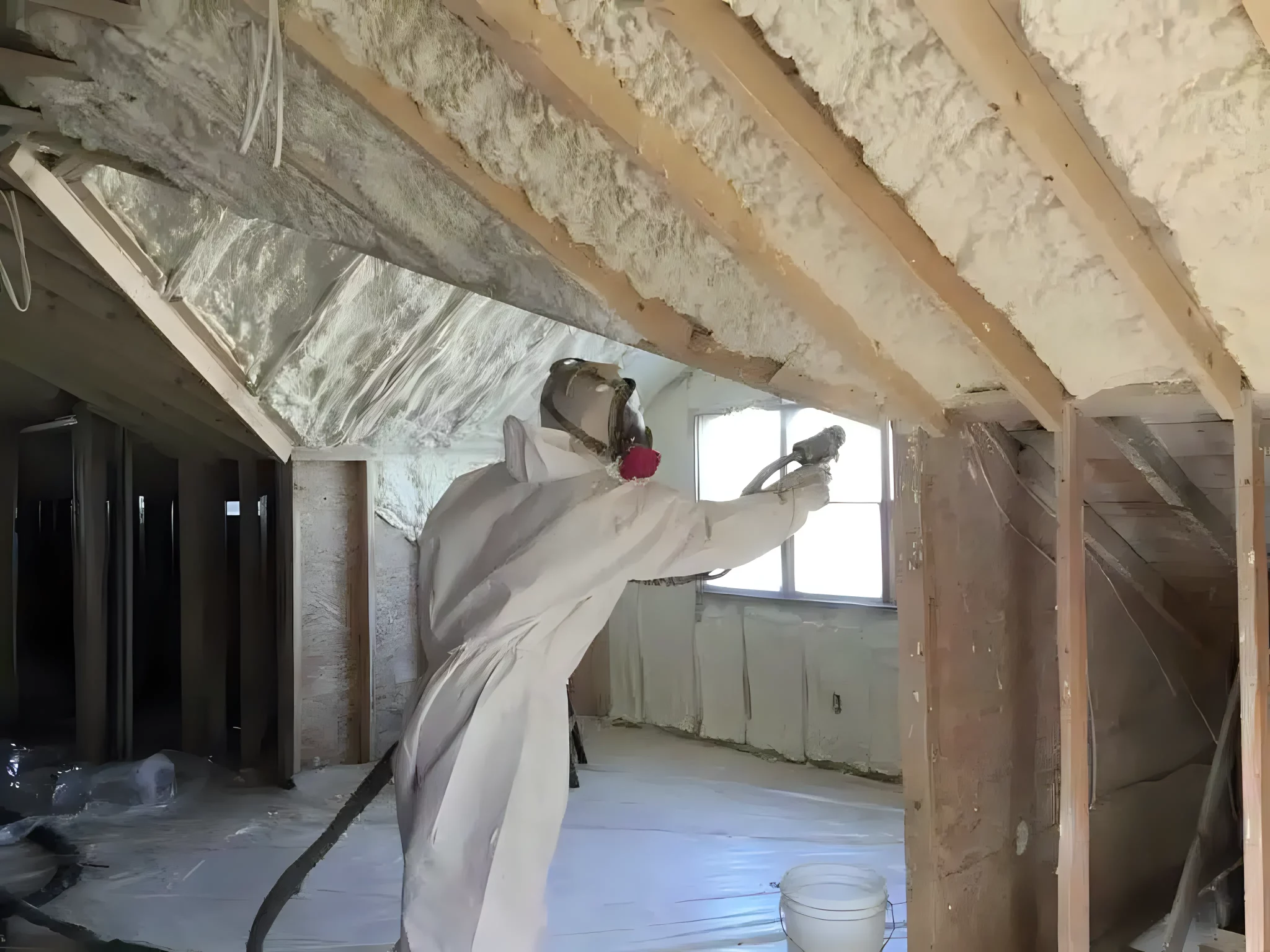
Why is Open Cell Spray Foam Ideal for Interior Walls and Attic Spaces?
Melissa Grant
July 16th, 2026
Choosing the right insulation for your home depends on your specific goals for comfort, sound control, and budget. Open-cell spray foam is a high-performance insulation material that expands significantly upon application, making it a specialized choice for interior walls and attic spaces where flexibility and air sealing are priorities. While closed-cell options provide structural reinforcement and higher R-values per inch, the open-cell variety excels in residential applications because it creates a seamless air barrier at a lower price point. Its soft, sponge-like texture allows it to move with the natural settling of a home, ensuring that gaps do not form over time. For Seattle homeowners, this material provides a balanced approach to energy-efficient homes by addressing thermal loss and acoustic transmission simultaneously.
TL;DR
Superior Air Sealing: Open-cell foam expands up to 100 times its liquid volume, filling every nook, cranny, and electrical box to stop drafts.
Acoustic Dampening: The flexible, porous structure of open-cell material absorbs mid-to-high frequency sound waves, making it the go-to for interior wall insulation.
Cost Efficiency: It generally costs 30% to 50% less than closed-cell foam while still providing a complete air seal.
Moisture Management: Its vapor-permeable nature allows wood components in attics to dry out if a roof leak occurs, preventing hidden rot.
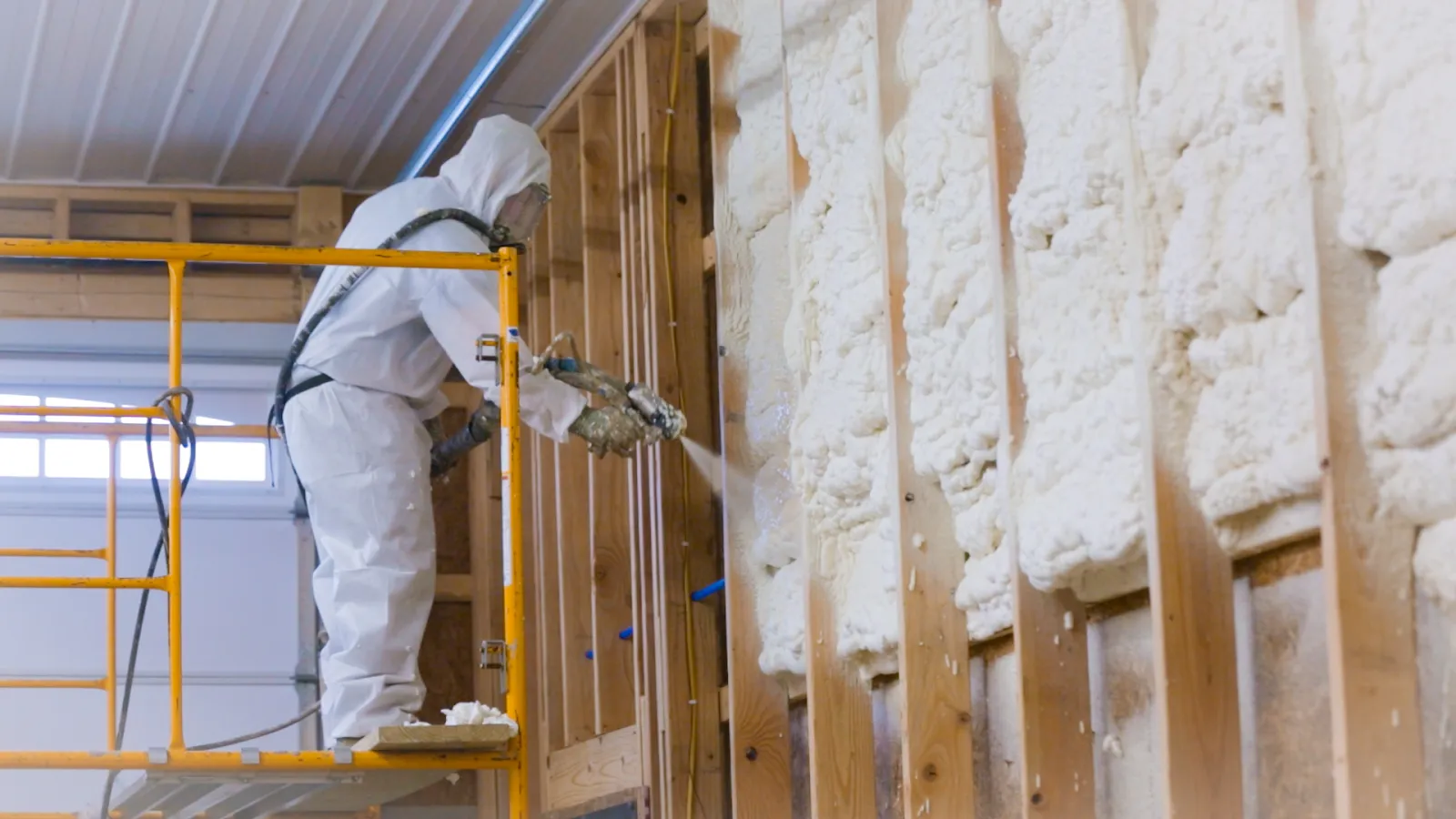
Installation Speed: Our team can often insulate an entire attic or a set of interior walls in a single day, reducing project timelines.
Long-Term Stability: Unlike fiberglass batts, spray foam does not sag, settle, or lose its R-value over decades of use.
Understanding the Mechanics of Open Cell Spray Foam
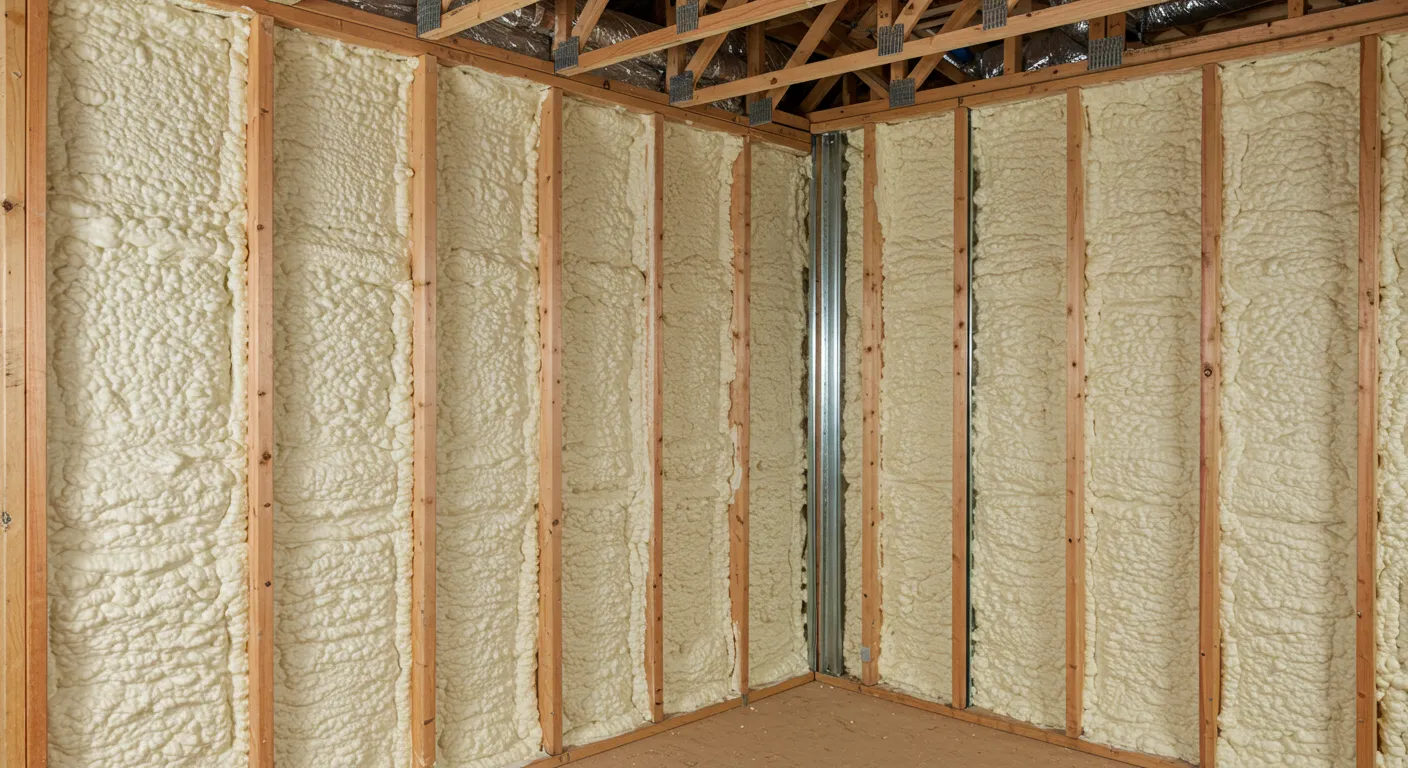
Open-cell foam is characterized by “open” cells that are not completely encapsulated. This design makes the foam softer and more pliable than its closed-cell counterpart. When we apply it, the chemical reaction causes a massive expansion that pushes the material into the smallest gaps in your framing.
This expansion is critical for attic insulation. In a typical Seattle home, the attic is a primary source of energy loss. Traditional materials like cellulose or fiberglass often leave small gaps around recessed lights, plumbing stacks, and chimney flues. Because open-cell spray foam is a spray-applied liquid, it creates a custom-fit gasket around these obstructions. This process, known as air sealing, is often more important for energy savings than the R-value itself, as it prevents the “stack effect” where warm air escapes through the top of the house.
According to research shared by Wikipedia, the ability of spray foam to provide both insulation and an air barrier in a single step is what differentiates it from traditional fibrous insulation.
Why the Attic Benefits from Open Cell Technology
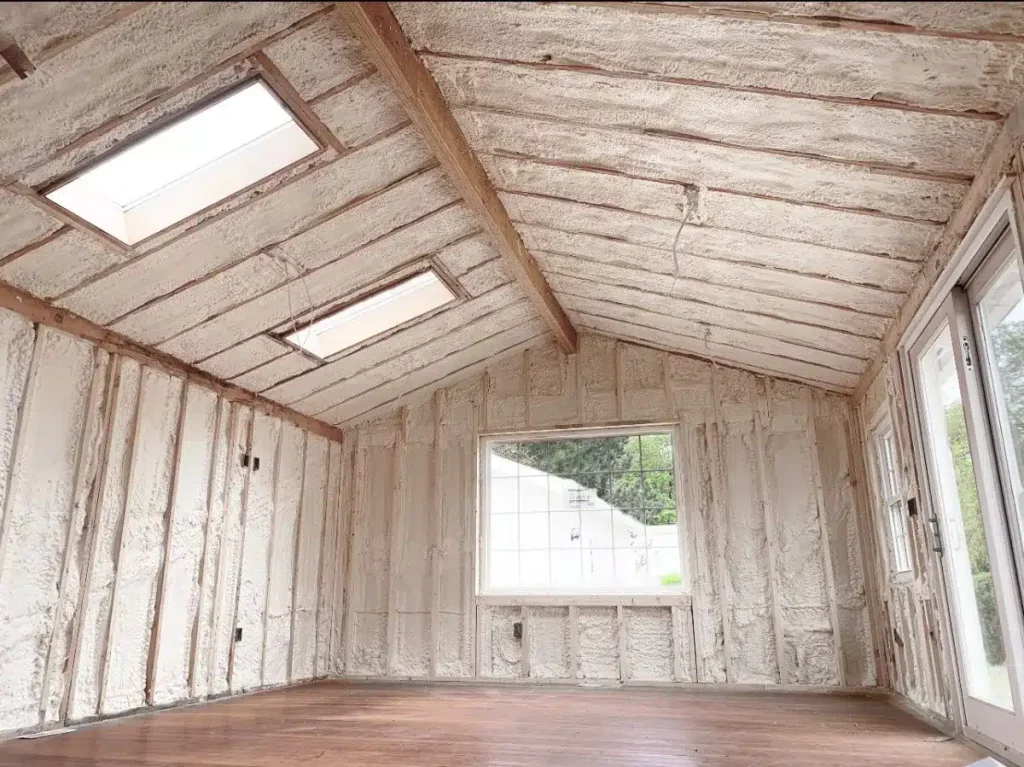
The attic is the thermal lid of your home. During the winter, heat rises and attempts to escape. During the summer, the sun beats down on the roof, radiating heat into your living spaces. Using open-cell spray foam on the underside of the roof deck (the rafters) brings the attic into the “conditioned space” of the home.
Feature
Open Cell in Attics
Impact on Homeowner
Expansion Rate
High (fills deep rafter cavities)
Eliminates all thermal bridging and air leaks.
Permeability
High (allows water to pass)
Reveals roof leaks early so you can fix them before wood rot starts.
Weight
Very Light
Does not add significant load to the roof structure.
Air Sealing
Excellent
Reduces HVAC workload by up to 15-40%.
By moving the insulation to the roofline, your HVAC ducts (if located in the attic) no longer have to work in extreme temperatures. This creates a more stable climate throughout the house. The U.S. Department of Energy notes that properly sealing and insulating a home can lead to significant reductions in monthly utility bills, particularly in regions with varying seasonal temperatures.
The Role of Interior Wall Insulation in Modern Comfort
While most people focus on the exterior “envelope” of the house, interior wall insulation is essential for privacy and comfort. Open-cell foam is a premier choice for these areas for two main reasons: soundproofing and temperature zoning.
Acoustic Performance
If you have a home office, a nursery, or a media room, sound dampening is vital. The open, interconnected cells of this foam act as a labyrinth for sound waves. As noise travels through the wall, the foam absorbs the energy, significantly reducing the transmission of voices, television audio, and footsteps. This creates a much quieter living environment.
Temperature Zoning
In larger homes, different rooms may have different heating and cooling needs. Insulating interior walls helps maintain the temperature in a specific room without it “bleeding” into the hallway or adjacent spaces. This is especially useful for guest rooms that are rarely used or master suites where you might prefer a cooler sleeping environment.
Comparison: Open Cell vs. Closed Cell for Residential Use
Factor
Open Cell Foam
Closed Cell Foam
R-Value per Inch
Approx. 3.5 – 3.8
Approx. 6.0 – 7.0
Cost
More Affordable
Higher Investment
Density
0.5 lb per cubic foot
2.0 lbs per cubic foot
Best Use Case
Interior walls, attics, ceilings
Basements, crawlspaces, metal buildings
Flexibility
Highly Flexible
Rigid/Structural
Evaluating Energy-Efficient Homes in Seattle
Building or retrofitting energy-efficient homes in the Pacific Northwest requires a strategy that accounts for moisture and moderate-to-cold temperatures. Spray foam insulation provides a monolithic barrier that resists the damp air typical of the Puget Sound area.
Because open-cell foam is breathable, it is often preferred in residential wood-frame construction. If moisture ever finds its way into the wall cavity, the foam allows it to dissipate rather than trapping it against the wooden studs. This breathability is a key factor in long-term building health. The International Code Council (ICC) provides guidelines on how spray foam should be integrated into building envelopes to meet modern fire and safety codes while maximizing thermal performance.
Recommendations by Audience
For New Home Builders
If you are in the framing stage, this is the perfect time to install High-Performance Open Cell Spray Foam in your interior walls. Focus on bathrooms, laundry rooms, and bedrooms to ensure a quiet, high-end feel for the finished home. It is a cost-effective upgrade that adds significant resale value.
For Retrofit Homeowners
If your attic currently has old, dusty fiberglass batts, removing them and applying spray foam to the roof deck can transform your home’s comfort. This is the best approach if you want to use your attic for storage or if your upstairs bedrooms are always too hot in the summer.
For Architects and Designers
Specify open-cell foam for complex architectural designs. Its ability to adhere to curved surfaces and irregular framing makes it much more effective than rigid board or batt insulation in custom modern homes.
Signs You’ve Found the Right Approach
Determining if open-cell spray foam is the right strategy for your property involves looking at the specific needs of your space. You know you are on the right track when:
Transparency in R-Value: Your provider explains that while open-cell has a lower R-value per inch, the total air seal provides better real-world performance than high R-value batts that allow air leaks.
Focus on Sound: The plan specifically addresses noise-sensitive areas of the home, utilizing the foam’s acoustic properties.
Moisture Strategy: There is a clear discussion about vapor permeance and how the insulation will interact with Seattle’s humidity and rain.
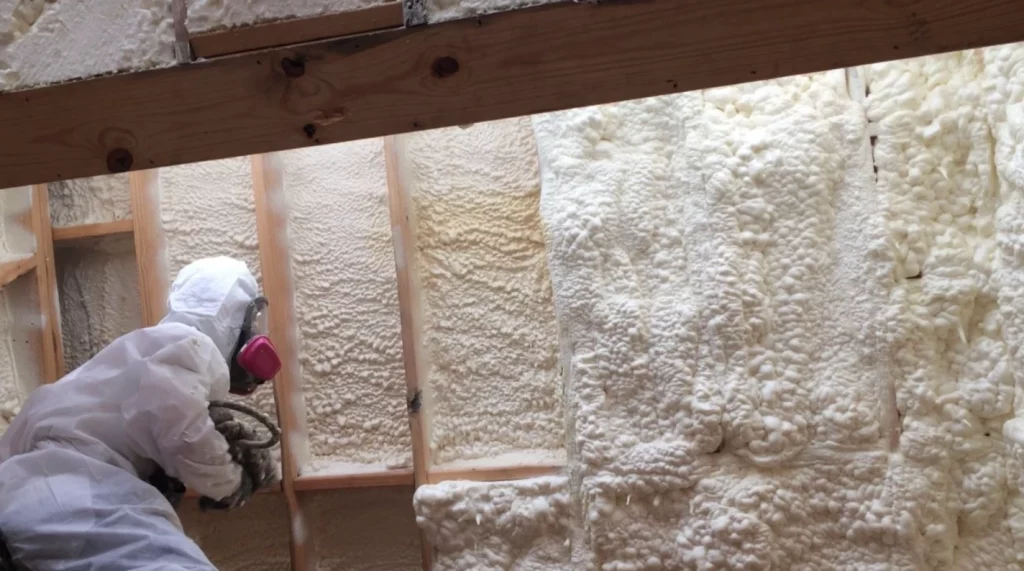
Site Preparation: A professional team will emphasize the importance of covering windows, floors, and finished surfaces before the spray process begins.
Partner with Cascadia Spray Foam Insulation of Seattle
As the local experts in high-performance building envelopes, we specialize in helping homeowners achieve maximum comfort and efficiency. Our team understands the unique climate challenges of the Seattle area and provides precision installation for both new construction and existing homes. Whether you need to quiet a noisy home office or lower your winter heating bills, we have the technical expertise to get the job done right.
Experience the difference that professional air sealing and premium insulation can make in your daily life.
FAQs
Is open-cell spray foam waterproof?
No, open-cell foam is vapor-permeable and can absorb water if submerged, which is why it is used for interior cavities and attics rather than below-grade applications.
Does the foam have a strong odor after installation?
There is a brief off-gassing period during application, but with our proper ventilation protocols, you can typically return to your home within 24 hours.
Can I install open-cell foam over existing fiberglass?
We recommend removing old insulation first to allow the spray foam to adhere directly to the substrate and ensure a perfect air seal.
Will open-cell foam attract pests or rodents?
Spray foam provides no food value to pests and, by sealing gaps, it actually helps prevent insects and rodents from entering your home.
How long does open-cell spray foam last?
When installed correctly, it is designed to last the lifetime of the structure without degrading, sagging, or needing replacement.
I’m Melissa Grant, owner of Cascadia Spray Foam Insulation, with over 10 years of hands-on spray foam experience. I focus on durable insulation solutions, improved comfort and energy efficiency, and excellent customer service.
Selecting the right commercial insulation for warehouses comes down to five considerations: thermal performance matched to your climate zone, air sealing, moisture and vapor control, code compliance, and installation quality.…
Residential insulation addresses heat transfer through attic assemblies by slowing all three ways heat moves: conduction through framing and drywall, convection through air leaks, and radiation from a hot roof…
Open-cell spray foam provides useful coverage across irregular areas wherever a cavity is too deep, too uneven, or too cluttered with framing, wiring, and pipes for batts or rigid boards…