Complete Guide to Residential Insulation for Homeowners in South Hill, WA
Melissa Grant
April 27th, 2026
If you’ve ever walked across a cold floor in January, noticed your energy bills spike during a heat wave, or felt that draft sneaking in through your walls, you already understand why insulation matters. Your home in South Hill, WA deserves a thermal envelope that works with you, not against you, through our Pacific Northwest seasons.
This guide exists because we have spent years helping homeowners across the region understand exactly how insulation functions, which options make sense for different areas of their homes, and how to avoid the mistakes that cost money and comfort. Whether you’re building a new home, upgrading an older one, or simply trying to understand what’s happening in your attic, you’ll find everything you need right here.
The information below covers the fundamentals of insulation science, walks through each material type with honest pros and cons, explains regional code requirements specific to Washington State, and provides actionable strategies you can implement today. By the time you finish reading, you’ll have the knowledge to make confident decisions about your home’s thermal performance.
What you’ll learn in this guide:
How insulation actually works and what R-value means for your home
The five main insulation types available and where each performs best
Washington State energy code requirements for South Hill homeowners
Step-by-step guidance for assessing and upgrading your insulation
Common problems that undermine insulation performance and how to fix them
Measuring the return on your insulation investment
Future trends and technologies shaping residential insulation
Understanding How Insulation Works
The Science Behind Thermal Resistance
Insulation doesn’t create heat. It slows down the movement of heat, keeping your home’s warmth inside during winter and blocking outdoor heat during summer. This simple concept affects everything from your monthly utility bills to how comfortable your family feels year-round.
Heat naturally travels toward colder areas through three mechanisms: conduction (through solid materials), convection (through air movement), and radiation (through electromagnetic waves). Quality insulation primarily targets conduction and convection by trapping tiny pockets of air within its structure. Still air conducts heat much more slowly than solid materials, which is why residential insulation materials work by capturing air in place.
When you understand this principle, you can see why proper installation matters as much as the material itself. Gaps, compression, and moisture infiltration all compromise the still air that makes insulation effective.
What R-Value Actually Means
R-value measures a material’s resistance to heat flow. The higher the R-value, the better the insulation resists heat transfer. A single inch of closed-cell spray foam typically provides R-6 to R-7, while the same thickness of fiberglass batts might deliver only R-3 to R-4.
According to the Department of Energy, R-value is a measure of insulation’s ability to resist heat traveling through it, with higher R-values indicating greater thermal performance. When shopping for insulation or evaluating proposals from contractors, R-value becomes your primary comparison tool.
However, R-value alone doesn’t tell the whole story. Installation quality, air sealing, and moisture management all affect real-world performance. Two materials with identical R-values can perform very differently depending on how they are installed and what conditions they face.
Why Climate Zone Matters for South Hill, WA
South Hill falls within Climate Zone 4C under the International Energy Conservation Code classification. This matters because regional building codes specify minimum insulation levels based on local weather patterns, heating and cooling loads, and humidity conditions.
In Zone 4C, winter temperatures regularly drop below freezing, and summers bring moderate heat with occasional spikes. Your home needs insulation that handles both heating season demands and summer cooling loads effectively. Materials that perform well in warmer climates may not provide optimal value here, and vice versa.
The Pacific Northwest also presents unique humidity challenges. Our region experiences significant rainfall and moisture exposure that can degrade certain insulation types if they aren’t properly protected. Understanding these local conditions helps you select materials that will perform reliably for decades.
R-Value Requirements for Washington State
Washington’s Energy Code Standards
Washington State has adopted some of the stricter energy codes in the nation, reflecting the state’s commitment to energy efficiency and environmental goals. For residential construction, the current Washington State Energy Code (WSEC) establishes minimum insulation requirements that exceed baseline International Energy Conservation Code levels.
For attics and ceilings in Climate Zone 4C, the code typically requires a minimum of R-49 insulation. This requirement increases if you have cathedral ceilings or limited attic space, sometimes jumping to R-60 or higher. Floor insulation requirements depend on whether your home has a conditioned basement, crawl space, or slab foundation.
Wall insulation requirements specify either cavity insulation combined with continuous insulation, or higher R-value cavity insulation alone. The prescriptive path for wood-frame walls in Zone 4C typically requires R-20 cavity insulation plus R-5 continuous insulation, or equivalent combinations that achieve the same overall thermal performance.
Recommended R-Values by Location in Your Home
Different areas of your home face different thermal challenges. A basement wall experiences different conditions than an attic ceiling, which sees the most extreme temperature swings throughout the year.
According to ENERGY STAR guidance, retrofitting existing wood-framed buildings in Zone 4C typically requires R-60 insulation in the attic if the space is currently uninsulated, or R-49 if you already have 3-4 inches of existing insulation. For floors above unconditioned spaces like garages or crawl spaces, Zone 4C requires approximately R-30 insulation.
When exterior siding is removed for renovation, the code presents an opportunity to add continuous insulation beneath the new siding. In Zones 4 through 8, this typically means adding R-5 to R-10 insulative sheathing, which significantly improves thermal performance by reducing thermal bridging through wall studs.
Meeting Code Without Compromising Performance
Meeting minimum code requirements gives you a legal foundation, but most experienced contractors and homeowners aim higher. Minimum code represents the floor, not the target for optimal comfort and efficiency. The incremental cost of adding extra insulation during construction or renovation is typically much lower than upgrading later.
For new construction, we typically recommend specifying insulation levels that exceed code minimums by 15-20 percent. This investment pays back through lower utility bills from day one and provides a buffer for future code changes that might require higher levels anyway.
For existing homes undergoing renovation, adding continuous exterior insulation during siding replacement offers one of the best cost-benefit ratios available. The wall sheathing itself costs relatively little, but the thermal improvement it provides lasts the life of the building.
Types of Residential Insulation Explained
Fiberglass Batts and Rolls
Fiberglass remains the most common insulation type in American homes, and for good reason. It delivers reasonable thermal performance at an accessible price point, and most contractors know how to install it correctly.
Fiberglass batts typically provide R-3.1 to R-3.4 per inch of thickness. A standard 3.5-inch wall cavity filled with fiberglass achieves approximately R-13, while a 5.5-inch cavity reaches about R-21. In attics, where thickness isn’t constrained by framing, you can stack multiple layers to achieve higher R-values.
Advantages:
Lower material cost than most alternatives
Widely available from any building supply retailer
DIY-friendly installation for experienced homeowners
Non-combustible and chemically inert
Does not absorb moisture or rot
Disadvantages:
Lower R-value per inch means thicker installations required
Performance degrades significantly if insulation becomes wet
Gaps between batts and compression around wiring reduce effectiveness
Air can move through loose-fill fiberglass, reducing performance
May require separate vapor barriers in our climate
Fiberglass performs adequately when installed carefully with no gaps, compression, or moisture exposure. In our experience, the majority of insulation problems we encounter in existing homes stem from improper fiberglass installation rather than material deficiencies.
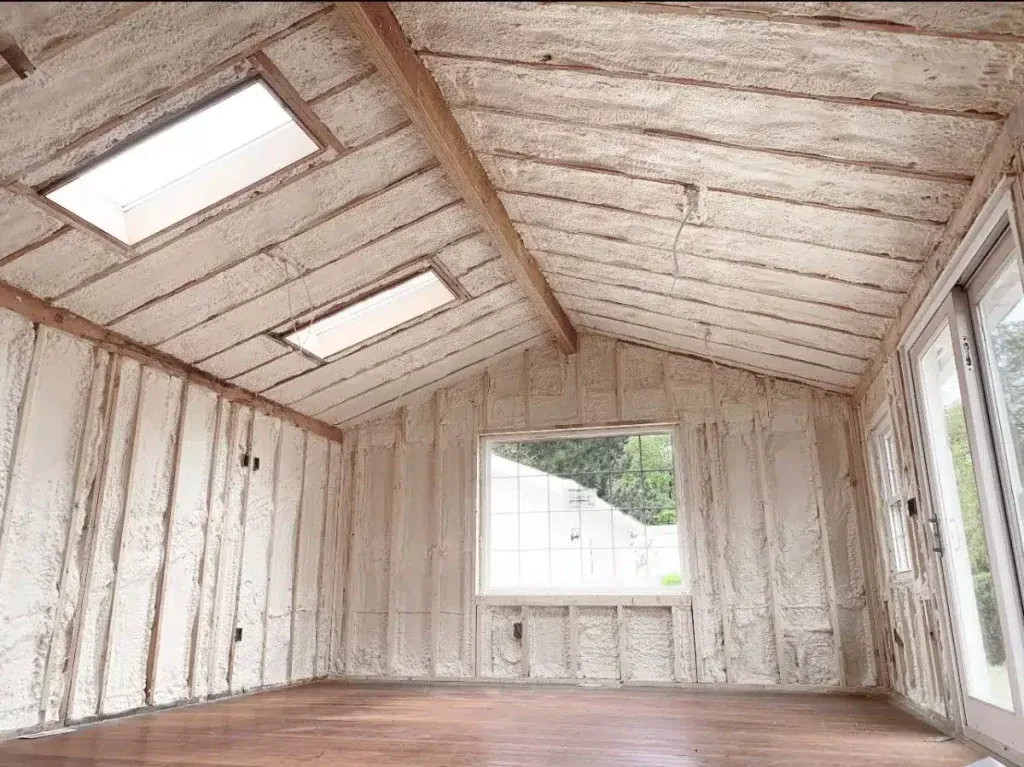
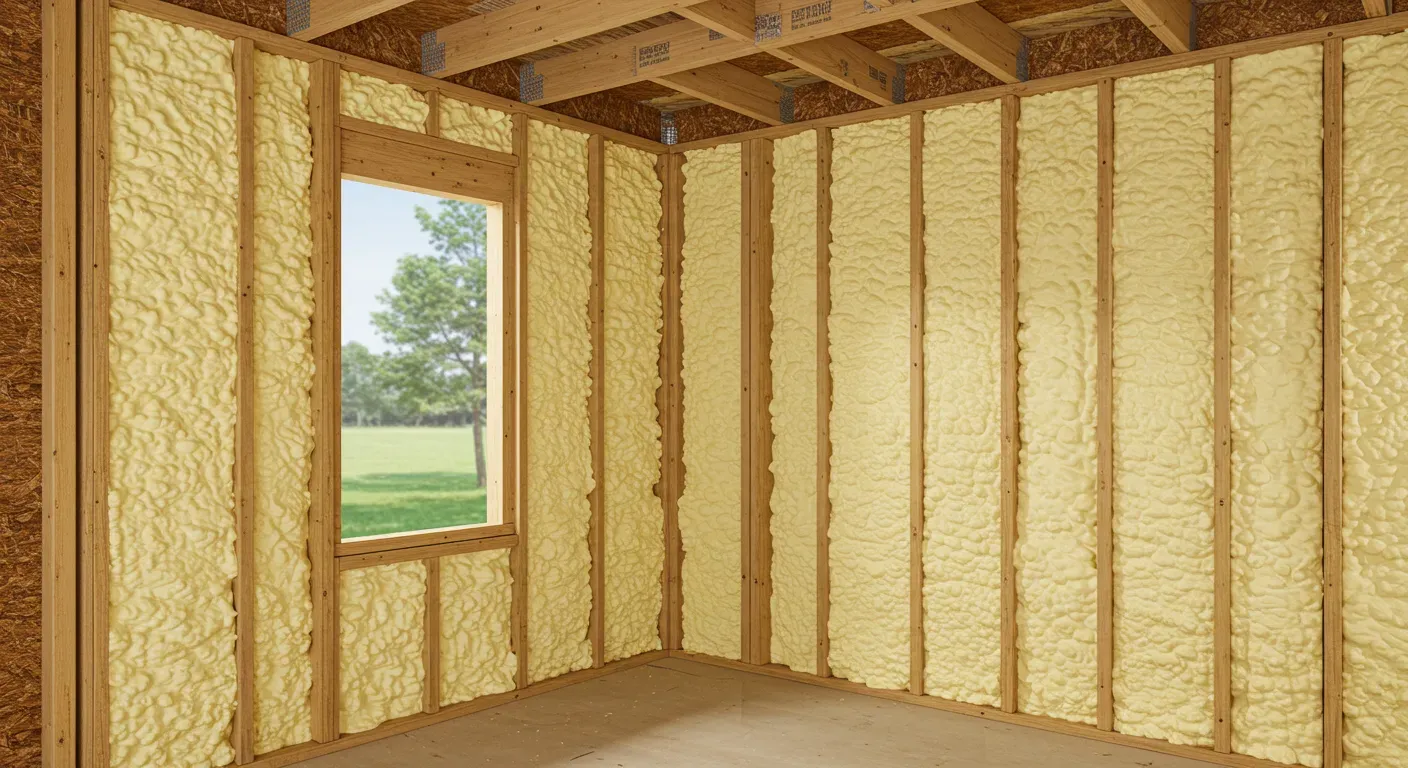
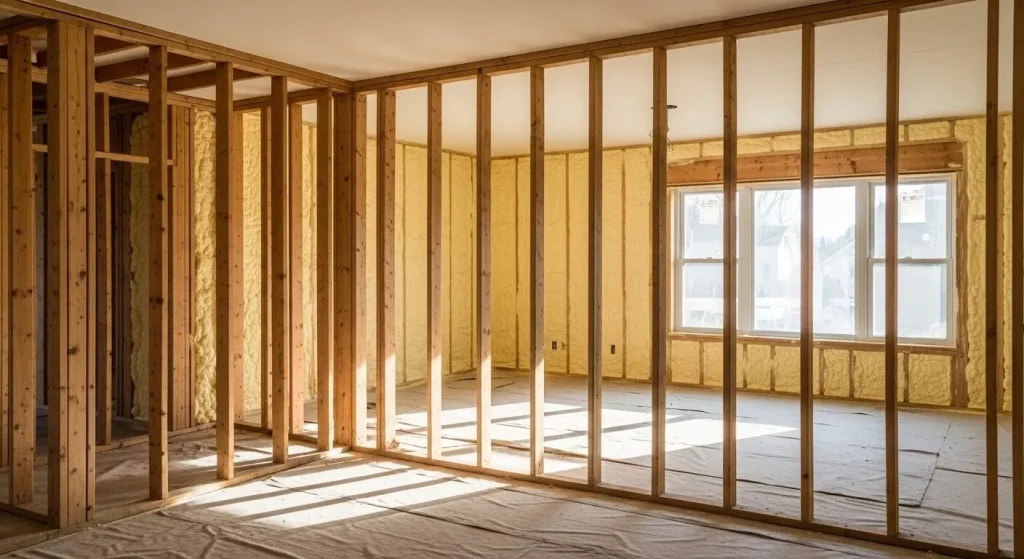
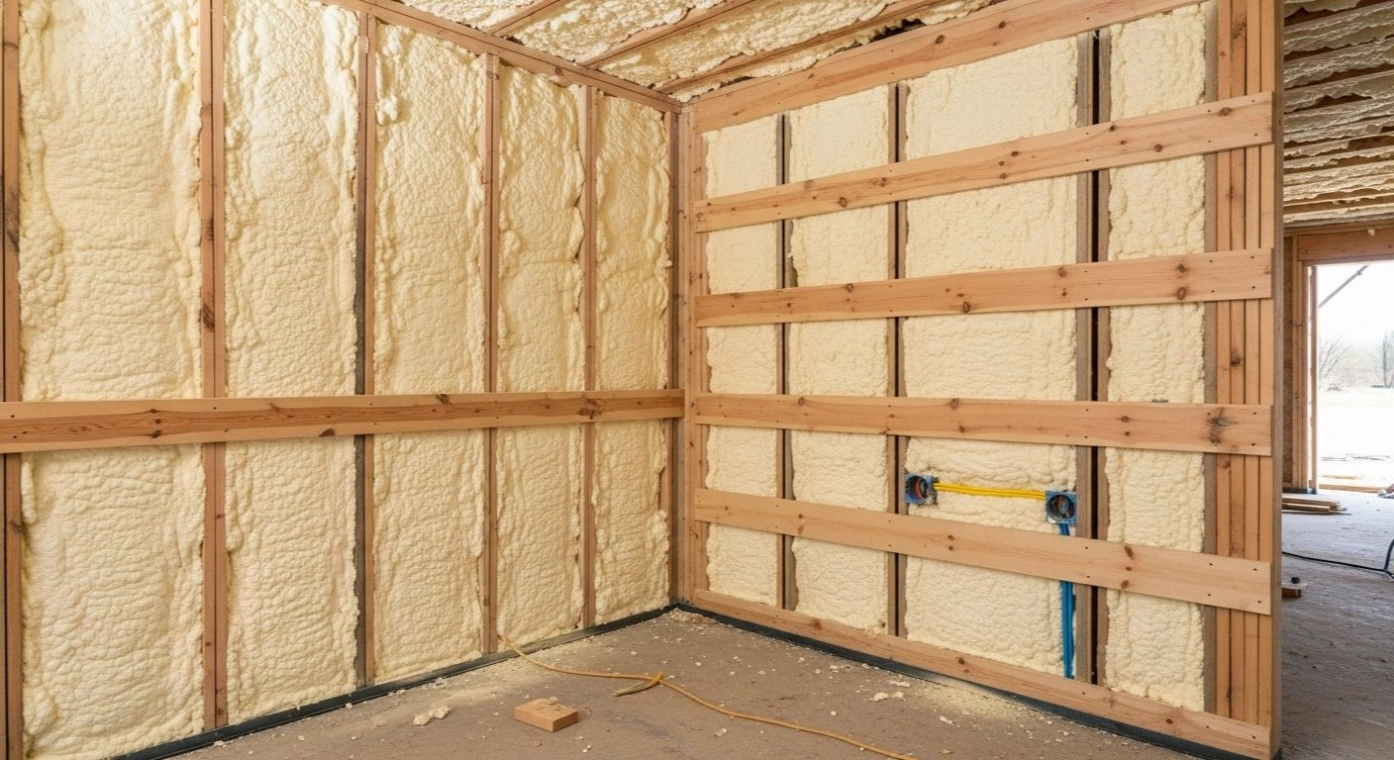
Spray Foam Insulation
Spray foam represents the premium option in residential insulation, offering both higher R-values and air sealing in a single application. Two main variants exist, each suited to different applications.
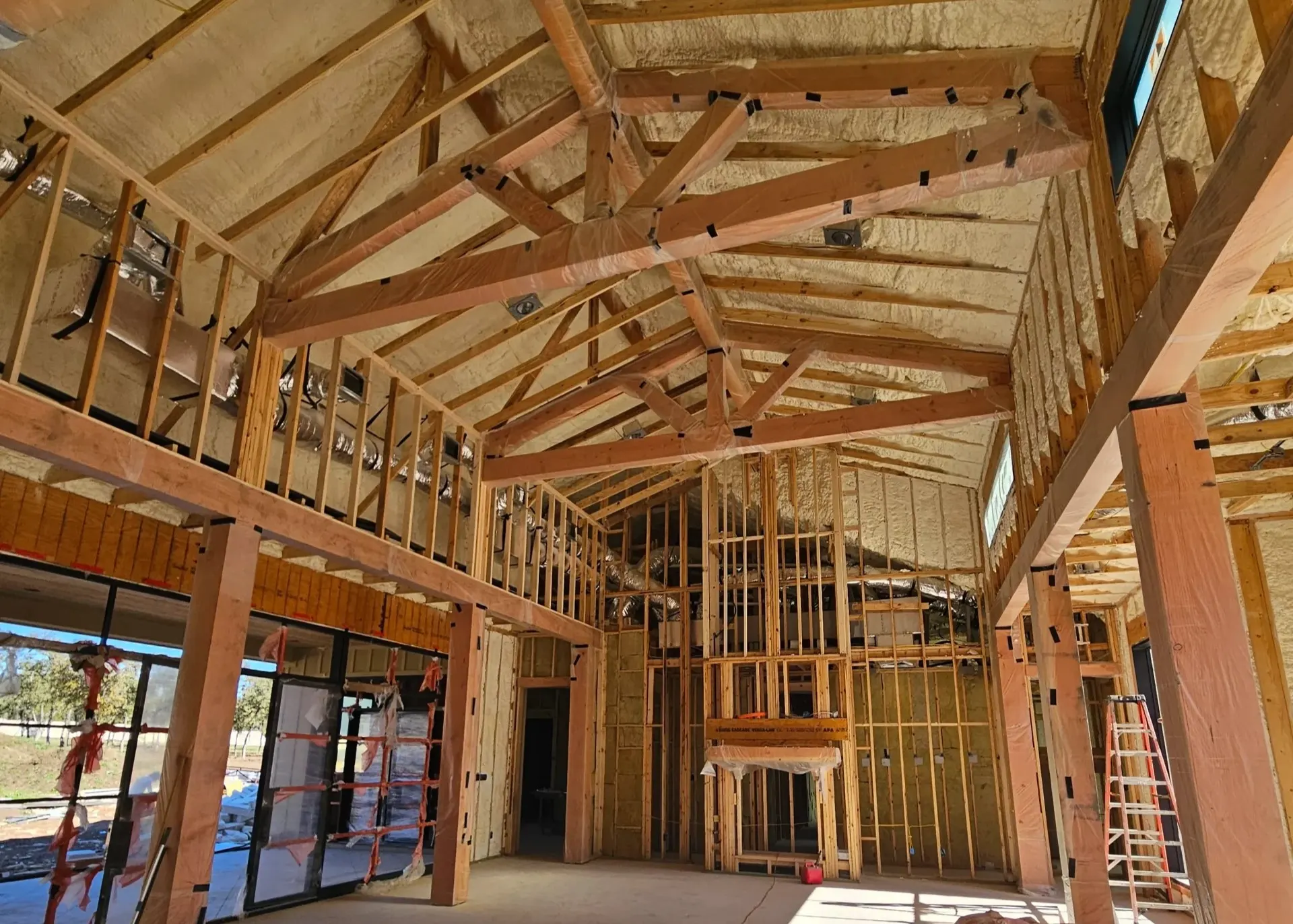
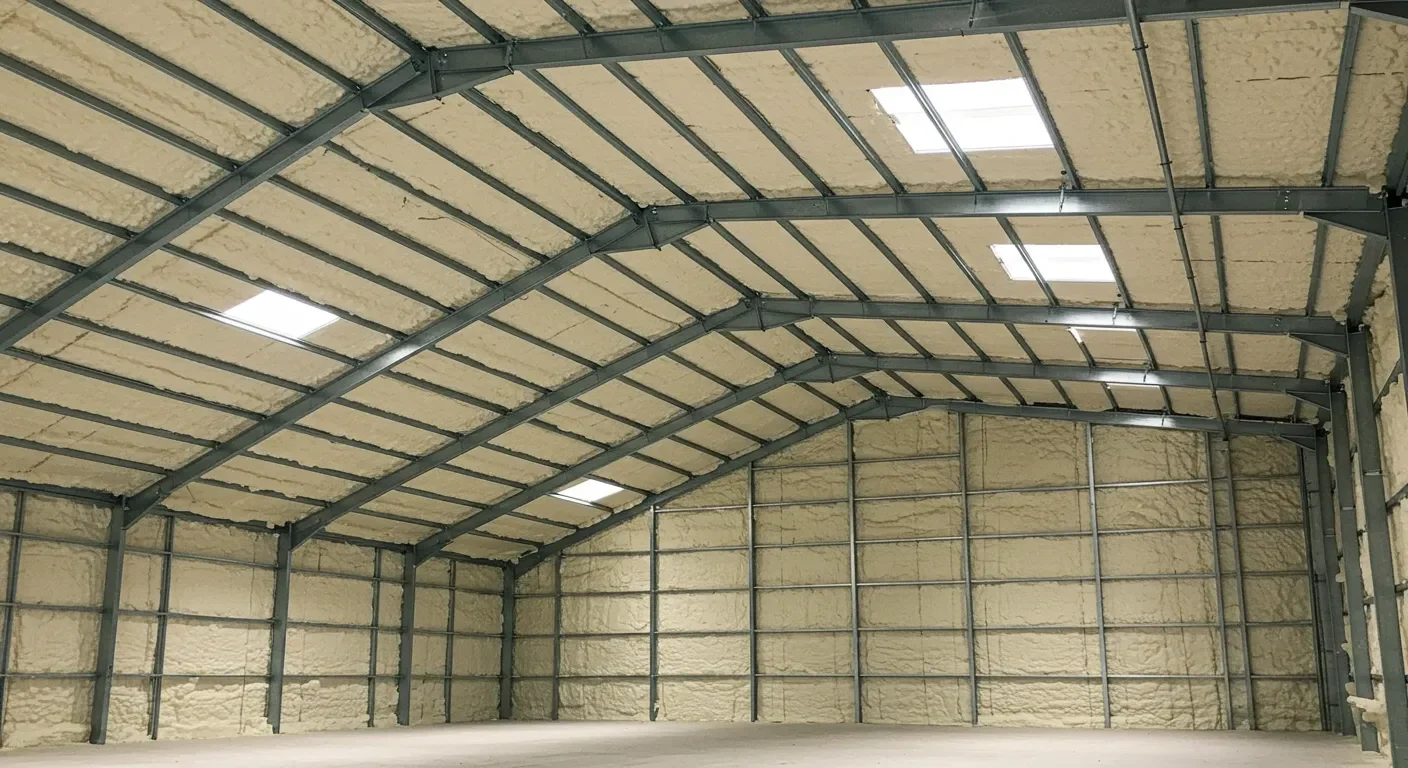
Open-cell spray foam provides R-3.5 to R-4 per inch and expands significantly during application, filling cavities completely and sealing air leaks along the way. This lighter foam allows moisture vapor to pass through, which can be beneficial in some wall assemblies but requires careful design consideration.
Closed-cell spray foam delivers R-6 to R-7 per inch, making it the highest R-value insulation material commonly available. Its rigid structure adds structural strength to walls and roofs, and its closed-cell nature blocks moisture transmission entirely. This makes it particularly valuable in our humid Pacific Northwest climate.
Advantages:
Highest R-value per inch of any residential insulation
Creates effective air seal when properly applied
Fills hard-to-reach cavities and irregular spaces completely
Adds structural rigidity to building assemblies
Resists moisture penetration (closed-cell)
Long-term performance stability
Disadvantages:
Higher material and installation costs
Requires professional installation with specialized equipment
Contains isocyanates that require careful handling during application
Off-gassing concerns during curing period require occupant evacuation
May require thermal barriers or covering for fire safety
Research from the National Renewable Energy Laboratory indicates that homes with spray foam insulation consistently demonstrate lower air infiltration rates and improved thermal performance compared to traditional insulation approaches. The air sealing capability often provides more value than the R-value improvement alone, particularly in older homes with numerous air leakage paths.
Blown-In and Loose-Fill Insulation
Blown-in insulation works by blowing loose insulation material into wall cavities, attic floors, or other enclosed spaces. This approach excels at filling irregular cavities and spaces with existing obstructions that would make batts difficult to install.
Common materials include cellulose (made from recycled paper treated with fire retardants), fiberglass, and mineral wool. Cellulose typically provides R-3.2 to R-3.8 per inch, while fiberglass loose-fill offers R-2.2 to R-2.7 per inch.
Advantages:
Fills cavities completely, even with wires, pipes, and other obstructions present
Effective for insulating existing walls without removing drywall
For attic floor applications, blown-in insulation often represents the best value proposition. The material can be installed quickly over existing wiring and fixtures, providing good coverage at reasonable cost. Just ensure adequate depth to achieve target R-values, and check periodically for settling that might require additional material.
Rigid Foam Insulation
Rigid foam boards provide high R-values in thin profiles, making them valuable for applications where space is constrained. Common types include expanded polystyrene (EPS), extruded polystyrene (XPS), and polyisocyanurate (polyiso).
R-values for rigid foam range from R-4 to R-8 per inch depending on type, with polyiso offering the highest performance per inch. XPS typically provides R-5 per inch, while EPS ranges from R-4 to R-4.5 per inch.
Advantages:
High R-value in thin profiles
Provides continuous insulation that eliminates thermal bridging
Water-resistant in most formulations
Can serve as both insulation and sheathing
Available with various facing materials for specific applications
Disadvantages:
Higher cost per board foot than fibrous alternatives
Panel joints create thermal bridges if not carefully detailed
Some formulations may off-gas volatile organic compounds
XPS and certain polyiso products use blowing agents with environmental concerns
Requires careful detailing at edges and penetrations
Rigid foam shines in specific applications: basement wall interior insulation, exterior continuous insulation under siding, and rim joist cavities. Using it as a substitute for cavity-fill insulation in standard wall cavities rarely makes economic sense.
Cellulose Insulation
Dense-pack cellulose insulation differs from loose-fill in that it is installed at higher densities, which minimizes settling and provides better air sealing. This approach has gained significant popularity in recent years as homeowners seek better performance from traditional materials.
Advantages:
Made from recycled materials with lower embodied energy
Excellent sound-dampening properties
Dense-pack application resists settling
Treated with fire retardants for safety
Lower cost than spray foam
Disadvantages:
Can absorb moisture, requiring vapor barrier considerations
Fire resistance depends on proper treatment and installation
In our experience, dense-pack cellulose works extremely well in wall cavities when installed by crews with proper training and equipment. The material performs comparably to fiberglass batts on a pure R-value basis, but the denser fill provides better air sealing and resists settling that creates performance degradation over time.
Insulation Comparison Table
Insulation Type
R-Value per Inch
Air Sealing
Moisture Handling
Cost Level
Best Applications
Fiberglass Batts
R-3.1 to R-3.4
Poor
Requires separate VB
Low
Standard wall and attic cavities
Open-Cell Spray Foam
R-3.5 to R-4
Good
Vapor permeable
High
Wall cavities, rim joists
Closed-Cell Spray Foam
R-6 to R-7
Excellent
Moisture blocking
Highest
High-performance envelopes, moisture-prone areas
Blown-In Fiberglass
R-2.2 to R-2.7
Moderate
Requires careful design
Moderate
Attic floors, existing walls
Dense-Pack Cellulose
R-3.2 to R-3.8
Good
Requires careful design
Moderate
Wall cavities, sound isolation
Rigid Foam (Polyiso)
R-6 to R-8
Moderate
Water resistant
Moderate-High
Continuous exterior insulation, foundations
Where to Insulate in Your South Hill Home
Attic and Ceiling Insulation
Your attic represents the single most impactful area to insulate. Heat rises, and without adequate attic insulation, your heating system works overtime every winter while your cooled air escapes upward every summer.
For South Hill homes, we recommend targeting R-60 insulation in the attic floor, which exceeds code minimums and provides a meaningful improvement in comfort and efficiency. If you have an unconditioned attic with access, you can add insulation on top of existing material relatively easily. Blown-in fiberglass or cellulose works well here, as the loose material fills around rafters and cross-bracing that would complicate batt installation.
If you use your attic for storage, you have two strategic options. The first involves installing insulation at the attic floor level and using a raised floor system with insulation underneath. The second involves insulating the roof rafters directly and creating a conditioned attic space. Both approaches work, but they require different installation strategies and have different cost implications.
Expert Tip: Before adding attic insulation, address air sealing in the attic itself. Penetrations for lights, ducts, and chimneys often leak significant air into the attic space. Sealing these leaks before insulating typically provides greater performance improvement than the insulation alone.
Wall Insulation
Walls present the most challenging insulation situation in existing homes because accessing the cavities often requires invasive work. Signs that your walls need attention include cold interior surfaces, uneven temperatures between rooms, and high energy bills relative to square footage.
For homes with inadequate wall insulation, several approaches exist. Drill-and-fill dense-pack cellulose or fiberglass reaches the interior of wall cavities through holes in the exterior sheathing or interior drywall. This works well when the walls are otherwise in good condition, but it requires patching and painting afterward.
When renovation allows, removing interior drywall to access cavities provides the opportunity for dense-pack or spray foam installation, along with the chance to add continuous exterior insulation that significantly improves overall wall performance.
For new construction or major renovations, we recommend spray foam or dense-pack insulation combined with continuous exterior rigid foam. This approach dramatically reduces thermal bridging through studs and provides superior air sealing.
Foundation and Basement Insulation
Foundation insulation requirements depend on whether your basement is conditioned space. If you heat your basement, it should be insulated to the same standard as your walls. If your basement remains unconditioned but connects to living space through a stairwell or door, the band rim joist area requires careful attention.
Rim joist cavities (the space between floor joists at the foundation top) often represent a major source of heat loss in homes with basements. These narrow cavities get ignored during construction and develop air leakage paths over time. Closed-cell spray foam or rigid foam cut to fit work well here, with spray foam providing superior air sealing in the irregular cavities.
Interior basement wall insulation requires careful vapor barrier consideration. In our climate, basements often experience moisture migration from the earth, and trapping that moisture against concrete can lead to mold problems. Rigid foam with sealed joints, followed by a properly detailed interior finish, usually provides the safest approach.
Crawl Space Insulation
Homes with crawl spaces present unique challenges. Vented crawl spaces historically were built with floor insulation and open vents to the exterior, but building science now strongly favors conditioned crawl spaces with insulation at the foundation walls.
For vented crawl spaces, floor insulation remains the primary strategy, but it must be accompanied by proper vapor barriers and ventilation to prevent moisture accumulation. This approach has significant performance limitations because the soil beneath the crawl space remains cold, and air moves through vents seasonally.
Conditioned crawl spaces, where the area is sealed and optionally heated, allow insulation on the foundation walls. This approach eliminates the cold floor problem by keeping the crawl space at or near interior temperatures. It also prevents moisture issues that plague vented crawl spaces in our humid climate.
Expert Tip: If your home has a vented crawl space with insulation under the floor, check that the insulation remains in contact with the subfloor and hasn’t fallen away from the floor over time. Gravity and wind can dislodge batt insulation, creating gaps that compromise performance significantly.
Common Insulation Problems and Solutions
Air Leakage Through Gaps and Cracks
Insulation materials resist conductive heat transfer, but air movement through gaps carries heat far more effectively. A wall with perfect R-30 insulation and air leaks can perform worse than a wall with R-13 insulation and no leakage.
Common leakage paths include penetrations for wiring, plumbing, and HVAC; gaps around windows and doors; gaps between framing members and sheathing; and general construction joints where different assemblies meet. These leaks often go unnoticed because they hide behind walls and under insulation.
The solution involves air sealing before or during insulation installation. Caulking, spray foam, and specialized air sealing products address different gap sizes and locations. A complete air sealing strategy costs relatively little compared to insulation itself and provides immediate improvements in comfort and efficiency.
Thermal Bridging Through Framing
Wood studs conduct heat significantly faster than insulation, creating thermal bridges that reduce overall wall performance. A 2×4 wall with R-13 cavity insulation and wood studs actually delivers approximately R-9.5 effective R-value because heat bypasses the insulation through the studs.
Steel studs create even worse thermal bridging. A standard steel stud wall might achieve only R-5 effective R-value despite R-13 cavity insulation, because steel conducts heat so efficiently.
The solution for new construction involves continuous insulation that covers studs entirely, eliminating the bridge path. For existing walls, the options are more limited, but adding exterior continuous insulation during renovation provides meaningful improvement.
Moisture Damage and Mold
Moisture can compromise insulation performance dramatically and create unhealthy indoor conditions. Sources include interior humidity that condenses on cold surfaces, ground moisture migrating through foundations, and roof or plumbing leaks.
When insulation gets wet, it loses effectiveness and can damage surrounding materials. Cellulose and fiberglass absorb water, while spray foam resists it. However, no insulation product solves moisture problems caused by other building failures.
Addressing moisture requires controlling sources first: fixing leaks, managing interior humidity, improving ventilation, and ensuring proper drainage away from foundations. Once sources are controlled, insulation can perform as designed.
Insulation Compression and Gaps
Batts installed around obstacles get compressed, reducing thickness and R-value. Batt insulation that fills a 3.5-inch cavity but gets compressed to 2 inches provides R-9 instead of the intended R-13. The compressed material also can create gaps elsewhere as installers force it around pipes and wires.
Gaps develop when batts don’t fill cavities completely, when settling occurs in loose-fill materials, or when insulation gets removed for maintenance and not replaced properly. These gaps provide direct pathways for heat transfer that bypass insulation entirely.
Prevention involves careful installation by experienced workers, proper support for loose-fill materials, and quality control inspection after installation. Remediation requires identifying the gaps and adding material or replacing sections as needed.
Measuring Success and ROI
Energy Savings You Can Expect
According to the Environmental Protection Agency, homeowners can save an average of 15% on heating and cooling costs by air sealing their homes and adding insulation to recommended levels. This figure represents an average across all climate zones and home types, so your actual savings may be higher or lower depending on your starting point.
Independent research confirms insulation upgrades reduce energy use in buildings significantly. Studies of schools and commercial buildings document average energy reductions of 7-9% from insulation improvements alone. For residential applications with older, underinsulated homes, the percentage savings can be substantially higher.
The most dramatic savings typically come from attic insulation upgrades in homes with little or no existing insulation. Moving from R-19 to R-60 in an attic can cut heating costs substantially, particularly in colder climates like ours. Wall insulation improvements provide somewhat lower percentage savings because walls typically represent a smaller heat transfer area than attics.
Payback Period Calculations
To estimate payback period, divide the net cost of insulation improvements (after incentives and tax credits) by the annual energy savings. A $3,000 attic insulation upgrade that saves $400 annually provides a 7.5-year payback, which compares favorably with most home improvements.
Several factors affect payback calculations. Higher utility rates improve economics, as do colder climates with longer heating seasons. Starting insulation levels matter enormously: adding R-20 to a wall with R-0 saves far more than adding R-20 to a wall with R-13.
Non-energy benefits also affect value. Improved comfort, reduced drafts, better moisture control, and increased property value all add to the economic case for insulation investment. While these benefits are harder to quantify, they often exceed the energy savings in importance to homeowners.
Incentives and Tax Credits
Federal tax credits for insulation and energy-efficient building envelope improvements have been available through various programs. Washington State also offers utility incentives through local utilities participating in efficiency programs. These incentives can substantially reduce net project costs.
Our team stays current on available incentive programs and can advise on eligibility during your consultation. Programs change frequently, so checking with us or with your utility provider for current options before beginning work makes sense.
Your Insulation Implementation Roadmap
Step 1: Assess Your Current Situation
Before spending money on insulation, understand what you have and where you stand. A professional energy assessment provides the most complete picture, including blower door testing to identify air leakage and thermal imaging to locate insulation gaps.
For a DIY assessment, you can inspect accessible areas yourself. In your attic, measure existing insulation depth and note any gaps, compression, or damage. In your basement or crawl space, check foundation insulation condition and identify any missing material. Look for signs of moisture problems that need addressing before insulating.
Review your utility bills to establish baseline energy consumption. Compare your home’s consumption to similar homes in your area if possible. High bills relative to expectations often indicate insulation or air sealing problems worth addressing.
Step 2: Prioritize Projects by Impact
With limited budgets, focusing on the highest-impact improvements first makes sense. In most homes, attic insulation and air sealing provide the best returns, followed by wall insulation and foundation work.
Consider both energy savings and comfort improvements when prioritizing. Some projects improve comfort dramatically without providing proportional energy savings, but they still represent good investments in quality of life.
Our team can provide a prioritized recommendation based on your specific home, budget, and goals. We will walk through your home with you, identify all insulation opportunities, and explain the expected performance improvement and cost for each.
Step 3: Choose Materials and Approaches
Selecting insulation involves balancing performance requirements, budget constraints, and specific application needs. No single insulation type works best everywhere, and the optimal approach often combines different materials in different locations.
For attic floors, blown-in fiberglass or cellulose typically provides the best value. For wall cavities, spray foam or dense-pack cellulose both perform well. For rim joists and hard-to-reach areas, spray foam often wins despite higher cost because it fills voids and seals air leaks simultaneously.
Expert Tip: Don’t make material decisions based on price alone. The installed cost per R-value, combined with air sealing benefits and long-term performance stability, often favors premium materials despite higher upfront costs.
Step 4: Plan for Professional Installation
While some insulation work can be DIY projects, professional installation typically provides better results for most applications. Spray foam absolutely requires professional installation, and blown-in insulation benefits significantly from experienced applicators who understand density requirements and coverage verification.
Professional installers bring specialized equipment, understand code requirements, and can address unexpected conditions that arise during work. They also typically provide warranties that DIY work lacks.
When hiring professionals, verify licensing and insurance, check references, and get detailed proposals that specify material R-values, coverage areas, and any preparatory work needed. Our team provides detailed proposals that explain exactly what we will do and why.
Future Trends in Residential Insulation
High-Performance Envelope Standards
Building codes continue trending toward higher insulation requirements, driven by both environmental policy and proven cost-effectiveness of efficiency investments. Future codes will likely require R-60 or higher in attics across more climate zones and may mandate continuous exterior insulation on all wall assemblies.
Net-zero energy homes, designed to produce as much energy as they consume, push envelope performance even further. These homes typically feature R-80 or higher attics, R-40 or higher walls, and highly efficient windows and air sealing. The insulation industry continues developing products optimized for these demanding applications.
New Materials and Technologies
Vacuum insulated panels offer R-values of R-30 or higher per inch, but remain expensive and fragile for residential use. Aerogel insulation provides similar high performance in flexible forms suitable for some residential applications. These materials will likely see expanded use as manufacturing costs decline.
Smart insulation systems that respond to temperature and humidity conditions remain largely conceptual but hold promise for future applications. Phase-change materials that store and release heat energy offer interesting possibilities for load management in grid-interactive buildings.
Sustainability and Environmental Impact
Embodied carbon, the emissions associated with manufacturing building materials, receives increasing attention. Cellulose insulation, made from recycled paper, offers relatively low embodied carbon. Spray foam manufacturing processes continue improving efficiency, though the chemical components raise some environmental concerns.
Life cycle assessment tools help builders and homeowners compare environmental impact across insulation options. As carbon pricing spreads and environmental awareness grows, these considerations likely will influence material selection more heavily.
Key Takeaways
Insulation Fundamentals: R-value measures thermal resistance, with higher values indicating better performance. South Hill’s Climate Zone 4C requires specific minimum insulation levels, but exceeding code minimums typically provides better long-term value.
Material Selection: Each insulation type has appropriate applications. Spray foam offers highest R-value and air sealing but at higher cost. Fiberglass and cellulose provide good value with proper installation. Select materials based on specific application needs, not price alone.
Strategic Implementation: Focus on attic insulation and air sealing first, as these typically provide best returns. Address moisture problems before insulating. Professional installation generally provides better results than DIY work.
Frequently Asked Questions About Residential Insulation
How do I know if my home needs more insulation?
Signs of inadequate insulation include cold interior walls and floors, drafty rooms, uneven temperatures between areas of your home, and utility bills that seem high for your climate zone. A professional energy assessment with thermal imaging can identify specific insulation gaps.
Which insulation type provides the best value for attics?
Blown-in fiberglass or cellulose typically provides the best value for attic floor applications, offering good R-value at moderate cost with relatively quick installation. The specific choice depends on your existing conditions and performance goals.
Is spray foam worth the extra cost?
For many applications, yes. Spray foam provides both insulation and air sealing in one application, which often delivers greater performance improvement than the R-value improvement alone. It performs particularly well in rim joists, wall cavities, and problem areas with irregular shapes or obstructions. The payback period varies by application and should be calculated for your specific situation.
Does wall insulation require removing drywall?
Not necessarily. Drill-and-fill techniques allow installation of dense-pack insulation into existing wall cavities through holes in exterior sheathing or interior walls. However, if you are already renovating, opening walls allows for spray foam or dense-pack installation plus continuous exterior insulation for superior performance.
How long does insulation last?
Properly installed insulation should last the life of your home. However, performance can degrade due to settling (loose-fill materials), moisture damage, or compression. Periodic inspection helps identify problems before they cause damage or discomfort.
Are there incentives available for insulation upgrades?
Federal tax credits, state programs, and utility incentives have been available periodically. Programs change frequently. Check with your utility provider and our team for current options before beginning your project.
Putting Your Insulation Strategy into Action
You now have everything you need to understand insulation, evaluate your home, and make informed decisions about upgrades. The information above provides a complete foundation for insulation planning, whether you are building new, renovating, or simply improving an existing home.
The most important action is to start with an accurate assessment of your current situation. Without knowing what you have, you cannot know what you need. We offer professional assessments that identify insulation levels, air leakage, and moisture issues throughout your home.
From there, prioritize projects based on impact and budget. Attic insulation and air sealing typically provide the best returns and can be accomplished relatively quickly. Wall and foundation insulation often requires coordination with other renovation work but provides lasting value.
Select materials based on application needs rather than price alone. The cheapest insulation is rarely the most cost-effective when performance and longevity are considered. We can help you evaluate options and select the approach that provides best value for your specific situation.
Need Expert Guidance?
Our team brings years of hands-on experience helping homeowners across the South Hill region improve their home performance. We provide honest assessments, detailed proposals, and professional installation in that delivers lasting results.
Whether you need a complete envelope upgrade or simply want to understand your insulation options in South Hill, we are here to help. Reach out via email at [email protected] or call us directly at (425) 386-3500 to discuss your project and receive personalized recommendations for your home.
I’m Melissa Grant, owner of Cascadia Spray Foam Insulation, with over 10 years of hands-on spray foam experience. I focus on durable insulation solutions, improved comfort and energy efficiency, and excellent customer service.
Spray foam insulation seals building gaps because the foam expands, bonds to the framing, and cures into one airtight layer that follows every angle. Batts and boards can’t hug odd…
Insulation-based temperature control comes down to one job: slowing heat flow so every room gains or loses heat at about the same pace. Fill the weak spots with the right…
Quick answer: Cutting commercial insulation heat loss on a large building means treating the whole envelope as one system. Insulation slows heat moving through walls, roofs, and ceilings. Air sealing…