What Residential Insulation Methods Help Reduce Energy Waste in Bremerton, WA?
Melissa Grant
August 28th, 2026
The most effective residential insulation methods in Bremerton for reducing energy waste include spray foam insulation, blown-in cellulose, fiberglass batts, and rigid foam board, each suited to different areas of the home and different project goals. Bremerton sits in IECC Climate Zone 4C (Marine), which means the building envelope faces prolonged heating seasons with a design temperature of 29°F and relatively mild summers at 83°F. The right insulation strategy for your home depends on its age, construction type, which areas need attention, and whether you are building new or retrofitting. A whole-house approach that combines the correct insulation material for each application with proper air sealing delivers the strongest reduction in energy waste.
TL;DR
Bremerton is classified as Climate Zone 4C (Marine) under the Washington State Energy Code, requiring minimum R-60 ceilings, R-20+5 or R-13+10 walls, and R-30 floors for new construction.
Nine out of ten homes in the U.S. are under-insulated according to ENERGY STAR, meaning most Bremerton homeowners have room to improve.
Spray foam provides the highest R-value per inch (R-6 to R-7.5) and doubles as an air barrier, making it ideal for rim joists, crawl spaces, and irregular cavities.
Blown-in cellulose and fiberglass work well for attics and existing wall cavities where access is limited, with cellulose delivering roughly R-3.7 per inch.
Air sealing should always precede or accompany insulation, since air leakage accounts for 25 to 40 percent of the energy used for heating and cooling.
Washington State mandates a maximum air leakage rate of 4.0 air changes per hour at 50 Pascals for new residential construction.
Why Bremerton’s Climate Zone Dictates Insulation Choices
Climate Zone 4C covers the marine-influenced areas of western Washington, including Kitsap County where Bremerton is located. The “C” designation refers to a marine moisture regime, which means homes here deal with cooler, damp conditions rather than extreme cold, but the heating season stretches across many months of the year. The 2021 Washington State Energy Code groups Marine Zone 4 with Climate Zone 5 for insulation requirements, setting demanding minimum R-values:
Building Component
Minimum Prescriptive R-Value (Zone 5 / Marine 4)
Ceiling / Attic
R-60 (R-49 acceptable if full height over top plate)
Wood Frame Wall
R-20 cavity + R-5 continuous, or R-13 + R-10 continuous
Floor over unconditioned space
R-30
Below-grade wall
R-10/15/21 with thermal break
Fenestration U-Factor
0.30 maximum
These requirements set the baseline. Many older Bremerton homes were built well before current code, meaning they likely fall short of these values, sometimes significantly.
How Each Insulation Method Reduces Energy Waste
Spray Foam Insulation
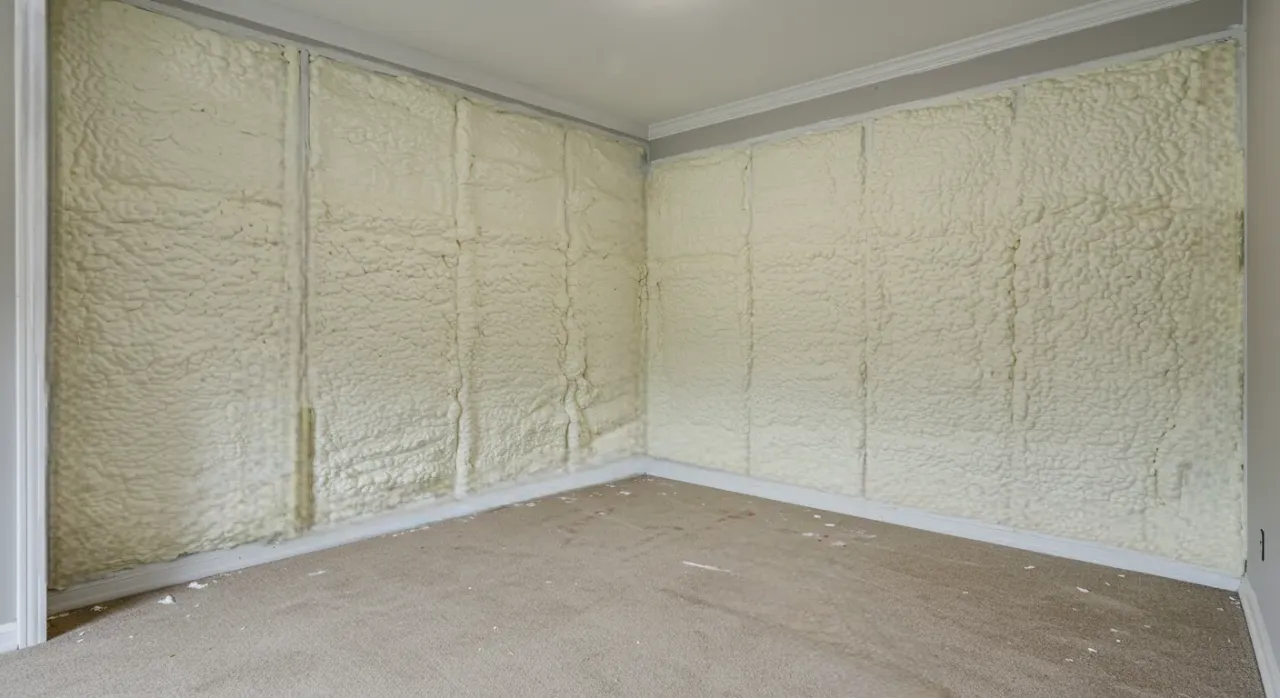
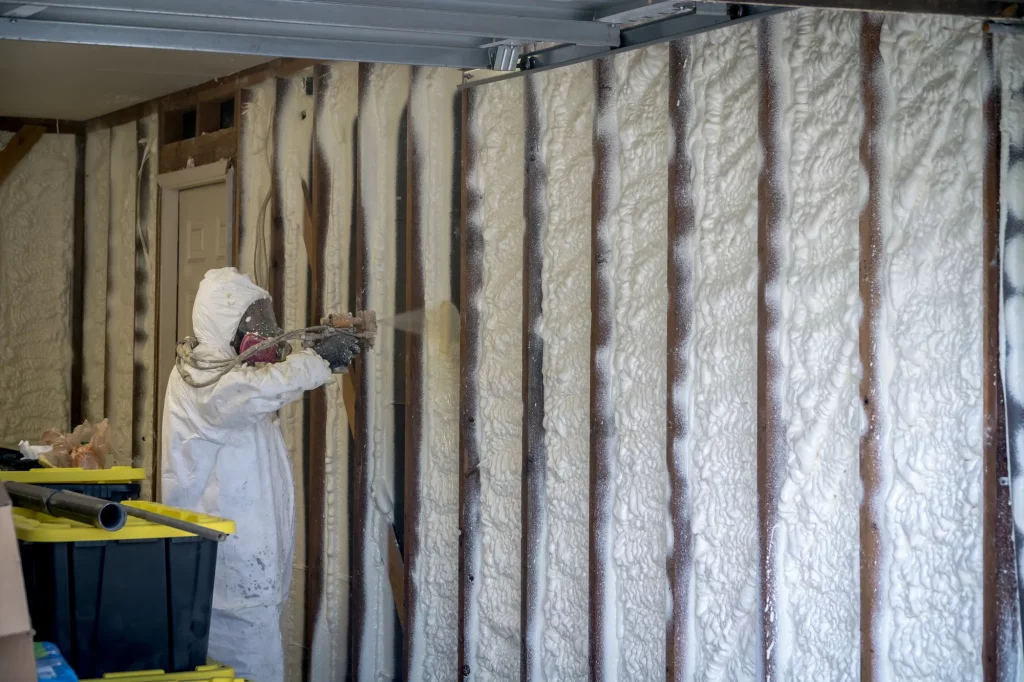
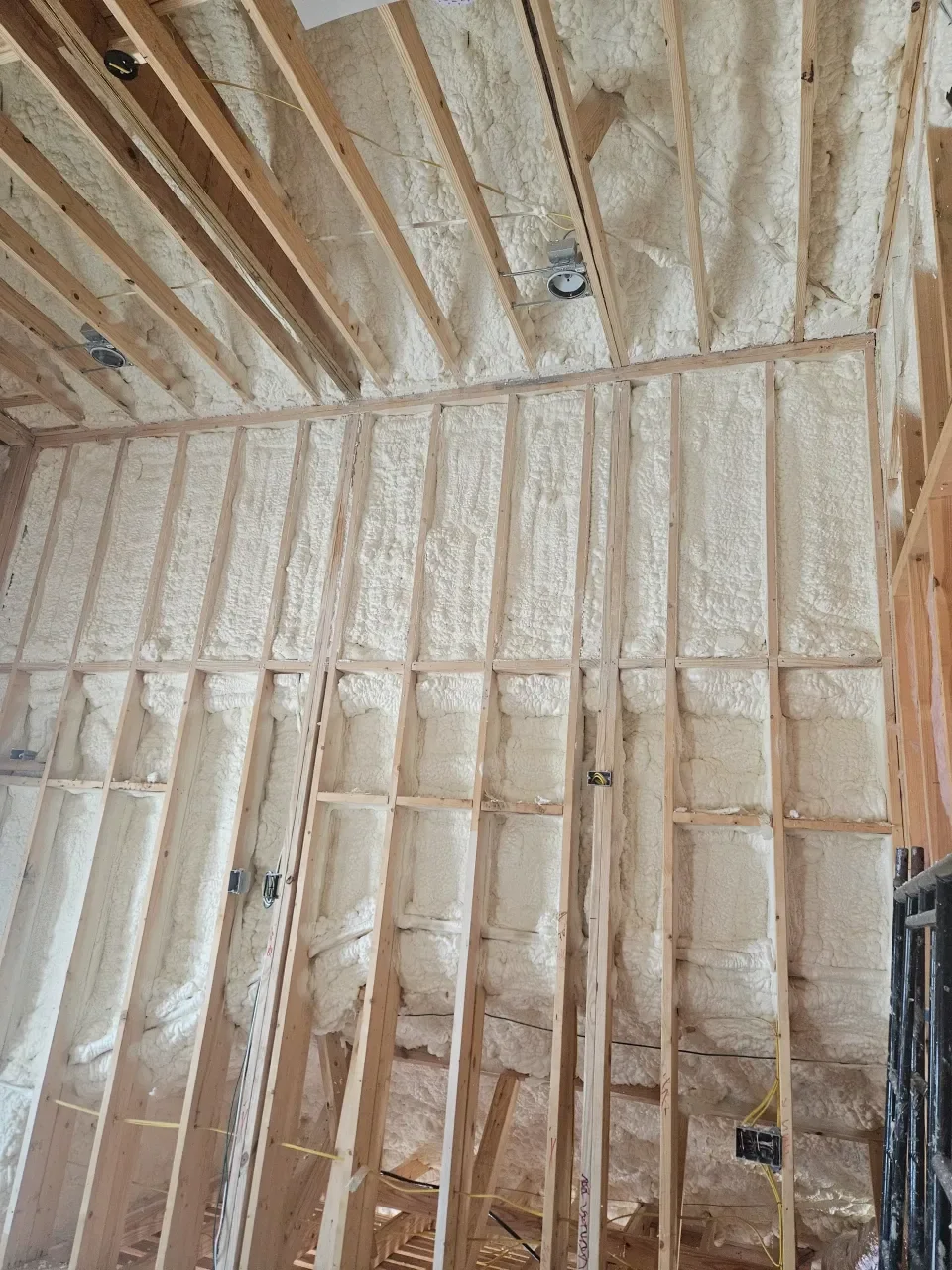
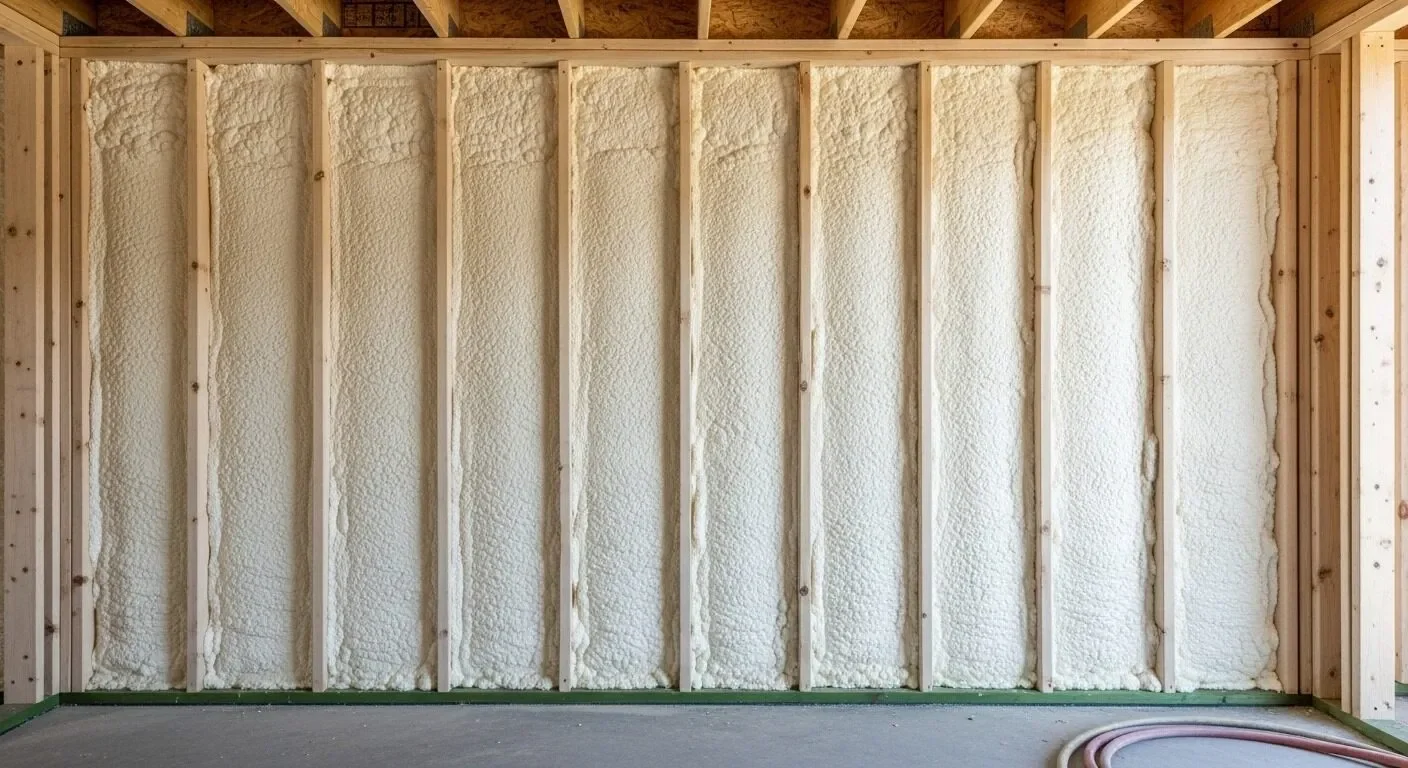
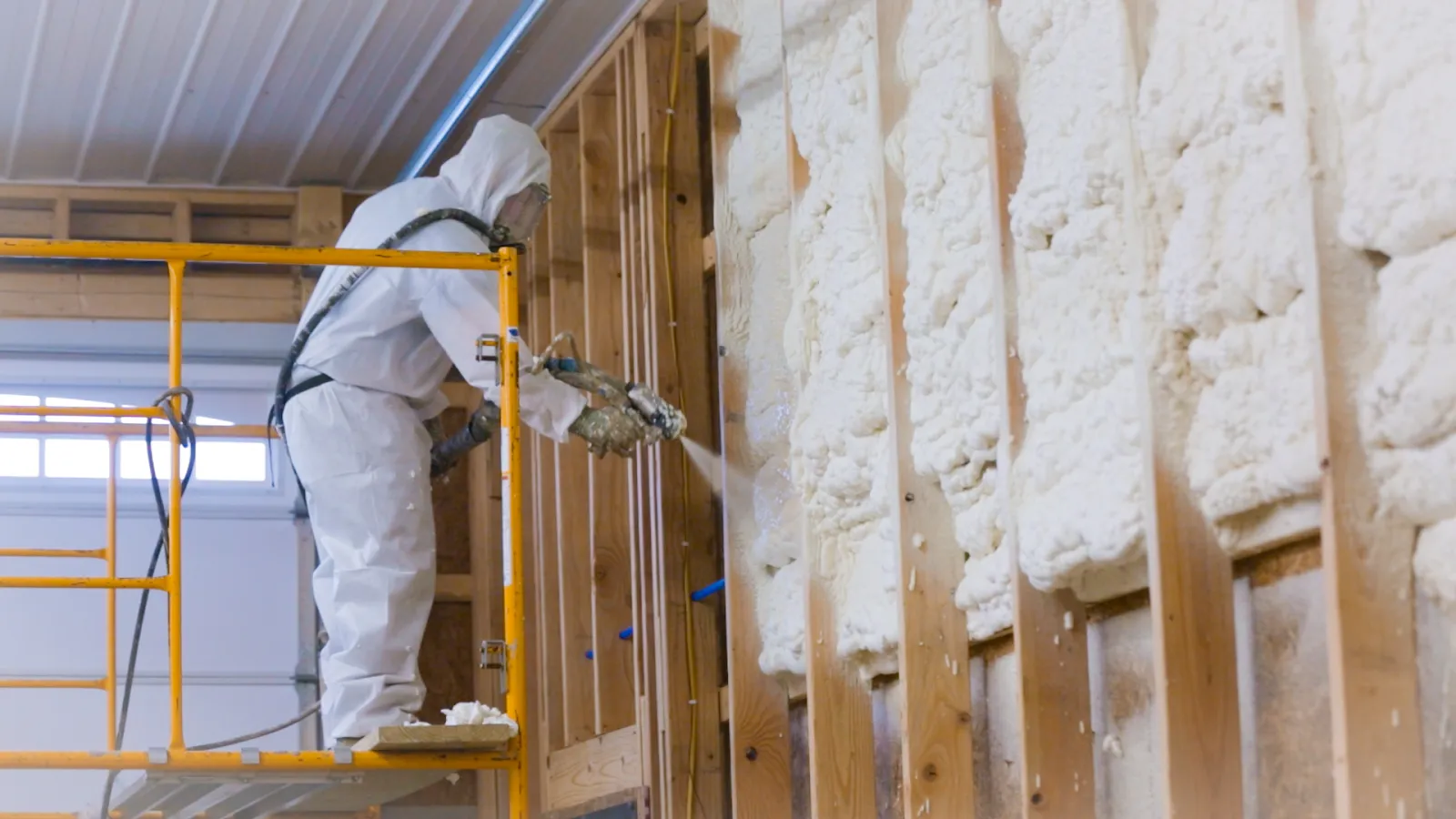
Spray foam is applied as a liquid that expands and hardens, making it an important part of the Complete Guide to Residential Insulation by filling gaps and crevices that other materials cannot reach. It comes in two main varieties: open-cell (lower density, roughly R-3.5 to R-3.7 per inch) and closed-cell (higher density, roughly R-6 to R-7 per inch). Closed-cell spray foam also acts as a vapor retarder and adds structural strength to wall assemblies.
Per ENERGY STAR’s insulation type guide, sprayed foam is best suited for enclosed existing walls, open new wall cavities, unfinished attic floors, and attic ceilings. It requires an advanced skill level and a certified installer, which is important to keep in mind for Bremerton homeowners planning a retrofit.
Where spray foam delivers the most value in this climate:
Rim joists and band joists, where it seals the junction between foundation and floor framing, one of the largest air leakage paths in any home.
Crawl spaces and basements, where moisture resistance and air sealing are both critical in marine climates.
Attic roofs (unvented assemblies), where spray foam applied to the roofline allows the attic to be brought into the conditioned space.
Blown-In Cellulose and Fiberglass
Loose-fill insulation is blown into wall cavities or spread across attic floors using specialized equipment. According to the Ohio State University Green Home Technology Center, cellulose delivers roughly R-3.7 per inch and fiberglass approximately R-2.2 to R-3.8 per inch depending on the form. Cellulose is made primarily from recycled paper treated with borates for fire and pest resistance.
This method works well for:
Existing wall cavities in older Bremerton homes, where removing drywall is not practical. Small holes are drilled, insulation is blown in, and the holes are plugged.
Attic floors, where loose-fill can be spread to any depth needed to reach code R-values. Reaching R-60 in an attic requires roughly 16 inches of blown-in cellulose.
Hard-to-reach framing bays, irregular joist spacing, and areas with existing obstructions.
Fiberglass Batts and Rolls
Fiberglass batts remain the most common insulation in residential insulation construction. Pre-cut to fit standard framing cavities (16 or 24 inches on center), they are straightforward to install in open framing during new construction or remodeling projects. ENERGY STAR rates fiberglass batts as a basic skill-level project suitable for some homeowners.
Batts are effective for:
New construction walls and ceilings where framing is fully exposed.
Basement and crawlspace walls during renovations.
Standard attic floors in homes with adequate clearance and regular joist spacing.
The limitation of batts is installation quality. Gaps, compression, and voids around obstructions all reduce effective R-value. In marine climates like Bremerton, any gaps also allow moist air to reach condensation surfaces.
Rigid Foam Board
Rigid foam boards, including expanded polystyrene (EPS), extruded polystyrene (XPS), and polyisocyanurate (polyiso), offer R-values of R-4 to R-7.5 per inch depending on the material. They are most commonly used as continuous insulation on the exterior or interior of wall assemblies.
Per the Washington State Energy Code, Marine Zone 4 requires continuous insulation in addition to cavity insulation for wood frame walls (R-5 continuous with R-20 cavity, or R-10 continuous with R-13 cavity). Rigid foam board is the standard way to meet this requirement in new construction. It is also used under siding during re-siding projects, providing a straightforward path to add continuous insulation to existing homes.
Structural Insulated Panels and Insulated Concrete Forms
For homeowners building new or doing major additions, ENERGY STAR highlights two advanced envelope systems: Structural Insulated Panels (SIPs) and Insulated Concrete Forms (ICFs). SIPs use a foam core sandwiched between structural boards, delivering high R-values with minimal thermal bridging. ICFs combine reinforced concrete with permanent foam forms, creating walls with high thermal mass and strong air sealing. Both approaches can outperform standard stick-frame construction for energy efficiency.
The Role of Air Sealing in Reducing Energy Waste
Insulation alone cannot stop air movement through the building envelope. Air leakage through gaps, cracks, and penetrations around windows, doors, plumbing, wiring, and framing accounts for 25 to 40 percent of the energy used for heating and cooling in a typical home. The EPA describes it this way: if you added up all the leaks in a typical home’s envelope, it would equal having a window open every day of the year.
Washington State’s energy code addresses this directly. New homes must pass a blower door test showing no more than 4.0 air changes per hour at 50 Pascals. For existing homes, the combined leakage rate for additions is 7 ACH50.
Key air sealing locations in Bremerton homes:
Rim joists and the sill plate-to-foundation junction
Air sealing should be completed before or during insulation installation. Without it, even high-R insulation underperforms because air carries heat directly through gaps.
Insulation Method Comparison
Method
R-Value per Inch
Air Sealing Capability
Best Applications
Installation Complexity
Closed-cell spray foam
R-6 to R-7
Acts as air and vapor barrier
Rim joists, crawl spaces, attic rooflines
Advanced (certified installer)
Open-cell spray foam
R-3.5 to R-3.7
Air barrier (not vapor barrier
Wall cavities, attics, hard-to-reach areas
Advanced (certified installer)
Blown-in cellulose
R-3.7
Moderate (dense-pack reduces air flow)
Existing walls, attic floors, irregular spaces
Intermediate
Blown-in fiberglass
R-2.2 to R-3.8
Low
Attic floors, open cavities
Intermediate
Fiberglass batts
R-3.2
Low
New walls, standard attics, accessible framing
Basic
Rigid foam board
R-4 to R-7.5
Varies by installation
Continuous exterior insulation, basement walls
Intermediate
SIPs / ICFs
R-4.5 to R-7+ (assembly dependent)
Very high air sealing
New construction, major additions
Advanced
Recommendations by Home Type
Older Homes (Pre-1980s Construction)
Many Bremerton, WA homes built before modern energy codes have little to no wall insulation and inadequate attic insulation. The most practical approach is blown-in cellulose or fiberglass for wall cavities (through drilled holes) and blown-in material for attic floors to reach R-49 or higher. Air sealing around attic penetrations, rim joists, and windows should be the first step.
Homes Built 1980s to 2000s
These homes may have some insulation but likely fall short of current R-value requirements for Climate Zone 4C. Attic upgrades are usually the most accessible and cost-effective improvement. Rim joist sealing with spray foam and adding continuous insulation during any re-siding project are strong secondary priorities.
New Construction and Major Renovations
New homes in Bremerton must meet the prescriptive R-values in the state energy code. Building beyond code, such as using R-21 cavity insulation with R-12 continuous insulation for walls, earns additional energy credits and delivers measurable long-term savings. Spray foam in rim joists and continuous rigid foam on wall exteriors should be standard practice.
Signs You Have Found the Right Insulation Contractor
Choosing the right installation partner matters as much as selecting the right material. Poorly installed insulation fails to deliver its rated R-value regardless of the product used. Look for these indicators:
Detailed home assessment before quoting, including attic inspection, wall cavity evaluation, and discussion of air sealing needs rather than a one-size-fits-all proposal.
Clear explanation of which method is recommended for each area of your home and why, with references to Climate Zone 4C requirements.
Willingness to conduct or coordinate blower door testing to identify air leakage before and after insulation work.
Documentation provided after installation, including insulation certificates with R-values, installed depths, and material types as required by the Washington State Energy Code.
Long-term warranty on workmanship and familiarity with marine climate moisture considerations specific to western Washington.
Get a Professional Insulation Assessment for Your Bremerton Home
Cascadia Spray Foam helps Bremerton homeowners reduce energy waste with expert insulation installation tailored to Climate Zone 4C. Our team evaluates your home’s specific needs, recommends the right combination of materials and air sealing, and installs everything to meet or exceed Washington State Energy Code requirements. Whether you need spray foam for your crawlspace, blown-in insulation for your attic, or a full envelope upgrade, we handle it all.
What R-value should my attic insulation be in Bremerton?
The Washington State Energy Code requires R-60 for ceilings in Climate Zone 4C (Marine 4), or R-49 if the full insulation depth extends over the wall top plate at the eaves.
Can insulation be added to existing walls without removing drywall?
Yes, blown-in cellulose or fiberglass can be installed through small holes drilled in the wall exterior or interior, then the holes are plugged and repaired.
Is air sealing really necessary if I am adding insulation?
Air sealing is essential. The EPA estimates air leakage accounts for 25 to 40 percent of heating and cooling energy use, and insulation cannot stop air movement through gaps and cracks.
How does Bremerton’s marine climate affect insulation choices?
The marine moisture regime means moisture control matters. Closed-cell spray foam and rigid foam boards with appropriate vapor retarder placement help manage moisture while insulating in this climate.
Does Washington State require blower door testing for new homes?
Yes. The state energy code requires new dwellings to be tested for air leakage and meet a maximum of 4.0 air changes per hour at 50 Pascals.
Sources
ENERGY STAR – Why Seal and Insulate? – EPA data on energy savings from air sealing and insulation, including the statistic that 9 out of 10 U.S. homes are under-insulated and that sealing and insulating can reduce heating and cooling costs by an average of 15%.
ENERGY STAR – Choosing the Appropriate Insulation Type – Classification of insulation types (blankets/batts, foam board, loose-fill, sprayed foam) with best-suited applications and required installation skill levels.
ENERGY STAR – Rule Your Attic! – EPA estimates that homeowners can save an average of 15% on heating and cooling costs by air sealing and adding attic insulation, plus information on federal tax credits.
I’m Melissa Grant, owner of Cascadia Spray Foam Insulation, with over 10 years of hands-on spray foam experience. I focus on durable insulation solutions, improved comfort and energy efficiency, and excellent customer service.
Open-cell spray foam reduces noise in Bellevue homes in two ways. Using open-cell spray foam noise Bellevue, WA solutions seals the cracks and gaps that let sound leak in, while…
In Tacoma, closed-cell spray foam bonds to studs and sheathing. Choosing a Closed-Cell Spray Foam Structure in Tacoma, WA helps make walls stiffer when wind pushes on them. Its dense,…
Selecting the right commercial insulation for warehouses comes down to five considerations: thermal performance matched to your climate zone, air sealing, moisture and vapor control, code compliance, and installation quality.…