Residential Insulation Materials Compared: Which Performs Best?
Melissa Grant
April 27th, 2026
When choosing residential insulation materials, spray foam insulation delivers the highest thermal performance and air-sealing capabilities, but fiberglass and cellulose remain cost-effective options that meet code requirements when properly installed. The best performing insulation for your project depends on your climate zone, budget constraints, and whether air-sealing is a priority. According to the Department of Energy, foam insulation products provide higher R-values than traditional fibrous materials, but the maximum thermal performance of any insulation depends heavily on proper installation by qualified professionals. This comparison breaks down the performance, costs, and ideal applications for each material type so contractors and homeowners can make informed decisions.
TL;DR
Closed-cell spray foam offers the highest R-value at R-6.5 per inch or higher, while fiberglass provides R-3.2, and cellulose delivers R-3.5 per inch
Fiberglass batt insulation costs $0.30 to $1.50 per square foot, spray foam ranges from $1 to $2 per square foot, and cellulose falls between $0.60 and $2.30 per square foot
All insulation types perform equally when properly installed with adequate air sealing, according to the Building Sciences Corporation
Spray foam requires professional installation and creates an effective air barrier, while fiberglass and cellulose allow for DIY installation in accessible areas
Fiberglass and mineral wool do not settle over time and maintain consistent R-values throughout the life of the building
Understanding R-Value and Thermal Performance
R-value measures insulation’s ability to resist heat flow. The higher the R-value, the better the thermal performance. According to ENERGY STAR, homeowners can save an average of 15% on heating and cooling costs by adding proper insulation and sealing air leaks throughout the home.
The major insulation types vary significantly in their per-inch R-values, which directly impacts how much thickness is needed to achieve code-compliant thermal performance.
Material
R-Value Per Inch
Air Sealing Ability
Installation Method
Closed-cell spray foam
R-6.5+
Excellent
Professional only
Open-cell spray foam
R-3.6 to R-3.9
Good
Professional only
Cellulose (blown-in)
R-3.5
Moderate
Professional
Fiberglass batts
R-3.2
Requires additional sealing
DIY or professional
Mineral wool
R-3.0 to R-3.5
Requires additional sealing
DIY or professional
Fiberglass and mineral wool insulation achieve consistently high R-values and can meet or exceed any energy code or green building requirements when properly installed with appropriate air-sealing measures.
Spray Foam Insulation: Maximum Performance
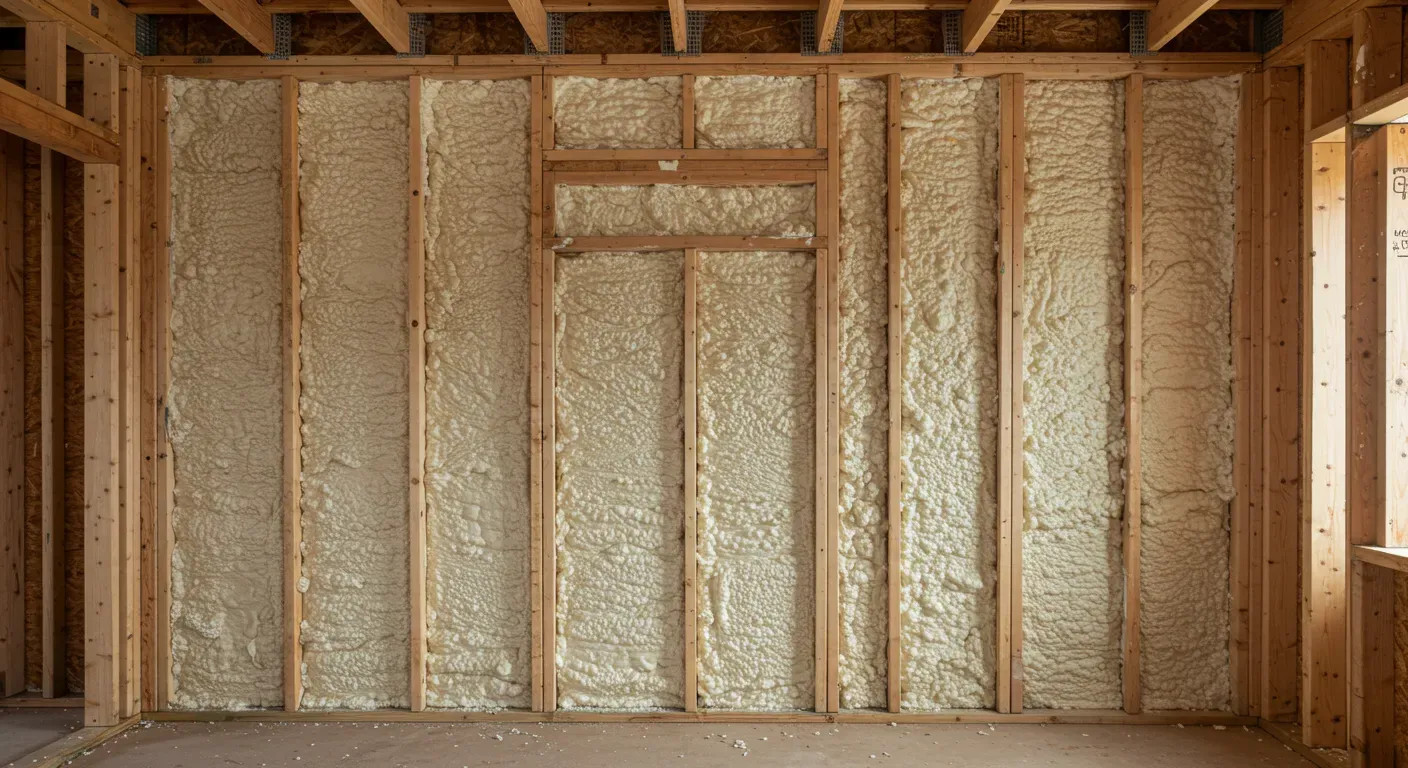
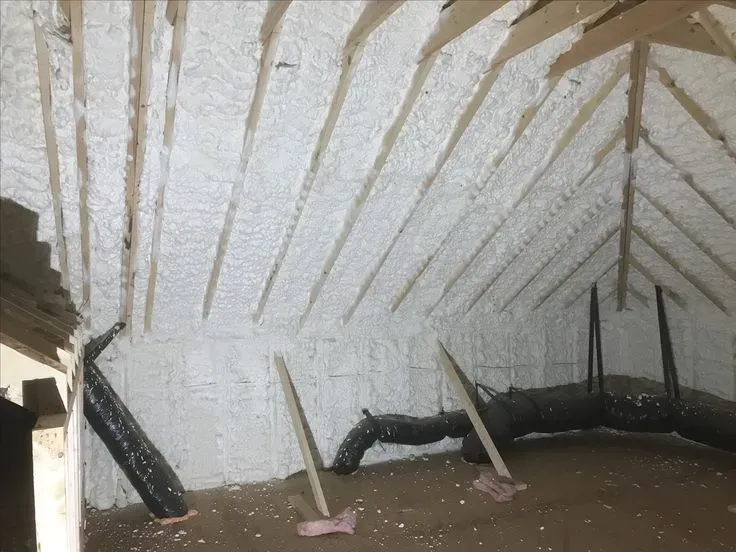
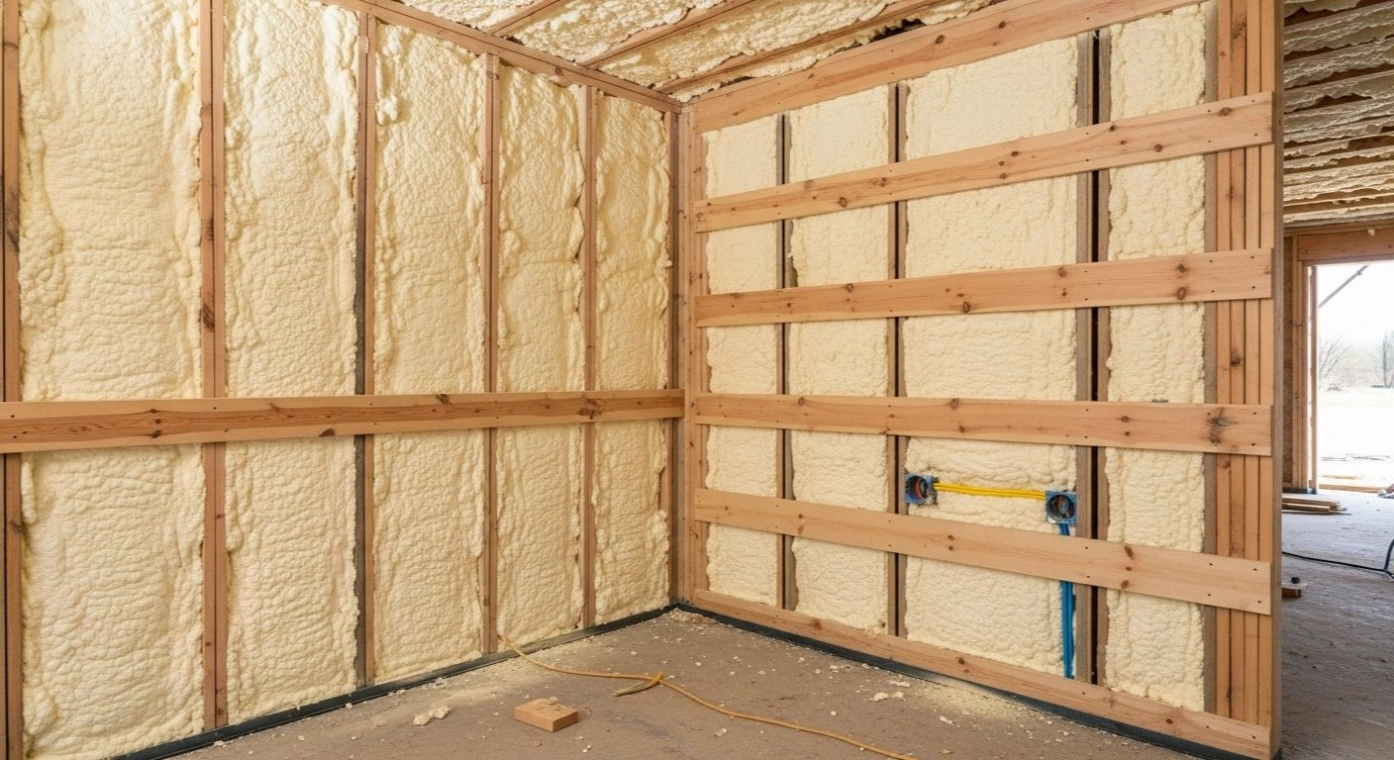
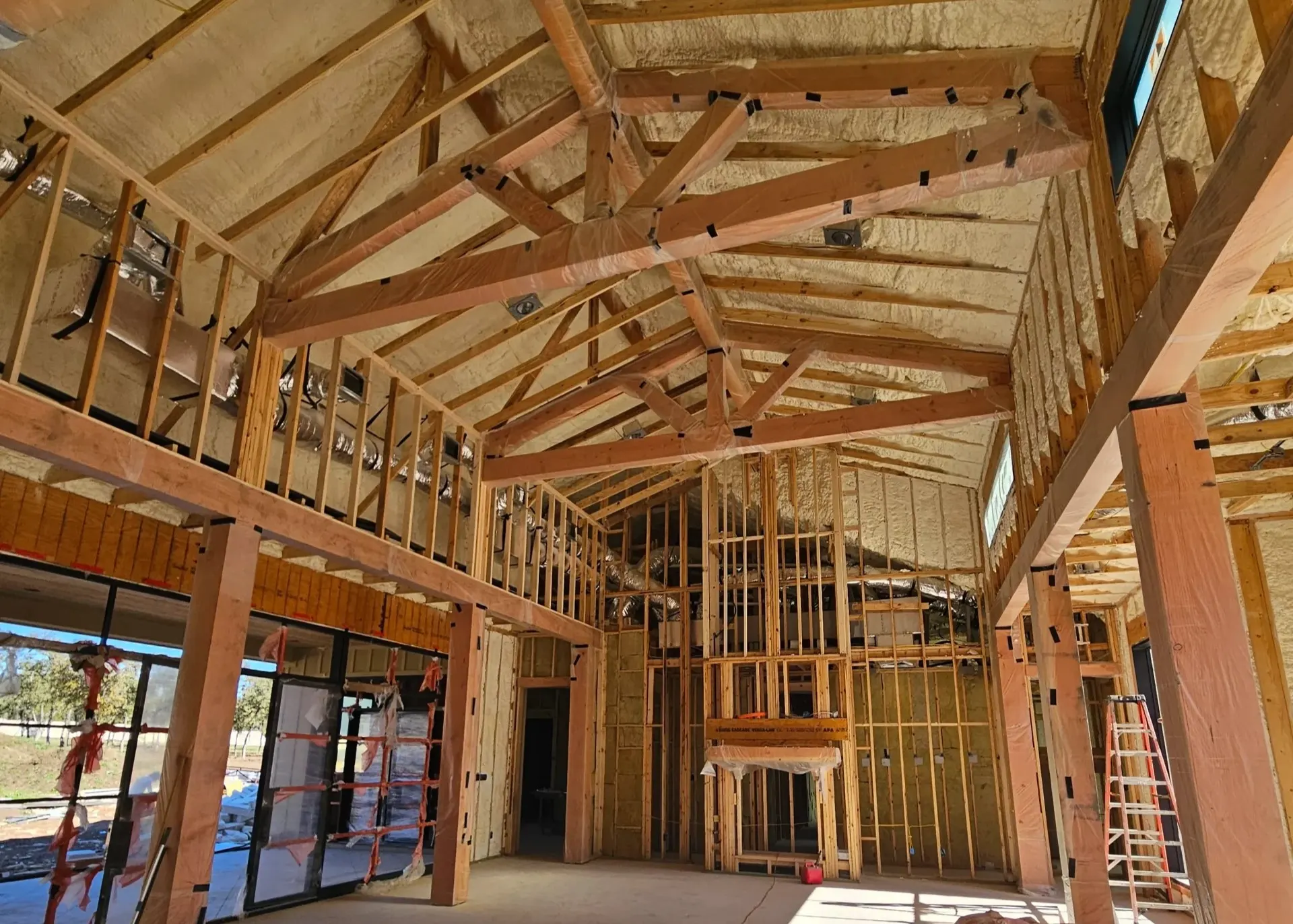
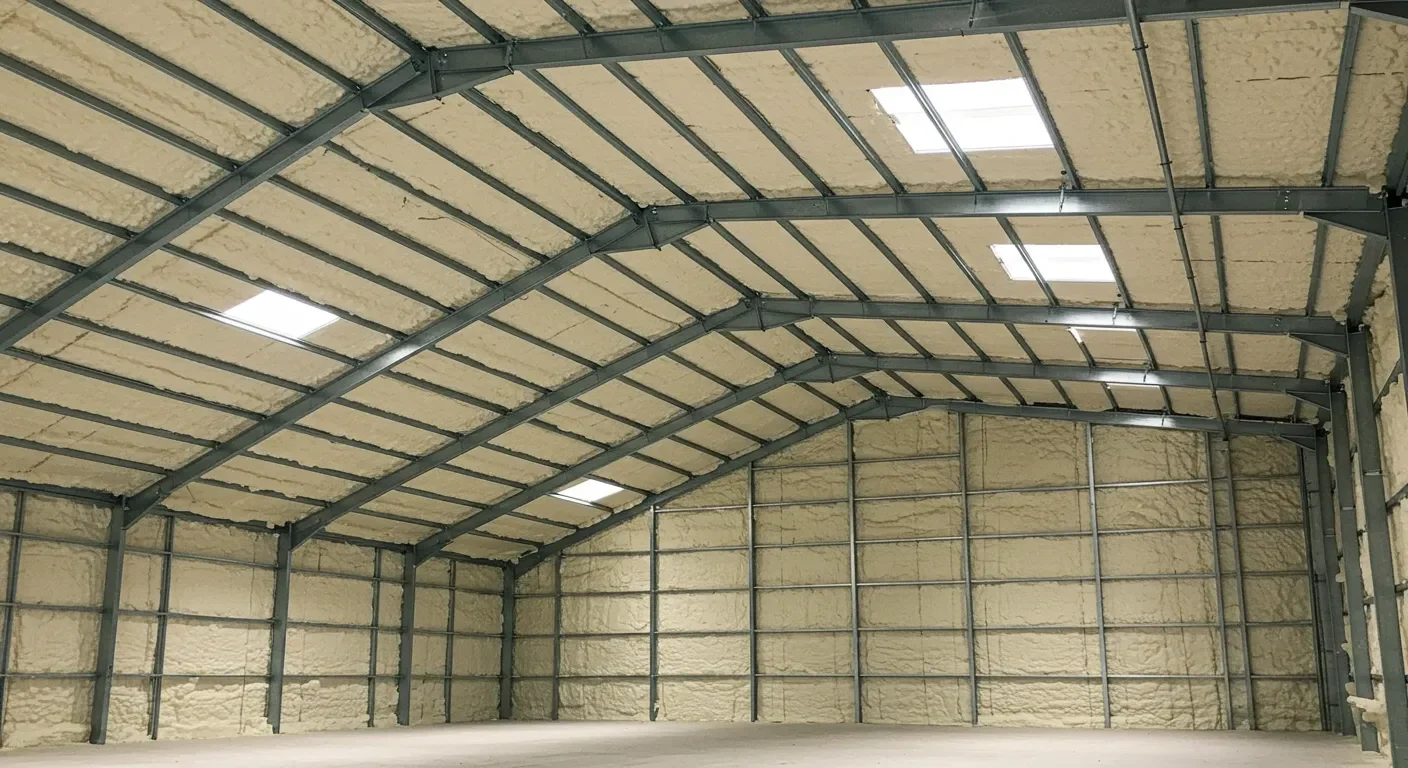
Spray polyurethane foam (SPF) insulation expands on contact to fill gaps, cracks, and cavities completely, creating an effective air barrier that fibrous materials cannot match without additional sealing work.
Closed-Cell Spray Foam
Closed-cell spray foam contains sealed cells filled with low-conductivity gas, making it rigid and moisture-resistant. It acts as a vapor barrier and provides structural reinforcement to walls and roofs. This material achieves R-6.5 or higher per inch, meaning less thickness is required to reach target R-values.
Closed-cell foam works exceptionally well in humid climates and below-grade applications like basements and crawl spaces where moisture resistance is critical. According to the Department of Energy, closed-cell foam has a greater R-value and provides stronger resistance against moisture and air leakage than open-cell alternatives.
Open-Cell Spray Foam
Open-cell spray foam has cells that are not fully sealed, filled with air rather than gas. This makes it lighter and more pliable, with R-values between R-3.6 and R-3.9 per inch. While it provides good insulation and sound-dampening qualities, open-cell foam does not act as a vapor barrier and can absorb water if exposed to moisture.
Open-cell foam excels at filling irregular cavities and hard-to-reach spaces, expanding to conform to any shape. It provides superior soundproofing compared to closed-cell foam.
Cost Considerations for Spray Foam
Spray foam insulation products and installation typically cost more than traditional batt insulation. However, spray foam’s higher R-values and air-sealing properties can reduce or eliminate separate costs for caulking, housewrap, vapor barriers, and joint taping that fibrous insulation projects often require.
Fiberglass Insulation: The Budget-Friendly Standard
Fiberglass insulation has remained the most widely use of residential insulation for decades due to its affordability and accessibility. It comes in pre-cut batts and rolls designed to fit standard stud and joist spacing.
Fiberglass insulation costs between $0.30 and $1.50 per square foot, making it the most budget-friendly option for projects where thermal performance targets can be met with proper installation techniques.
Benefits of Fiberglass
Available at every home improvement store
DIY-friendly for accessible areas like attics and floor joists
Naturally non-combustible with no fire rating concerns
Does not settle or degrade over time
UV stable with no thermal performance loss from sun exposure
Does not absorb moisture or provide a food source for mold
Does not require the evacuation of other trades during installation
Limitations of Fiberglass
Lower R-value per inch requires more thickness
Fitting batts around obstructions creates gaps in coverage
Installing in existing walls typically requires opening the walls
Does not seal air leaks without additional measures
Less effective in irregularly shaped cavities
Cellulose Insulation: Eco-Conscious Alternative
Cellulose insulation consists primarily of recycled newsprint treated with fire-retardant chemicals like borate. It is installed as loose-fill material blown into wall cavities, attics, and hard-to-reach spaces.
Cellulose costs between $0.60 and $2.30 per square foot, positioning it between fiberglass and spray foam in terms of price. Its environmental credentials attract homeowners prioritizing sustainability, as it diverts paper waste from landfills.
Cellulose Performance Characteristics
Cellulose provides R-3.5 per inch with superior coverage in irregular spaces since loose-fill material flows around obstructions and fills gaps that cut batts cannot address. It offers better sound-dampening than fiberglass and provides fire resistance from its chemical treatment.
However, cellulose absorbs 5 to 20% of its weight in moisture, creating potential mold concerns if water exposure occurs. It also settles over time, particularly in vertical wall cavities, which can reduce thermal performance in those locations. Cellulose can maintain effectiveness for 20 to 30 years but requires professional installation with specialized equipment.
These estimates vary based on project scope, accessibility, regional labor rates, and material availability. Always obtain written quotes from multiple contractors for accurate pricing.
Factors That Influence Material Selection
Climate Zone
Cold climates benefit most from spray foam’s air-sealing and high R-value per inch. Hot-humid climates require materials that resist moisture, making closed-cell spray foam attractive. Mixed-humid regions may perform well with any properly installed insulation.
ENERGY STAR recommends R-30 to R-60 for attics in zones 1 through 4, with R-49 to R-60 recommended for zones 5 through 8.
Project Type
New construction allows for any insulation type. Retrofit projects with limited access benefit from blown-in materials like cellulose. Finished homes requiring wall insulation typically need dense-pack cellulose or spray foam injected into existing cavities.
Budget Constraints
Tight budgets favor fiberglass batts with proper air sealing. Medium budgets may choose cellulose for its balance of cost and coverage. Projects prioritizing long-term energy savings and air-sealing may justify spray foam’s higher upfront cost.
Health and Safety Considerations
Fiberglass and mineral wool insulation require no special evacuation during installation and have no recognized carcinogenic classification according to the International Agency for Research on Cancer. Spray foam requires evacuation of all other trades during installation due to chemical off-gassing and contains isocyanates that may cause respiratory irritation in sensitive individuals.
Who Should Use Each Material
Fiberglass Works Best For
Budget-conscious projects with standard wall framing
DIY installations in accessible attics and floor cavities
Projects where additional air-sealing measures are planned
Construction schedules that cannot accommodate trade evacuations
Cellulose Works Best For
Retrofitting existing walls with minimal disruption
Projects prioritizing recycled content and environmental impact
Irregularly shaped cavities and hard-to-reach areas
Soundproofing between interior rooms
Spray Foam Works Best For
High-performance and net-zero construction projects
Projects where the maximum R-value in minimal thickness is needed
Installation Quality Matters
The Department of Energy emphasizes that the maximum thermal performance or R-value of insulation is very dependent on proper installation. When hiring professionals, obtain written cost estimates from several contractors, as quoted prices for identical R-value installations can vary by more than a factor of two.
Evaluate blanket installation by measuring batt thickness and checking for gaps between batts and around framing penetrations. For sprayed or blown-in insulation, measure the installed depth and verify complete coverage without gaps.
According to the Insulation Institute, fiberglass and mineral wool insulation achieve effectively zero air infiltration when paired with standard air-sealing practices, including taped housewrap or caulk at all joints and penetrations.
Ready to improve your home’s energy performance with professional-grade insulation?
Cascadia Spray Foam brings decades of experience to residential projects throughout the region, delivering precise installation and lasting thermal performance. Whether you need closed-cell spray foam for your basement or open-cell insulation for your attic, our team provides honest recommendations and quality workmanship.
Contact us today at (425) 386-3500 or email [email protected]to discuss your project requirements and receive a detailed quote.
Frequently Asked Questions
Which insulation material has the highest R-value per inch?
Closed-cell spray foam offers the highest R-value at approximately R-6.5 per inch. This means you need less thickness to achieve the same thermal resistance compared to other materials. Fiberglass provides R-3.2 per inch while cellulose delivers R-3.5 per inch.
Is spray foam worth the higher cost compared to fiberglass?
Spray foam costs two to three times more upfront but provides superior air-sealing that can reduce heating and cooling costs by 15% or more, according to ENERGY STAR. For high-performance builds or cold climates where air-sealing is critical, spray foam often delivers better long-term value. For standard code compliance in mild climates, properly installed fiberglass may suffice.
Can I install insulation myself, or do I need a professional?
Fiberglass batts are the most DIY-friendly option for accessible areas like attics and between floor joists. Cellulose and spray foam require specialized equipment and professional installation. Poor installation significantly reduces thermal performance regardless of material quality.
How long does residential insulation last?
Fiberglass and mineral wool maintain their R-value for the life of the building without settling. Cellulose can last 20 to 30 years before settling reduces its effectiveness. Spray foam insulation does not settle or sag and can remain effective for 80 to 100 years when properly installed.
Does insulation help with soundproofing?
Fiberglass and mineral wool provide better sound control than spray foam, achieving STC ratings of 43 and higher in complete wall assemblies. Spray foam typically achieves STC ratings of 37 to 39. For interior room-to-room sound control, fiberglass or mineral wool batts offer superior performance.
Sources
Department of Energy – Types of Insulation – Comprehensive guide to insulation materials, installation methods, and performance characteristics from the official U.S. Department of Energy website.
I’m Melissa Grant, owner of Cascadia Spray Foam Insulation, with over 10 years of hands-on spray foam experience. I focus on durable insulation solutions, improved comfort and energy efficiency, and excellent customer service.
Spray foam insulation seals building gaps because the foam expands, bonds to the framing, and cures into one airtight layer that follows every angle. Batts and boards can’t hug odd…
Insulation-based temperature control comes down to one job: slowing heat flow so every room gains or loses heat at about the same pace. Fill the weak spots with the right…
Quick answer: Cutting commercial insulation heat loss on a large building means treating the whole envelope as one system. Insulation slows heat moving through walls, roofs, and ceilings. Air sealing…