R11 vs R13 Wall Insulation: What’s the Difference and Which Is Better?
Melissa Grant
April 27th, 2026
R13 wall insulation outperforms R11 in nearly every exterior wall application. R13 provides approximately 18% better thermal resistance, costs only marginally more, and meets current building code requirements in most U.S. climate zones. For contractors and property owners evaluating wall insulation, R13 is the practical choice for any project where energy efficiency and code compliance matter.
The performance gap between these two insulation ratings comes down to how heat transfers through your building envelope. Higher R-values mean better resistance to that heat flow. R13 insulation resists heat transfer more effectively than R11, which translates to lower heating and cooling costs over the life of the building. The cost difference between the two options is surprisingly small, usually between $0.10 and $0.20 per square foot when using fiberglass batts. This means upgrading from R11 to R13 costs very little upfront while delivering measurable ongoing savings.
Building codes have largely settled this debate. The International Energy Conservation Code and most local jurisdictions now require R13 or higher for exterior walls across the majority of climate zones. Only the warmest regions, including parts of southern Florida and Hawaii, still permit R11 for certain exterior wall applications. For new construction or major renovations requiring permits, R13 is typically the minimum you can legally install.
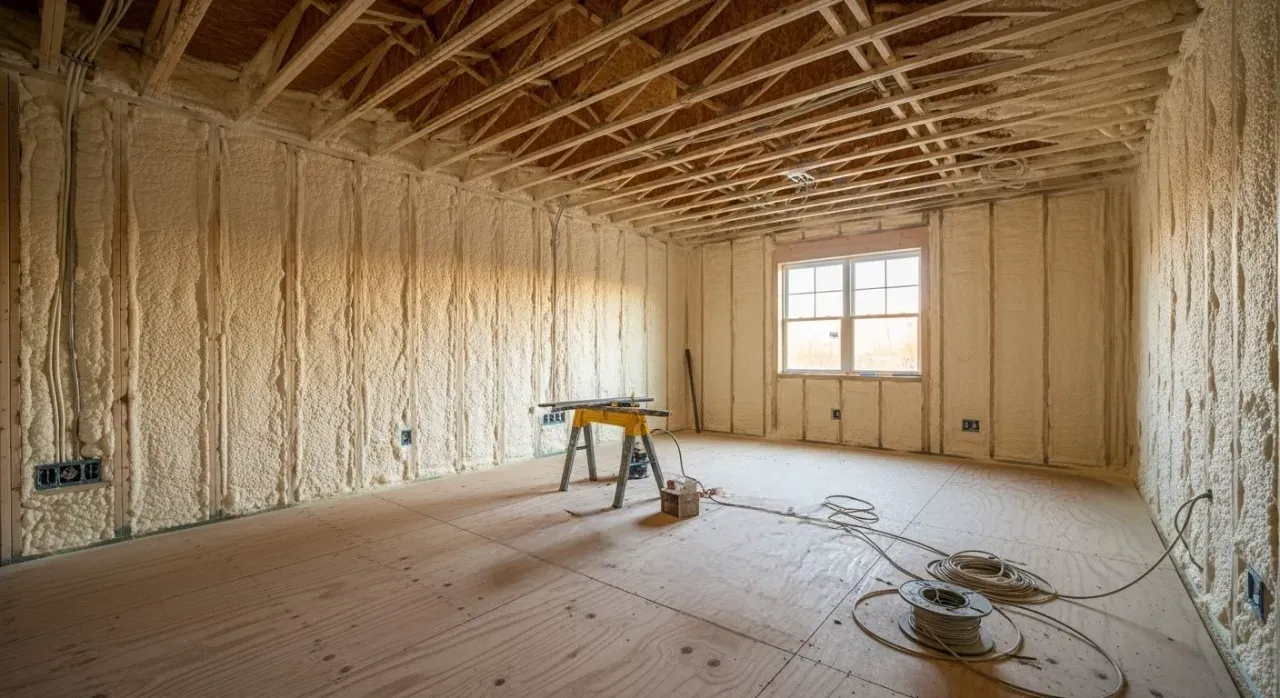
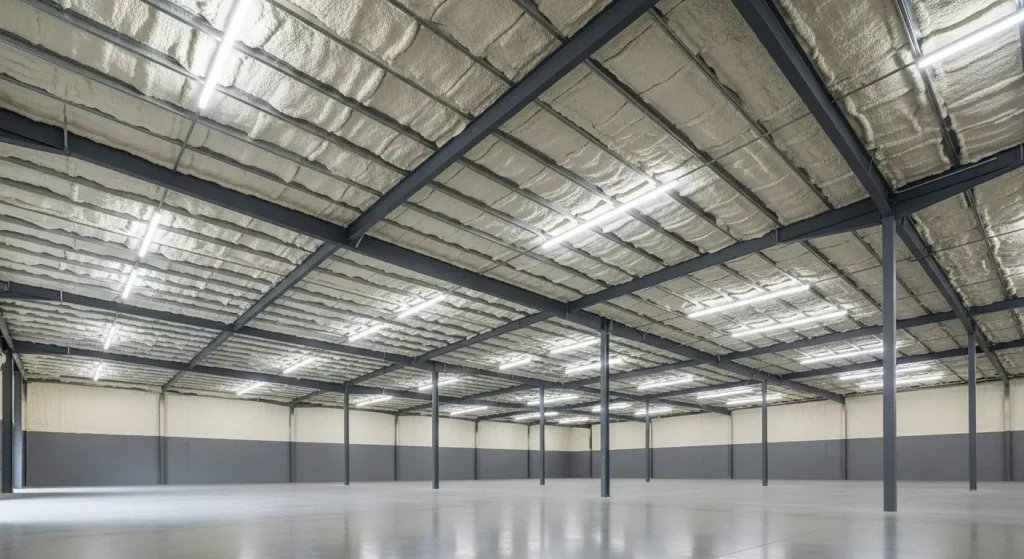
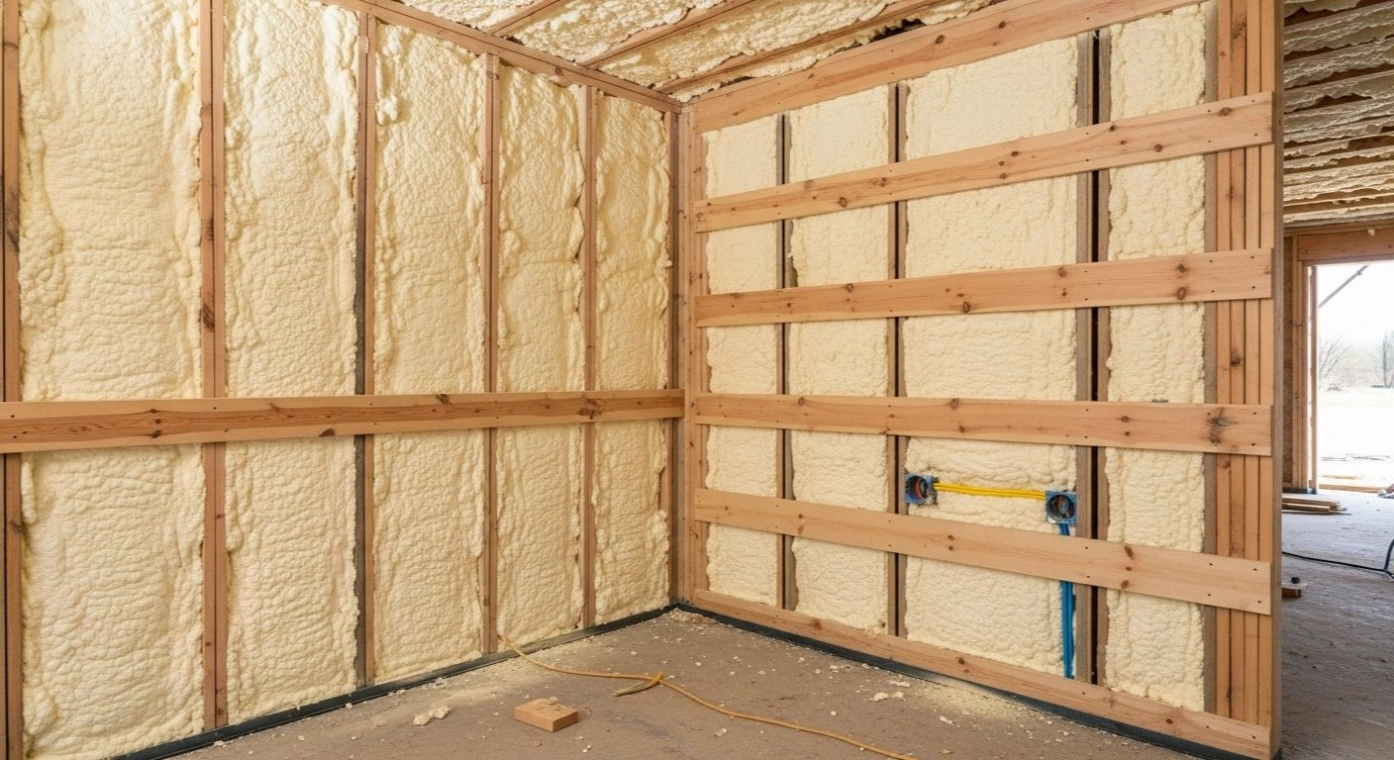
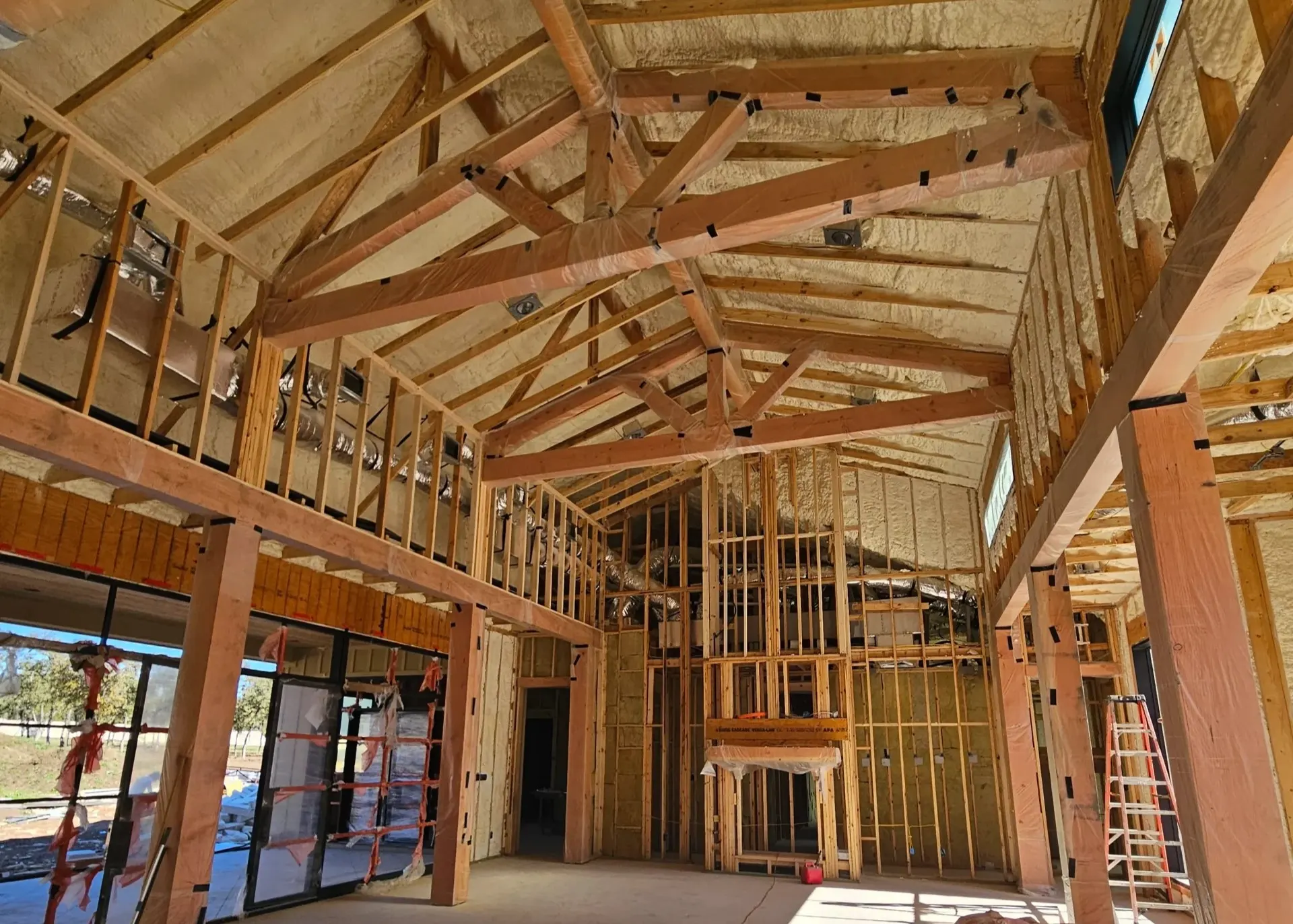
Spray foam insulation offers an alternative worth considering. Closed-cell spray foam provides R6 to R7 per inch, compared to R3 to R4 per inch for standard fiberglass batts. This means a 3.5-inch cavity filled with closed-cell spray foam achieves roughly R21 to R25, significantly outperforming either R11 or R13 fiberglass. While spray foam costs more upfront, the superior performance and air-sealing properties often justify the investment, particularly in existing homes where air leakage drives energy losses.
TL;DR
R13 delivers 18% better thermal resistance than R11 in the same 3.5-inch wall cavity
Material cost difference between R11 and R13 is minimal, typically $0.10 to $0.20 per square foot
Building codes now require R13 or higher for exterior walls in most U.S. climate zones
R11 remains viable for interior walls, sound control applications, and the warmest climate zones only
Spray foam alternatives achieve R21+ in 2×4 walls, outperforming both R11 and R13 fiberglass
Proper installation matters more than the R-value difference between R11 and R13
Energy savings from upgrading to R13 typically pay back the cost difference within the first few years
Understanding R-Value and What the Numbers Mean
R-value measures insulation’s resistance to heat flow. The higher the R-value, the better the material prevents heat from escaping in winter and entering in summer. R-value represents thermal resistance per inch of thickness, so materials with higher R-values achieve better performance without requiring thicker installations.
R11 insulation provides R11 thermal resistance, while R13 insulation provides R13 resistance. This 2-point difference on the R-value scale represents roughly 18% improvement in thermal performance. While that percentage sounds modest, it translates to measurable energy savings in real-world applications.
Both R11 and R13 fiberglass batts typically measure 3.5 inches thick, fitting standard 2×4 wall cavities. The difference lies in material density and composition. R13 batts use denser fiberglass or mineral wool to achieve the higher rating in the same physical space. This means you get better performance without changing framing requirements or wall thicknesses.
The Department of Energy confirms that higher R-values indicate better insulating performance, and the actual R-value you need depends on your climate zone, the area being insulated, and local building codes. Understanding these factors helps determine whether R11 or R13 is appropriate for your specific project.
R11 vs R13 Performance Comparison
Factor
R11 Insulation
R13 Insulation
Thermal Resistance
R11
R13
Thickness
3.5 inches
3.5 inches
Heat Transfer Improvement
Baseline
18% better than R11
Material Cost per sq ft
$0.40 – $0.60
$0.50 – $0.80
Installation Cost per sq ft
$1.00 – $1.50
$1.10 – $1.65
Building Code Status
Limited use only
Meets most requirements
Typical Applications
Interior walls, sound control, warm climates
Exterior walls, standard construction
The performance difference becomes clear when you calculate real-world impact. In a typical 2,000 square foot home with 1,500 square feet of exterior wall space, upgrading from R11 to R13 reduces heating and cooling costs by 8% to 12% attributable to wall heat transfer. If your annual energy bill is $1,500, that represents $120 to $180 in annual savings.
Walls account for roughly 35% of a home’s total heat loss. Improving wall insulation from R11 to R13 addresses a significant portion of the thermal envelope. Combined with proper attic and floor insulation, this upgrade contributes meaningfully to overall energy efficiency and occupant comfort.
Building Code Requirements by Climate Zone
Building codes establish minimum R-value requirements based on climate zones. The ENERGY STAR recommended insulation levels provide guidance for retrofitting existing wood-framed buildings:
Climate Zone
Exterior Wall Requirement
Crawlspace/Basement Walls
Zone 1-2 (Warm)
R11-R19 acceptable in some cases
R5 sheathing or R13 batt
Zone 3 (Moderate)
R11-R19, depending on the application
R5 sheathing or R13 batt
Zone 4A/4B (Mixed)
R13-R21 recommended
R10 sheathing or R13 batt
Zone 4C, 5 (Cool)
R13-R21 minimum
R15 sheathing or R19 batt
Zone 6-8 (Cold)
R21+ recommended
R19-R30 batt
The International Energy Conservation Code and most local codes now require R13 or higher for exterior walls in the majority of U.S. climate zones. For new construction or major renovations requiring permits, R13 is typically the minimum code-compliant option.
Even in areas where R11 remains technically code-compliant, choosing R13 makes financial sense. Energy codes represent minimums, not recommendations for optimal performance. Exceeding minimum requirements by selecting R13 over R11 costs a little more upfront while delivering ongoing benefits through reduced energy consumption.
For a 1,500 square foot exterior wall application, upgrading from R11 to R13 fiberglass adds approximately $150 to $300 in material costs. The energy savings over 30 years typically exceed $3,600, making this upgrade one of the best returns on investment in construction.
Spray foam costs more upfront but provides air sealing benefits that fiberglass cannot match. The combination of a higher R-value and air sealing often delivers better overall performance, particularly in existing homes where air leakage contributes significantly to energy loss.
Real-World Contractor Scenarios
Scenario
Property Type
Recommended Option
Estimated Installed Cost
Reasoning
New home construction in Zone 4
2,500 sq ft single-family
R13 fiberglass
$3,300 – $4,100
Meets code, cost-effective, solid performance
Retrofitting 1970s home exterior walls
1,800 sq ft ranch
R13 or spray foam
$2,700 – $12,600
Depends on budget and performance goals
Interior wall sound control
townhome renovation
R11 acceptable
$900 – $1,200
Thermal performance not required
Cold climate workshop
800 sq ft detached
R19 or closed-cell foam
$2,400 – $5,600
Higher R-value needed for unheated spaces
Garage conversion to living space
400 sq ft two-car garage
R13 with air sealing
$880 – $1,320
Must meet insulation requirements for conditioned spaces
For new construction, R13 fiberglass represents the practical minimum that balances cost, performance, and code compliance. The small premium over R11 delivers meaningful benefits without significant cost impact.
For retrofit applications, consider the condition of existing walls and the overall renovation scope. If walls are already exposed during renovation, upgrading to R13 or spray foam adds minimal cost compared to the overall project budget. If walls are intact and renovation is not planned, injectable spray foam or dense-packed cellulose can achieve higher R-values without removing finishes.
Factors That Influence the Decision
Climate Zone Requirements: Colder regions require higher R-values. If you build or renovate in Zone 6 or above, R13 represents a minimum rather than a target. R21 or higher may be specified for optimal performance.
Project Type and Budget: New construction projects benefit from the minimal cost difference between R11 and R13. Retrofit projects require evaluating whether the benefit justifies the disruption and cost of accessing wall cavities.
Existing Insulation Condition: Homes with no insulation or degrading insulation benefit most from upgrades. If your walls already contain R13 or higher, additional upgrades may not provide cost-effective returns.
Air Sealing Needs: Fiberglass batts insulate but do not seal air leaks. In older homes with significant air leakage, spray foam provides both insulation and air sealing, often delivering better results than increasing R-value alone.
Long-Term Energy Goals: If you plan to occupy the property long-term, investing in higher R-values and spray foam pays back through ongoing energy savings. If you’re preparing to sell, code-compliant R13 represents the safe minimum investment.
Moisture and Ventilation Considerations: In certain climates, vapor barriers and ventilation strategies affect which insulation type performs best. Closed-cell spray foam provides moisture resistance that fiberglass cannot match.
Who Should Use R13 (and Who Should Consider Alternatives)
R13 is the right choice for:
New exterior wall construction in most climate zones
Major renovations where walls are exposed
Retrofits in moderate climates where R13 meets code
Any project requiring building permits
Property owners prioritizing energy efficiency and comfort
Consider alternatives like spray foam or higher R-values when:
Building in cold climates (Zone 6 and above)
Dealing with moisture-prone areas like basements
Seeking maximum energy savings and comfort
Renovating homes with significant air leakage issues
Working in tight spaces where thicker insulation would cause problems
R11 may still be appropriate for:
Interior walls where thermal performance is not required
Sound control applications
Extremely warm climates with minimal heating needs
Budget-conscious projects where code allows it
Why Installation Quality Matters
Both R11 and R13 fiberglass batts are installed using identical methods. The batts fit between wall studs in 2×4 framing, held in place by friction or stapling. Installation difficulty and labor costs are essentially the same regardless of which R-value you choose.
The key to achieving rated R-value with either product is proper installation. Gaps, compression, and voids reduce actual thermal performance significantly. Insulation compressed to fit around wiring or plumbing loses R-value proportionally to the compression. A 3.5-inch R13 batt compressed to 2 inches might perform only at R8 to R9.
Professional installation ensures insulation fills cavities completely without compression, gaps, or voids. DIY installers often struggle to achieve proper fit around obstacles, resulting in thermal performance well below the rated R-value. Whether you choose R11 or R13, proper installation matters more than the difference between the two R-values of wall insulation.
Spray foam installation requires specialized equipment and training. While this adds to upfront costs, the material’s ability to fill irregular cavities and seal around obstacles often delivers better results than even perfectly installed fiberglass batts.
Making the Right Choice for Your Project
In nearly all exterior wall applications, R13 is the better choice over R11. The minimal cost difference, significant performance improvement, and code compliance make R13 the clear winner for any exterior wall insulation project. The only scenarios where R11 might be appropriate are interior walls being insulated solely for sound control or specific applications in the warmest climate zones.
For existing homes with R11 insulation in exterior walls, upgrading to R13 requires removing interior or exterior wall finishes to access wall cavities. This makes the upgrade impractical unless you are already doing major renovations. In these situations, consider addressing air sealing and other insulation priorities like attic insulation before tackling wall upgrades.
If your walls lack insulation entirely, choosing R13 over R11 is straightforward. The small additional cost delivers measurable energy savings, improved comfort, and compliance with current building standards. R13 represents the practical minimum for exterior wall insulation in most of the United States.
Our team at Cascadia Spray Foam helps contractors and property owners evaluate insulation options for their specific situations. Whether you need R13 wall insulation, higher R-values through spray foam, or comprehensive building envelope improvements, our experience ensures you get the performance and savings you expect from your insulation investment.
Get Expert Wall Insulation guidance from Cascadia Spray Foam
Our professionals assess your building envelope configuration and recommend the optimal insulation strategy for your climate zone, budget, and performance goals. We provide detailed cost estimates and energy savings projections so you can make informed decisions about your wall insulation investment.
Contact our team at Cascadia Spray Foam today to discuss your project requirements. Reach us by email at [email protected] or call (425) 386-3500 to speak with an insulation specialist.
Our team serves contractors, builders, and property owners throughout the region with professional insulation installation and expert guidance on material selection. Let us help you choose the right R-value for your next project.
Frequently Asked Questions
Is R13 much better than R11 for exterior walls?
Yes. R13 provides approximately 18% better thermal resistance than R11 in the same wall cavity. For exterior wall applications, this difference translates to meaningful energy savings and improved comfort. R13 also meets current building code requirements in most climate zones, while R11 may not.
Can I use R11 in my exterior walls if I want to save money?
In most U.S. climate zones, building codes require R13 or higher for exterior walls, making R11 non-compliant for new construction or permitted renovations. Even where R11 remains legal, the cost difference is minimal while the performance gap is significant. R13 is almost always the better investment.
How much does R13 wall insulation cost per square foot installed?
R13 fiberglass batt insulation costs approximately $1.10 to $1.65 per square foot installed. This includes material and labor for a typical retrofit or new construction project. Costs vary by location, accessibility, and project complexity.
Should I choose spray foam instead of R13 fiberglass batts?
Spray foam delivers higher R-values (R21-R25 in a 2×4 wall) and provides air sealing that fiberglass cannot match. While spray foam costs more upfront, the superior performance and energy savings often justify the investment, particularly in cold climates or homes with significant air leakage issues.
How do I know what R-value my walls need?
Your required R-value depends on your climate zone, local building codes, and project type. ENERGY STAR provides climate-specific recommendations, and your local building department can confirm minimum code requirements. For optimal performance, consider exceeding minimum requirements by selecting higher R-values or spray foam insulation.
Sources
ENERGY STAR Recommended Home Insulation R-Values – Government resource showing recommended insulation levels by climate zone for retrofitting wood-framed buildings, including wall requirements for crawlspaces and basements.
Department of Energy – Insulation – Official U.S. government guidance explaining R-value measurement and how higher ratings indicate better thermal performance for building insulation.
Insulation4Us – Insulation R-Value Guide – Comprehensive guide explaining R-value requirements by zone for attics, walls, floors, and crawlspaces with climate zone mapping.
I’m Melissa Grant, owner of Cascadia Spray Foam Insulation, with over 10 years of hands-on spray foam experience. I focus on durable insulation solutions, improved comfort and energy efficiency, and excellent customer service.
Spray foam insulation seals building gaps because the foam expands, bonds to the framing, and cures into one airtight layer that follows every angle. Batts and boards can’t hug odd…
Insulation-based temperature control comes down to one job: slowing heat flow so every room gains or loses heat at about the same pace. Fill the weak spots with the right…
Quick answer: Cutting commercial insulation heat loss on a large building means treating the whole envelope as one system. Insulation slows heat moving through walls, roofs, and ceilings. Air sealing…