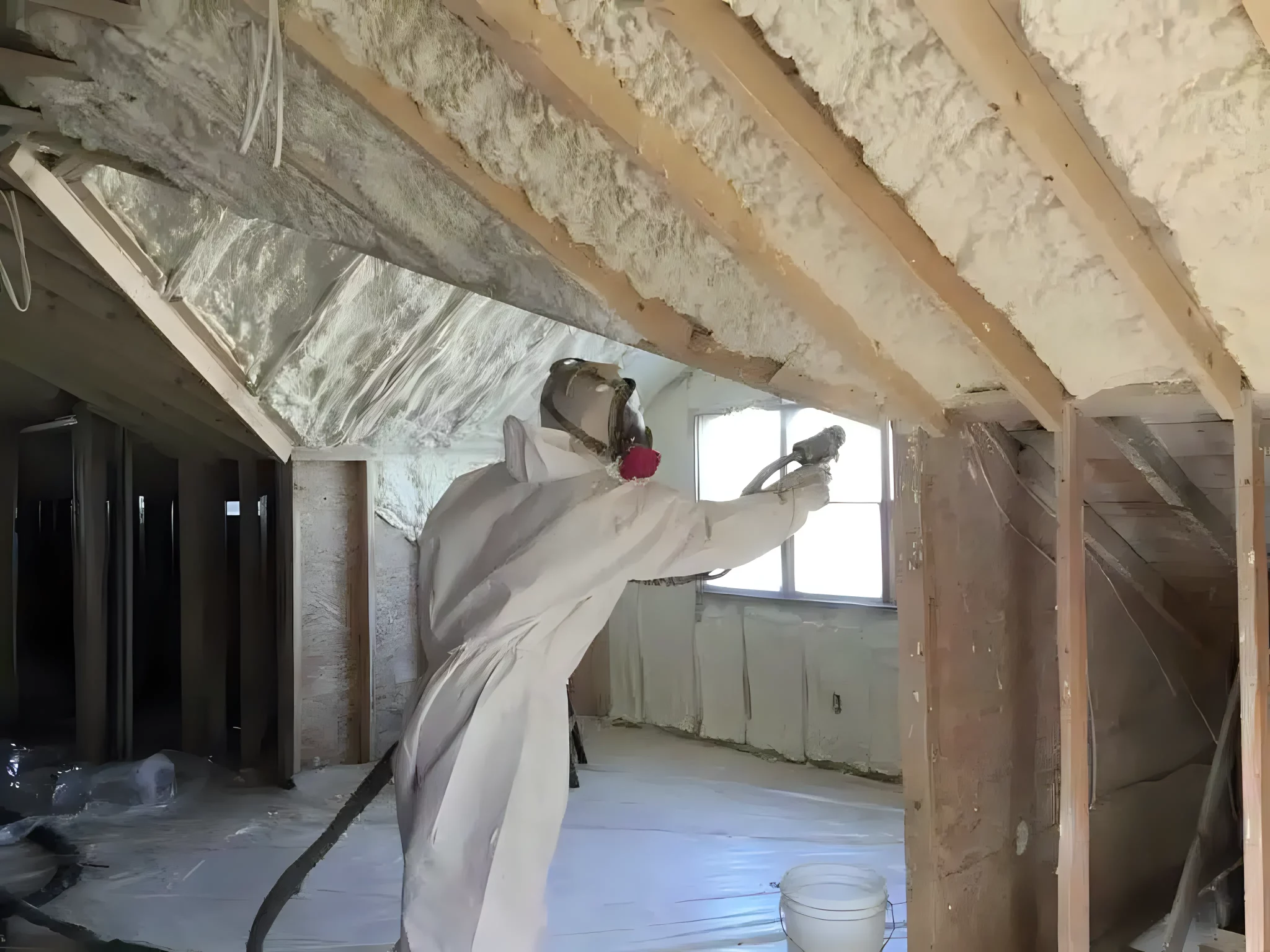
Open Cell versus Closed Cell Spray Foam use in Auburn ,WA
Melissa Grant
March 31st, 2026
Open-cell spray foam is the better choice for interior wall cavities and sound damping in Auburn, WA homes, while closed-cell spray foam outperforms in crawl spaces, rim joists, and areas exposed to moisture. Both deliver strong R-values and air sealing, but closed-cell’s higher R-value per inch (R-6.5 to R-7 versus R-3.7 to R-3.8 for open-cell) and built-in vapor barrier make it the go-to for Auburn’s Marine Climate Zone 4C, where persistent moisture and cool winters demand tighter building envelopes. Open-cell costs roughly 30 to 50 percent less per board foot, making it attractive for large-area applications like attics and walls, while closed-cell justifies its premium with structural reinforcement, moisture resistance, and higher thermal performance in thinner cavities. For contractors and property owners in Auburn, the decision comes down to application area, moisture exposure, and budget, not a one-size-fits-all answer.
TL;DR
Auburn, WA, falls within Climate Zone 4C (Marine), which demands insulation solutions that handle high moisture and moderate cold temperatures effectively
Open cell spray foam delivers R-3.7 to R-3.8 per inch, costs 30 to 50 percent less than closed cell, and excels at sound absorption and filling large wall cavities
Closed cell spray foam delivers R-6.5 to R-7 per inch, acts as a vapor barrier, adds structural rigidity, and resists moisture infiltration
Closed cell is the stronger pick for crawl spaces, basements, rim joists, and metal buildings in the Auburn area
An open cell is ideal for interior partitions, bonus rooms over garages, and retrofit wall fills where sound control matters
Washington State Energy Code requires specific wall and ceiling R-values that both foam types can meet, but closed-cell achieves compliance in thinner applications per the Washington State Energy Code
Spray foam insulation can reduce heating and cooling costs by 25 to 40 percent, with an average ROI of 3 to 5 years
How Auburn’s Climate Shapes the Decision
Auburn sits in the Puget Sound lowlands with wet winters, moderate summers, and consistent humidity year-round. The area is classified under Climate Zone 4C in Washington’s energy code, meaning buildings face prolonged damp conditions and temperatures that regularly dip into the 30s from November through March.
In this climate, moisture management is just as important as thermal resistance. Fiberglass and cellulose can absorb and hold moisture, leading to mold growth and degraded R-value over time. Spray foam, by contrast, seals gaps and crevices completely, eliminating air infiltration that brings humid outside air into wall cavities and crawl spaces.
For Auburn contractors, this means the foam type selected has to account for both thermal performance and moisture control. That is where the open cell versus closed cell split becomes critical.
Head-to-Head Comparison
Factor
Open Cell Spray Foam
Closed Cell Spray Foam
R-Value per Inch
3.7 to 3.8
6.5 to 7.0
Density
0.5 to 1.0 lb/ft³
1.5 to 2.0+ lb/ft³
Vapor Barrier
No (vapor permeable)
Yes (Class II vapor retarder)
Expansion Rate
Up to 100x its volume
30 to 40x its volume
Sound Dampening
Excellent
Moderate
Structural Strength
None
Adds rigidity to walls/roof
Typical Installed Cost
$0.40 to $0.70 per board foot
$0.80 to $1.50 per board foot
Best Application Areas
Walls, attics, sound partitions
Crawl spaces, rim joists, metal buildings, and basements
According to Johns Manville, closed-cell foam’s R-7 per inch makes it one of the most thermally efficient insulation materials available, while open-cell foam’s lower density and permeability make it better suited for interior applications where drying potential is needed.
Where Open Cell Wins in Auburn Homes
Open-cell spray foam is a versatile, cost-effective option that performs well in several common Auburn applications.
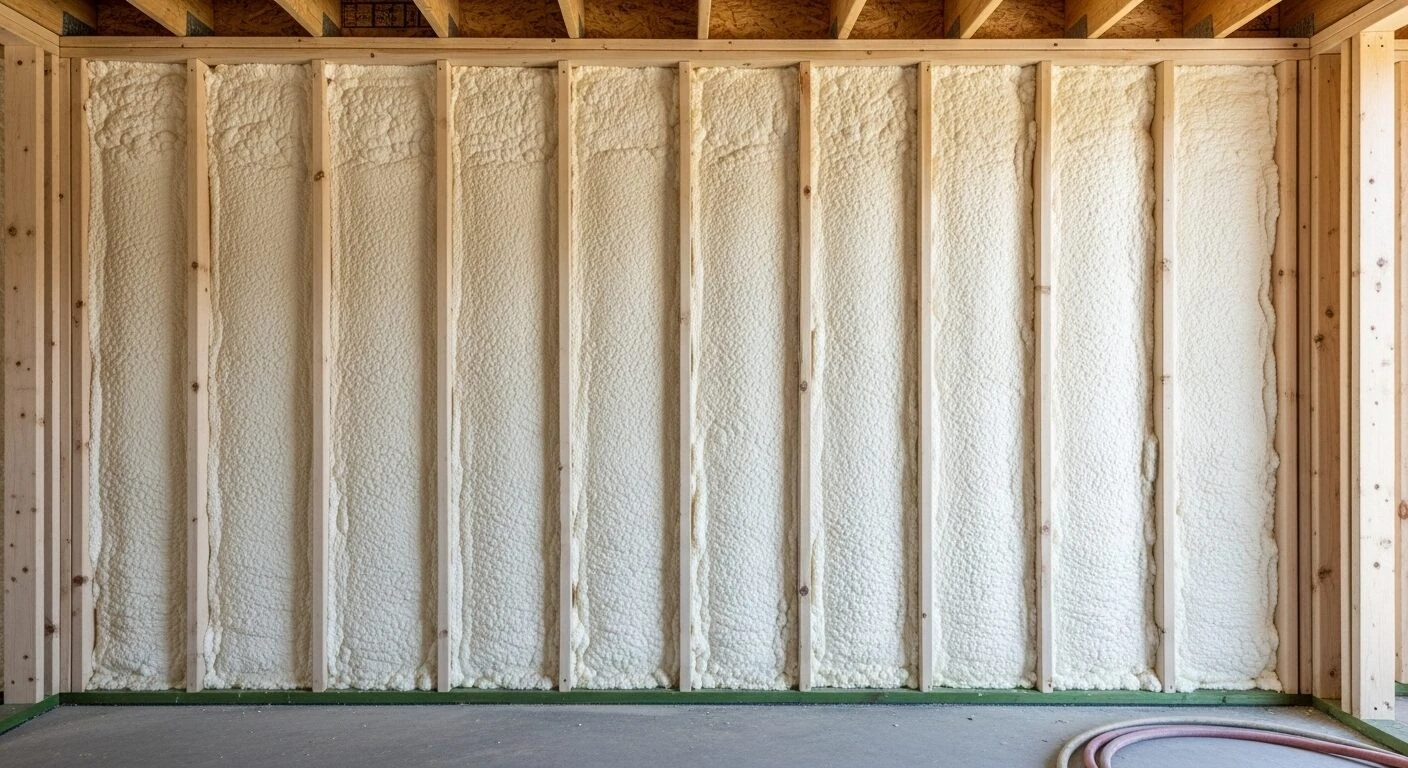
Interior Wall Cavities: Open-cell expands aggressively to fill every gap in standard 2×4 and 2×6 wall cavities. At roughly half the cost of closed-cell, it allows contractors to insulate entire homes without blowing through the budget. Its vapor-permeable nature lets any trapped moisture dry through the wall assembly, which matters in the Pacific Northwest’s humid climate.
Sound Control Between Rooms: Homeowners adding bonus rooms, home offices, or media rooms benefit from open-cell’s superior sound absorption. The open-cell structure breaks up sound waves far better than closed-cell or fiberglass batts.
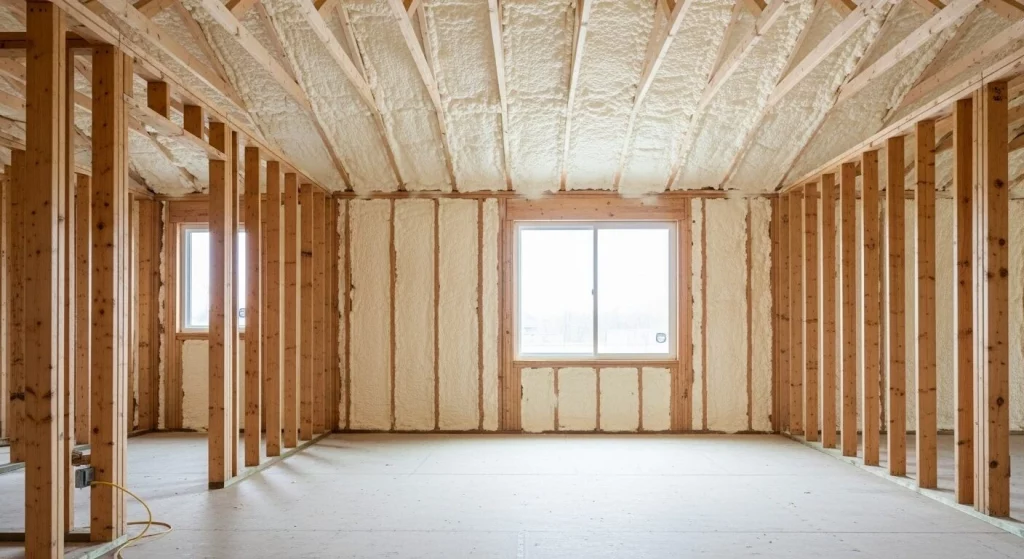
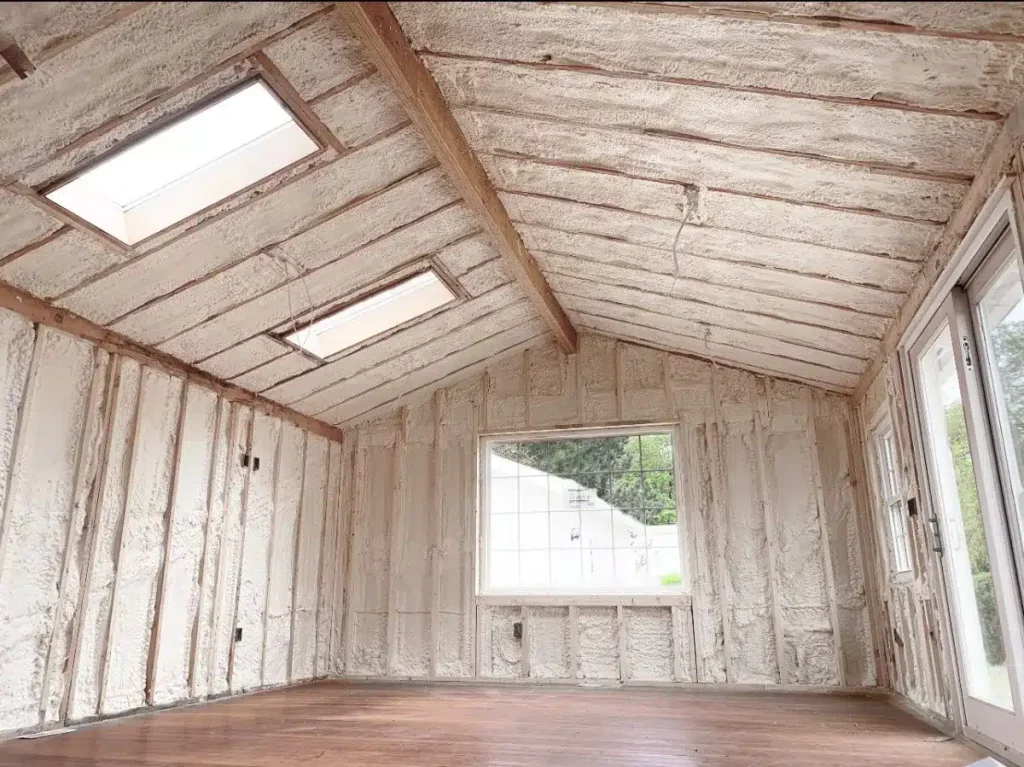
Attic Floors and Cathedral Ceilings: In vented attic assemblies, open-cell sprayed to the attic floor creates a tight air seal while remaining permeable to moisture. For cathedral ceilings with adequate depth, open-cell fills the rafter bays completely without the cost premium of closed-cell.
Large-Volume Retrofits: For contractors retrofitting older Auburn homes with little to no existing insulation, open-cell covers more square footage per dollar, making it practical for whole-house projects.
Where Closed Cell Delivers Better Returns
Closed-cell spray foam costs more upfront but delivers performance that open-cell simply cannot match in several high-demand scenarios around Auburn.
Crawl Spaces and Basement Walls: Auburn’s water table and seasonal rainfall make crawl spaces a persistent moisture challenge. Closed-cell seals the rim joist and foundation walls, creating a vapor barrier that keeps groundwater humidity from entering the living space. This is the single most common recommendation we make for Auburn crawl space encapsulation projects.
Rim Joist and Band Joist Sealing: The rim joist is one of the leakiest areas in any home. Closed-cell’s high density and adhesive properties seal the rim joist completely while adding rigidity. This application alone can cut air infiltration significantly.
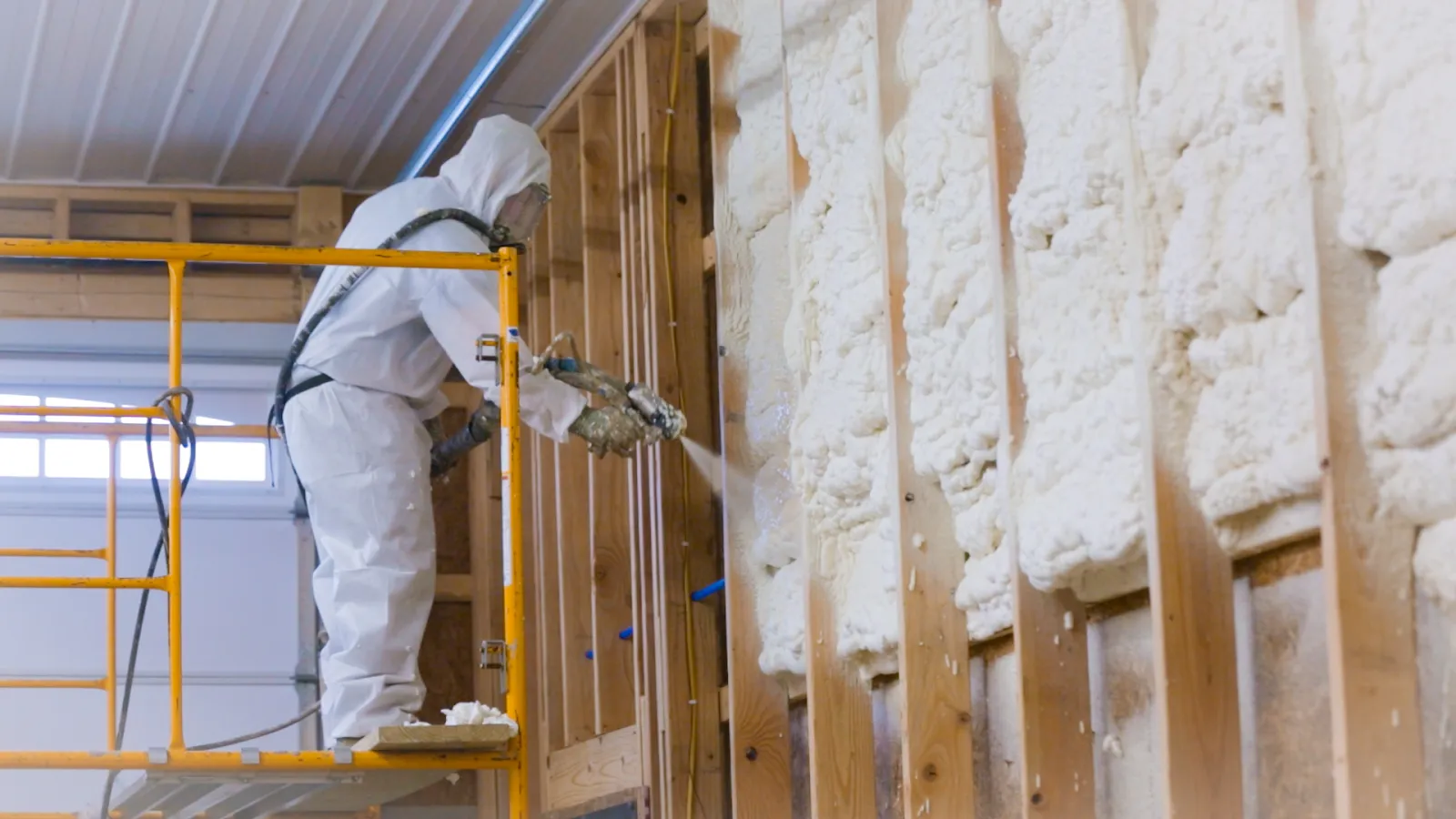
Metal Buildings and Pole Barns: Auburn has a large number of agricultural and light industrial buildings with metal framing. Closed-cell adheres to metal surfaces, provides condensation control, and delivers a high R-value in the thin profile these structures allow.
Thin Cavity Applications: When framing depth is limited, such as in 2×4 walls or between floor joists, closed-cell achieves a higher total R-value in less space. A 3.5-inch closed-cell application reaches R-22 to R-25, compared to R-13 to R-14 with open-cell.
Flood-Prone or High-Moisture Zones: Closed-cell does not absorb water. In areas near the Green River or Auburn’s low-lying zones where seasonal flooding is a concern, closed-cell insulation can survive water exposure and retain its insulating properties after drying.
Bar Chart Suggestion: A side-by-side bar chart comparing R-value per inch of open-cell (3.7) versus closed-cell (6.5) with a third bar showing fiberglass batts (3.1 to 3.4) for context, labeled with Auburn’s Climate Zone 4C compliance thresholds.
Line Graph Suggestion: A cost-versus-R-value graph showing the total installed cost per square foot on the X-axis and cumulative R-value achieved on the Y-axis for both foam types across 2-inch, 3-inch, and 4-inch depths, illustrating where closed-cell’s higher R-value per dollar breaks even with open-cell.
Real-World Auburn Contractor Scenarios
Scenario
Property Type
Recommended Option
Estimated Cost
Full wall cavity fill in new construction 2×6 framing
Single-family home, 2,400 sq ft
Open cell
$3,200 to $5,500
Crawl space encapsulation with rim joist sealing
1970s rambler, 1,600 sq ft
Closed cell
$3,000 to $5,000
Sound insulation for home office addition over garage
Remodel project
Open cell
$1,200 to $2,000
Metal shop building insulation, 30×40
Agricultural outbuilding
Closed cell
$5,500 to $9,000
Rim joist air sealing only, existing home
Retrofit, 2,000 sq ft home
Closed cell
$1,500 to $2,500
Costs are rough estimates for the Auburn, WA market and vary based on access, preparation needs, and project complexity.
Factors That Influence the Decision
Several variables determine which foam type delivers the best results on any given Auburn project.
Moisture exposure: High-moisture areas like crawl spaces, basements, and below-grade walls strongly favor closed-cell for its vapor barrier properties
Available cavity depth: Thin framing cavities make closed-cell the practical choice to meet Washington State Energy Code R-value requirements
Budget constraints: Open-cell covers more area per dollar, making it the choice for budget-sensitive whole-home projects
Sound control needs: Home theaters, offices, and multi-family partitions benefit from open-cell’s sound absorption
Structural reinforcement requirements: Closed-cell adds shear strength to wall and roof assemblies, which matters in high-wind or seismic zones
Existing building conditions: Retrofits in older Auburn homes may require different approaches depending on existing insulation, framing conditions, and ventilation systems
Code compliance: The Washington State Energy Code prescribes specific R-values for walls, ceilings, and floors in Climate Zone 4C, and the chosen foam must meet these minimums
Who Each Foam Type Is For (And Is Not)
Open Cell Spray Foam Is Best For:
Interior wall and ceiling cavities in new construction and retrofits
Projects where sound dampening is a priority
Contractors working with tight budgets on large-area insulation
Attic floor applications in vented attic assemblies
Homeowners adding finished space in basements or over garages
Open Cell Spray Foam Is NOT For:
Crawl spaces, basements, or any below-grade application
Thin cavities where a high R-value per inch is required
Buildings with chronic moisture or flooding issues
Metal building or pole barn insulation
Closed Cell Spray Foam Is Best For:
Crawl space encapsulation and rim joist sealing
Metal buildings, pole barns, and commercial structures
Flood-prone or high-moisture zones
Projects where structural reinforcement is desired
Thin framing cavities requiring maximum thermal performance
Closed Cell Spray Foam Is NOT For:
Large-area applications where budget is the primary constraint
Interior partitions where sound absorption matters more than R-value
Projects where the wall assembly needs to dry to the interior
Combining Both Foam Types on One Project
Many Auburn projects benefit from using both products strategically. A common approach is spraying closed-cell in the crawl space and rim joist for moisture control and structural benefit, then applying open-cell spray foam in the wall cavities and attic floor for cost-effective thermal and acoustic performance. This hybrid method maximizes R-value where it matters most while keeping overall project costs manageable.
FAQs
Can I use open-cell spray foam in my Auburn crawl space?
We do not recommend it. Auburn crawl spaces are exposed to ground moisture and humidity from the Puget Sound climate. Open-cell foam is vapor-permeable and can absorb moisture over time. Closed-cell spray foam creates the vapor barrier needed to keep crawl spaces dry and prevent mold growth.
Does closed-cell spray foam add structural strength to my building?
Yes. Closed-cell spray foam adheres to framing and sheathing, increasing the rigidity of wall and roof assemblies by up to 75 to 200 percent in some studies. This added shear strength is beneficial in seismic zones and high-wind areas, which matters for Puget Sound region buildings.
How does spray foam compare to fiberglass for Washington State Energy Code compliance?
Spray foam air seals as it insulates, which fiberglass batts cannot do. The Washington State Energy Code prescriptive requirements for Climate Zone 4C can be met with either material in terms of R-value, but spray foam eliminates the air leakage that degrades fiberglass performance. In practice, a spray foam installation often outperforms the code minimum even at the same rated R-value.
How long does spray foam insulation last in a Pacific Northwest home?
Both open-cell and closed-cell spray foam are considered permanent insulation materials when installed correctly. They do not settle, sag, or degrade over time like fiberglass or cellulose. Closed cell foam also resists moisture absorption, which is especially important in the Auburn area, where humidity is a year-round factor.
Can spray foam be installed over existing insulation?
In some cases, yes. Closed-cell spray foam can be applied directly over fiberglass in crawl spaces or attics to add R-value and create an air seal. Open cell can also be used in certain retrofit scenarios. An on-site assessment is needed to evaluate the existing insulation condition, moisture levels, and framing before determining the best approach.
Ready to Choose the Right Spray Foam for Your Auburn Project?
Choosing between open-cell and closed-cell spray foam in Auburn, WA, is not about picking the better product. It is about matching the right product to the right application. Cascadia Spray Foam has insulated homes, commercial buildings, and agricultural structures throughout the Auburn area, and we understand how Climate Zone 4C conditions affect material performance. Our team assesses each project individually, factoring in moisture exposure, framing depth, budget, and code requirements to recommend the foam type, or combination, that delivers the best long-term value.
Reach us at [email protected] or call (425) 386-3500 to discuss your project. We serve Auburn and the surrounding Puget Sound communities with professional spray foam installation built to perform in the Pacific Northwest.
I’m Melissa Grant, owner of Cascadia Spray Foam Insulation, with over 10 years of hands-on spray foam experience. I focus on durable insulation solutions, improved comfort and energy efficiency, and excellent customer service.
Selecting the right commercial insulation for warehouses comes down to five considerations: thermal performance matched to your climate zone, air sealing, moisture and vapor control, code compliance, and installation quality.…
Residential insulation addresses heat transfer through attic assemblies by slowing all three ways heat moves: conduction through framing and drywall, convection through air leaks, and radiation from a hot roof…
Open-cell spray foam provides useful coverage across irregular areas wherever a cavity is too deep, too uneven, or too cluttered with framing, wiring, and pipes for batts or rigid boards…