How to get rid of mice in your attic by applying attic insulation?
Melissa Grant
May 22nd, 2026
Getting rid of mice in your attic requires more than setting a few traps. The most effective, long-term solution is removing contaminated insulation, sealing every entry point, and re-insulating with a material that eliminates nesting opportunities and blocks future access. Spray foam insulation, particularly closed-cell, does both by expanding into gaps and hardening into a dense barrier that mice cannot tunnel through or easily chew. Combined with proper exclusion and cleanup protocols, new attic insulation eliminates the conditions that attract mice and restores the thermal performance of your home, as explained in this attic insulation guide.
TL;DR
Mice can fit through openings as small as a quarter inch, making complete sealing of all attic entry points the single most important step
Contaminated insulation must be removed before installing new material, as mouse droppings and urine carry bacteria and can compromise air quality
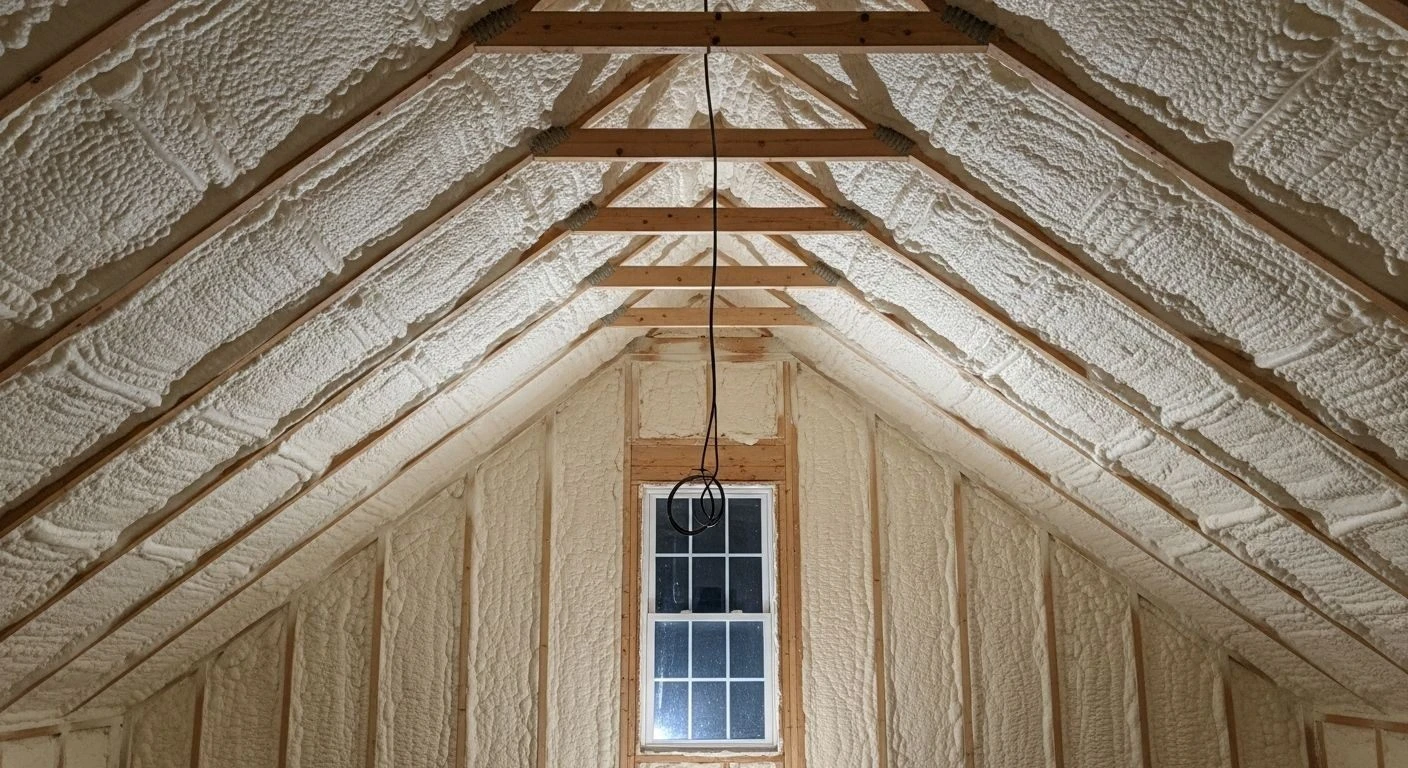
Closed-cell spray foam creates an air-sealed, dense barrier that eliminates voids where mice nest and blocks the gaps they use to enter
Fiberglass batts and blown-in insulation provide no meaningful resistance to mice and often become nesting material
The EPA recommends an integrated pest management approach that prioritizes prevention and exclusion over chemical treatments
Proper attic ventilation must be maintained when adding insulation to prevent moisture problems
ENERGY STAR recommends R-49 to R-60 for uninsulated attics in most climate zones, depending on your location
Trapping alone will not solve the problem if entry points remain open and insulation still holds nesting material
Why Mice Target Attic Insulation
Attics offer everything mice need to survive and reproduce. Warmth radiates from the living space below, insulation provides soft nesting material, and the space is typically undisturbed by humans. Fiberglass batts and blown-in insulation are especially attractive because mice can tunnel through them with minimal effort, creating elaborate networks of pathways and nesting chambers, which reduces overall attic insulation ROI over time.
According to the CDC’s rodent prevention guidance, mice can fit through an opening the width of a pencil, roughly one-quarter inch in diameter. Once inside, they contaminate insulation with droppings, urine, and nesting debris. Over time, this degrades the insulation’s thermal performance and introduces allergens and potential pathogens into the living space through air leaks and ductwork.
Research published by the National Institutes of Health found that relying solely on rodenticides achieved only a 63% reduction in mouse activity after ten weeks of continuous baiting in one building, while buildings that combined exclusion with baiting saw reductions of 87% or more. The study concluded that “incorporating exclusion to prevent continual mouse entry from outside and the use of a combination of several preventive control methods will likely achieve better control results.” This directly supports the approach of removing contaminated insulation, sealing entry points, and replacing with pest-resistant materials.
How Different Attic Insulation Types Compare Against Mice
Not all insulation performs the same when it comes to deterring rodents. The material you choose makes a meaningful difference in whether mice can enter, nest, and survive in your attic.
Insulation Type
R-Value per Inch
Air Barrier
Rodent Resistance
Best Application
Closed-cell spray foam
R-6.5 to R-7
Yes, when 1+ inch
High, dense and difficult to chew
Attic roof decks, rim joists, entry point sealing
Open-cell spray foam
R-3.5 to R-3.7
Yes
Low, mice can tunnel through
Wall cavities, non-rodent areas
Fiberglass batts
R-2.9 to R-3.8
No
Very low, ideal nesting material
Standard attic floors
Blown-in fiberglass
R-2.2 to R-2.7
No
Very low, easy tunneling
Attic floors, existing coverage
Blown-in cellulose
R-3.1 to R-3.8
No
Low to moderate, some treated with borates
Attic floors, dense pack walls
Rigid foam board
R-3.8 to R-6.5
No (joints leak)
Moderate, hard but joints vulnerable
Basement walls, attic baffles
Closed-cell spray foam stands apart because it expands to fill the exact shape of every gap, crack, and void during installation. Once cured, it hardens into a rigid structure that does not offer the loose, fibrous texture mice prefer for nesting. The Department of Energy notes that insulation that fills building cavities also reduces airflow and leakage, which directly eliminates the drafts and air movement that help rodents detect comfortable temperatures inside a home.
The Step-by-Step Process: From Infestation to Protected Attic
Step 1: Identify and Seal All Entry Points
Before touching any insulation, every potential mouse entry point must be located and sealed. The CDC recommends checking inside and outside the home, paying special attention to areas around pipes, electrical lines, vents, soffits, eaves, and the foundation. Any opening larger than one-quarter inch must be closed using appropriate materials. For small holes, the CDC suggests filling with steel wool and sealing with caulk or spray foam. Larger holes require metal flashing, hardware cloth, or cement.
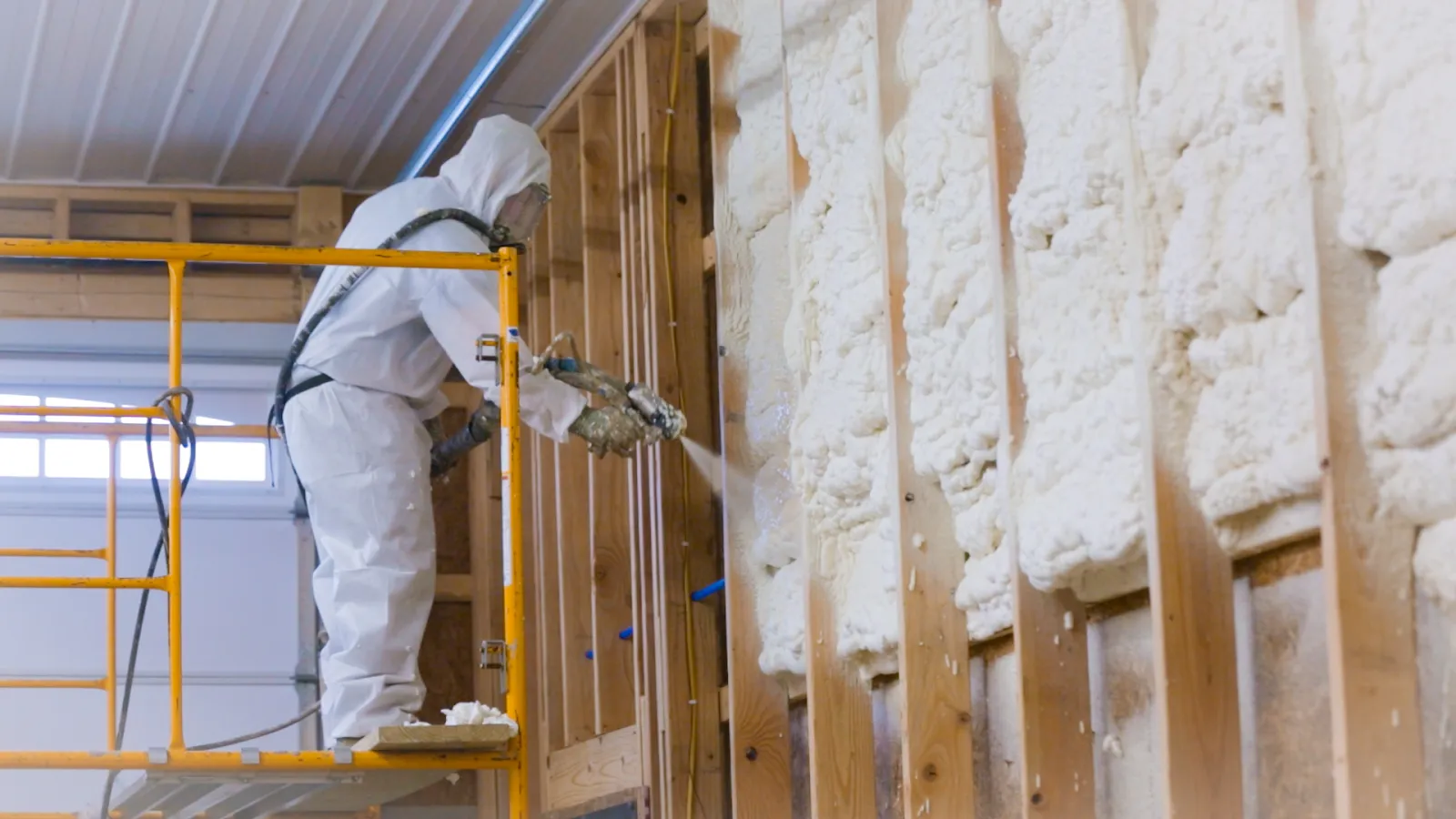
Spray foam is effective for sealing many of these gaps because it expands to fill irregular shapes and adheres to surrounding materials. However, for the largest structural openings, combining spray foam with wire mesh or metal flashing adds an extra layer of protection.
Step 2: Remove Contaminated Insulation
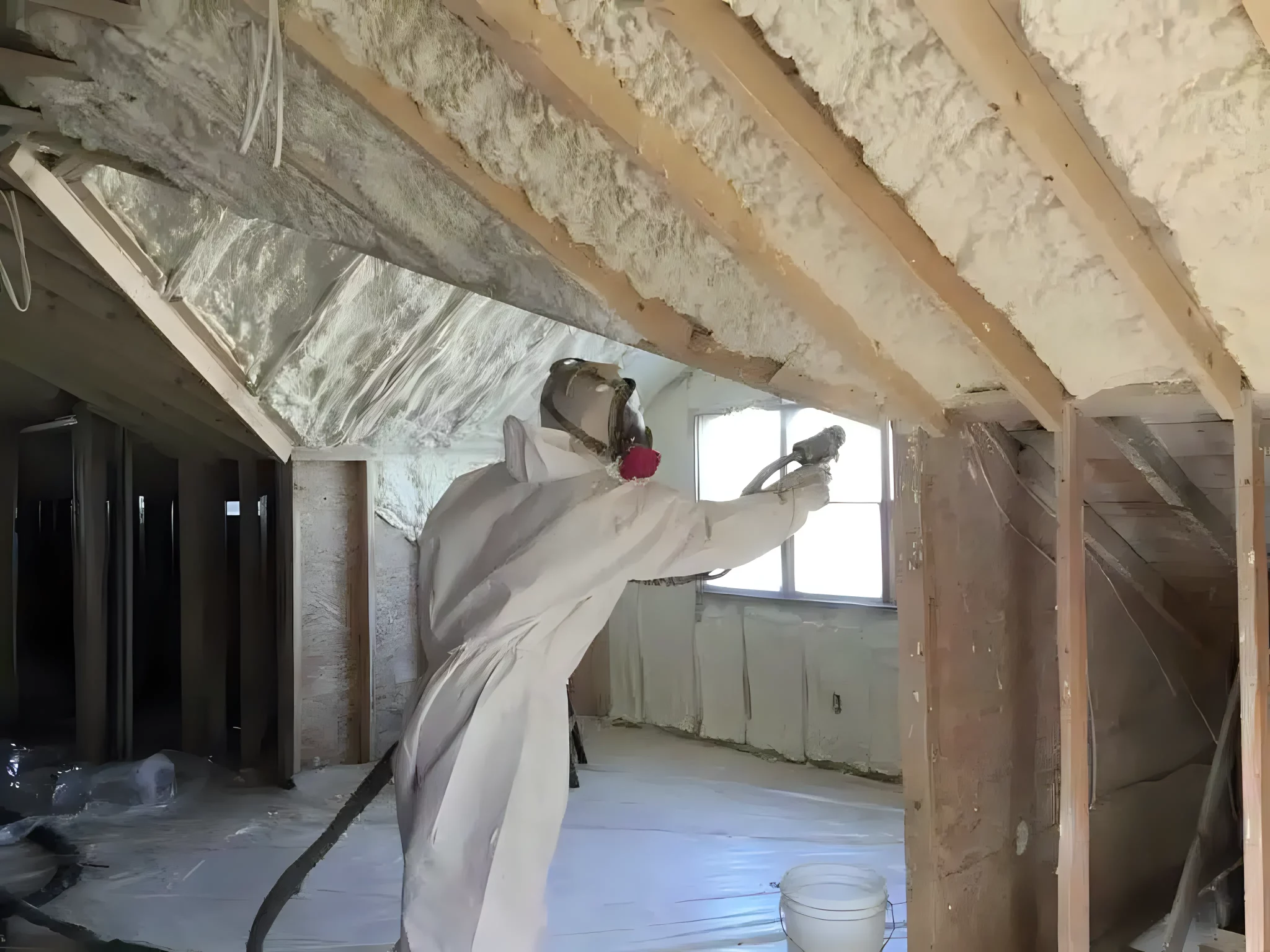
If mice have been active in the attic, the existing insulation is contaminated. The CDC’s cleanup guidance warns against vacuuming or sweeping rodent droppings, as this launches contaminated particles into the air. Instead, contaminated materials should be sprayed with a disinfectant solution, allowed to soak for five minutes, and then placed into plastic bags for removal. If the infestation is heavy, the CDC recommends protective equipment including a respirator with a HEPA filter, goggles, gloves, and disposable coveralls.
Contaminated insulation cannot be salvaged. It must be removed entirely, along with any nesting materials, dead rodents, and debris. This step also exposes the full extent of entry points that may have been hidden beneath the insulation.
Step 3: Clean and Disinfect the Attic Space
After removing insulation, the exposed attic surfaces need thorough cleaning and disinfection. Hard surfaces should be mopped or wiped with an EPA-registered disinfectant or a bleach solution of one part bleach to nine parts water. Wooden framing, sheathing, and any remaining structural elements should be inspected for gnawing damage that may need repair before new insulation goes in.
Step 4: Install New Insulation With Rodent-Resistant Properties
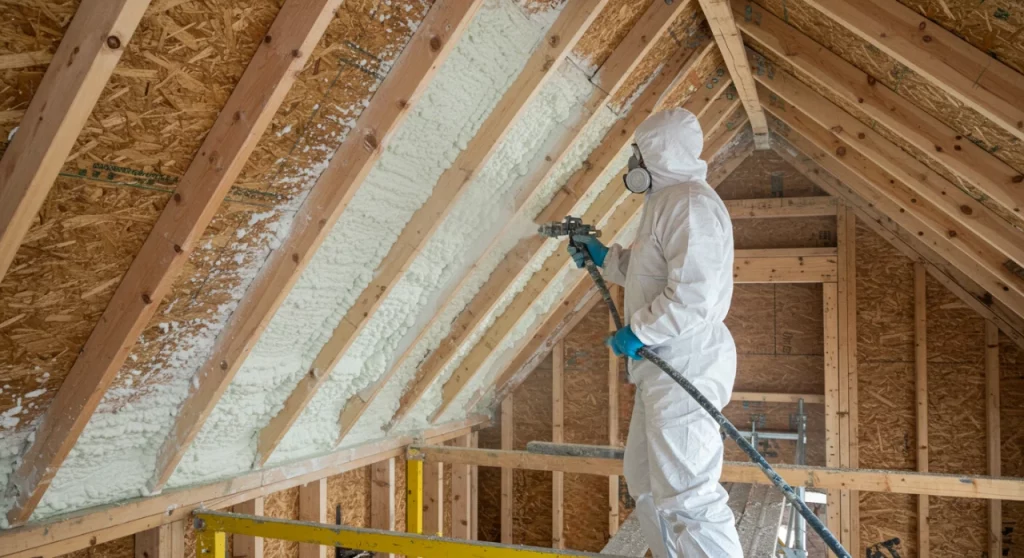
With the attic clean and sealed, the new insulation goes in. Closed-cell spray foam applied to the roof deck creates a continuous air and thermal barrier that also eliminates the void between insulation and sheathing where mice commonly travel. For attic floor applications, dense-packed materials with pest-deterrent additives offer better resistance than standard fiberglass.
The U.S. Department of Energy emphasizes that properly insulating your home reduces heating and cooling costs while improving comfort, and that air sealing works together with insulation to maximize performance. According to ENERGY STAR recommendations, uninsulated attics in climate zones 4 through 8 should achieve R-49 to R-60, depending on the zone and existing insulation levels.
Step 5: Ongoing Monitoring and Maintenance
Even with new insulation and sealed entry points, monitoring is necessary. The EPA’s integrated pest management framework recommends regular inspections to catch any new rodent activity early, before it becomes a full infestation. Setting snap traps in key attic locations and checking them monthly provides a simple, early warning system.
Real-World Scenarios
The following examples illustrate how different attic situations call for different insulation strategies.
Scenario
Home Type
Problem
Solution
Outcome
1970s rambler with blown fiberglass
Single-family, 1,400 sq ft
Mice tunneled through 8 inches of blown fiberglass, contaminating roughly 60% of the attic floor
Full removal of blown fiberglass, sealing of soffit vents and pipe penetrations with closed-cell spray foam, and re-insulated with blown cellulose
No re-infestation after 14 months, improved heating efficiency
Two-story home with a knee wall attic
Single-family, 2,200 sq ft
Mice entering through the gap between the roof sheathing and the fascia board, nesting in fiberglass batts
Closed-cell spray foam was applied along the entire rim joist and roof-to-wall transition, and damaged batts were replaced
Entry points eliminated, no further nesting activity
Ranch home with vented attic and ductwork
Single-family, 1,600 sq ft
Mice nesting on top of fiberglass batts near warm HVAC ducts, droppings visible on insulation surface
Contaminated batts removed, duct seams sealed, closed-cell foam applied to attic floor penetrations, new batts installed with foam board baffles
Duct leakage reduced, no mouse activity detected at 6-month follow-up
Attached garage with open attic access
Townhouse
Mice traveling from garage wall cavity into attic through unsealed chase
Garage-to-attic chase sealed with closed-cell spray foam, rim board insulated, garage wall cavity cleared and foamed
Migration route eliminated, trapping confirmed no remaining activity
Factors That Affect Long-Term Performance
Several variables influence how well your new attic insulation will continue to keep mice out and maintain thermal performance over time.
Entry point completeness. Mice only need one unsealed gap to re-enter. The EPA’s IPM approach stresses that pest prevention depends on removing conditions that attract pests, including shelter and access. Every single penetration, no matter how small, must be addressed.
Insulation thickness and R-value. The Department of Energy notes that R-value depends on the type of insulation, its thickness, and its density. Inadequate insulation thickness leaves the attic vulnerable to temperature fluctuations that can create condensation, which in turn can degrade insulation materials over time.
Ventilation balance. Spray foam applied to the roof deck changes the attic from a vented to an unvented assembly. This requires careful attention to building codes and moisture control. If spray foam is applied only to the attic floor, existing ventilation must be maintained and baffles installed to prevent insulation from blocking soffit vents.
Installation quality. Gaps, voids, or thin spots in spray foam application create weak points where mice could potentially gnaw through or where air leaks reduce thermal performance. Professional installation with experienced crews produces more consistent coverage.
Building age and construction type. Older homes with balloon framing, unsealed tops of wall cavities, and numerous utility penetrations present more entry points than newer construction. These homes require more thorough inspection and sealing before insulation is applied.
The Case for Professional Installation
Applying spray foam insulation in an attic with a history of rodent activity involves contamination cleanup, precise identification of entry points, and correct foam application to meet building code requirements. Our team handles every phase of this process, starting with a thorough attic inspection to identify contamination levels and all potential rodent access points.
We use closed-cell spray foam to seal penetrations and create a continuous barrier, then install appropriate insulation to meet or exceed ENERGY STAR recommendations for your climate zone. Our professionals also ensure that ventilation requirements are met and that the finished assembly complies with local building codes.
Ready to Protect Your Attic
Cascadia Spray Foam specializes in resolving attic rodent problems through professional insulation removal, complete entry point sealing, and expert spray foam installation. Our experienced team evaluates your attic, removes contaminated materials safely, and applies insulation that keeps mice out while improving your home’s energy efficiency. Contact us at [email protected] or call (425) 386-3500 to get started.
Frequently Asked Questions
Can mice chew through closed-cell spray foam?
Mice have strong teeth and can technically gnaw through many materials, including cured spray foam. However, closed-cell spray foam is dense and rigid, making it much more difficult and time-consuming to chew through than fiberglass or open-cell foam. Its real value is in sealing the tiny gaps and cracks that mice use to enter, eliminating access points before mice even attempt to chew.
Do I need to remove all my attic insulation after finding mouse droppings?
If mice have been active in your attic, contaminated insulation should be removed. The CDC advises that insulation exposed to rodent urine and droppings should be bagged and disposed of, not left in place. Leaving contaminated insulation means leaving bacteria, allergens, and potential pathogens in direct contact with your living space.
Is spray foam insulation alone enough to keep mice out?
No. Spray foam is an effective tool for sealing entry points and creating a resistant barrier, but it should be part of a broader integrated pest management approach. The EPA recommends combining exclusion, sanitation, and monitoring for the best results. Trapping, removing food sources, and maintaining the exterior of the home all contribute to keeping mice out permanently.
How long does it take to replace attic insulation after a mouse infestation?
The timeline depends on the severity of the infestation and the size of the attic. A typical project involves one to two days for contaminated insulation removal and attic cleaning, followed by one to two days for sealing entry points and installing new insulation. Larger attics or heavy contamination may take longer.
Will new attic insulation also improve my home’s energy efficiency?
Yes. Removing compressed, contaminated insulation and replacing it with properly installed spray foam restores the thermal resistance your attic needs. The Department of Energy confirms that proper insulation reduces heating and cooling costs and improves comfort, especially when combined with effective air sealing of gaps and penetrations.
Sources
CDC – How to Clean Up After Rodents – Official guidance on safe cleanup procedures for rodent-contaminated areas, including recommended disinfectants, protective equipment, and proper handling of contaminated insulation and nesting materials.
CDC – How to Seal Up to Prevent Rodents – Detailed instructions for identifying and sealing rodent entry points around the home, including specific locations to check and recommended materials such as steel wool, hardware cloth, and spray foam.
EPA – Introduction to Integrated Pest Management – Overview of the EPA’s IPM framework emphasizing pest prevention, exclusion, and the combined use of multiple control strategies rather than reliance on chemical treatments alone.
U.S. Department of Energy – Insulation – Comprehensive guide to how insulation works, R-value specifications by climate zone, and the relationship between insulation, air sealing, and home energy efficiency.
I’m Melissa Grant, owner of Cascadia Spray Foam Insulation, with over 10 years of hands-on spray foam experience. I focus on durable insulation solutions, improved comfort and energy efficiency, and excellent customer service.
Selecting the right commercial insulation for warehouses comes down to five considerations: thermal performance matched to your climate zone, air sealing, moisture and vapor control, code compliance, and installation quality.…
Residential insulation addresses heat transfer through attic assemblies by slowing all three ways heat moves: conduction through framing and drywall, convection through air leaks, and radiation from a hot roof…
Open-cell spray foam provides useful coverage across irregular areas wherever a cavity is too deep, too uneven, or too cluttered with framing, wiring, and pipes for batts or rigid boards…