A Complete Step by Step Guide How to Install Attic Insulation?
Melissa Grant
May 22nd, 2026
If you have ever walked upstairs on a July afternoon and felt like you just stepped into an oven, or noticed your heating bill climbing every winter despite keeping the thermostat low, the problem might be sitting right above your head. Most homes lose a significant amount of their conditioned air through the attic, making it one of the most impactful places to improve your home’s thermal performance through proper attic insulation.
According to ENERGY STAR, the EPA estimates that homeowners can save an average of 15% on heating and cooling costs (or an average of 11% on total energy costs) by air sealing their homes and adding insulation in attics, floors over crawl spaces, and accessible basement rim joists. Those savings climb even higher in northern climates, reaching up to 19% on heating and cooling alone in the coldest zones.
This guide covers everything you need to know about installing attic insulation from start to finish. We have spent years working in insulation and have seen firsthand what separates a job that performs for decades from one that leads to moisture problems, wasted energy, and expensive callbacks. Whether you are a homeowner considering a DIY project or simply want to understand the process before hiring a professional, the sections below will walk you through the fundamentals, the materials, the step-by-step installation process, and the mistakes that trip people up most often.
Why Attic Insulation Matters
Heat moves through your home in three ways: conduction (through solid materials), convection (through air currents), and radiation (as direct heat energy). In a home without adequate attic insulation, all three mechanisms work against you. In winter, the warm air from your living spaces rises naturally through convection, passes through any gaps or poorly insulated areas in the ceiling, and escapes into the attic and eventually outdoors. In summer, the sun heats your roof, and that radiant energy pours into the attic, forcing your air conditioning system to work overtime.
The U.S. Department of Energy explains that most common insulation materials work by slowing conductive and convective heat flow. The higher the insulation’s resistance to heat flow (measured as R-value), the less energy your HVAC system needs to maintain a comfortable indoor temperature.
Beyond energy savings, proper attic insulation delivers several other benefits. It reduces temperature differences between rooms, eliminating those annoying hot or cold spots. It helps prevent ice dams in winter by keeping the attic temperature closer to the outdoor temperature so snow does not melt and refreeze at the gutters. It can also reduce noise transmission from outside and improve indoor air quality by reducing the conditions that encourage mold growth.
Key Takeaways:
The attic is typically the single largest source of energy loss in a home
Proper insulation addresses all three types of heat transfer: conduction, convection, and radiation
R-value measures an insulation material’s resistance to heat flow. The higher the R-value, the better the insulation performs. R-value depends on the type of insulation, its thickness, and its density. When you stack layers of insulation, you add their R-values together to get the total thermal resistance.
The amount of insulation you need depends heavily on where you live. The ENERGY STAR recommended R-values provide a clear breakdown by climate zone. Here is a simplified reference table:
Climate Zone
Uninsulated Attic
Existing 3-4 Inches
Zone 1 (Hot)
R30
R25
Zone 2 (Warm)
R49
R38
Zone 3 (Mixed)
R49
R38
Zone 4 (Mixed)
R60
R49
Zone 5-6 (Cold)
R60
R49
Zone 7-8 (Very Cold)
R60
R49
As you can see, homes in colder zones need significantly more insulation. A home in Minnesota (Zone 7) needs R-60 in the attic, while a home in South Florida (Zone 1) only needs R-30. If your attic already has 3 to 4 inches of older insulation, you still likely need to add more to reach current recommendations.
Expert Tip: You can check your current insulation depth with a ruler or tape measure. Fiberglass batts typically deliver about R-3 per inch, and blown-in cellulose delivers about R-3.5 per inch. If you measure 6 inches of fiberglass in a Zone 4 attic, you are sitting at roughly R-18, which is well below the R-60 target. You will need to add a second layer to close that gap.
Types of Attic Insulation
Not all insulation is created equal, and the best choice depends on your attic’s configuration, your budget, whether you plan to use the attic for storage, and your climate zone. Here are the main options:
Fiberglass Batts and Rolls
Fiberglass batts come in pre-cut panels or continuous rolls, typically with a paper or foil facing (which acts as a vapor retarder) or unfaced. They are the most common choice for DIY attic projects because they are easy to handle and do not require special equipment. Standard fiberglass delivers roughly R-3.0 to R-3.3 per inch.
Pros: Widely available, easy to install for DIYers, relatively affordable, works well in standard joist cavities.
Cons: Can be compressed during installation (which lowers effective R-value), difficult to fit around obstacles like wiring and ductwork, gaps and voids reduce performance significantly.
Blown-In Insulation (Cellulose or Fiberglass)
Blown-in insulation consists of loose fibers that are pneumatically blown into the attic space using a machine. Cellulose is made from recycled paper treated with fire retardants and delivers roughly R-3.5 to R-3.8 per inch. Loose-fill fiberglass delivers roughly R-2.2 to R-2.7 per inch.
Pros: Fills irregular spaces and gaps effectively, conforms around obstructions, provides more complete coverage than batts in hard-to-reach areas.
Cons: Requires a blowing machine (often rented from home improvement stores), needs two people (one in the attic, one operating the machine), can settle over time reducing effective R-value.
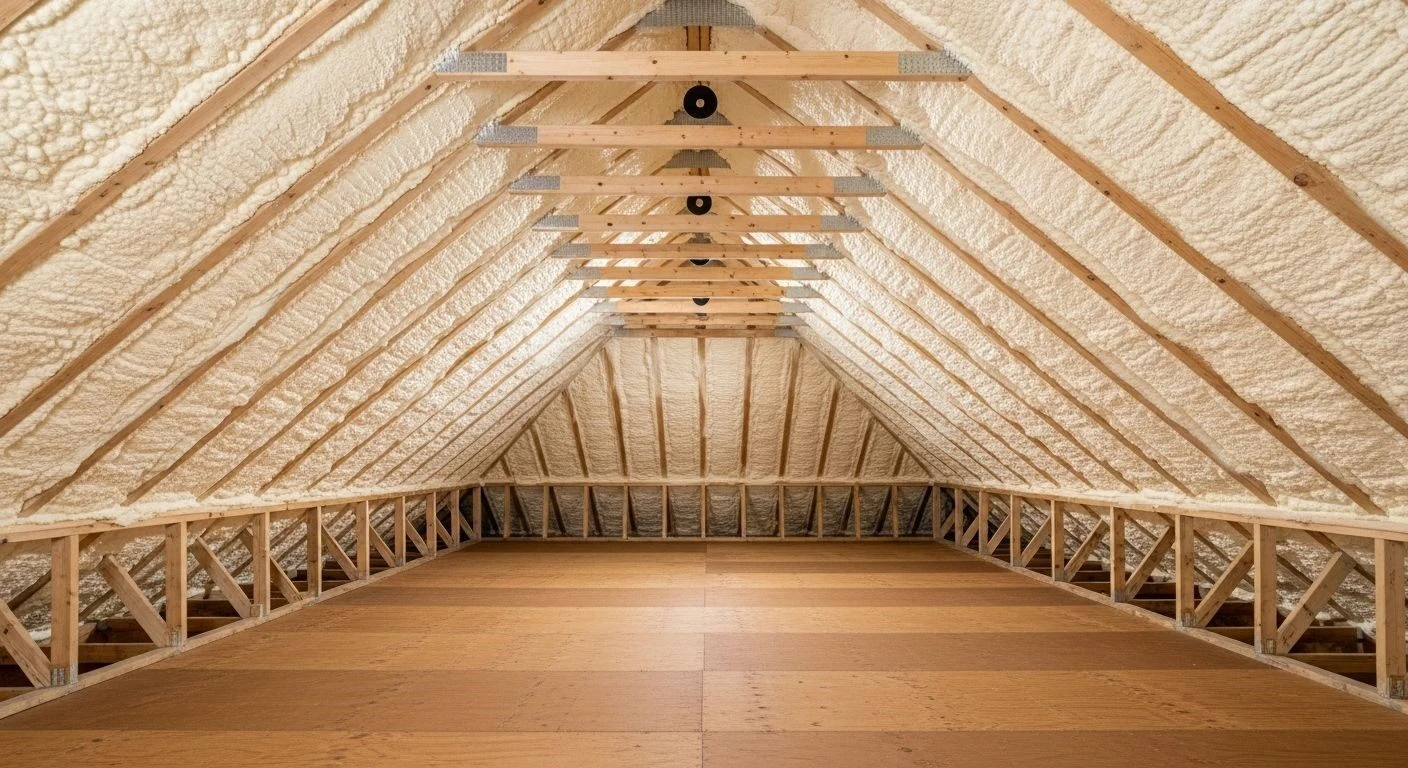
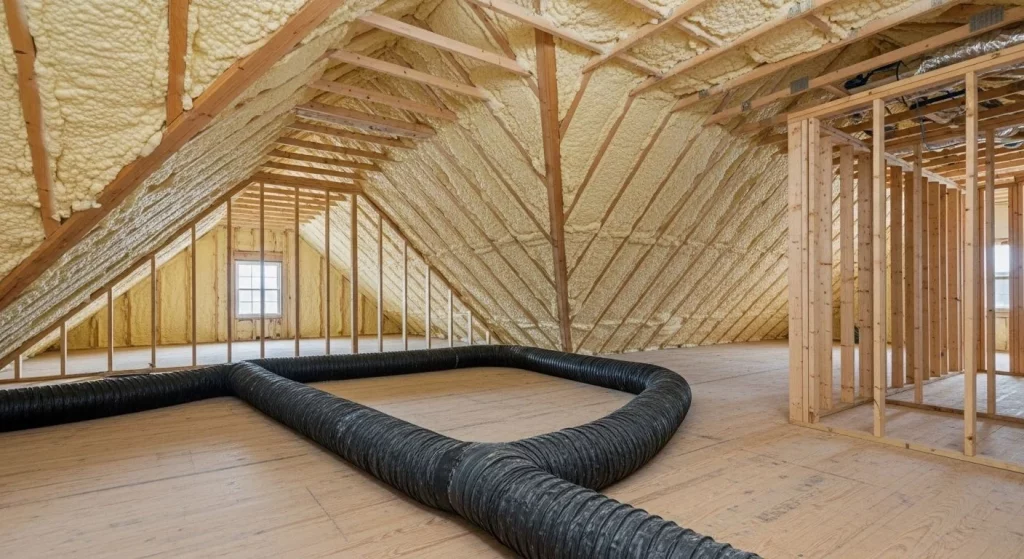
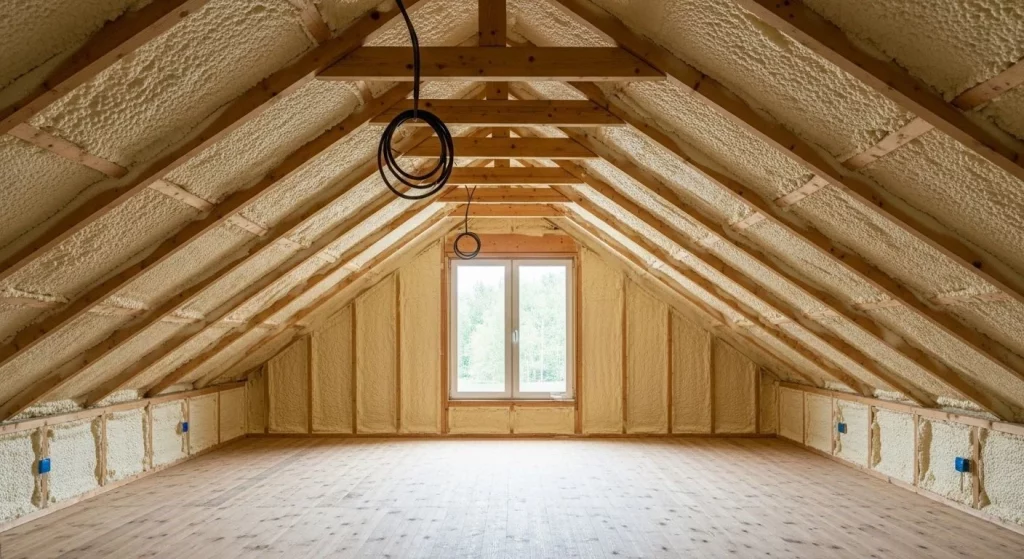
Spray Foam Insulation
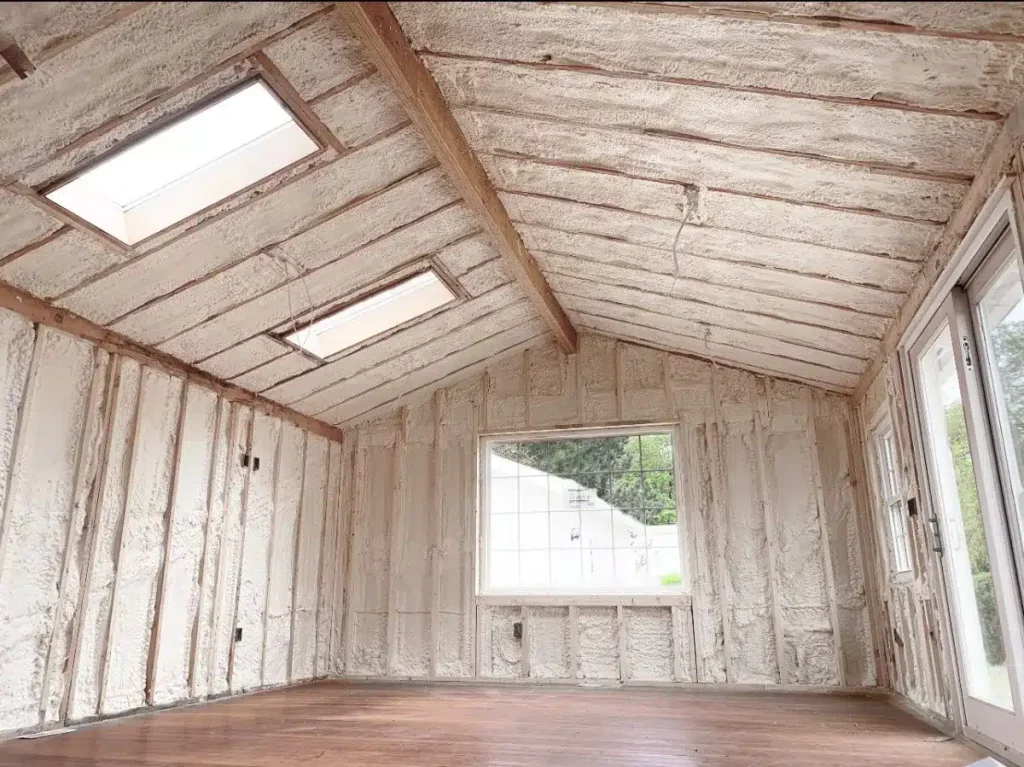
Spray foam comes in two main varieties: open-cell and closed-cell. Open-cell spray foam has an R-value of roughly R-3.5 to R-3.7 per inch and expands significantly to fill gaps. Closed-cell spray foam delivers roughly R-6.0 to R-6.5 per inch, is denser, and also acts as a vapor barrier and air seal.
Pros: Excellent air sealing in addition to insulating, fills gaps and cracks completely, highest R-value per inch among common insulation types, resists moisture.
Cons: Most expensive option, requires professional installation, not a typical DIY project, can require removal of existing insulation to apply at the roof deck.
Insulation Type
R-Value Per Inch
DIY Friendly
Air Sealing
Best For
Fiberglass Batts
R-3.0 to R-3.3
Yes
Minimal
Standard joist cavities, flat attic floors
Blown-In Cellulose
R-3.5 to R-3.8
Moderate
Good
Irregular spaces, topping up existing insulation
Blown-In Fiberglass
R-2.2 to R-2.7
Moderate
Good
Large open attic areas
Open-Cell Spray Foam
R-3.5 to R-3.7
No
Excellent
Roof deck applications, air sealing
Closed-Cell Spray Foam
R-6.0 to R-6.5
No
Excellent
Limited space, moisture-prone areas
Expert Tip: If you are adding insulation on top of what is already in your attic, you can mix types. For example, you can lay unfaced fiberglass batts over existing blown-in cellulose, or add blown-in insulation over existing fiberglass batts. Just make sure any new batt insulation is unfaced, since adding a second vapor barrier can trap moisture between the layers.
Tools and Materials You Will Need
Gather everything before you climb into the attic. Multiple trips up and down the pull-down stairs waste time and energy, especially in a hot attic. Here is a comprehensive checklist:
Safety Equipment:
Safety glasses or goggles
N95 respirator or dust mask
Work gloves (heavy-duty)
Disposable coverall suit
Hard hat or thick cap to protect against roofing nails
Knee pads for crawling
Portable work light or headlamp
Insulation Materials:
Insulation (batts, rolls, or blown-in material)
Rafter vents (baffles) for soffit ventilation
Sheet metal or wire mesh for barriers around fixtures
Vapor barrier material (if required by your climate zone)
Caulk or spray foam sealant for air sealing
Hand Tools:
Tape measure
Utility knife with sharp blades
Straight edge or cutting board
Staple gun and staples
Flashlight
Boards or plywood panels to walk on
Marking crayon or marker for depth guides
Safety Precautions Before You Start
Attics can be hazardous workspaces. Before you begin any insulation work, take these precautions seriously. Our team has encountered every attic condition imaginable over the years, and we cannot stress safety enough.
Watch your footing. Step only on joists or truss chords, never on the ceiling drywall between them. One wrong step can put your leg through the ceiling. Lay plywood panels across the joists to create a safe walking surface.
Protect yourself from insulation fibers. Fiberglass and mineral wool particles irritate skin, eyes, and lungs. Wear a long-sleeved disposable coverall, gloves, safety glasses, and an N95 respirator at all times. It only takes a few minutes of exposure without protection to cause significant discomfort.
Check for hazardous materials. If your attic contains lightweight, flaky gray granules, it may be vermiculite insulation, which can contain asbestos. Do not disturb it. Have it tested by an approved lab before proceeding. Also check for knob-and-tube wiring (pre-1930s), which is a fire hazard when covered by insulation and should be addressed by a licensed electrician first.
Look for moisture problems. Wet or damp insulation, moldy rafters, or water stains indicate a roof leak that must be repaired before adding new insulation. Installing insulation over a leak traps moisture and accelerates wood rot.
Ensure proper ventilation. Before adding insulation, confirm that your attic has adequate ventilation. Soffit vents at the eaves and ridge vents or gable vents at the top create the natural airflow needed to remove excess heat and moisture.
Plan around the heat. If you are working in summer, start early in the morning. Attic temperatures can exceed 120 degrees Fahrenheit by midday. Drink plenty of water and take frequent breaks.
Expert Tip: Before starting any insulation project, we recommend getting a professional home energy audit. An auditor will use a blower door test and infrared camera to identify exactly where air leaks occur and how much insulation you need. This targeted approach often saves money by ensuring you address the most impactful areas first.
Step-by-Step Attic Insulation Installation
Now we get into the actual installation process. Follow these steps in order for the best results.
Step 1: Inspect and Prepare the Attic Space
Start with a thorough inspection. Climb into the attic with your flashlight and check for the following:
Signs of roof leaks (water stains, damp insulation, mold)
Existing insulation type, depth, and condition
Knob-and-tube wiring or other electrical hazards
Vermiculite insulation (do not disturb if present)
Bathroom or kitchen exhaust vents that may be dumping moist air into the attic instead of venting outside
Adequate soffit and ridge ventilation
Chimney or flue pipes that need clearance
According to the Building America Solution Center, before any retrofit work begins, you should inspect the roof and attic, repair any leaks, remove active knob and tube wiring, and remediate any hazardous materials. If existing bath fans vent into the attic, they must be redirected to vent outside.
Remove any debris or damaged insulation from the work area. If your existing insulation is in good condition and free of contamination, you can work over it. If it is compacted, wet, or contains animal droppings or construction debris, it is best to remove it and start fresh.
Step 2: Air Seal the Attic Floor
This is the step most DIYers skip, and it is arguably the most important. Air sealing the attic floor before adding insulation prevents warm indoor air from leaking into the attic around gaps, penetrations, and joints. Insulation without air sealing is like wearing a thick winter coat with the zipper open.
Seal the following areas with caulk or spray foam:
Top plate-to-drywall seams along all exterior walls
Around electrical wire penetrations
Around plumbing vent pipes
Around recessed light fixtures (use approved covers for non-IC-rated fixtures)
Around the attic hatch or pull-down stair opening
Any gaps around ductwork penetrations
The Building America Solution Center recommends sealing all ceiling joints and penetrations with sealant, including top plate-to-drywall seams and top plate-to-baffle seams. Use solid blocking for larger holes, and install metal blocking and collars around hot flues to maintain the required clearance from insulation.
Key Takeaways:
Air sealing before insulating is essential. Gaps and air leaks dramatically reduce insulation effectiveness.
Focus on top plate seams, penetrations for wires and pipes, and around light fixtures.
Use caulk for small gaps (less than 1/4 inch) and spray foam for larger gaps.
Step 3: Install Rafter Vents (Baffles)
Rafter vents, also called insulation baffles, maintain the airflow path from your soffit vents up to your ridge or gable vents. Without them, insulation will block the soffit vents when you install it, cutting off ventilation and setting the stage for moisture problems and roof damage.
ENERGY STAR provides clear guidance: place rafter vents between the rafters where the ceiling meets the floor of the attic, staple them directly to the roof decking, and ensure they extend from the soffit area up past the height of the planned insulation.
Rafter vents come in 4-foot lengths and widths of 14-1/2 inches or 22-1/2 inches to match common rafter spacing. Install one in every rafter bay that has a soffit vent below it. The bottom of the baffle should align with the top of the exterior wall’s top plate, and it should extend high enough to stay above the insulation level.
Seal the bottom edge of the baffle to the top plate with spray foam. This prevents air from the soffit vents from flowing underneath the baffle and pushing up into the insulation.
Expert Tip: If your attic does not have soffit vents, you can still provide ventilation using gable vents, eyebrow vents near the eaves, or a combination of ridge vents and gable vents. The key principle is that air needs a low intake point and a high exhaust point to create natural convective flow.
Step 4: Create Barriers Around Light Fixtures and Heat Sources
Recessed can lights generate heat, and covering them with insulation creates a fire hazard. Before laying any insulation, create physical barriers around all non-IC-rated fixtures.
Check each recessed light for an “IC” (Insulation Contact) rating stamped on the fixture housing. IC-rated fixtures are designed to be safely covered with insulation. Non-IC-rated fixtures must maintain at least 3 inches of clearance from any insulation material.
Use sheet metal or wire mesh to build a barrier around non-IC fixtures. For sheet metal barriers, cut the metal to form a box or cylinder around the fixture, leaving the required clearance on all sides. Secure the barrier so it cannot shift. The ENERGY STAR attic insulation project guide warns that insulation contacting recessed can lights can cause fire hazards and recommends using sheet metal or wire mesh to create barriers around these openings.
Also maintain clearance around:
Metal flues and chimneys (check local code for required clearances, typically 1 to 2 inches)
Electrical junction boxes
Any heat-producing fixtures or equipment
Step 5: Lay the First Layer of Insulation
If you are using fiberglass batts or rolls, start at the far end of the attic and work your way back toward the access point. This way, you do not have to crawl over freshly installed insulation to exit.
For the first layer, cut the batts to fit snugly between the ceiling joists. The batts should fill the cavity from the bottom of the joist to the top, touching the ceiling drywall below. Use a utility knife and straight edge to make clean cuts. Cut the batts slightly wider than the space if needed so they friction-fit without gaps.
Follow these guidelines for the first layer:
Do not compress the insulation. Compressed fiberglass loses R-value. If a 6-inch batt is forced into a 4-inch space, it only delivers R-4 worth of performance, not R-6.
Split batts around wiring and pipes. Pull the batt apart and place half behind the obstacle and half in front, rather than folding it over. This maintains full thickness on both sides.
Fit batts snugly against the baffles at the eaves. The insulation should contact the rafter vent to cover the top plate of the exterior wall, which is a major source of air leakage.
Do not leave gaps or voids. Even small gaps at the edges, around obstacles, or between sections significantly reduce the overall thermal performance. The InterNACHI guide to installing attic insulation emphasizes that bunching or compressing the material will reduce the insulative effect.
Step 6: Install the Second Layer Perpendicular
Once the first layer is in place between the joists, install a second layer on top, running perpendicular (at a 90-degree angle) to the joists. This cross-hatched approach covers the tops of the joists themselves, which are wood studs that conduct heat through a process called thermal bridging. By covering the joists, you reduce this direct heat path.
The second layer must be unfaced (no paper or foil backing). Installing a second vapor barrier can trap moisture between the two layers, leading to mold growth and wood rot.
Roll out the insulation across the tops of the joists, starting at the eaves and working toward the center. Butt the pieces tightly together to eliminate gaps. If you are using blown-in insulation, fill to the target depth using depth markers (sticks with measurements marked on them) nailed to joists throughout the attic to ensure consistent coverage.
Work from the perimeter toward the attic opening so you do not have to walk over completed areas. As ENERGY STAR advises, when laying down additional insulation, work from the perimeter toward the attic opening and never lay insulation over soffit vents.
Step 7: Final Inspection and Cleanup
Once all insulation is in place, do a final walkthrough:
Check that all areas have even coverage at the correct depth
Verify that no soffit vents are blocked
Confirm that barriers around light fixtures are intact and have proper clearance
Look for any gaps, thin spots, or compressed areas
Make sure rafter vents are visible and airflow paths are clear
Check that the attic hatch or access door is weatherstripped and insulated
Install an insulation R-value card (available where insulation is sold) in a visible spot in the attic to document the type and total R-value installed. This is useful for future reference if you sell the home or hire contractors for additional work.
Expert Tip: After completing your insulation project, consider scheduling a follow-up blower door test. This will give you a quantitative measure of how much air leakage you have eliminated and can help identify any remaining gaps you may have missed.
Ventilation: Why It Cannot Be an Afterthought
Proper attic ventilation works hand in hand with insulation. As ENERGY STAR explains about attic ventilation, it may seem counterintuitive to insulate for warmth while allowing cold air to enter through vents, but this combination is key to a durable and energy-efficient home.
In winter, ventilation keeps the attic cold, which prevents snow on the roof from melting and refreezing at the gutters to form ice dams. In summer, ventilation allows superheated air to escape, protecting your roof shingles from premature deterioration and reducing the heat load on your living spaces below.
The recommended ventilation ratio for vented attic assemblies with an air barrier is 1:300, meaning one square foot of ventilation for every 300 square feet of attic floor area, with the ventilation split evenly between intake (soffit) and exhaust (ridge or gable) vents.
The most common mistake homeowners make is covering soffit vents with insulation. This is exactly what the rafter vents we discussed in Step 3 are designed to prevent. Without baffles, insulation naturally slides into the eave area and blocks the intake airflow. Once blocked, the entire ventilation system fails.
Powered attic fans are generally not recommended. According to research cited by the Building America Solution Center, powered ventilators can actually increase infiltration and have higher electricity consumption than any associated air conditioner savings. They can also pull conditioned air from your living spaces up through ceiling leaks, working against the very insulation you just installed.
Common Mistakes and How to Avoid Them
After years of inspecting attics, we have seen the same errors repeated across countless homes. Here are the most common installation mistakes and how to prevent them.
Skipping the air sealing step. This is the number one error. Insulation slows heat transfer, but it does not stop air movement. If you have gaps around penetrations and joints, warm air will still flow through them regardless of how much insulation you pile on top. Always seal first, insulate second.
Compressing insulation. Whether it is stuffing a batt into a narrow cavity, placing heavy storage boxes on top of insulation, or walking on it during installation, compression reduces R-value. Every inch of compressed fiberglass loses a proportional amount of its insulating ability.
Blocking soffit vents. Without rafter vents in place, insulation will slide into the eaves and cover the soffit vents. This cuts off the airflow that your attic needs to manage temperature and moisture. Always install baffles before adding insulation.
Using faced insulation for the second layer. A second vapor barrier traps moisture between the two layers. If you are adding insulation over existing insulation, always use unfaced batts or unfaced blown-in material.
Ignoring recessed light clearances. Covering non-IC-rated recessed lights is a genuine fire hazard. Take the time to build proper barriers around every fixture.
Not installing enough insulation. Many homeowners stop short of the recommended R-value for their climate zone. Measure your depth with rulers or depth guides as you go, and use enough material to reach the target.
Leaving gaps around obstacles. Gaps around ductwork, wiring, and framing create thermal bypasses where heat can flow freely. Split batts around obstacles rather than cutting notches, and fill voids with leftover material or spray foam.
Expert Tip: One detail that gets overlooked regularly is the attic hatch or pull-down stairs. These are essentially large holes in your insulated ceiling. Weatherstrip the edges and attach a rigid foam insulation board to the back of the hatch door. An uninsulated attic hatch can account for a surprising amount of heat loss.
How to Know If You Need Professional Help
While adding attic insulation is a manageable DIY project for many homeowners, there are situations where calling a professional is the smarter and safer choice.
Consider hiring a professional if you encounter any of these conditions:
Vermiculite insulation that may contain asbestos
Knob-and-tube wiring that needs professional evaluation
Mold growth or significant moisture damage
A roof with active leaks
Difficult attic access with limited space to work
No existing attic ventilation that needs to be added
HVAC ductwork in the attic that needs to be addressed
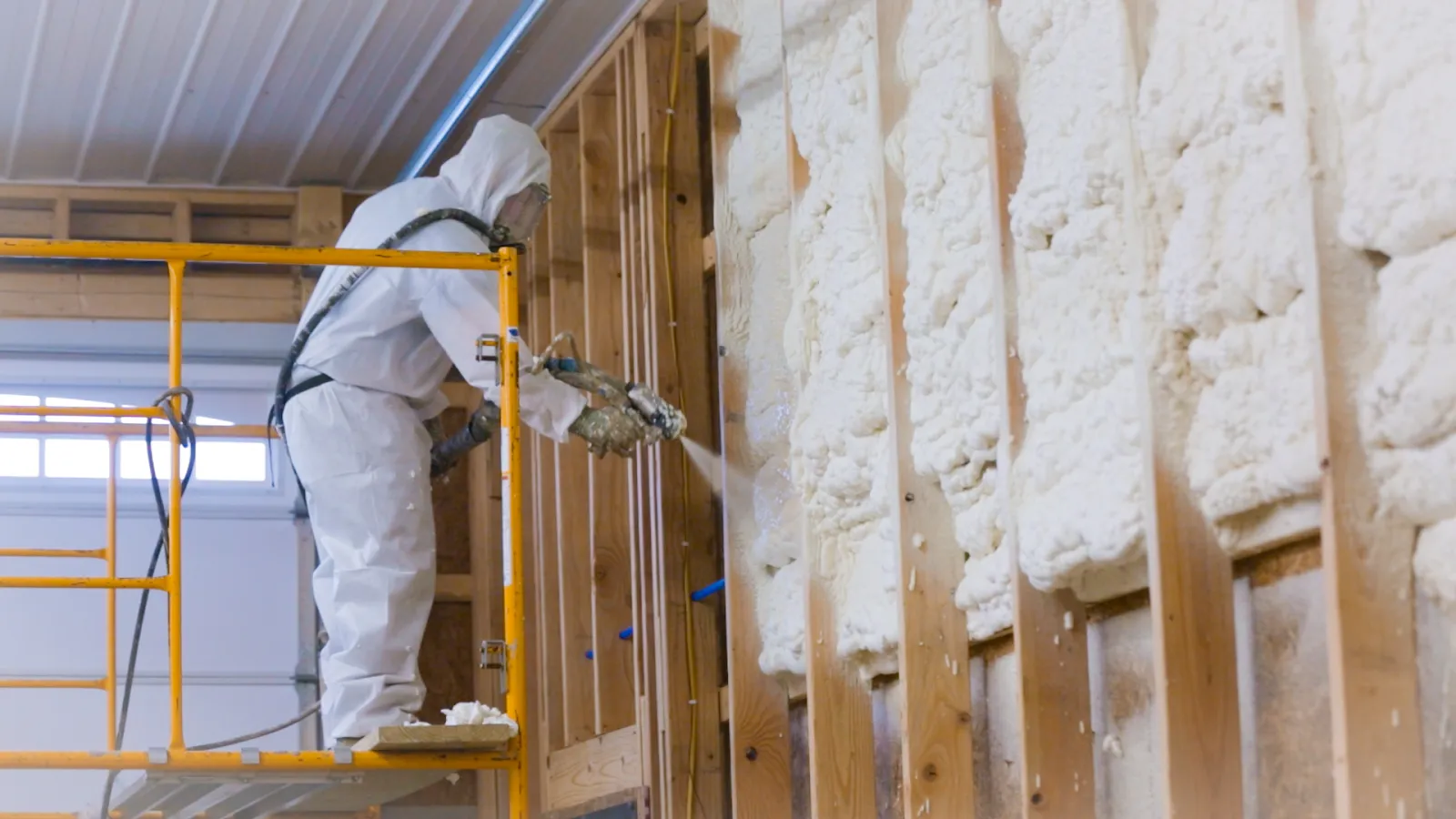
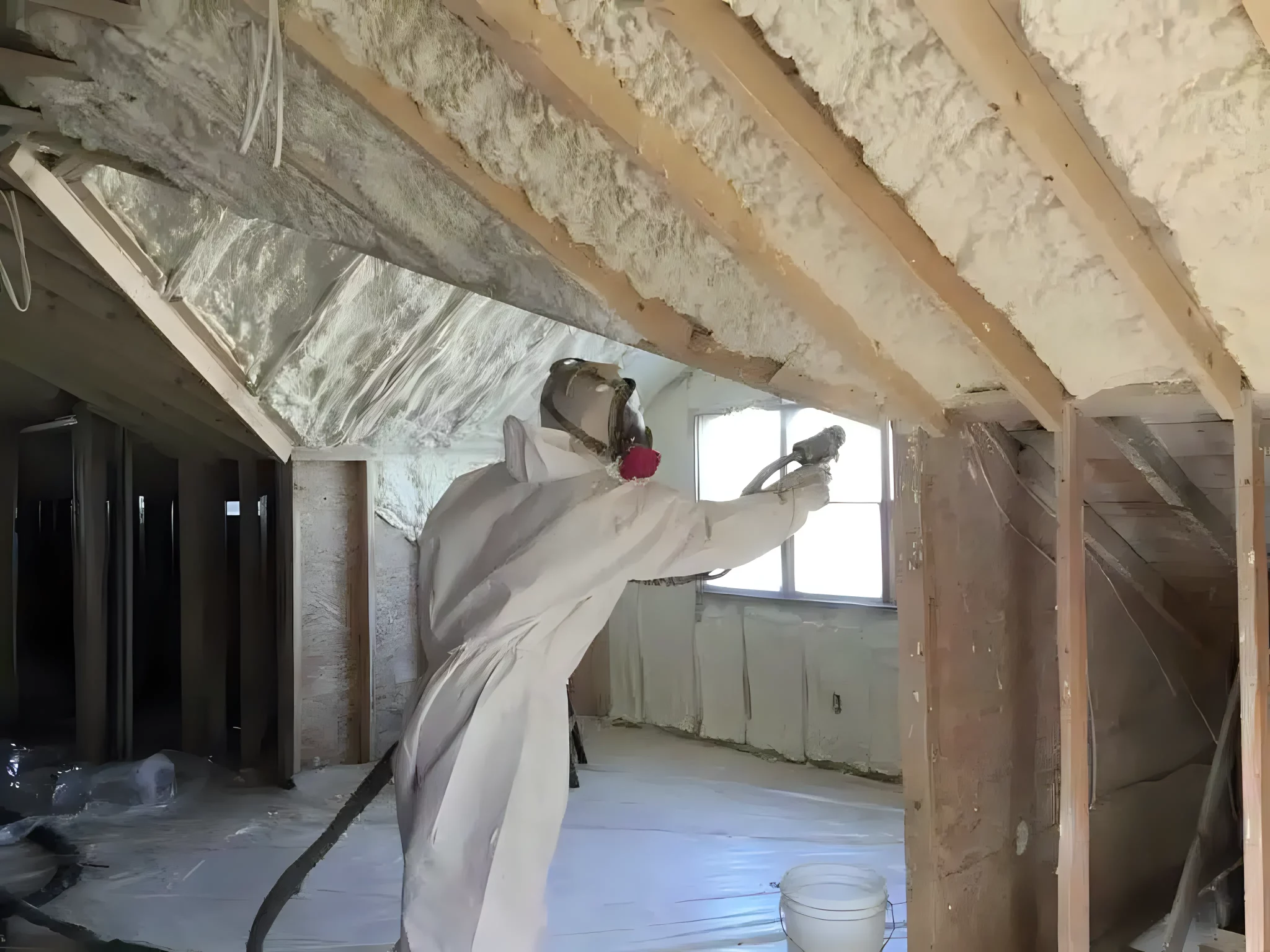
A desire for spray foam insulation, which requires specialized equipment and training
A professional insulation contractor will also ensure that the work meets local building codes and can provide warranties on materials and labor. Many energy utilities offer rebates for professionally installed insulation, which can offset a portion of the cost.
Putting Your Attic Insulation Strategy into Action
Installing attic insulation is one of the most effective home improvement investments you can make. It reduces energy waste, improves daily comfort, protects your roof structure, and pays for itself over time through lower utility bills. The process is straightforward when approached methodically: inspect your space, air seal thoroughly, install rafter vents, create barriers around fixtures, lay insulation in two perpendicular layers, and verify your work.
The most important things to remember are these: always air seal before insulating, never cover soffit vents, maintain clearances around heat sources, and use enough material to reach the R-value recommended for your climate zone. If any of these steps feel beyond your comfort level, there is no shame in bringing in a professional. The job only needs to be done once if it is done right.
Keep this guide handy as a reference throughout your project. Every attic is a little different, and having the key steps and safety reminders at your fingertips will help you avoid the pitfalls we have covered. Whether you tackle this project on a weekend or bring in a professional team, you will notice the difference the first time a winter cold front rolls through or a summer heat wave hits.
Need Expert Guidance?
If you would like professional guidance on your attic insulation project, our team at Cascadia Spray Foam is here to help. We offer comprehensive insulation assessments and installation services. Reach out to us at [email protected] or call (425) 386-3500 to discuss your specific needs.
Frequently Asked Questions About How to Install Attic Insulation
How do I know if my attic needs more insulation?
Measure the depth of your existing insulation with a ruler. Compare it to the recommended R-value for your climate zone. If you have less than the recommended amount, or if the insulation is uneven, compressed, or damaged, you will benefit from adding more.
Can I install new insulation over old insulation?
Yes, in most cases. You can add new insulation on top of existing fiberglass batts, rolls, or blown-in material. The key rules are to use unfaced insulation for the new layer (no second vapor barrier) and to ensure the existing insulation is dry and in good condition.
How long does attic insulation last?
Fiberglass and mineral wool batts can last 80 to 100 years when properly installed and kept dry. Blown-in cellulose can last 20 to 30 years before it may need topping up, as it settles over time. Spray foam insulation can last the lifetime of the building.
Do I need a vapor barrier in my attic?
It depends on your climate zone. In colder climates (Zones 5 and above), a Class I or Class II vapor retarder is typically recommended on the warm side of the insulation. In warmer climates, vapor barriers can trap moisture from air conditioning and are generally avoided. If your existing insulation already has a facing, do not add a second one.
How much does it cost to insulate an attic?
The cost varies depending on the size of your attic, the type of insulation, whether you do it yourself or hire a professional, and your geographic location. Contact us for a specific quote tailored to your home and situation.
Can I use my attic for storage after adding insulation?
If you install blown-in insulation over the attic floor, you cannot use the space for storage without compressing the insulation. If you need storage space, the best approach is to insulate the rafters (the roofline) instead, which requires a different method and is more complex. Fiberglass batts between floor joists allow for some storage if you lay plywood decking on top, but this typically means the total insulation depth is limited to the joist height.
Sources
ENERGY STAR – Attic Insulation Project – Comprehensive DIY guide covering tools, safety, and step-by-step installation instructions for attic insulation
I’m Melissa Grant, owner of Cascadia Spray Foam Insulation, with over 10 years of hands-on spray foam experience. I focus on durable insulation solutions, improved comfort and energy efficiency, and excellent customer service.
Selecting the right commercial insulation for warehouses comes down to five considerations: thermal performance matched to your climate zone, air sealing, moisture and vapor control, code compliance, and installation quality.…
Residential insulation addresses heat transfer through attic assemblies by slowing all three ways heat moves: conduction through framing and drywall, convection through air leaks, and radiation from a hot roof…
Open-cell spray foam provides useful coverage across irregular areas wherever a cavity is too deep, too uneven, or too cluttered with framing, wiring, and pipes for batts or rigid boards…