What Makes Closed-Cell Spray Foam a Durable Solution for Moisture and Air Control?
Melissa Grant
August 20th, 2026
Closed-cell spray foam stands apart from other insulation materials because it handles water, air, vapor, and heat control simultaneously in a single application. According to the Building Science Corporation, spray foam is “unique in that it has the ability to handle all four” of these building envelope control layers, and closed-cell formulations go further by adding structural rigidity and low vapor permeability that open-cell foam cannot match. For homeowners and builders in the Pacific Northwest, where moisture management is a constant concern, this dual capability matters more than raw R-value alone.
TL;DR
Closed-cell spray foam provides continuity of water control, air control, vapor control, and thermal control in a single installed layer
At sufficient thickness, closed-cell foam qualifies as a Class II vapor retarder (perm rating of 1.0 or less), preventing moisture from migrating through assemblies
It achieves air-impermeable classification at far less thickness than open-cell foam, sometimes under one inch per product testing reports
Closed-cell foam delivers R-5.5 to R-6.5 per inch, roughly double the thermal resistance of open-cell spray foam per inch
In IECC Climate Zones 5 and higher, building codes specifically recommend closed-cell spray foam for condensation control in crawlspaces, basements, and unvented attics
Its high-density cell structure resists moisture absorption, reducing the risk of mold, rot, and long-term R-value degradation
The material also adds structural strength to wall and roof assemblies, something most other insulation types cannot do
How Closed-Cell Spray Foam Manages Moisture
Moisture is the primary threat to building durability in any climate. When warm, humid air contacts a cold surface inside a wall or roof cavity, condensation forms. Over time, that trapped moisture leads to mold growth, wood rot, and degraded insulation performance. Closed cell spray foam analysis explains why the question is not whether moisture will try to enter a building assembly, but how effectively the assembly blocks it.
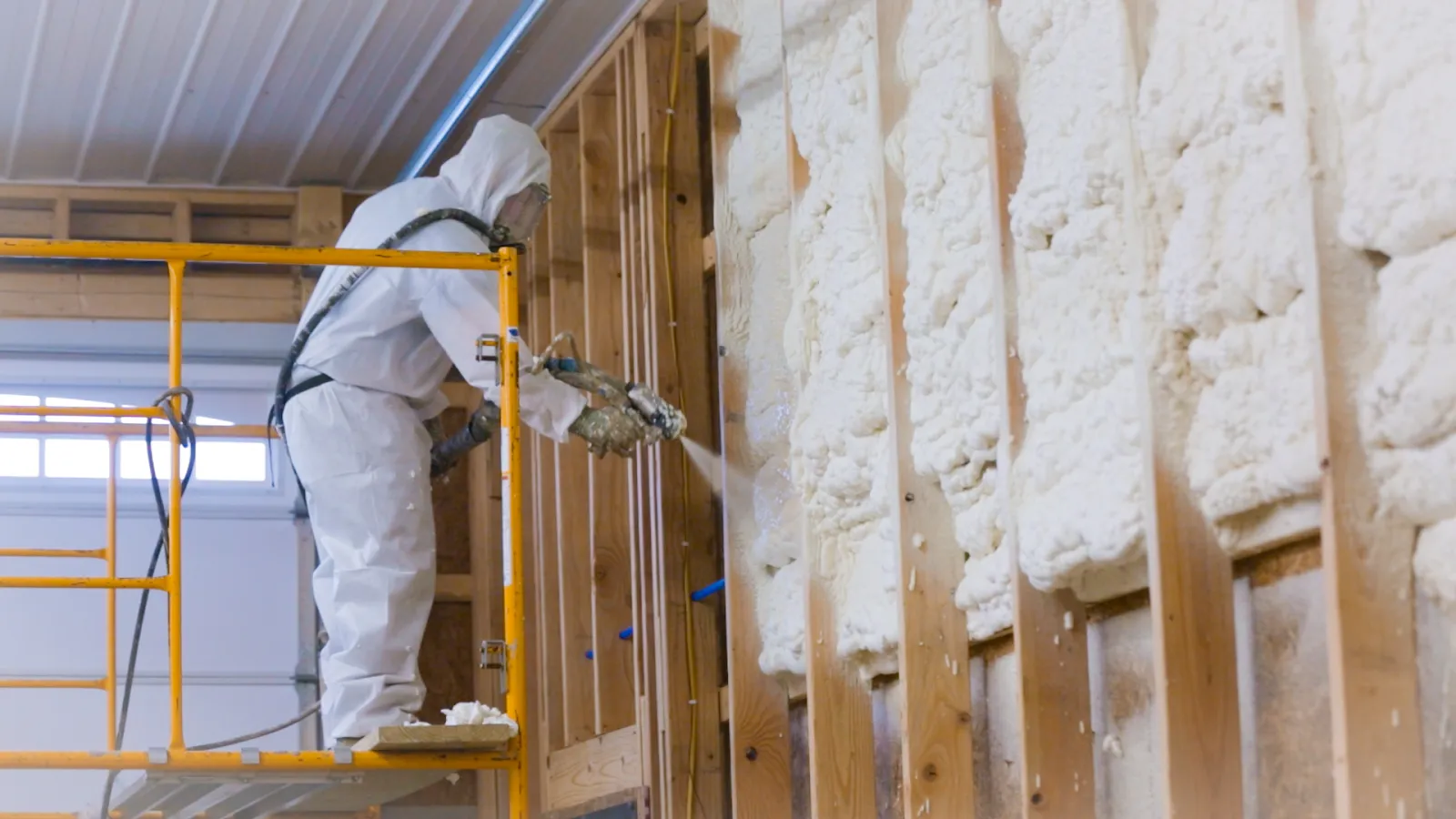
Closed-cell spray foam addresses this through its cell structure. The foam is formed from a two-component chemical reaction that creates a matrix of completely closed gas-filled cells. These cells are filled with a high-performance blowing agent rather than ambient air, which contributes to both thermal resistance and low vapor permeability. The gas barrier within each closed cell means water vapor cannot easily diffuse through the material. At approximately 1.5 inches of thickness, high-density closed-cell spray foam meets the code-prescribed requirements for a Class II vapor retarder as specified in the International Residential Code section R702.7 for IECC Climate Zones 5 through 8.
Building codes reinforce this. The Minnesota Energy Code (based on the IECC) requires that closed-cell foam used on foundation walls comply with ASTM C1029 and maintain a permeance not greater than 0.8 per ASTM E96, which firmly places it within Class II vapor retarder territory. By contrast, when open-cell foam is used in the same application, the code requires a separate vapor retarder and air barrier on the warm-in-winter side of the assembly. The closed-cell product handles both functions without additional materials.
This distinction becomes critical in below-grade and high-humidity applications. For vented crawlspaces, Building Science Corporation states that “only high density closed cell spray polyurethane foam should be used in all IECC Climate Zones.” For basement foundations in Climate Zones 5 and higher, the same source recommends closed-cell foam on interior concrete walls and specifies that only closed-cell foam, never open-cell, should be used under basement floor slabs.
Air Sealing: Why Air-Impermeable Classification Matters
Air leakage accounts for a significant portion of energy loss in most buildings, and it also carries moisture that causes condensation damage. Standard insulation materials like fiberglass batts and cellulose slow heat transfer through conduction but do little to stop air movement through gaps, cracks, and penetrations.
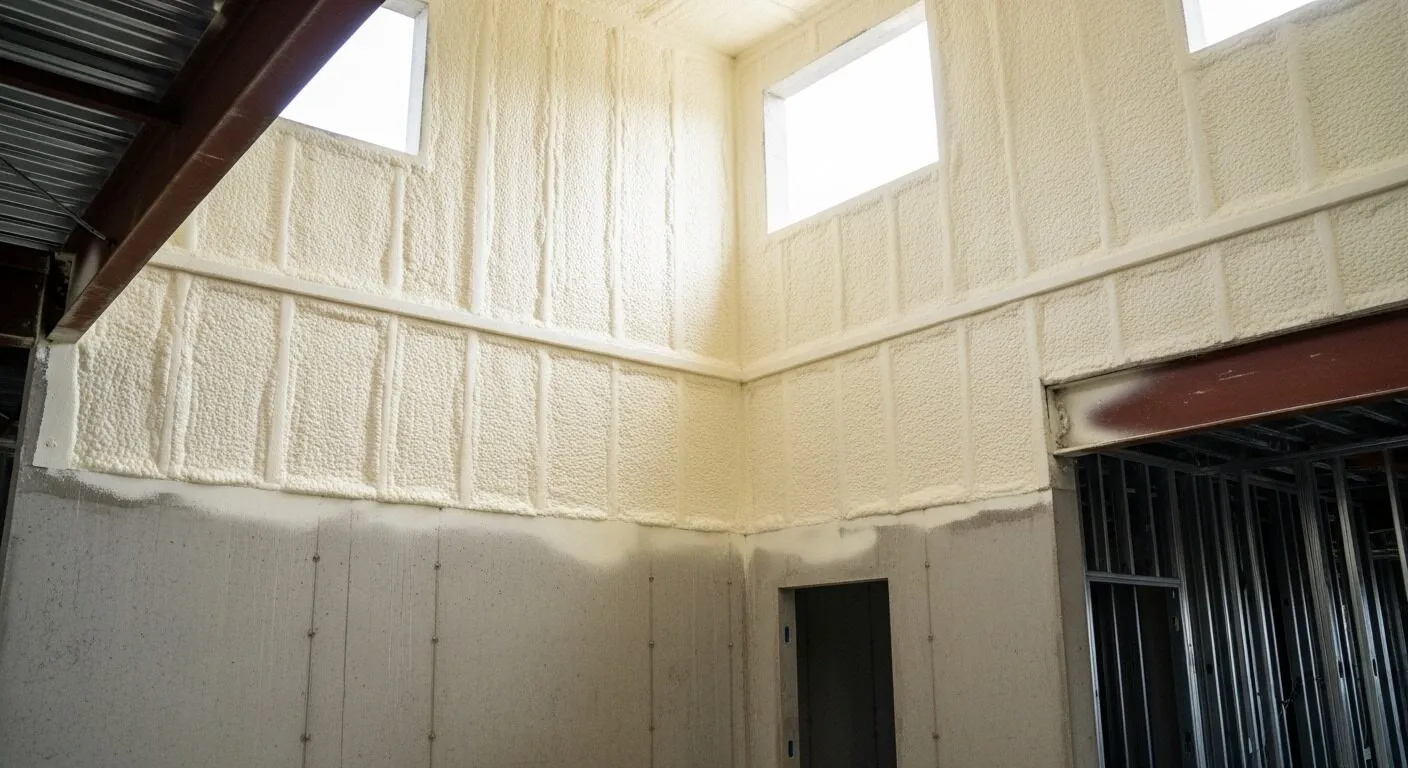
Closed-cell spray foam fills and seals those gaps as it expands during installation. It adheres directly to substrates, including wood framing, concrete, steel, and sheathing, creating a monolithic air barrier. The City of Seattle SDCI notes that closed-cell spray foam products may be rated as “air-impermeable” with less than an inch of installed thickness, whereas open-cell types may require 4 inches or more, and some open-cell products “may not be ‘air-impermeable’ at any thickness.”
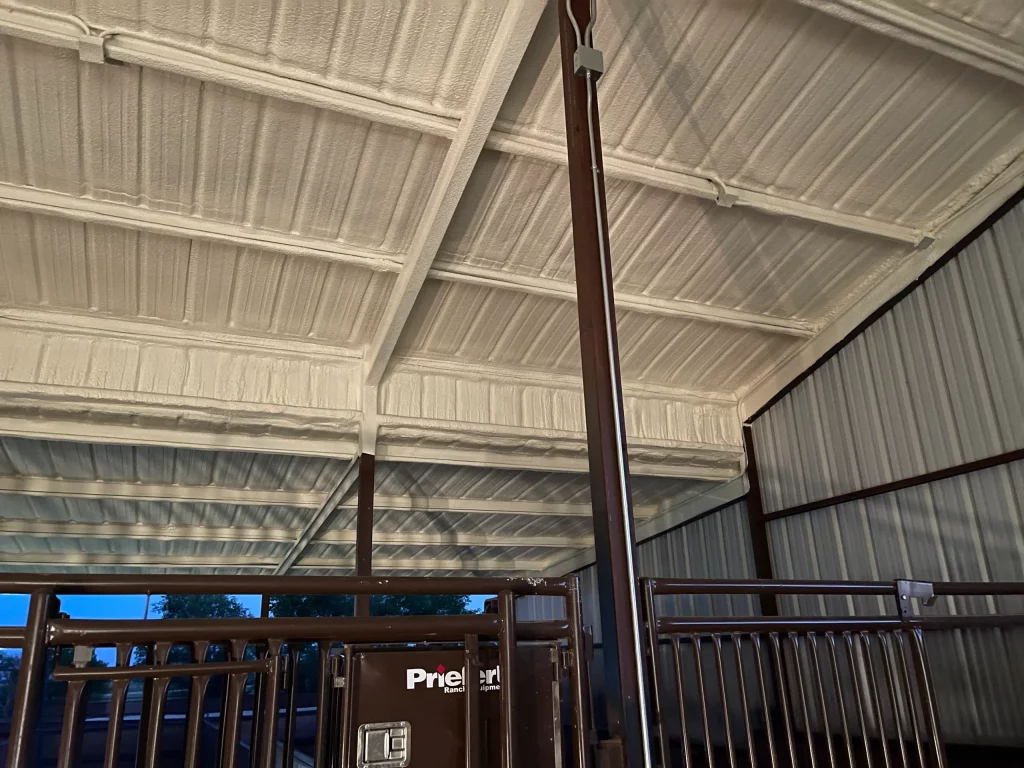
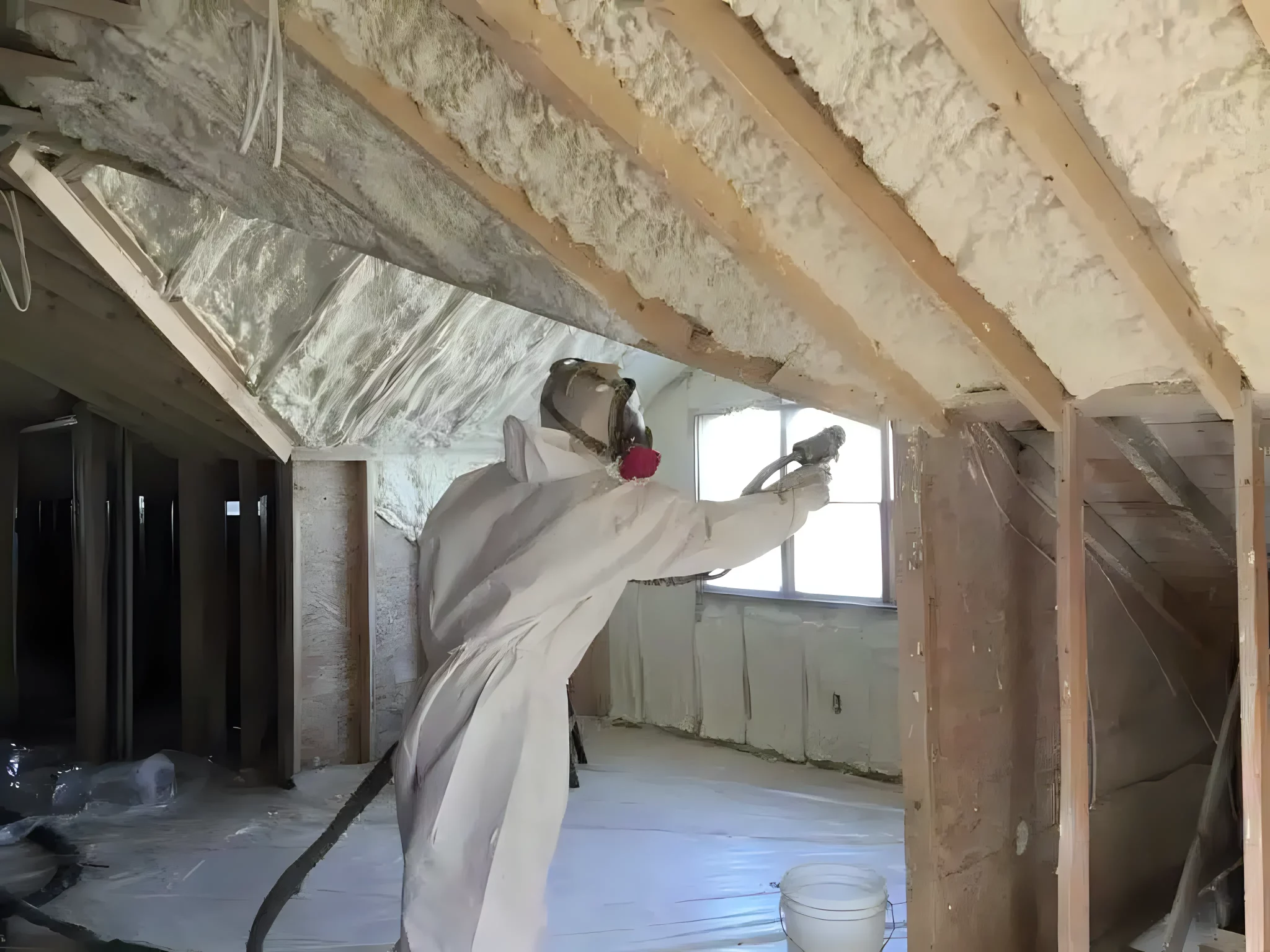
This air-impermeable classification is what allows closed-cell spray foam to enable unvented attic assemblies. In unvented attics, insulation is applied directly to the underside of the roof deck, bringing HVAC ductwork and equipment into the conditioned space. The Seattle building code recognizes air-impermeable insulation applied directly to the underside of roof sheathing as one of the accepted configurations for unvented attics. Without a material that blocks air movement to the roof deck, moisture migrating through the insulation would condense or freeze on the sheathing, a problem the city notes “has rotted out many roofs in Seattle.”
Property
Closed-Cell Spray Foam
Open-Cell Spray Foam
Fiberglass Batts
Air Barrier
Air-impermeable at minimal thickness
May require 4+ inches; some never qualify
Not an air barrier
Vapor Retarder Class
Class II at ~1.5 inches
Requires separate vapor retarder
Requires separate vapor retarder
R-Value per Inch
R-5.5 to R-6.5
R-3.5 to R-3.7
R-3.1 to R-3.8
Moisture Absorption
Low (closed cell structure)
High (open, sponge-like structure)
High (absorbs and holds moisture)
Structural Contribution
Adds wall and roof rigidity
Minimal
None
Recommended for Crawlspaces
Yes, all climate zones
No (ventedspace application)
No
Thermal Performance and Durability Over Time
The R-value of closed-cell spray foam places it among the highest-performing insulation materials available. According to the Wikipedia R-value (Insulation) reference, closed-cell polyurethane spray foam achieves R-5.5 to R-6.5 per inch, comparable to foil-faced polyisocyanurate rigid panels and well above fiberglass, cellulose, or open-cell foam. This higher per-inch performance means closed-cell foam can meet code-prescribed R-values in thinner assemblies, which matters in wall cavities with limited depth.
The same reference notes a long-term concern specific to closed-cell foam: over time, the blowing agent within the cells can diffuse out and be replaced by air, reducing effective R-value. Closed-Cell Spray Foam in High Flood Zones also requires consideration of the foam’s long-term performance. The foam industry addresses this through the Long-Term Thermal Resistance (LTTR) method, which rates R-value based on a 15-year weighted average. In practice, this means the published R-value accounts for some aging, though the actual in-service R-value will continue to settle over the life of the building.
What separates closed-cell foam from many other insulation types is that its performance remains relatively stable in the presence of moisture. As the Building Insulation reference on Wikipedia explains, while some insulation materials see dramatic thermal conductivity increases in high humidity, polyurethane foam (PUR) shows only approximately a 5% increase in thermal conductivity when relative humidity shifts from 1% to 100%. Fiberglass and mineral wool can degrade more significantly when exposed to moisture, and once those materials trap water, their insulating value drops further. Closed-cell foam’s resistance to moisture absorption helps protect both the foam itself and the structural components around it.
Where Closed-Cell Spray Foam Performs Best
Not every project needs closed-cell spray foam, and the right choice depends on climate zone, building assembly, and budget. Based on the guidance from Building Science Corporation and building codes, here are the applications where closed-cell spray foam delivers the most value:
Basement and crawlspace foundation walls. In IECC Climate Zones 5 and higher, high-density closed-cell foam is the recommended choice for interior foundation insulation. In vented crawlspaces, it is the only spray foam type recommended across all climate zones because it blocks moisture from reaching floor framing above.
Unvented conditioned attics. In IECC Climate Zones 5 and higher, only high-density closed-cell spray foam should be applied directly to the underside of the roof deck. In warmer climates, both foam types work, but closed-cell provides the added assurance of a built-in vapor retarder.
Below-grade and flood-prone assemblies. Closed-cell foam resists water absorption and can be used in applications where open-cell foam would act like a sponge, pulling moisture into the assembly.
Hybrid wall assemblies. A common approach uses a thin layer of closed-cell spray foam against the sheathing for air and vapor control, then fills the remaining cavity with fiberglass or cellulose for thermal resistance at lower material cost.
Signs You Have Chosen the Right Insulation Approach
When evaluating a spray foam installation, several indicators point to a quality job:
The installer provides an ICC-ES evaluation report for the specific product being used, as required by most building departments
The installation plan specifies R-values for each location and identifies where air-impermeable versus air-permeable insulation will be used
The foam thickness matches the minimum requirements for air-impermeable classification and Class II vapor retarder performance in your climate zone
The installation includes a thermal barrier (typically half-inch gypsum board) between foam and interior occupied spaces, as required by code
The installer follows manufacturer application temperature ranges and maximum installed thickness limits specified in the evaluation report
Get a Professional Assessment for Your Project
Cascadia Spray Foam specializes in closed-cell spray foam installations that deliver lasting moisture and air control for homes and buildings throughout the Pacific Northwest. Our team evaluates each project’s specific conditions, from climate zone requirements to assembly design, and recommends the right approach for durable performance. Whether you are building new, insulating a crawlspace, or converting a vented attic to a conditioned space, we bring the expertise to make sure the job is done right.
Can closed-cell spray foam replace a separate vapor barrier in wall assemblies?
Yes. When installed at sufficient thickness (typically 1.5 inches or more depending on the product), closed-cell spray foam qualifies as a Class II vapor retarder and can replace a separately installed polyethylene vapor barrier in most wall assemblies.
How does closed-cell foam perform in unvented attics in marine climates?
In IECC Climate Zone 4 (marine), closed-cell spray foam applied directly to the underside of the roof deck provides both the air-impermeable insulation and condensation control needed for an unvented attic assembly. Building Science Corporation confirms this approach works in most climates, with closed-cell being the required choice in Zones 5 and higher.
Does closed-cell spray foam add structural strength to a building?
Yes. The high-density cell structure of closed-cell spray foam, typically 2 pounds per cubic foot or greater, bonds to framing and sheathing and contributes to the overall rigidity of wall and roof assemblies. This is a benefit not shared by open-cell foam or fiber insulation.
What is the difference between air-impermeable and air-permeable insulation?
Air-impermeable insulation blocks the movement of air through the material itself, while air-permeable insulation allows air to pass through. Closed-cell spray foam achieves air-impermeable classification at thin applications, sometimes under one inch, whereas open-cell foam may need four or more inches and some products never qualify.
Why is closed-cell foam recommended over open-cell for crawlspace applications?
In vented crawlspaces, moisture from the ground and outside air must be prevented from reaching the floor framing above. Closed-cell foam’s low vapor permeability and resistance to water absorption make it the only spray foam type Building Science Corporation recommends for this application across all climate zones.
Wikipedia – Building Insulation – Reference article covering building insulation types, thermal resistance, moisture management, and the relationship between insulation and building envelope performance.
Wikipedia – R-value (Insulation) – Detailed reference on thermal resistance measurement, R-value comparisons across insulation materials, and long-term degradation factors including blowing agent diffusion in closed-cell foam.
I’m Melissa Grant, owner of Cascadia Spray Foam Insulation, with over 10 years of hands-on spray foam experience. I focus on durable insulation solutions, improved comfort and energy efficiency, and excellent customer service.
Selecting the right commercial insulation for warehouses comes down to five considerations: thermal performance matched to your climate zone, air sealing, moisture and vapor control, code compliance, and installation quality.…
Residential insulation addresses heat transfer through attic assemblies by slowing all three ways heat moves: conduction through framing and drywall, convection through air leaks, and radiation from a hot roof…
Open-cell spray foam provides useful coverage across irregular areas wherever a cavity is too deep, too uneven, or too cluttered with framing, wiring, and pipes for batts or rigid boards…