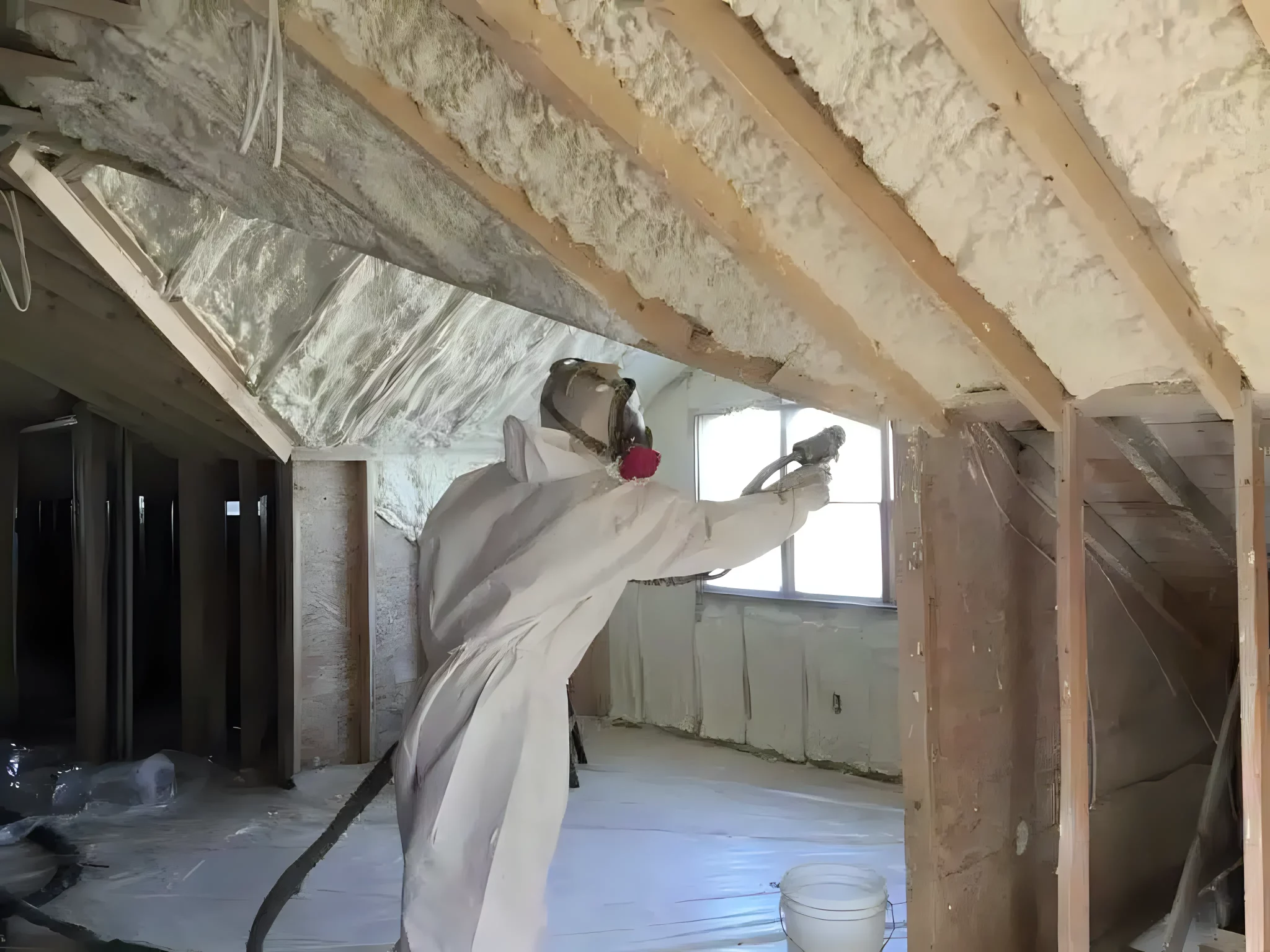
Why Open Cell Spray Foam is Great for Insulating Home Additions in Seattle, WA?
Melissa Grant
June 18th, 2026
Open cell spray foam insulation delivers a combination of air sealing, sound dampening, and moisture vapor permeability that makes it well suited for above-grade home additions in Seattle’s wet, marine climate. Unlike fiberglass batts or blown-in cellulose, open cell spray foam expands to fill every gap and irregularity in wall cavities, floor joists, and ceiling assemblies, creating a continuous air barrier that helps prevent the drafts and temperature inconsistencies common in new additions. The right insulation choice for your addition depends on factors like framing depth, whether the space is above or below grade, and how your HVAC system will tie into the existing home. For most above-ground additions in the Seattle area, open cell spray foam stands out as a practical, high-performing option.
TL;DR
Seattle falls within Climate Zone 4C (Marine), which requires R-60 for uninsulated attics and R-20 to R-30 for wood-frame walls, according to the Seattle Energy Code and DOE recommendations.
Open cell spray foam provides roughly R-3.5 to R-3.7 per inch, allowing it to meet code requirements in standard 2×4 or 2×6 framed walls when applied at the correct thickness.
Open cell foam is vapor permeable, meaning it lets moisture pass through rather than trapping it, which is an advantage in Seattle’s humid, marine climate where moisture management is critical.
It doubles as both insulation and an air barrier, eliminating the need for separate air-sealing steps like caulking and housewrap in new addition wall cavities.
The DOE notes that open cell foam should not be used below grade or in areas where it could absorb water, so it works best for above-ground additions, not basements or crawlspaces.
Open cell spray foam offers notable sound dampening, reducing noise transfer between the new addition and the rest of the house.
It is lighter and more flexible than closed-cell foam, making it less likely to bow or stress framing in new wall assemblies.
Professional installation is required, and the installer must provide an R-value certification as specified by building codes.
How Open Cell Spray Foam Works in New Additions
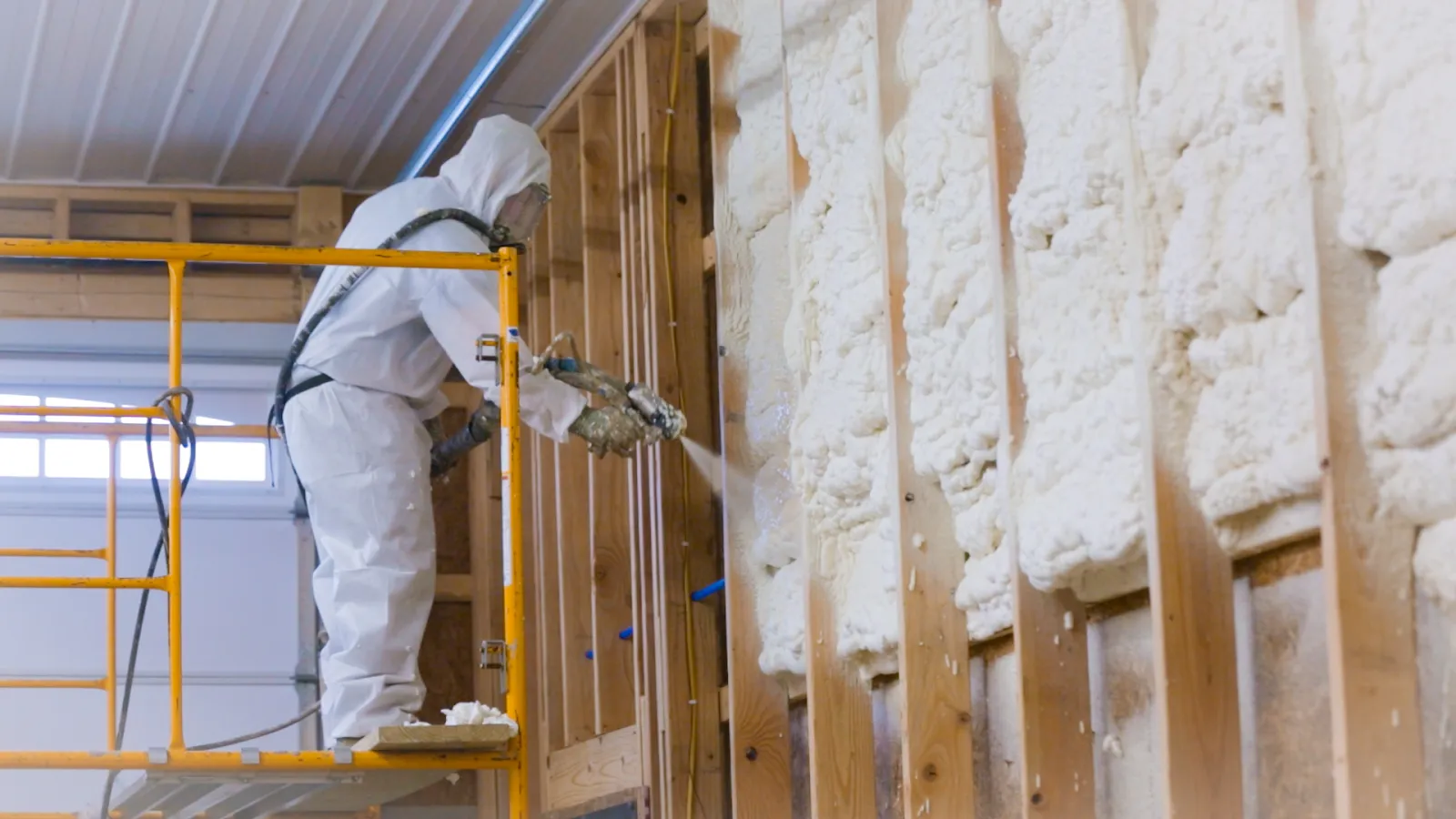
Open cell spray foam is a low-density polyurethane insulation applied as a liquid that expands to many times its original volume, filling wall cavities, ceiling joists, and floor assemblies completely. As the DOE explains, open cell foam cells are not as dense as closed-cell alternatives and are filled with air, giving the material a soft, spongy texture. This lower density means it delivers a lower R-value per inch than closed-cell foam, but it compensates with the ability to fill larger cavities at a typical cavity-fill depth of 3.5 to 5.5 inches.
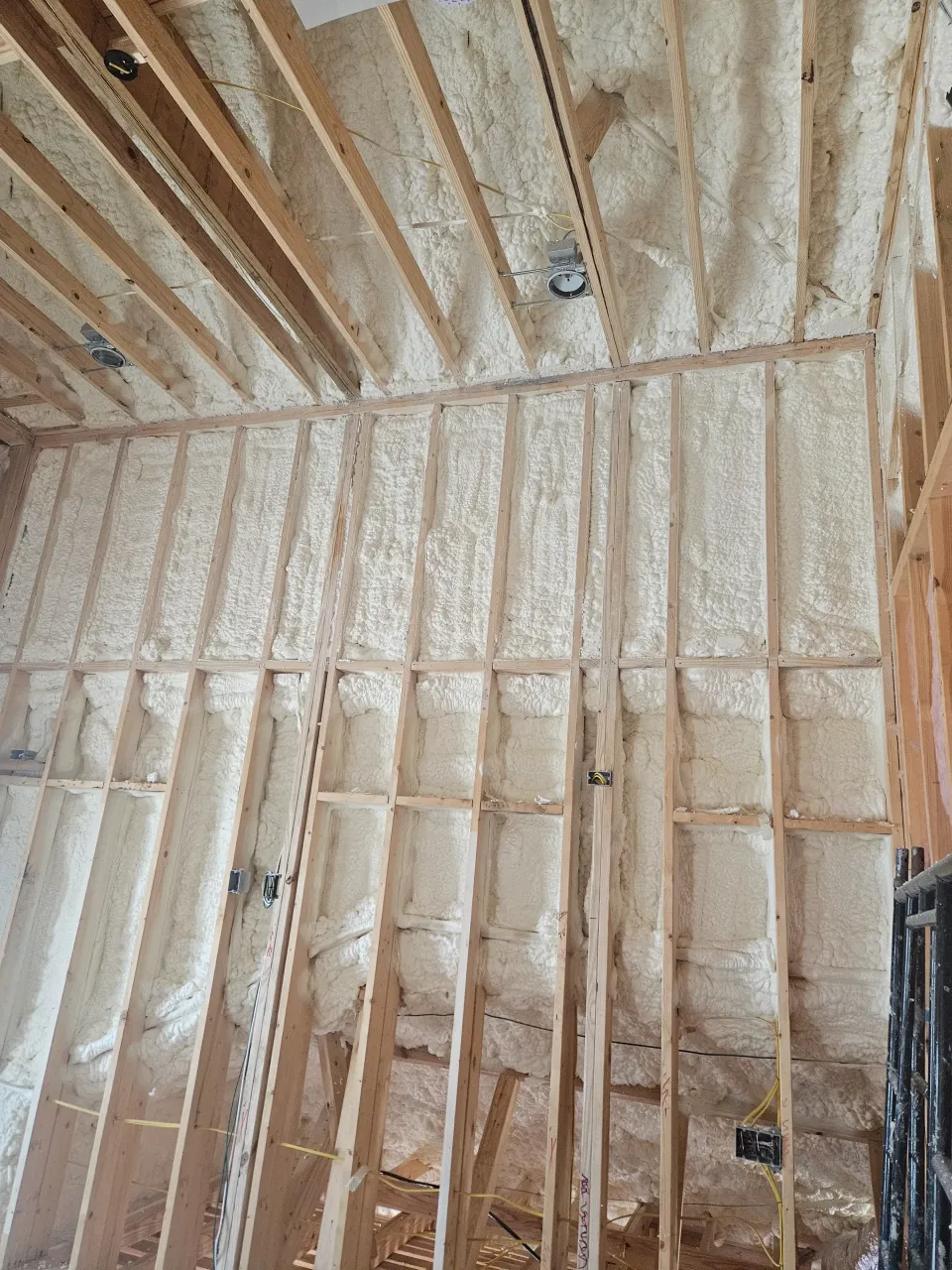
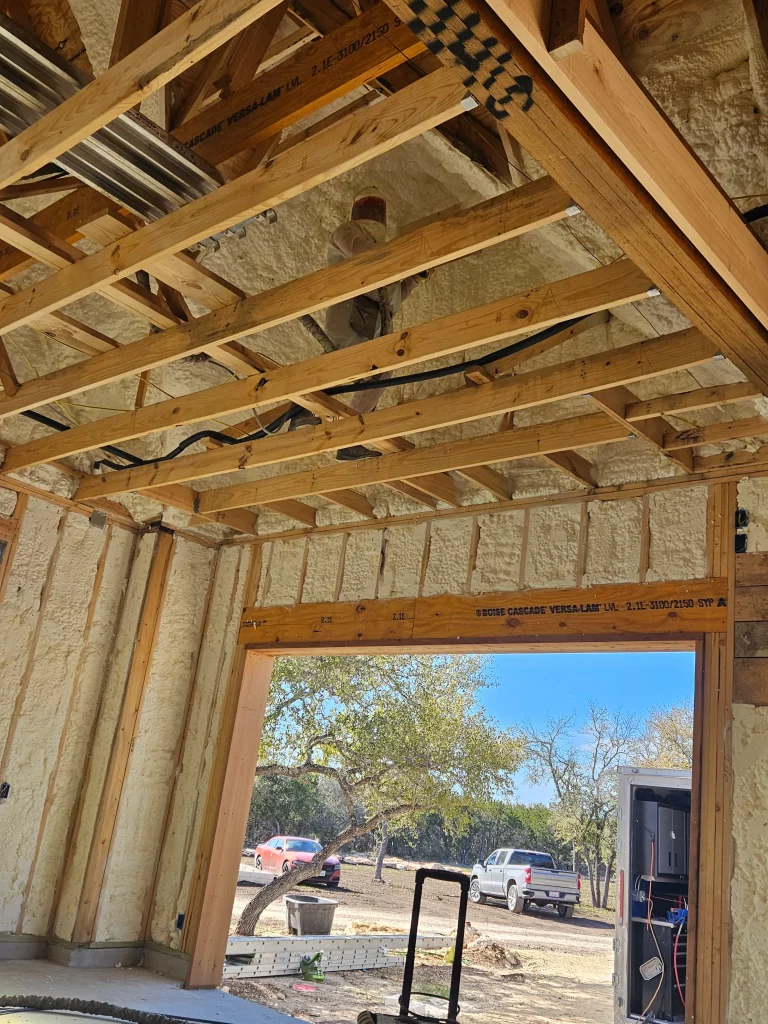
In the context of a home addition, the framing is often exposed before drywall goes up. This gives our installers direct access to every stud bay, rim joist, and cavity opening, which is ideal for spray foam application. The foam expands around plumbing runs, electrical wires, and structural members, sealing gaps that would otherwise require separate caulking, weatherstripping, or spray sealing.
Why Seattle’s Climate Makes This Choice Matter
Seattle is classified as Climate Zone 4C Marine, a designation confirmed in the 2021 Seattle Energy Code. This marine classification means the area experiences relatively mild winters and cool summers, but with persistently high humidity and frequent rain. The DOE’s moisture control guidance points out that air movement accounts for more than 98% of water vapor movement in building cavities, which is why air sealing matters as much as the insulation material itself.
Open cell spray foam addresses both issues at once. It creates an effective air barrier that blocks random air leakage through the building envelope, and its vapor-permeable nature allows any incidental moisture within the wall cavity to dry out rather than becoming trapped. In a marine climate where trapped moisture leads to mold, rot, and structural damage, this drying potential is a real benefit.
For Zone 4C Marine, the DOE recommends R-20 for wood-frame walls with continuous insulation, or R-13 with R-5 continuous insulation in existing walls. Open cell spray foam at standard stud cavity depths can meet these targets in a single application step, simplifying the construction process for your addition.
Open Cell vs. Other Insulation for Additions
Understanding how open cell spray foam compares to common alternatives helps clarify where it fits best.
Insulation Type
Air Sealing
Vapor Permeability
R-Value per Inch
Best For
Open cell spray foam
Excellent
Permeable (allows drying)
~3.5 to 3.7
Above-grade walls, ceilings, floors of additions
Closed cell spray foam
Excellent
Acts as vapor barrier
~6.0 to 7.0
Below-grade, flood-prone, or high-moisture areas
Fiberglass batts
Poor
Permeable
~2.9 to 3.8
Standard budget wall cavities (with separate air sealing)
Cellulose (blown)
Moderate
Permeable
~3.1 to 3.8
Retrofitting existing walls, attics
Rigid foam board
Good (when sealed)
Varies by type
~3.8 to 6.5
Continuous exterior insulation
As shown, open cell spray foam is the only option that combines strong air sealing with vapor permeability at a practical R-value for standard framing depths. Closed-cell foam offers higher R-values per inch and serves as a vapor barrier, but open cell foam should not be used below grade where water absorption is a risk, making open cell the better choice for above-ground addition walls.
Where Open Cell Spray Foam Performs Best in an Addition
Not every part of an addition is equally suited for open cell spray foam. Here is how we typically recommend applying it by location.
Exterior Walls
Above-grade exterior walls in the addition are the primary application for open cell spray foam. The foam fills the full stud cavity, seals around every penetration, and provides both insulation and air barrier in one step. In Seattle’s Zone 4C climate, meeting the R-20 wall target is achievable with a proper application depth in 2×6 framing.
Ceilings and Vaulted Roofs
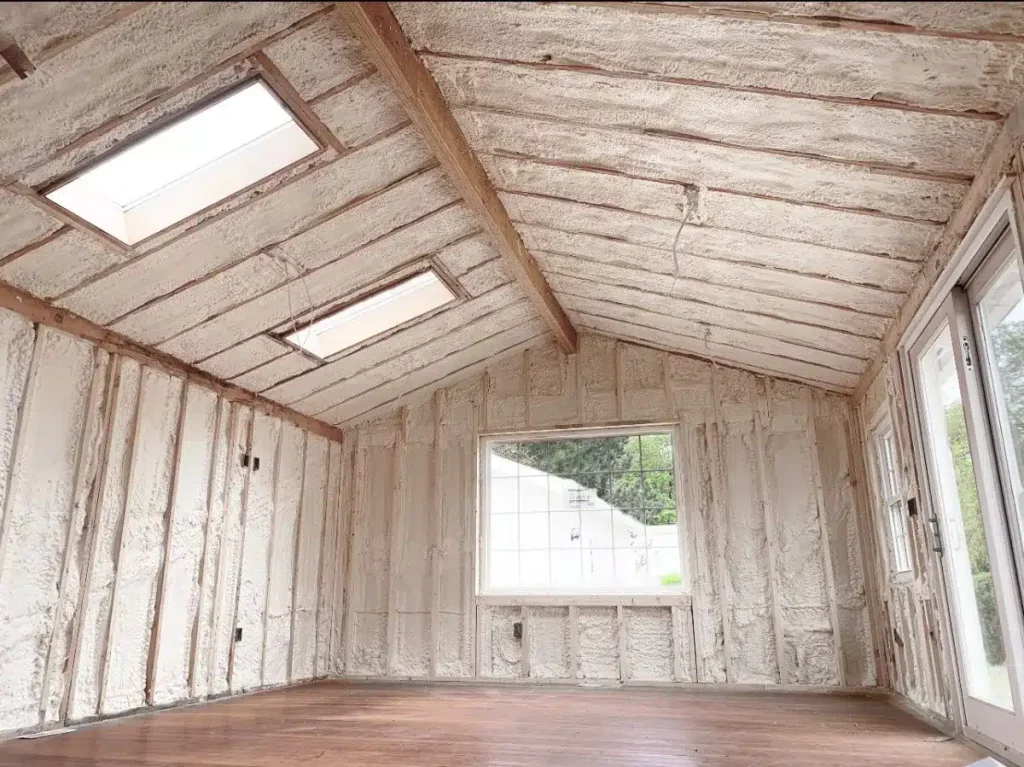
Additions with vaulted or cathedral ceilings present a challenge because there is no accessible attic space above. Quality open cell spray foam provides reliable insulation and long-lasting comfort for home additions. The vapor permeability allows the assembly to dry toward the interior, which aligns with moisture management best practices for marine climates.
Floors Over Unconditioned Spaces
If your addition sits over a garage, crawlspace, or unheated space, open cell spray foam applied between the floor joists provides insulation and air sealing simultaneously. The DOE’s guidance on where to insulate emphasizes sealing air leaks first before insulating floors over unconditioned areas, and open cell foam handles both in one pass.
Where to Avoid Open Cell
We do not recommend open cell spray foam for below-grade applications such as basement walls, crawlspaces, or areas where the foam could come into direct contact with water. The material can absorb and hold water, which would compromise its insulating properties. In those situations, closed-cell foam or other moisture-resistant insulation is the better choice.
What to Look for in an Insulation Installer
Choosing the right installer matters as much as choosing the right material. The quality of spray foam installation directly affects long-term performance.
Certification and training: Our installers hold manufacturer certifications and have completed hands-on training specific to spray foam application. The DOE recommends asking contractors about their experience with specific insulation products before hiring them.
R-value documentation: Seattle’s building code requires that the insulation installer provide a certification listing the type, manufacturer, and R-value of spray polyurethane foam installed. We provide this documentation for every project.
Air sealing approach: A strong installer will discuss air sealing as part of the insulation strategy, not treat it as an afterthought. The DOE notes that reducing air leakage is one of the most cost-effective ways to improve energy efficiency, and spray foam’s air-sealing properties are part of what makes it effective.
Moisture awareness: In Seattle’s marine climate, your installer should understand vapor diffusion, proper vapor retarder placement, and how the wall assembly will dry. We evaluate each addition’s specific conditions before recommending an insulation approach.
Local code knowledge: Familiarity with the 2021 Seattle Energy Code requirements for Climate Zone 4C ensures your addition passes inspection and performs as designed.
Signs You Have Found the Right Insulation Approach
The installer explains why open cell is appropriate for your specific addition, not just pushes a single product
You receive a clear scope of work that references R-value targets for your climate zone
The proposal addresses air sealing, moisture management, and code compliance, not just material cost
The installer walks through the project timeline and what to expect during and after application
There is a discussion about mechanical ventilation, since spray foam creates a tighter building envelope that benefits from controlled fresh air
Get Started With Your Addition Insulation Project
Cascadia Spray Foam provides professional open cell spray foam insulation for home additions throughout the Seattle area. Our team evaluates your addition’s framing, climate zone requirements, and moisture conditions to recommend the right insulation approach and ensure it meets the 2021 Seattle Energy Code. We handle everything from initial assessment through installation and documentation.
Can open cell spray foam meet Seattle’s energy code requirements for my addition?
Yes, when applied at the correct thickness in standard framing, open cell spray foam can meet the R-20 wall and R-49 ceiling requirements for Climate Zone 4C Marine as specified in the Seattle Energy Code. Our installers calculate the exact depth needed for each assembly.
How does open cell spray foam handle Seattle’s constant moisture and rain?
Open cell foam is vapor permeable, meaning it allows moisture to pass through and dry out rather than trapping it in the wall cavity. This is a direct advantage in Seattle’s marine climate, where preventing trapped moisture is essential for long-term building durability.
Is open cell spray foam appropriate for a second-story addition over a garage?
It works well for second-story floor assemblies and above-grade walls, providing both insulation and air sealing between the conditioned addition space and the unconditioned garage below. We recommend against using it in direct contact with below-grade or flood-prone surfaces.
Will open cell spray foam help with sound between my addition and the main house?
Yes, open cell foam’s spongy, low-density structure absorbs sound effectively. It reduces airborne noise transfer through shared walls, floors, and ceilings better than fiberglass batts or rigid foam board.
How long does the installation take for a typical home addition?
Most additions can be insulated in a single day, depending on the square footage and complexity of the space. Our team coordinates with your builder to install at the right stage, after framing and rough-in are complete but before drywall closes the cavities.
Sources
DOE Energy Saver – Types of Insulation – Detailed comparison of insulation types including open-cell and closed-cell spray foam, their properties, and appropriate applications.
DOE Energy Saver – Moisture Control – Guidance on moisture movement in building cavities, vapor diffusion retarders, and climate-specific moisture management strategies.
DOE Energy Saver – Where to Insulate in a Home – Comprehensive guide to insulating all areas of a home including walls, floors, ceilings, and foundations, with specific recommendations for spray foam.
I’m Melissa Grant, owner of Cascadia Spray Foam Insulation, with over 10 years of hands-on spray foam experience. I focus on durable insulation solutions, improved comfort and energy efficiency, and excellent customer service.
Selecting the right commercial insulation for warehouses comes down to five considerations: thermal performance matched to your climate zone, air sealing, moisture and vapor control, code compliance, and installation quality.…
Residential insulation addresses heat transfer through attic assemblies by slowing all three ways heat moves: conduction through framing and drywall, convection through air leaks, and radiation from a hot roof…
Open-cell spray foam provides useful coverage across irregular areas wherever a cavity is too deep, too uneven, or too cluttered with framing, wiring, and pipes for batts or rigid boards…