What Makes Closed-Cell Spray Foam Effective for Moisture-Prone Foundation Spaces?
admin_cascadiaspray
September 11th, 2026
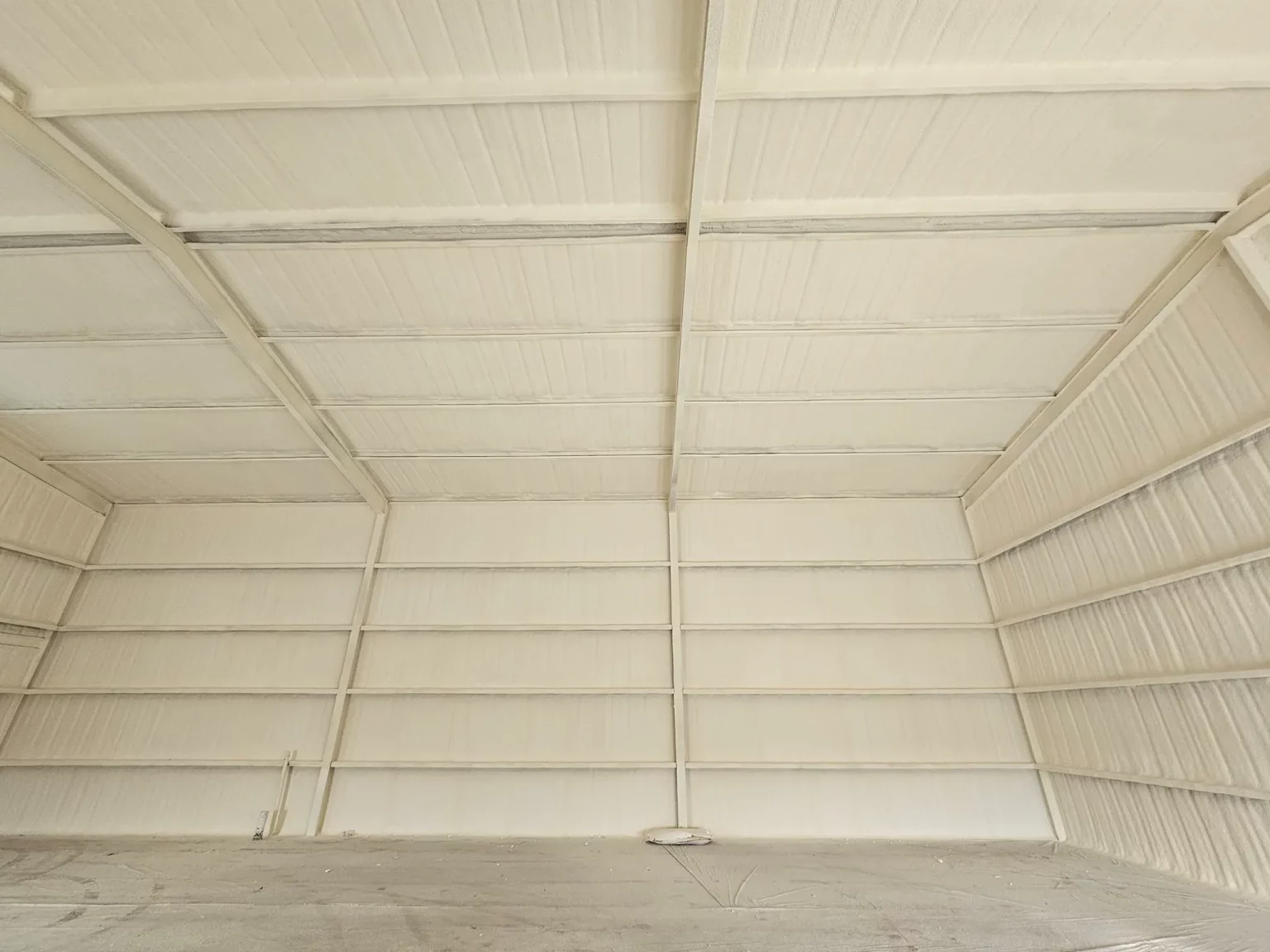
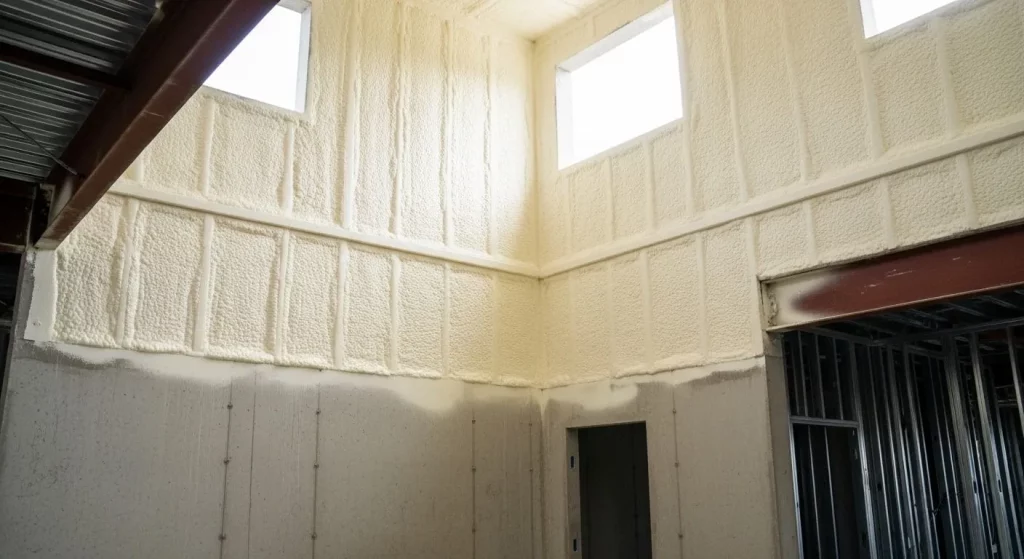
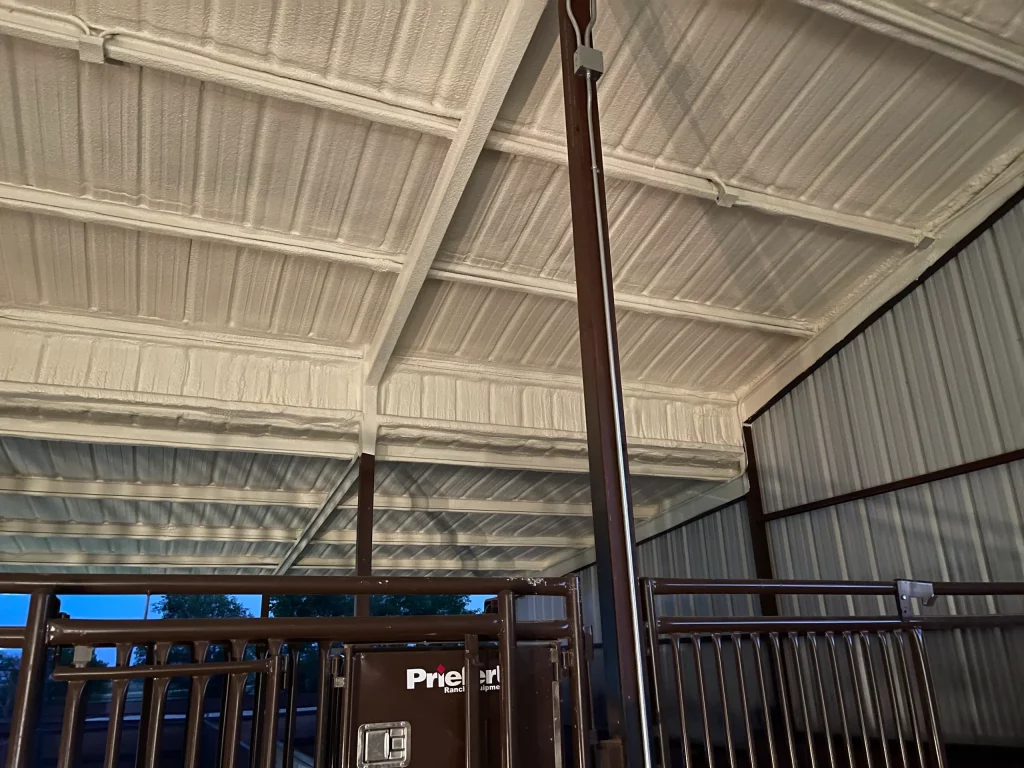
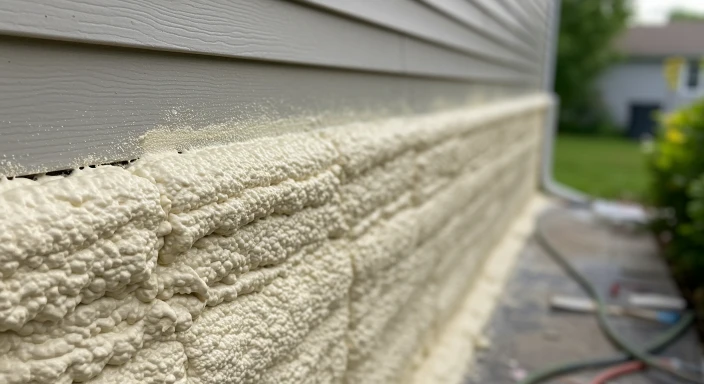
Closed-cell spray foam performs in damp basements and crawl spaces because it combines four jobs in one material: high insulation value, air sealing, vapor control, and direct adhesion to concrete. Medium-density closed-cell foam (often called 2-pound foam) delivers a long-term thermal resistance of roughly R-5.1 to R-6 per inch, and at a minimum application thickness of about 50 mm (2 inches) it functions as both an air barrier and a vapor barrier in a single continuous layer, according to Wikipedia’s overview of spray foam. Its dense, non-porous cell structure also resists water vapor penetration, which is why it suits below-grade walls, rim joists, and encapsulated crawl spaces. Whether it is the right choice for your building depends on your climate zone, the source of the moisture (humidity versus active bulk water), site drainage, and local code requirements for covering exposed foam.
TL;DR
Closed-cell SPF provides roughly R-5.1 to R-6 per inch, nearly double the per-inch performance of open-cell foam (about R-3.8 per inch).
At approximately 2 inches of thickness, one application serves as insulation, air barrier, and vapor barrier, controlling heat flow, air leakage, and vapor drive at once.
It bonds to flat and irregular substrates alike, including poured concrete, concrete block, brick, and rubble stone, which makes it practical for retrofitting older foundation walls.
Correct bulk-water problems before spraying: grading, gutters, downspouts, and drainage must be managed first, because foam limits the wall’s ability to dry to the interior.
Relative humidity above 80 percent in a crawl space can support mold growth and rot in wooden framing, so vapor and air control matter as much as R-value.
A U.S. Department of Energy field study found sealed, insulated crawl spaces reduced space-conditioning energy use compared with traditional wall-vented crawl spaces.
Codes generally require a thermal or ignition barrier (gypsum board or an approved coating) over exposed spray foam.
Installer discipline drives results: substrate temperature, pass thickness, and layer continuity determine whether foam cures properly and performs as rated.
Why Foundation Spaces Collect Moisture in the First Place
Foundation walls sit in constant contact with soil, so they stay cool year-round while interior air stays warm and humid. Closed-Cell Spray Foam In-Depth Analysis of Performance, Costs, and Installation explains why this matters: when humid air meets a surface below its dew point, condensation forms on walls, ductwork, and framing. In humid climates, open vents can actually pull moist outdoor air into a crawl space where it condenses on cooler surfaces, and even without condensation, relative humidity above 80 percent can support mold growth and rot floor joists, as explained in Wikipedia’s crawl space article.
The result is a space where fibrous insulation underperforms, wood decays, and musty air migrates into living areas through the stack effect. The EPA’s position is blunt: the best way to control mold growth is to control moisture, a principle summarized on the EPA Mold resource page. Any foundation insulation strategy must therefore manage water, vapor, and air, not just heat flow.
The Science Behind Closed-Cell Performance
Several physical properties explain why closed-cell foam succeeds where other insulation struggles below grade:
Non-porous cell structure. Each cell in closed-cell foam is sealed, so the material does not absorb and hold water the way open-cell or fibrous products can. Wikipedia’s building insulation materials reference notes that closed-cell foam is non-porous and effectively forms a vapor barrier, while open-cell foam is porous and allows both vapor and liquid water through.
Air sealing. Spray foam expands into cracks, gaps, and penetrations, blocking convective heat transfer and the moist air movement that carries vapor into assemblies.
Higher R-value in less space. Closed-cell foams reach R-5 to R-8 per inch versus R-3 to R-4 for open-cell, so a 1-inch layer of closed-cell performs like roughly 2 inches of open-cell.
Structural rigidity. Closed-cell foam is rigid when cured and reinforces the surface it insulates, an advantage on block or stone walls that flex and shift.
Conformity. The liquid foam expands and hardens against irregular surfaces, which matters on old rubble, brick, and stone foundations that sheet products cannot seal tightly.
Closed-Cell vs. Open-Cell vs. Traditional Insulation
Material
R-Value Per Inch
Moisture Behavior
Best Use in Foundation Spaces
Key Limitation
Closed-cell spray foam
~R-5.1 to R-6+
Non-porous, resists vapor and liquid water; vapor barrier at ~2 in.
Basement walls, crawl space walls, rim joists, stone foundations
Higher material cost per board foot
Open-cell spray foam
~R-3.8
Porous, vapor-permeable, holds water if wet
Interior sound walls, dry above-grade cavities
Poor fit for damp below-grade walls
Fiberglass batts
~R-3 to R-4
Absorbs moisture, loses R-value when damp, supports mold growth on facing
Rarely appropriate below grade
Leaves air paths and bypasses
Rigid foam board
~R-4 to R-6.5
Water resistant, but boards leave seams
Flat, new foundation walls
Cannot conform to irregular or stone walls
The comparison explains why closed-cell foam dominates moisture-prone spaces: it is the only option that seals irregular geometry while simultaneously blocking vapor and liquid water.
Where Closed-Cell Foam Delivers the Most Value
Rim joists and sill plates. This band where the wood structure meets the foundation is a notorious leak point for both air and vapor.
Rubble, brick, and stone foundations. The Building America Solution Center confirms spray foam interior insulation is appropriate for irregular, water-permeable walls built of discrete pieces, because the foam conforms and seals them.
Encapsulated crawl spaces. Closed-cell on the walls pairs with a sealed ground liner to create a conditioned, dry space.
Homes in damp climates. In the Pacific Northwest, where we work, persistent soil moisture and cool surfaces make vapor control a year-round concern.
Moisture Management Comes Before the Foam
The most common mistake we see is treating spray foam as a fix for active water problems. It is not. The Building America Solution Center guide on spray foam for existing foundation walls directs crews to inspect the foundation and correct any water intrusion or moisture issues before the retrofit begins. Its checklist includes:
Grading the soil so it slopes away from the house at 5 percent for at least the first 3 feet.
Maintaining gutters and extending downspouts well past the perimeter.
Installing perimeter or interior drainage where hydrostatic pressure is present.
Assessing the sill beam for rot where no capillary break exists and the sill sits within 12 inches of grade.
Caulking sill plate seams before insulating, then extending foam continuously over the sill and down to the slab.
Skipping these steps traps moisture against wood and concrete behind the foam, converting a moisture-management upgrade into a long-term liability.
Installation Factors That Decide Long-Term Performance
Closed-cell foam is chemistry applied in the field, so process quality determines outcomes:
Substrate and chemical temperature. Foam applied to cold concrete outside manufacturer specs can shrink or under-expand, leaving gaps.
Pass thickness and cure time. Overly thick passes trap heat and can affect cell structure, while thin, discontinuous passes break the vapor barrier.
Continuity. The layer must run unbroken from the base of the wall cavity to the slab, with no voids at penetrations.
Code-required coverings. A thermal or ignition barrier, such as gypsum board or an approved spray-on coating, is generally required over exposed foam.
Site safety. During application, installers use respiratory protection, and occupants stay out until the foam has fully cured.
Recommendations by Project Scenario
Scenario
Recommended Approach
Key Notes
Expected Outcome
Finished basement, concrete walls
2 in.+ closed-cell, then stud wall with gypsum
Fix drainage first; foam over sill
Warm, dry, code-compliant walls
Vented crawl space, humid climate
Close vents, seal ground liner, closed-cell walls
DOE study showed energy savings from sealed designs
Lower humidity, less mold risk
Stone or rubble foundation
Closed-cell sprayed direct to wall
Only product that conforms and seals irregular stone
Draft-free, vapor-controlled walls
Active water seepage
Drainage and waterproofing first
Foam is never a substitute for water management
Stable substrate ready for insulation
Signs You’ve Found the Right Approach
A sound foundation insulation plan shows itself early. The contractor offering closed-cell spray foam services insists on a pre-installation moisture and drainage assessment rather than quoting over the phone. The written scope specifies foam type, target thickness, and the ignition barrier solution. Crews talk openly about substrate conditions, cure times, and re-occupancy. Finally, the plan addresses the whole assembly, sill, rim, walls, and ground moisture, instead of selling inches of foam alone. If a proposal skips the water-management conversation, keep looking.
Get a Moisture-Controlled Foundation With Cascadia Spray Foam
At Cascadia Spray Foam, we specialize in closed-cell spray foam applications engineered for damp basements, crawl spaces, and foundation walls across the Pacific Northwest. Our team evaluates drainage, sill condition, and moisture sources first, then installs a continuous closed-cell layer that insulates, air seals, and blocks vapor in one step. Call us at (425) 386-3500 or email [email protected] to get started.
Dry foundations are built on sequencing and craft, not luck, and we deliver both on every project.
Frequently Asked Questions
Can closed-cell spray foam stop an actively leaking foundation wall?
No. Foam manages vapor and incidental dampness, not hydrostatic pressure or bulk water. Drainage, grading, and waterproofing repairs must come first, then foam is applied to a stable, dry substrate.
How thick does closed-cell foam need to be to act as a vapor barrier?
Most specifications reference approximately 50 mm (about 2 inches) as the minimum thickness at which medium-density closed-cell foam performs as both an air barrier and a vapor barrier, though local code and product data govern the final number.
Why is open-cell foam discouraged below grade?
Open-cell foam is porous, so it allows water vapor and liquid water to pass through and can hold moisture against framing. In a damp foundation space, that invites mold and rot rather than preventing them.
Does closed-cell foam add structural strength to foundation walls?
Yes. Because it cures rigid and bonds to the substrate, closed-cell foam adds racking resistance and reinforces block and stone assemblies, unlike soft or loose insulation materials.
Is closed-cell spray foam in a crawl space compatible with encapsulation?
Yes, it is a standard pairing. Closed-cell foam on the walls, combined with a sealed ground liner and closed vents, creates the conditioned crawl space design that outperformed vented designs in DOE field research.
Sources
Wikipedia – Spray Foam – Reference overview of spray polyurethane foam chemistry, open- versus closed-cell types, R-values, and the thickness at which closed-cell foam acts as an air and vapor barrier.
Wikipedia – Building Insulation Materials – Comparative encyclopedia entry covering material properties, including closed-cell foam’s non-porous structure, per-inch R-values, and structural reinforcement characteristics.
U.S. Environmental Protection Agency – Mold – Federal guidance stating that moisture control is the key to mold control, with resources on prevention in homes and crawl spaces.
Wikipedia – Crawl Space – Overview of crawl space design, humidity thresholds for mold growth, encapsulation practice, and the DOE field study comparing sealed and vented crawl spaces.
admin_cascadiaspray
September 11, 2026 No Comments
Closed-cell spray foam improves sealing around complex building gaps because it starts as a liquid, expands 30 to 60 times its original volume, and bonds to irregular surfaces that batts…
admin_cascadiaspray
September 11, 2026 No Comments
Closed-cell spray foam performs in damp basements and crawl spaces because it combines four jobs in one material: high insulation value, air sealing, vapor control, and direct adhesion to concrete.…
Open cell spray foam stands out for these applications because it expands aggressively to fill cavities, seals air leaks on contact, and remains vapor-permeable so building assemblies can dry. According…