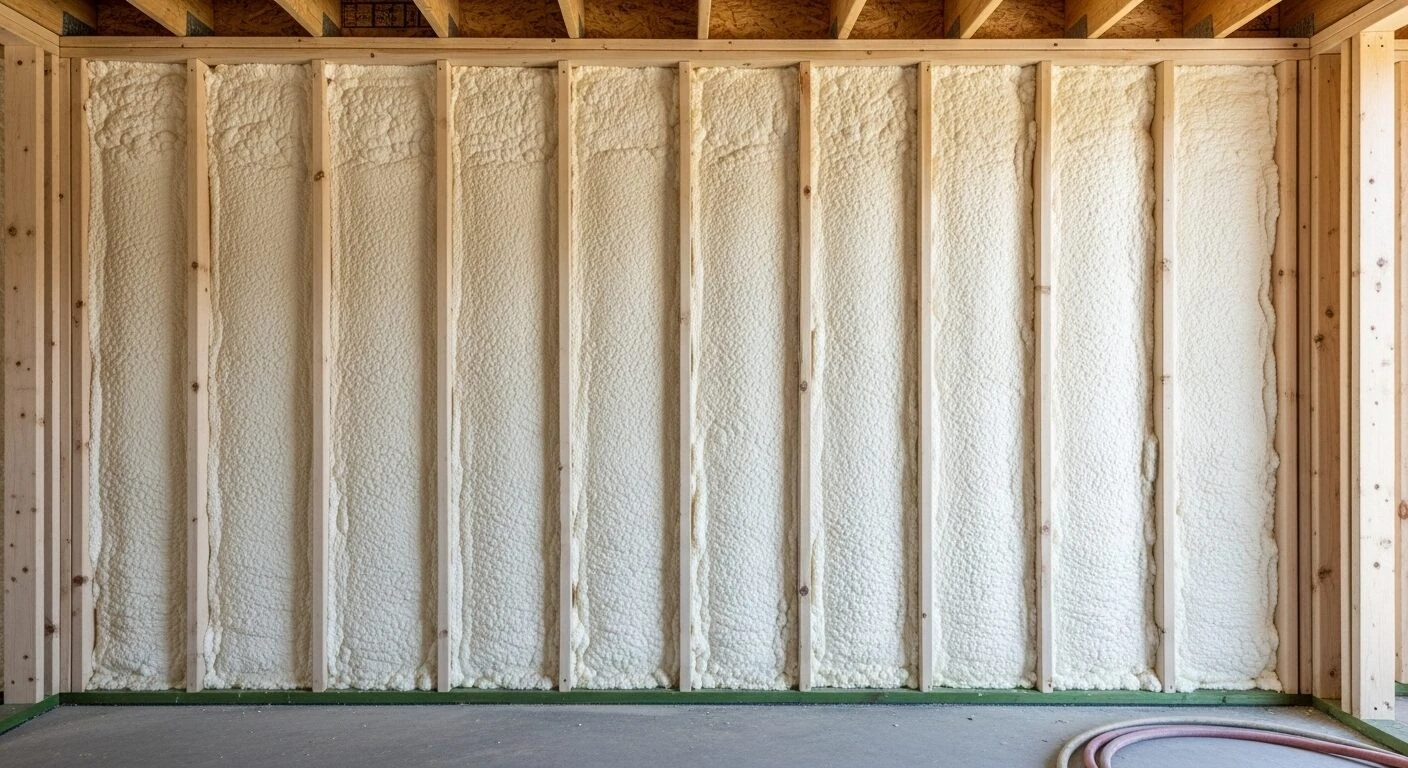
Use Wall Insulation or commercial insualtion in Marysville, WA?
admin_cascadiaspray
March 31st, 2026
For most properties in Marysville, Washington, the right choice depends on whether you are insulating a residential or commercial building. Wall insulation refers to the general practice of insulating interior or exterior walls, typically in homes and small structures, using materials like fiberglass batts, spray foam, or cellulose. Commercial insulation covers a much broader scope: it includes wall insulation but extends to metal building panels, roof systems, HVAC ductwork, fire-rated assemblies, and acoustic treatments required in commercial buildings. Marysville sits in Climate Zone 4C (marine) under the Washington State Energy Code, which means both residential and commercial structures must meet strict R-value and air leakage standards. If you own or manage a commercial building in Marysville, commercial insulation is the correct and code-required approach because it accounts for fire ratings, larger wall cavities, and specialized building materials that standard wall insulation products cannot address. For homeowners and residential builders, wall insulation is the right path and offers a simpler, more cost-effective way to meet energy code requirements while improving comfort and lowering utility bills.
TLDR / Key Takeaways
Marysville, WA, falls under Climate Zone 4C (marine), requiring R-13 to R-21 cavity insulation and continuous exterior insulation depending on wall construction type.
Wall insulation typically costs between $0.75 and $3.50 per square foot installed, while commercial insulation projects range from $2.00 to $7.00+ per square foot due to fire ratings, specialized materials, and code compliance requirements.
Commercial insulation covers wall systems but also includes roof/ceiling assemblies, metal building panels, ductwork, and fire-rated barriers that residential wall insulation does not address.
Spray foam insulation can reduce energy costs by up to 15% and provides an airtight seal that outperforms traditional batt insulation in both residential and commercial settings.
Residential properties benefit most from standard wall insulation (fiberglass, cellulose, or spray foam), while commercial buildings require code-compliant commercial insulation systems.
Washington State enforces one of the stricter energy codes in the country, and both residential and commercial insulation must meet specific air leakage and R-value requirements.
Retrofitting uninsulated walls in older Marysville homes typically costs $2,500 to $6,000, depending on wall area and insulation type chosen.
Commercial insulation projects often require engineering reviews, third-party inspections, and documentation that residential wall insulation projects do not.
Wall Insulation: What It Covers and When It Makes Sense
Wall insulation is the most common insulation upgrade for homeowners and residential contractors in Marysville. It involves installing insulation material within the wall cavities of exterior walls to slow heat transfer and improve thermal performance. The most widely used materials include fiberglass batts, blown-in cellulose, and spray foam insulation.
In Marysville’s marine climate, winters are cool and wet, while summers are mild. This means heat loss through walls during the winter months is the primary concern. According to the Insulation Institute, wall insulation directly impacts thermal performance, moisture management, and overall energy efficiency in any building type.
For a comprehensive comparison of materials, R-values, and cost data, consult the buyer guide from Leyton.
New residential construction where wall cavities are open and accessible
Older homes with little to no existing wall insulation (common in pre-1980s Marysville homes)
Remodeling projects where drywall is already being removed
Room additions and garage conversions
The installation process for wall insulation is relatively straightforward. For new construction, batts or spray foam are installed between studs before drywall goes up. For retrofit projects, contractors can drill access holes and blow cellulose or fiberglass into closed wall cavities, or use injection foam products that expand to fill voids.
Commercial Insulation: What It Covers and When It Makes Sense
Commercial insulation is a broader category that encompasses wall insulation but extends far beyond it. In Marysville, commercial buildings such as warehouses, retail spaces, offices, restaurants, and multi-family complexes all fall under the Washington State Energy Code, Commercial Provisions, which sets more demanding requirements than the residential code.
Commercial insulation typically includes:
Metal building insulation systems with a facing that serves as a vapor barrier
Fire-rated assemblies required by building codes for commercial occupancies
Roof and ceiling insulation with R-values of R-25 to R-30+, depending on the assembly type
HVAC duct insulation to prevent condensation and energy loss in commercial mechanical systems
Acoustic insulation for sound control between tenant spaces, offices, and manufacturing areas
Continuous insulation (exterior rigid foam or mineral wool) is required on many commercial wall assemblies
The cost of commercial insulation is higher because the materials are specialized, the installations are larger in scale, and the code compliance requirements are more complex. A commercial insulation contractor in Marysville must also account for building type, occupancy classification, and fire safety standards that residential wall insulation installers do not need to worry about.
Commercial insulation makes the most sense for:
New commercial construction projects in Marysville and Snohomish County
Commercial retrofit and tenant improvement projects
Multi-family buildings with four or more units
Metal buildings and warehouses with large roof and wall surface areas
Buildings requiring fire-rated assemblies or acoustic separation
Head-to-Head Comparison
Factor
Wall Insulation (Residential)
Commercial Insulation
Typical Cost per Sq Ft
$0.75 – $3.50
$2.00 – $7.00+
Common Materials
Fiberglass batts, cellulose, spray foam
Rigid board, mineral wool, metal building insulation, spray foam
Code Requirements
WA State Residential Energy Code (Zone 4C)
WA State Commercial Energy Code (Zone 4C)
Fire Rating Needs
Minimal
Often required (1-hour or 2-hour rated assemblies)
Scope of Work
Wall cavities only
Walls, roofs, ductwork, fire barriers, and acoustic treatments
Third-party energy code verification is often required
Cost Breakdown for Marysville, WA Properties
Costs vary based on material choice, wall cavity accessibility, building size, and code requirements. Here is a general cost framework for Marysville-area properties:
Insulation Type
Residential Wall (per sq ft)
Commercial Wall (per sq ft)
Commercial Roof (per sq ft)
Fiberglass Batts
$0.75 – $1.50
$1.50 – $3.00
N/A
Blown-In Cellulose
$1.00 – $2.00
N/A (not typical)
N/A
Open-Cell Spray Foam
$1.50 – $2.50
$2.50 – $4.00
N/A
Closed-Cell Spray Foam
$2.00 – $3.50
$3.50 – $5.50
N/A
Rigid Board (Commercial)
N/A
$2.00 – $4.00
$2.50 – $5.00
Metal Building Insulation
N/A
$1.50 – $3.50
N/A
These ranges reflect typical pricing in the Snohomish County market. Actual bids will vary based on project size, access conditions, and material availability.
Bar Chart Suggestion: Side-by-side bar chart showing cost per square foot ranges for residential wall insulation vs. commercial wall insulation in Marysville, WA, with separate bars for fiberglass, spray foam, and rigid board options.
Real-World Contractor Scenarios
Scenario
Property Type
Recommended Option
Estimated Cost
1970s rambler with no wall insulation
Single-family home, 1,800 sq ft
Blown-in cellulose wall retrofit
$3,200 – $4,500
New office building downtown
2-story commercial, 5,000 sq ft
Full commercial insulation package
$18,000 – $30,000
Warehouse conversion to retail
Metal building, 8,000 sq ft
Metal building insulation + spray foam seal
$12,000 – $22,000
Home addition with open walls
Residential, 400 sq ft addition
Closed-cell spray foam in new walls
$800 – $1,400
Multi-family apartment complex
12-unit building, new construction
Commercial wall + roof + fire-rated assemblies
$45,000 – $80,000+
Factors That Influence the Decision
Several variables determine whether wall insulation or commercial insulation is the right choice for your Marysville property:
Building type and occupancy: Single-family homes and duplexes fall under residential code. Anything four units or more, plus all commercial properties, falls under commercial code requirements.
Climate Zone 4C requirements: Marysville’s marine climate means moisture management is just as important as thermal performance. Exterior continuous insulation is strongly recommended for both residential and commercial buildings.
Existing construction vs. new build: New construction allows for optimal insulation placement. Retrofit projects may be limited by existing wall construction and accessibility.
Budget and project scope: Wall insulation projects for homes are typically completed in one to two days. Commercial projects can take weeks depending on building size and complexity.
Fire code requirements: If your building requires fire-rated assemblies (common in commercial construction), standard residential wall insulation will not meet code.
Acoustic needs: Multi-family and commercial buildings often need sound-rated wall assemblies, which require specific insulation types and densities.
Energy code compliance: Washington State has some of the strictest energy codes in the nation. Commercial buildings often require third-party verification of insulation installation and building envelope performance.
Who Wall Insulation Is Best For (And Who It Is Not)
Wall insulation is the right choice for:
Homeowners upgrading or retrofitting residential properties
Residential contractors building new homes or additions
Property owners with older homes lacking adequate wall insulation
Remodeling projects where walls are already opened up
Wall insulation is NOT the right choice for:
Commercial building owners needing code-compliant insulation systems
Multi-family properties with four or more units
Metal buildings or warehouses requiring specialized insulation packages
Projects requiring fire-rated or sound-rated wall assemblies
Who Commercial Insulation Is Best For (And Who It Is Not)
Commercial insulation is the right choice for:
Commercial building owners and property managers in Marysville
General contractors working on office, retail, or industrial construction
Multi-family developers building apartments or condos
Businesses tenant-improving commercial spaces
Commercial insulation is NOT the right choice for:
Single-family homeowners insulating standard wood-frame walls
Small residential remodeling projects
Budget-conscious homeowners looking for the lowest-cost option
DIY insulation projects on residential homes
FAQs
Does Marysville, WA require commercial insulation for multi-family buildings?
Yes. In Washington State, buildings with four or more dwelling units fall under the commercial energy code. This means multi-family properties must meet commercial insulation requirements for walls, ceilings, fire-rated assemblies, and air leakage testing, which go beyond what standard residential wall insulation covers.
Can I use spray foam insulation in both residential walls and commercial buildings?
Absolutely. Spray foam is one of the most versatile insulation materials available. Open-cell and closed-cell spray foam work well in residential wall cavities, and both are widely used in commercial applications for walls, roofs, and sealed building envelopes. The main difference is the scale, code documentation, and fire-rating requirements in commercial settings.
How much does it cost to insulate walls in an older Marysville home?
For a typical 1,500 to 2,000 square foot home with no existing wall insulation, a blown-in cellulose or injection foam retrofit typically costs between $2,500 and $5,500, depending on wall area, accessibility, and material choice. Closed-cell spray foam in new construction walls runs $2.00 to $3.50 per square foot.
Is commercial insulation required for a small retail space or just large buildings?
The Washington State Commercial Energy Code applies to all commercial buildings regardless of size. Even a small 1,000 square foot retail space in Marysville must meet commercial insulation requirements, including minimum R-values for walls and roofs, continuous insulation where specified, and compliance with air leakage testing standards.
How does Marysville’s climate zone affect insulation choices?
Marysville is in Climate Zone 4C, a marine climate with cool, wet winters and mild summers. This means moisture management is a significant factor. Closed-cell spray foam provides both insulation and a vapor barrier, making it a strong choice for both residential and commercial walls. Exterior continuous insulation is also recommended to prevent condensation within wall assemblies.
Ready to Insulate Your Marysville Property the Right Way
Choosing between wall insulation and commercial insulation comes down to your building type, code requirements, and performance goals. At Cascadia Spray Foam, we work with residential and commercial property owners throughout Marysville and Snohomish County to deliver code-compliant, high-performance insulation solutions. Whether you are retrofitting a 1970s home or insulating a new commercial build, our team will assess your property, recommend the right materials, and handle the installation from start to finish. Reach out to us at [email protected] or call (425) 386-3500 to discuss your project. We will help you make the right call based on your building, your budget, and Washington State code requirements.
Leyton – Ultimate Insulation Buyer Guide – Comprehensive insulation buyer guide with R-value charts, material comparisons, and cost data for residential and commercial applications.
Seattle homeowners face a specific set of insulation challenges: cool, damp winters, moderate summers, older housing stock, and increasingly strict energy codes. The right insulation choice in 2026 depends on…
Closed-cell spray foam insulation delivers the highest R-value per inch of any common insulation material, creates a continuous air and vapor barrier in a single application, and actively resists moisture…
Open-cell spray foam is the better choice for interior wall cavities and sound damping in Auburn, WA homes, while closed-cell spray foam outperforms in crawl spaces, rim joists, and areas…