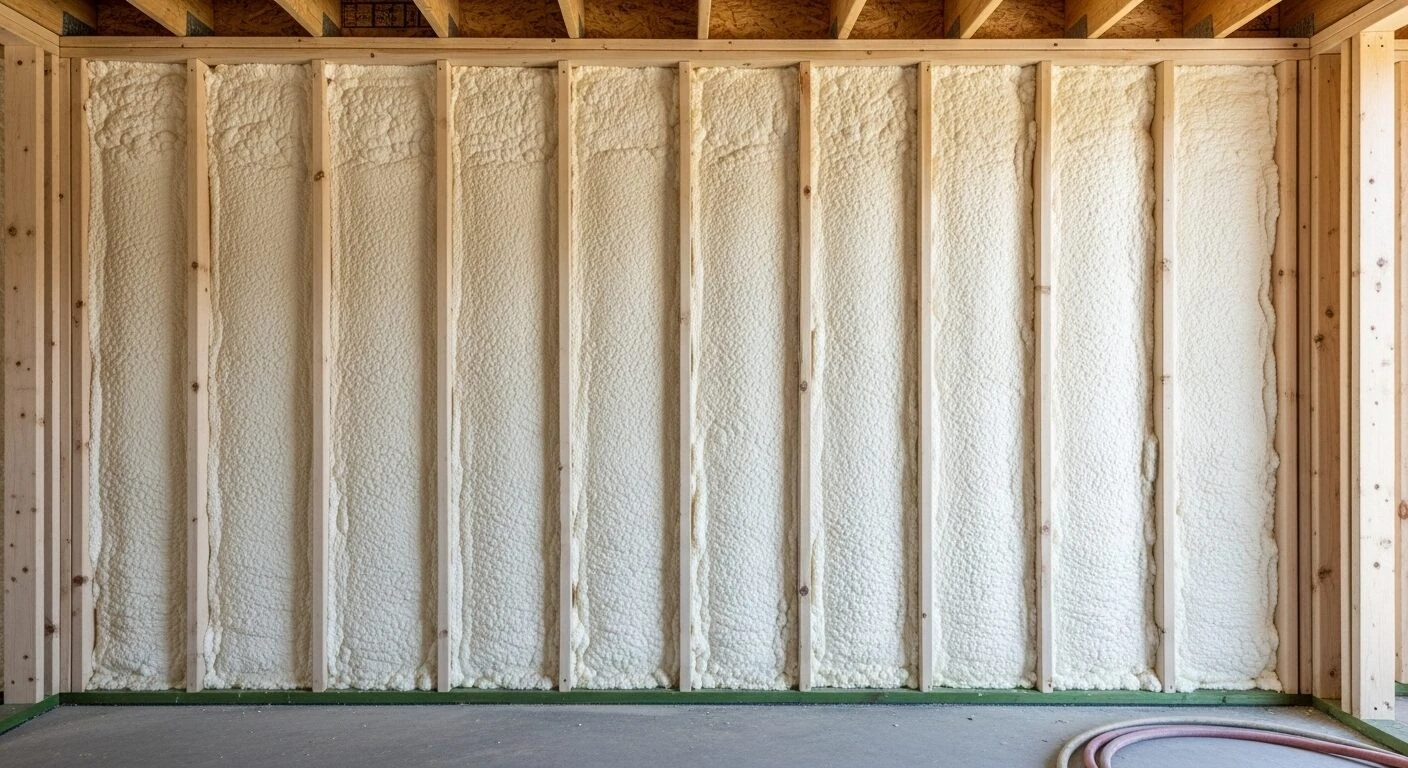
Choosing the right wall insulation comes down to three practical factors: your climate zone, your wall assembly type, and whether you are insulating during new construction or retrofitting an existing home. Each insulation material offers a different balance of thermal resistance (R-value), moisture management, air sealing, sound dampening, and cost. Fiberglass batts work well for standard stud cavities in new builds, blown-in cellulose fills existing wall cavities without major demolition, rigid foam boards add a continuous thermal layer to exterior walls, and spray foam delivers the highest R-value per inch along with air sealing in a single application. There is no single “best” option for every project, but understanding how each material performs in specific wall assemblies helps you make a confident, cost-effective decision.
TLDR / Key Takeaways
R-value per inch varies significantly by material: closed-cell spray foam delivers R-5.6 to R-6.5 per inch, while fiberglass batts range from R-2.9 to R-3.8 per inch, according to the Department of Energy.
Air sealing is a major performance differentiator. Spray foam and rigid foam with taped joints create an air barrier, while fiberglass and mineral wool rely on separate air barrier systems.
Retrofit projects typically favor blown-in cellulose or spray foam because both can be installed through small openings in finished walls.
Moisture resistance is strongest in closed-cell spray foam and extruded polystyrene (XPS) rigid foam, making them better suited for basements and below-grade walls.
Sound control is a standout benefit of mineral wool and dense-pack cellulose, both of which outperform standard fiberglass for noise reduction.
Cost per square foot generally ranges from $0.30 to $1.50 for fiberglass batts, $1.50 to $3.00 for blown-in cellulose, $2.00 to $4.00 for rigid foam, and $3.00 to $7.00 for spray foam installed.
Fire resistance is inherent in mineral wool and fiberglass, which are noncombustible, whereas foam-based insulations typically require a thermal barrier like drywall.
How Wall Insulation Works: The Basics
Wall insulation slows the transfer of heat between your home’s interior and exterior. The measurement for this resistance is the R-value, a number that indicates how well a material resists conductive heat flow. The higher the R-value, the better the insulating power. Energy Star recommends specific R-values based on your climate zone, ranging from R-13 for warmer southern zones up to R-23 or higher for walls in colder northern climates.
Beyond thermal resistance, modern insulation choices also need to account for air infiltration, which can account for 25% to 40% of energy loss in a typical home. Materials that both insulate and seal air gaps, like spray foam, offer a dual benefit that standard batts cannot match on their own.
The Main Types of Wall Insulation
Fiberglass Batts and Rolls
Fiberglass is the most widely used wall insulation in North America. It comes in pre-cut batts or continuous rolls designed to fit standard stud cavities of 2×4 and 2×6 framing. Installers staple or friction-fit the material between studs, then cover it with drywall.
Strengths: Low cost, widely available, noncombustible, and familiar to nearly all framing crews. Fiberglass batts also dry out relatively well if they get wet.
Limitations: Fiberglass does not stop air movement on its own. Gaps around pipes, wiring, and uneven framing create thermal bypasses that reduce real-world performance below the rated R-value. Compression during installation also lowers effectiveness.
Mineral Wool (Rockwool)
Mineral wool is made from basalt rock and steel slag, spun into fibers similar to fiberglass but denser and heavier. It is available in batts, boards, and loose-fill forms.
Strengths: Exceptional fire resistance (withstands temperatures above 2,000°F), excellent sound dampening, and naturally water-repellent without added chemicals. Mineral wool also holds its shape over time without sagging.
Limitations: Higher material cost than fiberglass, heavier to handle, and can be harder to source in some regions. It also requires careful cutting for a snug fit around obstacles.
Blown-In Cellulose
Cellulose insulation is made from recycled paper, treated with borates for fire and pest resistance. It is installed by blowing the loose material into wall cavities through small holes drilled in the drywall or sheathing.
Strengths: Ideal for retrofitting existing walls without tearing down drywall. Dense-pack cellulose fills voids around wiring and plumbing, reducing air infiltration better than fiberglass batts. It also has a higher R-value per inch (approximately R-3.1 to R-3.8) compared to standard fiberglass.
Limitations: Can settle over time if not densely packed, may absorb moisture in humid environments, and requires specialized blowing equipment.
Spray Foam Insulation
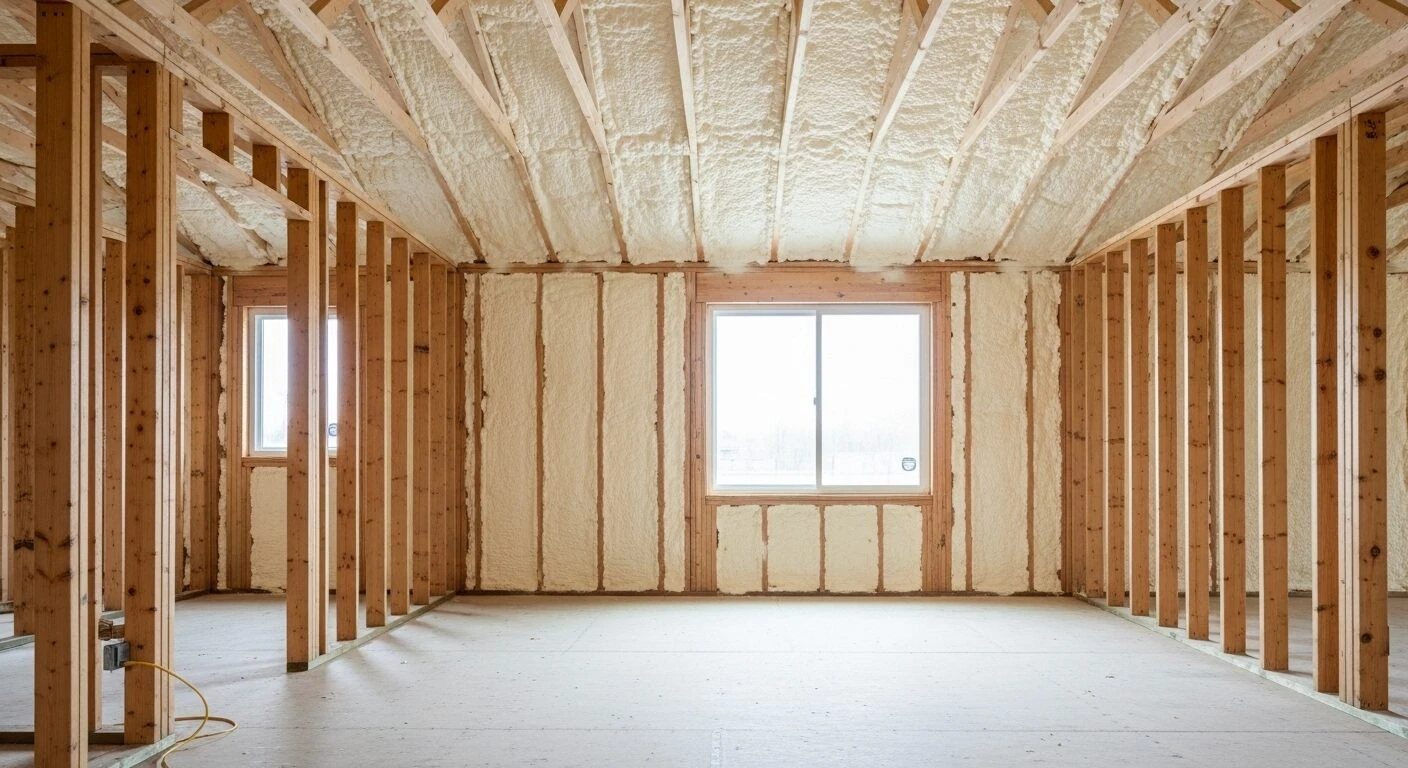
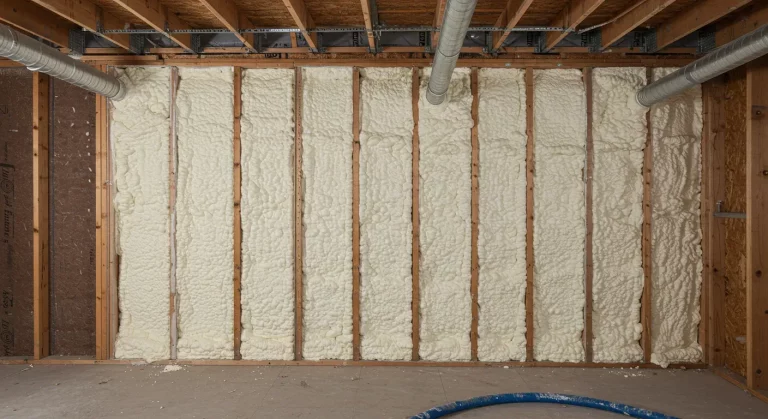
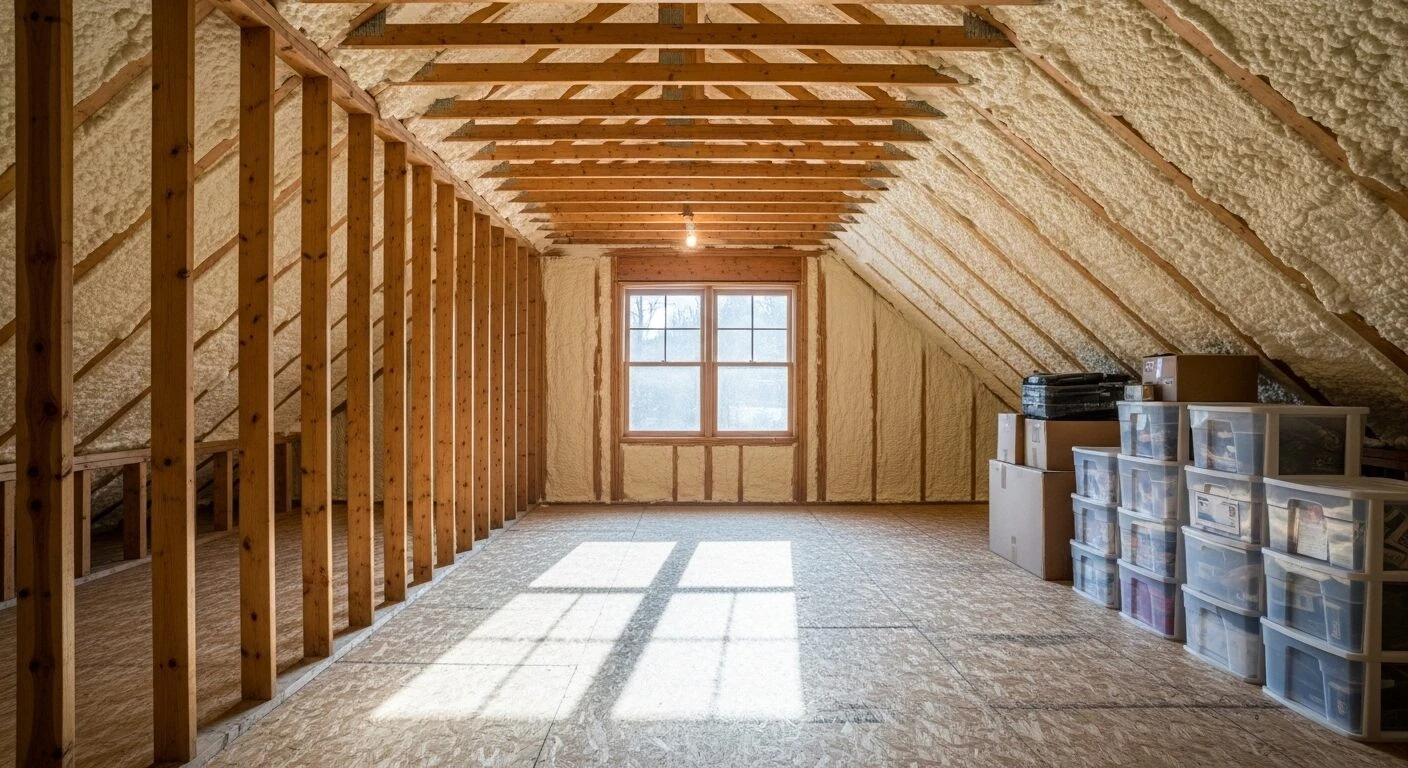
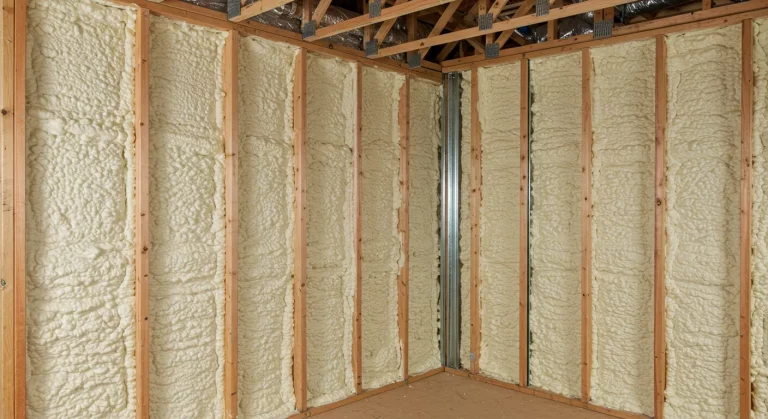
Spray foam comes in two main varieties: open-cell and closed-cell. Open-cell foam is lighter, less expensive, and expands significantly to fill cavities. Closed-cell foam is denser, offers a higher R-value per inch, and adds structural rigidity to the wall assembly.
Strengths: Spray foam provides both insulation and air sealing in a single step. Closed-cell spray foam reaches R-5.6 to R-6.5 per inch, making it one of the highest-performing wall insulation options available. It also acts as a vapor barrier in closed-cell form and resists moisture, making it suitable for basement walls and crawl spaces.
Limitations: The highest cost of any wall insulation type. Installation requires trained professionals with specialized equipment. Off-gassing during installation requires protective gear and ventilation.
Rigid Foam Board
Rigid foam insulation comes in large panels of expanded polystyrene (EPS), extruded polystyrene (XPS), or polyisocyanurate (polyiso). It is typically applied to the exterior of wall assemblies, either under siding or as a continuous insulation layer over structural sheathing.
Limitations: Requires detailing at openings, corners, and penetrations to maintain the air barrier. Some foam types are not compatible with all cladding systems, and code requirements may limit interior applications due to flammability.
Comparison Table: Wall Insulation Types at a Glance
Insulation Type
R-Value Per Inch
Air Sealing
Moisture Resistance
Sound Control
Best Application
Cost Range (per sq ft)
Fiberglass Batts
2.9 – 3.8
None
Low
Moderate
New construction stud cavities
$0.30 – $1.50
Mineral Wool Batts
3.3 – 4.2
Minimal
Moderate
Excellent
Fire-rated walls, sound isolation
$1.00 – $2.50
Blown-In Cellulose
3.1 – 3.8
Good (dense-pack)
Low to Moderate
Good
Retrofit existing walls
$1.50 – $3.00
Spray Foam (Open Cell)
3.6 – 3.9
Excellent
Low
Good
Open wall cavities, sound walls
$0.50 – $1.50
Spray Foam (Closed Cell)
5.6 – 6.5
Excellent
High
Good
Basements, crawl spaces, exteriors
$3.00 – $7.00
Rigid Foam Board
3.8 – 6.5
Good (when taped)
Moderate to High
Low
Continuous exterior insulation
$2.00 – $4.00
Recommendations by Project Type
New Construction
For new builds, we recommend a combination approach. Fiberglass or mineral wool batts inside stud cavities paired with a continuous layer of rigid foam board on the exterior addresses both cavity insulation and thermal bridging. This assembly meets or exceeds energy code requirements in most climate zones while keeping material costs manageable.
Retrofit and Remodeling
When insulating existing walls without removing drywall, blown-in cellulose or spray foam are the two practical options. Dense-pack cellulose is more affordable and fills cavities effectively, but spray foam offers superior air sealing. The choice depends on budget, wall accessibility, and whether the home has existing moisture issues.
Basements and Below-Grade Walls
Below-grade walls face unique moisture challenges. Closed-cell spray foam is often the strongest single-material choice here because it acts as a vapor barrier, resists water absorption, and adheres directly to concrete. Rigid XPS foam board with proper drainage is another reliable approach.
Soundproofing and Party Walls
When noise control is the priority, mineral wool batts installed in a staggered-stud or double-stud wall assembly deliver the best results. Dense-pack cellulose in a similar configuration is a strong alternative at a lower cost.
Visual Suggestion for Designers
Bar Chart Concept: Side-by-side comparison of R-value per inch for all six insulation types, color-coded by material family. A secondary overlay could show cost per square foot on the same chart, allowing readers to visually weigh thermal performance against budget.
Signs You Have the Right Insulation Strategy
A strong insulation plan should check off several practical indicators. Your contractor or insulator should be able to clearly explain why they chose a specific material for your wall assembly and climate zone, not just default to whatever they stock. Look for detailed scope documents that specify R-values by wall type, air sealing details at penetrations, and moisture management strategies for your particular site conditions. A trustworthy installer will also discuss potential tradeoffs, like spending more upfront on spray foam versus saving on fiberglass and investing the difference elsewhere. Communication quality, willingness to walk through the building science reasoning, and familiarity with local energy code requirements are all strong signals that you are working with the right team.
FAQs
Can I install wall insulation myself?
Fiberglass batts and rigid foam board are the most DIY-friendly options because they require minimal specialized equipment. Blown-in cellulose and spray foam require professional equipment and training. Improper installation can significantly reduce performance, so even with batts, careful fitting around obstacles and proper vapor barrier placement are essential.
Is spray foam worth the higher cost?
For homes in colder climates, homes with high energy bills, or wall assemblies prone to air infiltration and moisture, spray foam often pays for itself through energy savings over 5 to 10 years. Its air sealing capability alone can eliminate drafts and comfort issues that fiberglass cannot address. The value depends on your climate zone, existing construction quality, and how long you plan to own the home.
Does wall insulation help with soundproofing?
Yes, and the material choice matters. Mineral wool and dense-pack cellulose offer the best sound reduction among common insulation types. Standard fiberglass provides moderate sound dampening, while rigid foam offers very little acoustic benefit. For party walls between units or bedrooms near living spaces, mineral wool in a double-stud assembly is the strongest choice.
How do I know if my existing walls need more insulation?
Common signs include noticeably cold walls in winter, uneven temperatures between rooms, high heating and cooling bills, and visible drafts near outlets and baseboards. An energy audit with a blower door test and thermal imaging can identify exactly where insulation is missing or underperforming before you commit to any work.
What R-value should my walls have?
According to Energy Star’s recommended home insulation R-values, wall cavities in climate zones 3 through 5 (which cover most of the Pacific Northwest) should target R-13 to R-20 for wood-framed walls. Adding continuous exterior insulation can push total wall performance to R-20 or higher, which is increasingly required by updated energy codes.
Get Expert Guidance on Your Wall Insulation Project
Understanding insulation options is one thing. Choosing and installing the right system for your specific home is another. Our team at Cascadia Spray Foam has helped homeowners and builders across the Pacific Northwest select and install wall insulation that performs reliably in our unique climate conditions. Whether you are building new, remodeling, or retrofitting an older home, we assess your wall assemblies, identify air sealing opportunities, and recommend materials that match your budget and performance goals.
U.S. Department of Energy – Types of Insulation – Comprehensive overview of all insulation materials, installation methods, and their advantages for residential and commercial applications.
Seattle homeowners face a specific set of insulation challenges: cool, damp winters, moderate summers, older housing stock, and increasingly strict energy codes. The right insulation choice in 2026 depends on…
Closed-cell spray foam insulation delivers the highest R-value per inch of any common insulation material, creates a continuous air and vapor barrier in a single application, and actively resists moisture…
Open-cell spray foam is the better choice for interior wall cavities and sound damping in Auburn, WA homes, while closed-cell spray foam outperforms in crawl spaces, rim joists, and areas…