Comparing modern Insulation tips for Seattle, WA homes in 2026
admin_cascadiaspray
March 31st, 2026
Seattle homeowners face a specific set of insulation challenges: cool, damp winters, moderate summers, older housing stock, and increasingly strict energy codes. The right insulation choice in 2026 depends on your home’s age, problem areas like attics and crawlspaces, budget, and whether you prioritize energy savings, moisture control, or indoor air quality. The leading options for our region include spray foam, fiberglass, mineral wool, cellulose, and rigid foam board, each serving different needs from high-performance air sealing to budget-friendly retrofits.
TLDR / Key Takeaways
Seattle homes sit in IECC Climate Zone 4 (marine), requiring attic insulation at R-38 to R-60 and wall insulation at R-13 to R-20, per ENERGY STAR guidelines.
Closed-cell spray foam delivers the highest R-value per inch (R-6.0 to R-7.0) and also seals air leaks, making it a strong long-term investment for attics, crawlspaces, and rim joists.
Open-cell spray foam offers a lower cost per square foot with good sound dampening but a lower R-value (R-3.7 per inch), best suited for interior wall cavities.
Fiberglass and mineral wool remain cost-effective options for attics and walls when air sealing is already handled or budget is a primary concern.
Seattle City Light offers rebates and programs that can offset insulation upgrade costs for qualifying homeowners.
Combining materials, such as spray foam for air sealing layered with blown-in fiberglass for depth, often delivers the best balance of performance and cost.
Moisture management is as important as R-value in Seattle’s marine climate, making vapor barriers and proper ventilation critical to any insulation strategy.
Why Seattle Homes Need Updated Insulation in 2026
Seattle’s housing market is dominated by older homes. Many were built before modern energy codes, meaning they typically have inadequate insulation in attics, walls, and crawlspaces. According to Goodwin General Construction’s 2026 energy upgrade guide, older homes across Washington still lose significant energy through under-insulated assemblies. With heating costs rising and Washington state pushing toward stricter energy efficiency standards, 2026 is a practical time to evaluate your home’s thermal envelope.
Seattle’s marine climate adds a specific complication: moisture. High humidity levels mean that insulation must not only resist heat flow but also manage condensation risk. Materials that trap moisture against framing, or installations that block ventilation without providing a proper vapor barrier, can lead to mold and rot. This is why material selection matters as much as installation quality.
Top Insulation Materials Compared for Seattle Homes
Spray Foam Insulation
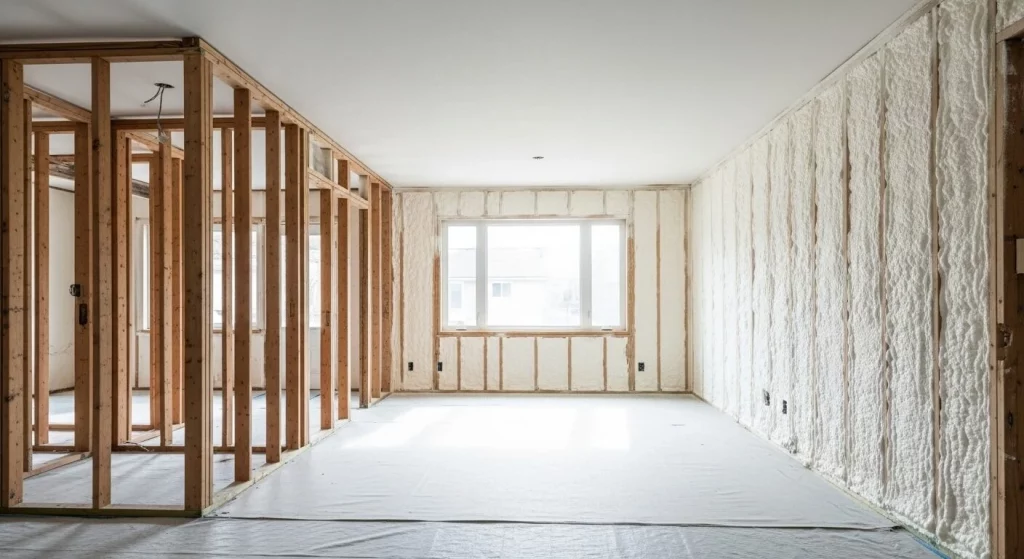
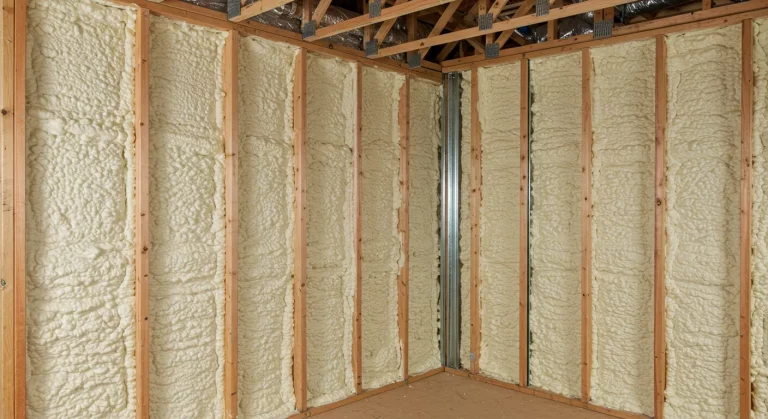
Spray foam continues to lead in performance for Pacific Northwest homes. It comes in two varieties: closed-cell and open-cell.
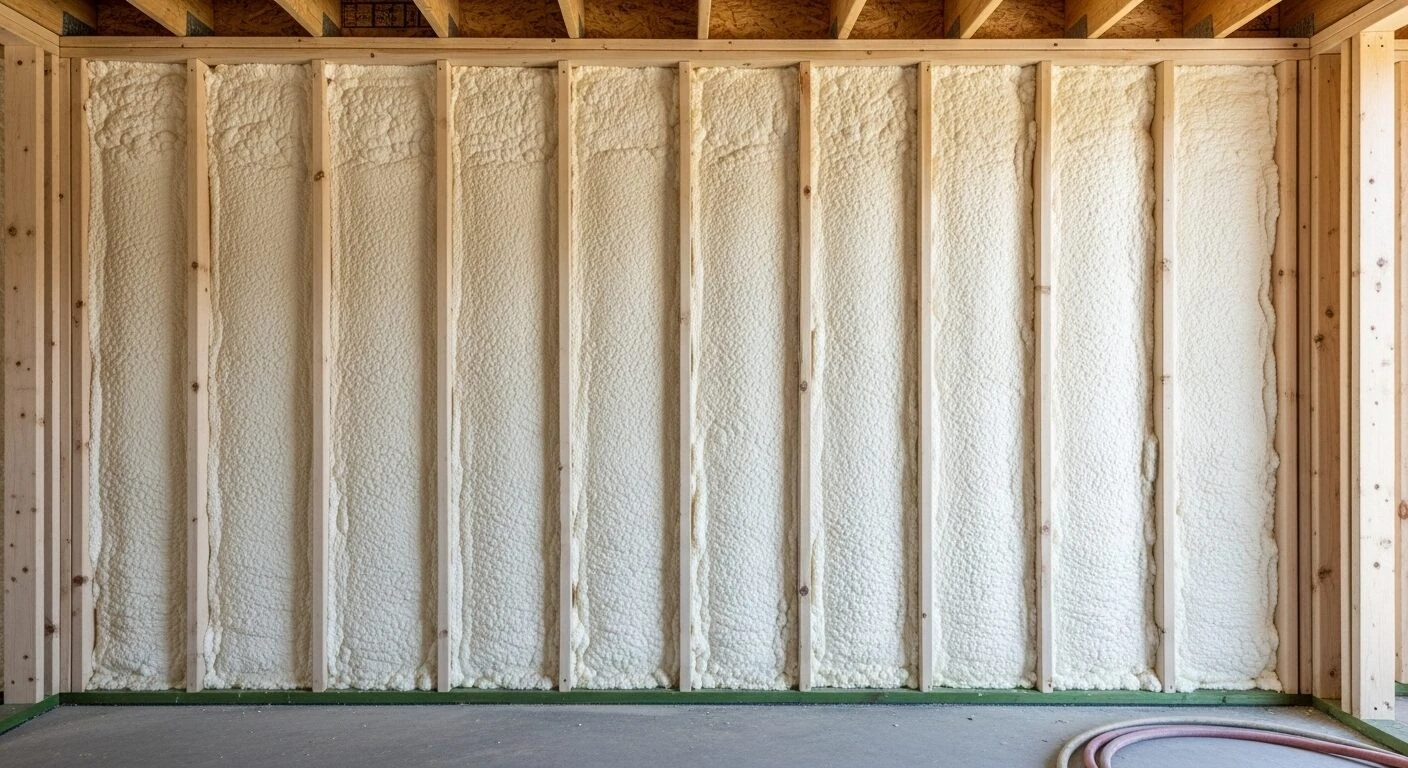
Closed-cell spray foam delivers R-6.0 to R-7.0 per inch, the highest rating among common residential insulation materials. It also acts as a vapor barrier and an air barrier in a single application, which is especially valuable in crawlspaces and rim joists where moisture infiltration is common. Per the U.S. Department of Energy, spray foam insulation is one of the most effective options for reducing air leakage and improving overall home energy performance.
Open-cell spray foam provides R-3.7 per inch at a lower material cost. It does not function as a vapor barrier, so it is better suited for interior applications where moisture drive is less of a concern. It excels at sound dampening, making it a good fit for shared walls and bonus rooms.
Fiberglass Insulation
Fiberglass remains the most widely used insulation material in the United States. It delivers R-2.9 to R-3.8 per inch for batts and R-2.2 to R-4.3 per inch for blown-in varieties. The primary advantages are low upfront cost, widespread availability, and familiarity among contractors. For Seattle homeowners on a tighter budget, adding blown-in fiberglass to an under-insulated attic is one of the fastest ways to improve comfort.
The limitation is that fiberglass does not air-seal. Gaps, compression, and voids can significantly reduce its effective performance. In practice, fiberglass works best when paired with a separate air-sealing step or when installed in cavities that are already reasonably airtight.
Mineral Wool (Rockwool)
Mineral wool offers R-3.7 to R-4.2 per inch with excellent fire resistance (it melts above 2,000°F) and strong sound-dampening properties. It is denser than fiberglass, which helps it resist settling over time and maintain its R-value in wall cavities. Mineral wool is also naturally moisture-resistant, which gives it an advantage in Seattle’s damp climate.
The trade-off is cost. Mineral wool typically runs higher per square foot than fiberglass, though still lower than spray foam. It is a strong middle-ground option for homeowners who want better moisture performance than fiberglass without the premium of spray foam.
Cellulose Insulation
Cellulose is made from recycled paper treated with fire retardants. It delivers R-3.2 to R-3.8 per inch and is one of the more environmentally friendly options available. When blown into attic floors or dense-packed into wall cavities, it fills gaps and voids better than fiberglass batts, improving effective R-value. Cost is competitive with fiberglass.
Cellulose does absorb moisture more readily than mineral wool or spray foam, so proper installation with adequate vapor barriers is essential in Seattle homes.
Rigid Foam Board
Rigid foam boards (XPS, EPS, and polyiso) deliver R-3.8 to R-6.5 per inch, depending on the type. They are most commonly used in basements, crawlspaces, and as continuous exterior insulation. Polyiso boards offer the highest R-value but can lose effectiveness in cold temperatures, making EPS or XPS sometimes preferable for exterior Seattle applications.
Material
R-Value Per Inch
Air Sealing
Moisture Resistance
Best Application in Seattle
Relative Cost
Closed-Cell Spray Foam
R-6.0 to R-7.0
Yes (vapor barrier)
Excellent
Crawlspace, rim joist, attic
High
Open-Cell Spray Foam
R-3.7
Yes (air barrier)
Moderate
Interior walls, sound control
Moderate-High
Mineral Wool
R-3.7 to R-4.2
No
Good
Walls, fire-rated assemblies
Moderate
Fiberglass (Blown-In)
R-2.2 to R-4.3
No
Low
Attic floors, existing walls
Low
Cellulose (Blown-In)
R-3.2 to R-3.8
Partial (when dense-packed)
Low-Moderate
Attic floors, wall cavities
Low
Rigid Foam Board
R-3.8 to R-6.5
When taped/sealed
Varies by type
Basement walls, exterior continuous
Moderate
Where to Insulate First: Priority Areas for Seattle Homes
Not every area of your home needs the same material or the same urgency. Here is a practical priority ranking based on where Seattle homes lose the most energy.
Priority 1: Attic Floor and Ceiling
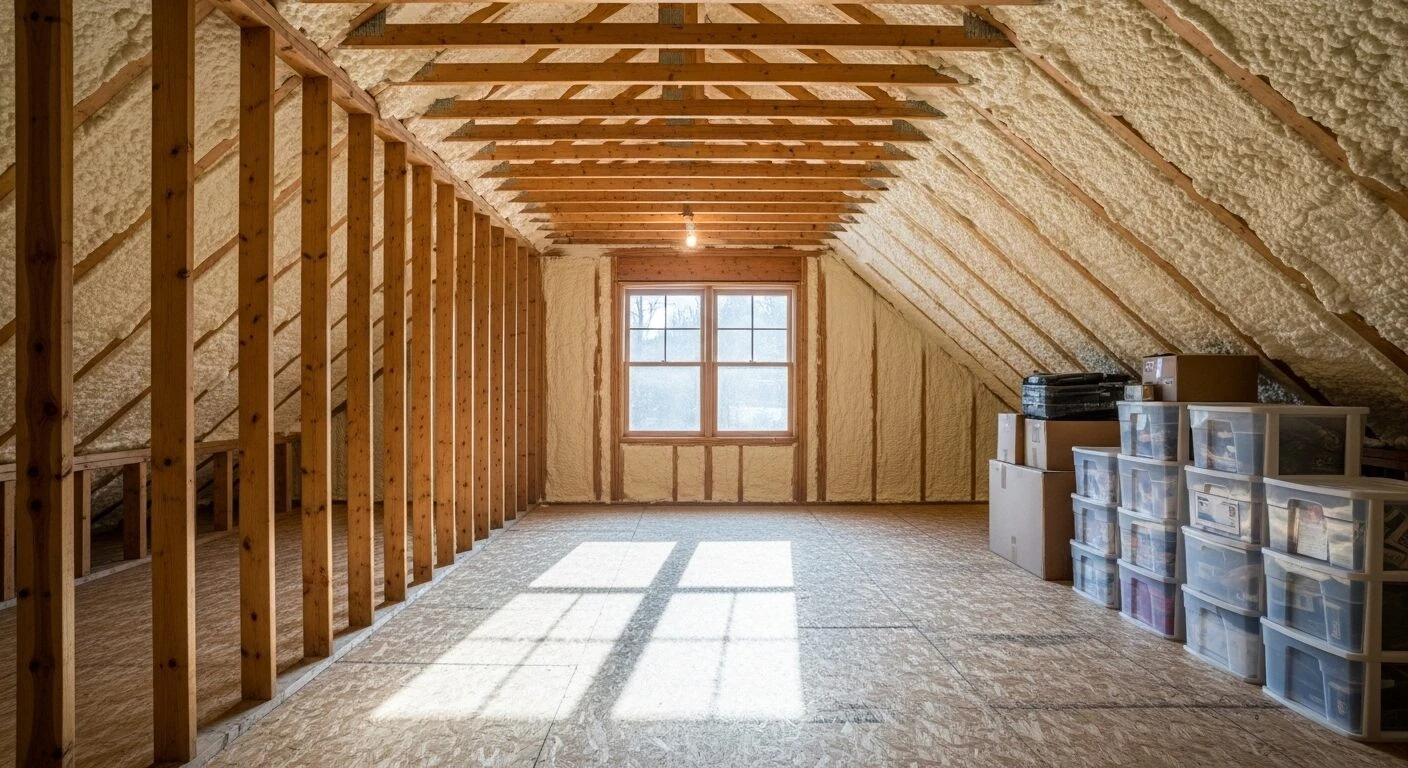
Heat rises, and attics are typically the largest single source of energy loss in a home. For Seattle’s Climate Zone 4, ENERGY STAR recommends R-38 to R-60 for uninsulated attics. Blown-in fiberglass or cellulose over existing insulation is the most common and cost-effective upgrade. For new construction or full gutters, spray foam on the attic roof deck (creating a conditioned attic) is an increasingly popular approach.
Priority 2: Crawlspace
Seattle’s older homes frequently have vented, uninsulated crawlspaces that allow cold air and moisture to infiltrate the floor above. Sealing and insulating the crawlspace walls with closed-cell spray foam, combined with a ground vapor barrier, is one of the highest-impact upgrades available. It improves floor comfort, reduces moisture issues, and can lower heating bills noticeably.
Priority 3: Rim Joist and Band Joist
The rim joist area, where the floor framing meets the foundation, is notoriously leaky. Spraying closed-cell foam into these cavities eliminates a major air infiltration pathway and adds meaningful R-value in a thin space where other materials are difficult to install.
Priority 4: Exterior Walls
Upgrading wall insulation in existing homes is more invasive and expensive because it typically requires removing drywall or drilling and blowing material into each stud cavity. For homes undergoing renovations, this is the time to add mineral wool batts or dense-pack cellulose. For full re-sides, adding rigid foam board as continuous exterior insulation is an excellent strategy.
Visual Suggestion for Designers:
Bar Chart: Side-by-side comparison of percentage energy loss by area (attic, crawlspace, walls, windows, ducts) for a typical Seattle home built before 1980.
Line Chart: Cumulative energy savings over 10 years comparing three strategies: attic-only upgrade, attic plus crawlspace, and whole-home insulation.
Common Mistakes Seattle Homeowners Make with Insulation
Even with the right materials, poor decisions during planning and installation can undermine performance. Here are the most frequent issues we see:
Skipping air sealing before adding insulation. Adding R-60 of fiberglass to an attic with major air leaks is like wearing a thick coat with the zipper open. Air sealing should always come first or be combined with a material that seals, like spray foam.
Ignoring ventilation requirements. In older Seattle homes, blocking soffit vents with insulation or converting a vented attic to a conditioned space without updating ventilation can cause moisture buildup and roof damage.
Using the same material everywhere. Closed-cell spray foam is ideal for crawlspaces but overkill and expensive for a simple attic floor top-off. Matching material to application saves money without sacrificing performance.
Compressing insulation. Fiberglass and mineral wool lose R-value when compressed. Stuffing batts into tight cavities or storing items on top of attic insulation reduces its effectiveness significantly.
Not addressing vapor barriers properly. In a marine climate like Seattle, vapor drive can come from both inside and outside the home, depending on the season. Using the wrong vapor barrier placement can trap moisture inside wall assemblies.
Recommendations by Homeowner Situation
Homeowner Scenario
Recommended Approach
Key Considerations
Older home (pre-1980), budget under $5,000
Blown-in fiberglass or cellulose in attic + air sealing
Biggest bang for the buck, fastest ROI, addresses the largest energy loss area first
Older home, budget $8,000 to $15,000
Attic insulation + crawlspace encapsulation with spray foam
Addresses two major problem areas, noticeable comfort improvement throughout the home
Full gut renovation or new construction
Spray foam in the crawlspace and rim joist + mineral wool in the walls + rigid foam exterior
Maximum performance, meets or exceeds 2026 energy code, best long-term value
Home with moisture or mold issues in the crawlspace
Open-cell spray foam in shared walls + mineral wool in interior partitions
Superior sound reduction alongside thermal benefits
Signs You Have Found the Right Insulation Contractor
Choosing the right installer is as important as choosing the right material. Here are indicators that a contractor is worth hiring:
They conduct a pre-installation assessment. A reputable contractor will inspect your attic, crawlspace, and walls before recommending a specific material or approach, rather than pushing a one-size-fits-all solution.
They discuss air sealing as part of the scope. If a contractor quotes only insulation without mentioning air sealing, that is a red flag. The two should be discussed together.
They explain R-value targets for your specific climate zone. For Seattle, any contractor working on your attic should be referencing R-38 to R-60 targets.
They provide a clear, written scope of work. The proposal should specify material type, R-value, areas to be insulated, thickness or depth, and any preparatory work like air sealing or ventilation modifications.
They carry appropriate licensing and insurance for Washington state. This includes a contractor registration through the Washington State Department of Labor and Industries.
They communicate timelines and site preparation expectations. You should know how long the job will take, what needs to be moved or covered, and what cleanup is included.
Seattle-Specific Rebates and Incentives
Seattle City Light and Puget Sound Energy offer rebates for insulation upgrades that meet certain criteria. Seattle City Light’s Home Energy Solutions program provides incentives for home energy assessments and qualifying improvements. These programs can reduce your out-of-pocket cost by hundreds or even thousands of dollars, depending on the scope of work and your income qualification level.
Additionally, the federal Inflation Reduction Act continues to offer tax credits of up to 30% of insulation costs (capped at $1,200 per year) through 2032. Combining local rebates with federal tax credits can make higher-performance options like spray foam more financially accessible.
FAQs
What R-value do I need for my Seattle attic?
For Seattle’s Climate Zone 4, ENERGY STAR recommends R-38 to R-60 for attics, depending on whether insulation is on the attic floor or the roof deck. Most existing homes benefit from adding blown-in material to reach at least R-38, while new construction or conditioned attic assemblies should target R-49 or higher.
Is spray foam worth the extra cost compared to fiberglass?
For many Seattle homeowners, yes, but it depends on the application. In crawlspaces, rim joists, and areas prone to moisture and air infiltration, spray foam’s air-sealing and vapor barrier properties justify the higher cost. For a simple attic floor top-off where air sealing is already adequate, fiberglass or cellulose may deliver sufficient performance at a lower price.
Can I install insulation over existing insulation in my attic?
In most cases, yes. You can add blown-in fiberglass or cellulose over existing batts or loose-fill insulation, provided the existing material is dry, undamaged, and does not have a vapor barrier facing down (which would trap moisture between layers). A professional assessment can confirm whether a top-off is appropriate for your situation.
How long does a typical insulation upgrade take in a Seattle home?
Most residential insulation projects take one to two days, depending on the scope. A standalone attic blow-in can often be completed in a few hours. Crawlspace encapsulation or full-home insulation during a renovation may take two to three days. Your contractor should provide a timeline as part of their written proposal.
Does adding insulation help with cooling in Seattle summers?
Yes. While Seattle summers are mild, insulation slows heat transfer in both directions. A well-insulated attic keeps your home cooler during warm spells by reducing radiant heat gain through the roof, which can reduce reliance on air conditioning or fans and improve overall comfort.
Get Your Seattle Home Insulation Upgrade Started
Cascadia Spray Foam specializes in residential and commercial insulation solutions tailored to the specific demands of Seattle’s marine climate. Our team assesses your home’s unique needs, recommends the right materials for each area, and installs to the highest standards, so you see real results in comfort and energy savings.
Seattle homeowners face a specific set of insulation challenges: cool, damp winters, moderate summers, older housing stock, and increasingly strict energy codes. The right insulation choice in 2026 depends on…
Closed-cell spray foam insulation delivers the highest R-value per inch of any common insulation material, creates a continuous air and vapor barrier in a single application, and actively resists moisture…
Open-cell spray foam is the better choice for interior wall cavities and sound damping in Auburn, WA homes, while closed-cell spray foam outperforms in crawl spaces, rim joists, and areas…