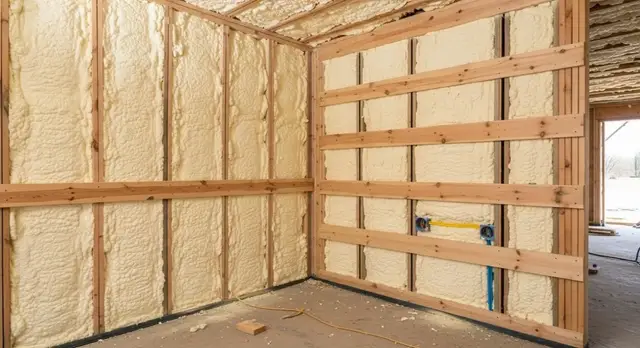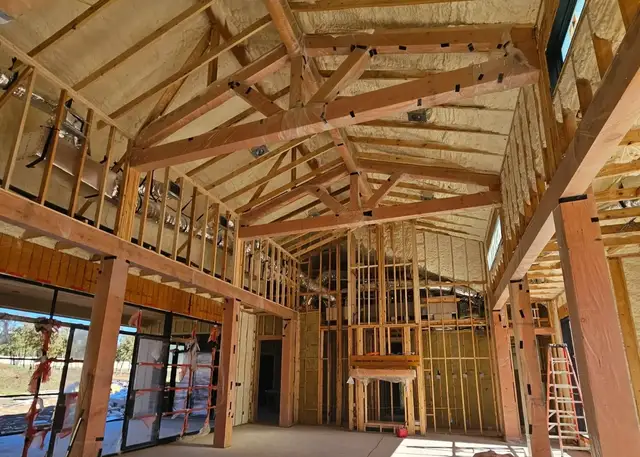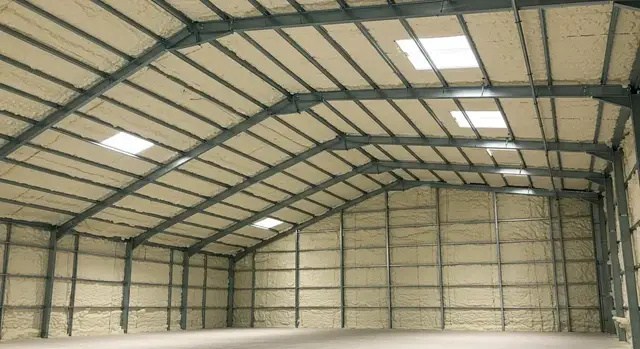
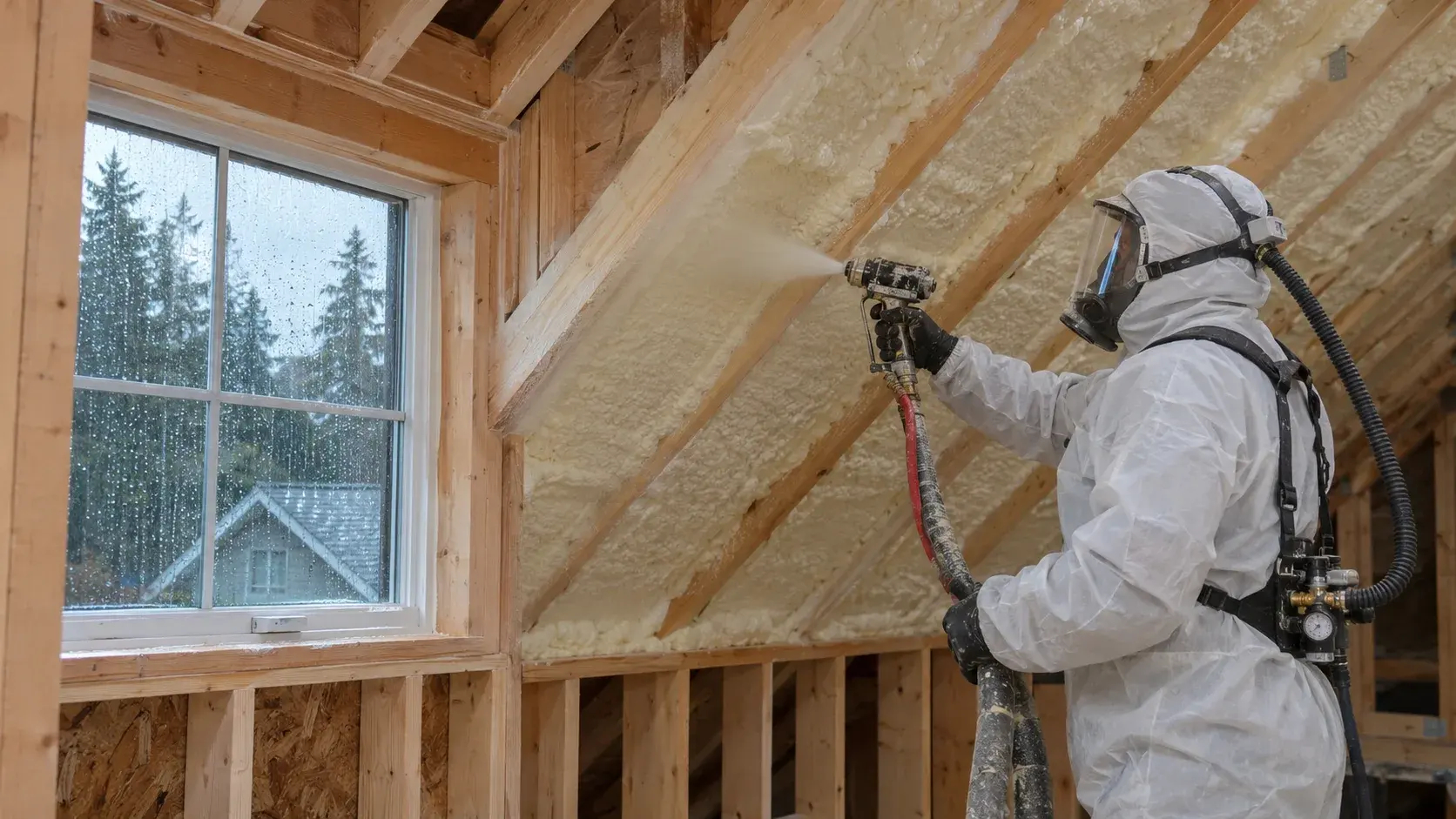
Yes, spray foam insulation can be installed during Seattle's rainy winter. Rain outside does not automatically stop work inside a house. What matters is whether the framing and other surfaces to be sprayed are dry, the product's temperature requirements can be met, and the space can be isolated and ventilated safely. A wet roof, active leak, or unsuitable jobsite conditions can mean the installation needs to wait.
For homeowners planning spray foam insulation in Seattle, WA, the useful question is not simply What month is it? It is Is this particular space ready for the product the installer plans to use?
The Short Answer for Seattle Homeowners
- A rainy day can still be an installation day when the work takes place in a protected, dry interior and all product requirements are satisfied.
- Wet wood is a reason to pause. Insulation should not be used to cover an unresolved leak or trap moisture in an assembly.
- Cold surfaces need attention. The crew must follow the specific foam manufacturer's air, surface, and material temperature limits.
- People and pets need a re-entry plan. Professional spray foam application requires work-area isolation, protective equipment, ventilation, and product-specific curing guidance.
- Foam selection is project-specific. Open-cell and closed-cell products have different properties, but neither is a universal answer to winter moisture.
Why Rainy Weather Changes the Installation Plan
Seattle's damp season brings two separate challenges: water that reaches the building materials and cool surfaces that may affect how a spray foam product reacts and bonds. Neither issue can be solved just by applying more foam.
An enclosed, weather-tight attic or wall cavity may be suitable for work even while rain falls outside. But if roof flashing leaks, sheathing is wet, or condensation is collecting on the framing, spraying over the problem can conceal it. The U.S. Department of Energy's Building America guidance calls for a dry, clean roof assembly before spray foam goes in and directs installers to check surface moisture and temperatures.
For a winter project, the first decision is whether the space is properly sheltered and dry, not whether there is rain in the forecast.
Check the Wood and Fix Leaks Before Insulating
Moisture inspection is especially important around roof sheathing, rafters, wall framing, and foundation transitions. The absence of dripping water does not prove that a surface is dry enough to insulate.
For spray foam applied beneath roof sheathing, Building America recommends measuring the wood's moisture content and confirming that it is below 19% or within the foam manufacturer's specified limit. That is guidance for the roof assembly described in the resource, not a substitute for product instructions or a project-specific evaluation.
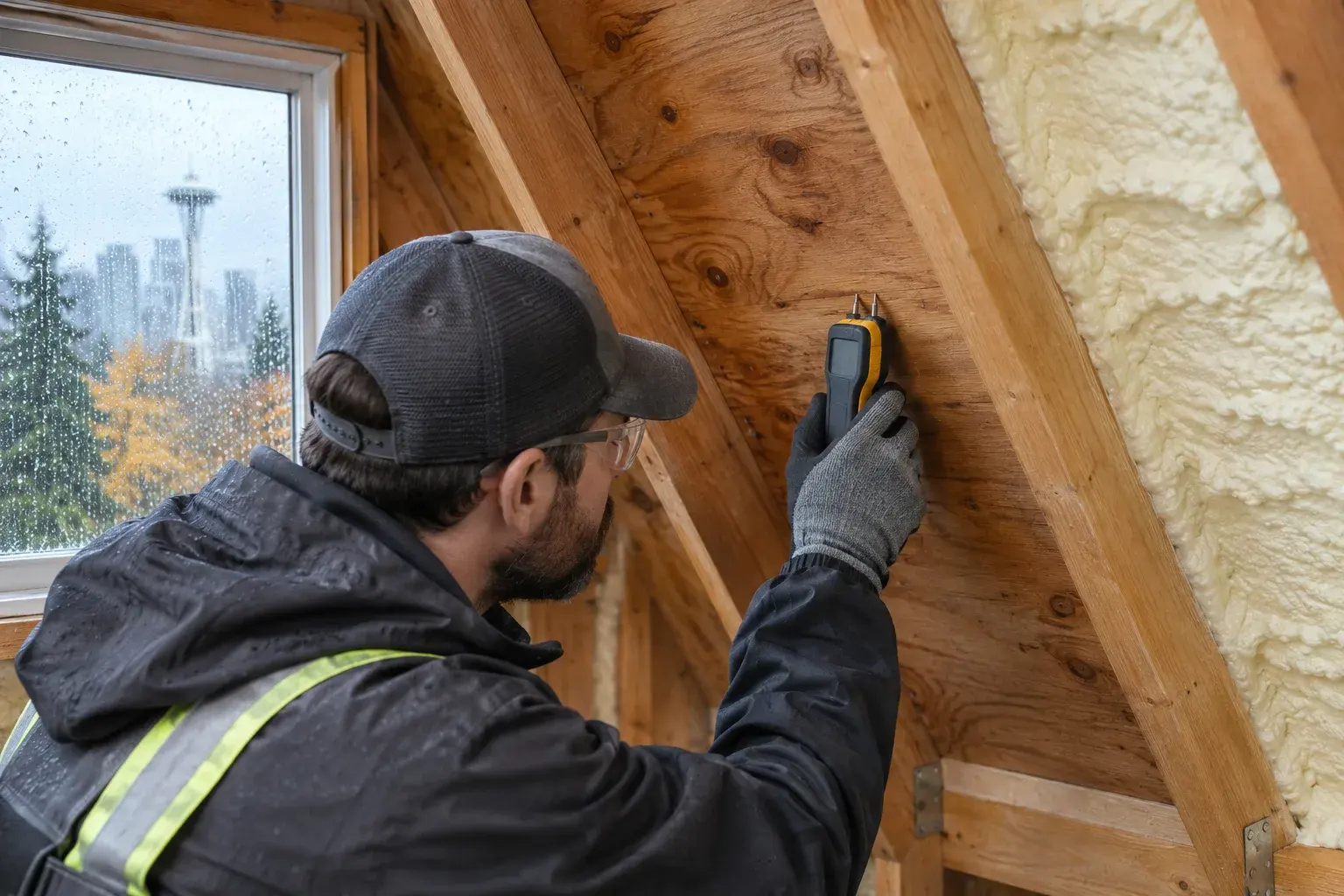
Before work begins, ask the installer to look for:
- Water stains, damp sheathing, or an active roof or plumbing leak.
- Condensation on cold framing or other surfaces that will receive foam.
- Old insulation or debris that hides the actual condition of the cavity.
- Gaps around penetrations and changes in the building assembly that affect where air can move.
If a leak or wet framing is found, correct the water source and allow the materials to reach an acceptable condition first. Spray foam is insulation and air sealing, not a repair for failing flashing or a leaking roof.
How Cold Is Too Cold for Spray Foam Installation?
There is no single outdoor temperature that applies to every spray foam system. The acceptable range depends on the product and its technical data sheet, as well as the temperature of the surface being sprayed. A room can feel reasonably warm while its exterior-facing framing is still too cold.
Cold-weather work may require appropriate jobsite conditioning or a different product designed for the conditions. The installer should verify the air and substrate temperatures, check for surface condensation, and follow the manufacturer's instructions for material handling, mixing, application thickness, and curing. The EPA's contractor checklist specifically calls for reviewing air and surface temperatures, relative humidity, and surface moisture before spraying.
If the prescribed conditions cannot be achieved and maintained, postponing that part of the work is the better decision. A deadline does not make a cold or damp substrate suitable.
Open-Cell or Closed-Cell Foam for a Seattle Winter Project?
Both products can insulate and reduce air movement when designed and installed correctly, but they do not manage water vapor in the same way. Product choice depends on the cavity, available depth, drying direction, and the complete wall or roof assembly.
| Consideration | Open-cell spray foam | Closed-cell spray foam |
|---|---|---|
| Typical texture | Softer and more flexible | Denser and more rigid |
| Vapor movement | Generally more vapor-permeable | Generally lower vapor permeance at suitable thickness |
| Common consideration | Interior cavities where drying potential is part of the design | Assemblies needing more resistance to vapor movement in limited space |
| Winter installation | Must meet its own application and moisture requirements | Must meet its own application and moisture requirements |
Neither foam should be sprayed onto wet wood. A low-permeance layer in the wrong assembly can make drying more difficult, so more moisture resistance is not automatically better. Ask how the proposed wall, attic, or foundation will dry if water ever gets in. Explore the site's open-cell spray foam and closed-cell spray foam pages for the available services.
What a Responsible Winter Installation Schedule Looks Like
Professional installation is a sequence of checks, not just the hour when foam comes out of the spray gun.
- Assess the space. Identify the insulation area, current leaks, existing materials, and the assembly's moisture-control requirements.
- Prepare dry surfaces. Fix active water entry, confirm acceptable moisture conditions, clean the substrate, and protect wiring, fixtures, and adjacent finishes as appropriate.
- Confirm product conditions. Check the manufacturer's specifications and verify the actual air and surface temperatures before and during application.
- Isolate and ventilate. Keep occupants, pets, and unprotected trades out of the spray area while trained applicators use the required protective equipment and ventilation controls.
- Inspect the result. Check for consistent coverage, gaps, and other visible application defects before the work is concealed.
- Follow the re-occupancy instructions. The contractor should explain the product-specific curing, ventilation, cleaning, and safe-return requirements in advance.
The U.S. Environmental Protection Agency warns that re-entry time depends on the particular formulation and job conditions. Do not assume that a fixed number of hours is appropriate for every spray foam installation.
When to Move Forward and When to Reschedule
| Jobsite condition | Practical next step |
|---|---|
| Rain outside, enclosed work area dry, product requirements met | Installation may be possible |
| Active roof leak or wet framing | Repair and dry the affected area before spraying |
| Surface temperature outside the product's allowed range | Adjust conditions according to manufacturer guidance or reschedule |
| Work area cannot be safely isolated or ventilated | Resolve the safety plan before scheduling application |
| Unclear roof or wall vapor-control design | Review the assembly and required code details first |
This decision should be made on the actual jobsite. A contractor who checks conditions and recommends waiting when necessary is protecting the quality of the installation.
Questions to Ask Before Booking Winter Spray Foam Work
If you are comparing insulation contractors in Seattle, these questions will tell you more than a generic promise that work is possible year-round:
- Which foam product is proposed, and what temperatures and substrate conditions does its data sheet require?
- How will the crew check whether framing and sheathing are dry enough?
- What happens if rain exposes a roof leak or the surface conditions change on installation day?
- Does the design allow the assembly to manage moisture and dry as intended?
- How will the work area be contained and ventilated, and when may people and pets return?
- Are any inspections, thermal barriers, or other code requirements part of the project?
For homes with winter drafts or uneven temperatures, it is also worth reviewing the condition of the attic insulation and the air-leakage paths around the building before selecting a material.
Frequently Asked Questions
Can installers spray foam while it is raining outside?
Sometimes. Rain outdoors is not itself a reason to stop work in a dry, protected interior. The surface being sprayed must be dry and within the selected product's application limits. Exposed exterior work requires its own weather restrictions.
Will spray foam fix a damp attic or a leaking roof?
No. Investigate and repair the water source before adding insulation. Covering wet materials can make a moisture problem harder to discover or allow it to persist inside the assembly.
Is closed-cell spray foam always the best choice for Seattle's wet climate?
No. Closed-cell foam can have useful vapor-control properties, but whether those properties are appropriate depends on the wall or roof design. Open-cell foam may suit other assemblies. The complete building assembly, not the weather alone, should guide the choice.
How soon can my family return after installation?
Ask the installer for the specific product's re-occupancy instructions before work begins. The area must remain restricted until the product's curing, ventilation, and cleaning conditions are met. People and pets should not stay in an active spray area.
Plan Your Seattle Insulation Project With Cascadia Spray Foam
A Seattle winter does not automatically put an insulation project on hold, but careful planning matters. If you are considering a new attic, wall, or other residential insulation upgrade, Cascadia Spray Foam of Seattle can discuss the space, available insulation services, and the questions to address before installation.
Call (425) 386-3500 or email info@cascadiasprayfoam.com to talk about your project in Seattle, WA, and surrounding service areas.
Sources and Further Reading
- U.S. Department of Energy, Building America: Unvented Conditioned Attic With Spray Foam Insulation — roof sheathing moisture, surface preparation, installation checks, and roof-assembly design.
- U.S. EPA: Safer Workplace Practices for Spray Polyurethane Foam Installation — protective equipment, jobsite isolation, and working with a qualified installer.
- U.S. EPA: Vacate and Safe Re-Entry Time for Spray Polyurethane Foam Application — product-specific curing, ventilation, and occupancy precautions.