
Cutting heat loss on a large building means treating the whole envelope as one system. Insulation slows heat moving through walls, roofs and ceilings. Air sealing stops warm air from leaking out, and continuous insulation blocks the heat that slips through steel framing. Fix all three and your heating system works less to hold the same temperature.
TL;DR
- Heat leaves a building three ways: through materials, through air leaks, and through framing that bypasses insulation.
- Big roofs, long walls and steel studs make large buildings lose heat faster than most owners expect.
- Air sealing matters as much as R-value. Leaky insulation underperforms.
- Continuous insulation on steel-framed walls restores much of the R-value the studs steal.
- Start with a heat-loss inspection, seal leaks first, then add insulation where it pays back.
What Building Envelope Insulation Does on a Large Building
The building envelope includes everything between heated space and the outdoors: walls, roofs, ceilings, floors, windows and doors. Insulation in the envelope reduces heat transfer, while air sealing limits drafts and thermal bridging. For larger properties, commercial insulation can improve energy efficiency and keep indoor temperatures more consistent. The right approach depends on the building’s structure, insulation needs and climate.
- Conduction: heat moves through solid materials. Insulation slows it, and R-value tells you how well.
- Air leakage: warm air escapes through gaps at joints, seams and openings for pipes or ducts. Moving air also carries heat right past insulation.
- Thermal bridging: steel studs, girts, slab edges and fasteners carry heat around the insulation like a shortcut.
Why Large Commercial Buildings Lose So Much Heat
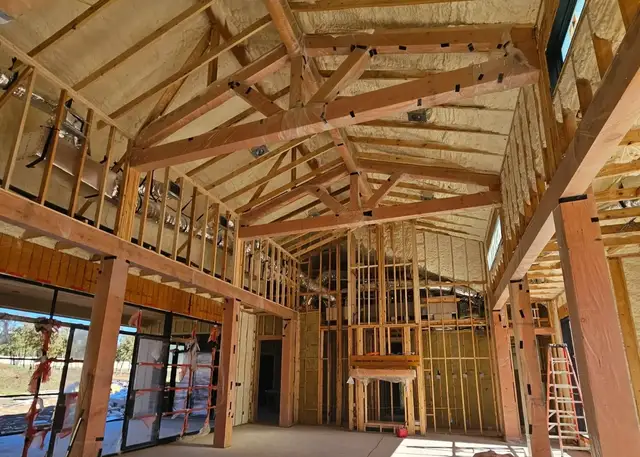
Size works against you. More roof and wall area means more seams, more penetrations and more places where insulation may be incomplete. Addressing these weak points improves a commercial building’s energy efficiency by reducing heat loss through walls, roofs and unsealed joints.
The stakes are real. According to the U.S. Department of Energy Better Buildings Solution Center, the envelope (windows, walls and roof) accounts for roughly 30% of the primary energy used in commercial buildings.
Air Leaks Add Up Fast
The same DOE source estimates that air leakage can account for about 20% of the energy used to heat and cool commercial buildings. In taller buildings, warm air rises and pushes out near the roof, pulling cold air in at ground level. Every unsealed gap feeds that loop.
Steel Framing Bypasses Cavity Insulation
Most commercial walls use steel studs, and steel conducts heat very well. Research reported by The Construction Specifier shows a steel-framed wall with R-11 cavity insulation at 16 inches on center performs closer to R-5.5, about half its rated value. You pay for R-11 and get roughly half.
Roofs and Top Floors Take the Hardest Hit
Warm air collects at the top of the building, so the roof sees the biggest temperature difference. Gaps around light fixtures, HVAC curbs and roof drains let that heat escape. Thin or compressed insulation above a drop ceiling makes it worse.
Where Insulation Makes the Biggest Difference
Not every surface needs the same fix. Focus first on the areas with the most surface or the worst leaks.
| Area | Common problem | Practical fix |
|---|---|---|
| Steel-stud walls | Studs bypass cavity insulation | Continuous insulation outside the studs |
| Roof deck or ceiling | Thin layers, gaps at openings | Rigid board above deck or spray foam below |
| Roof-to-wall joint | Air leaks at the seam | Seal the transition |
| Rim joists, slab edges | Bare perimeter framing | Spray foam or rigid board |
Commercial Wall Insulation
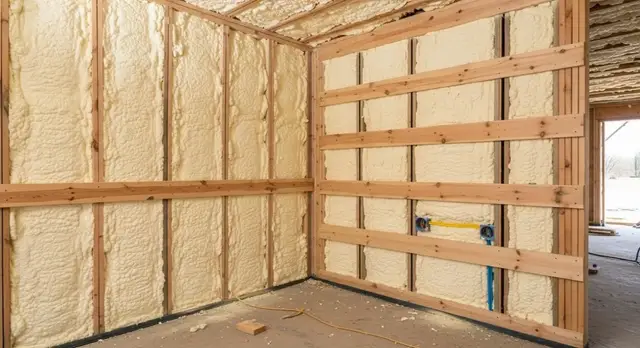
Good commercial wall insulation usually pairs cavity insulation with a continuous layer that covers the studs. That layer breaks the thermal bridge. Spray foam applied over metal framing can also seal air paths in the same step.
Commercial Ceiling Insulation and Roof Decks
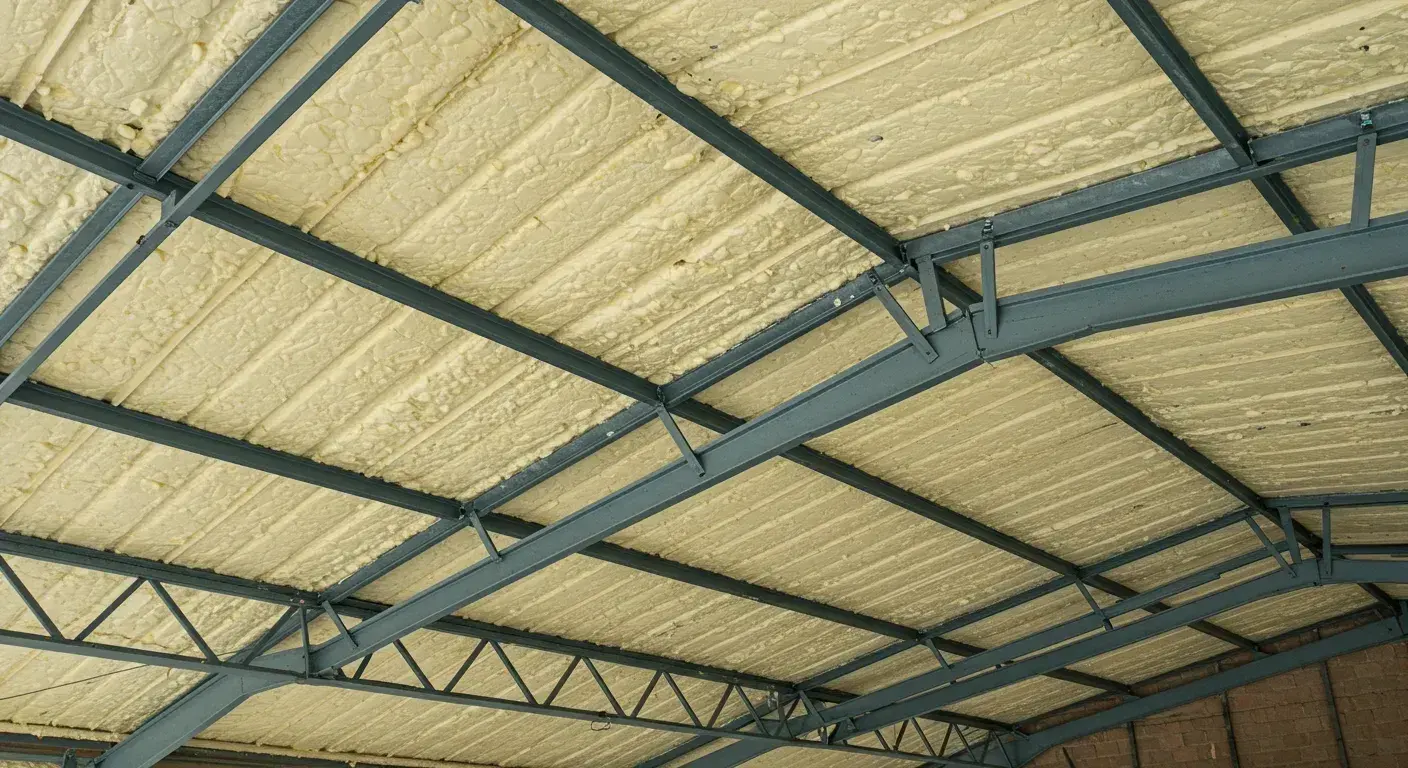
Ceiling insulation only works if it stays even and unbroken. Insulation pushed aside for wiring or HVAC work leaves cold strips across the ceiling. On many flat roofs, adding insulation at the deck keeps the whole roof assembly warmer.
Which Insulation Types Work Best for Large Building Envelopes?
Each material has a job it does well and limits you should know. The right pick depends on the wall or roof type, moisture exposure and budget.
| Type | Best use | Watch out for |
|---|---|---|
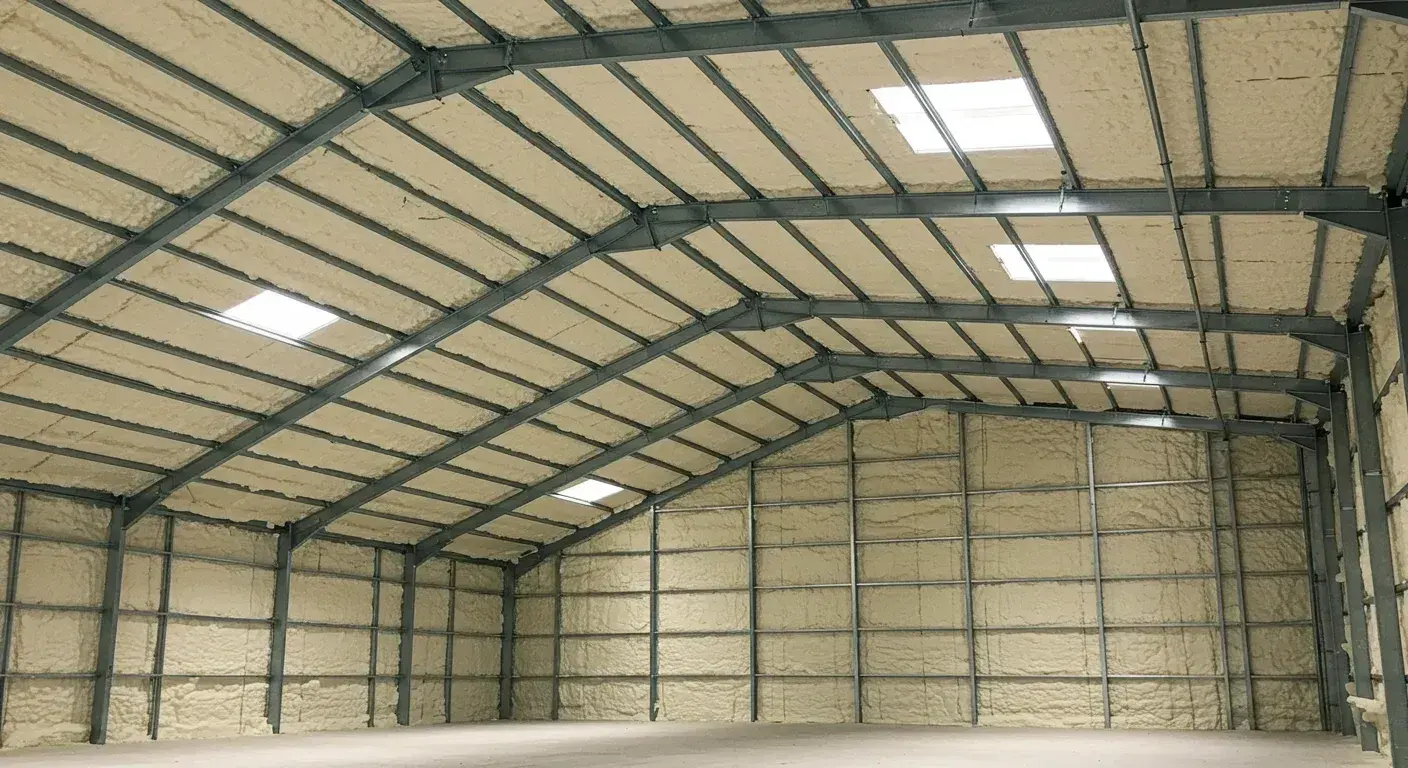
| Closed-cell spray foam | Metal buildings, roof decks, rim joists | Higher cost; needs trained crews |
| Open-cell spray foam | Interior walls and ceilings | Not for wet or exposed areas |
| Rigid foam board | Continuous insulation, above-deck roofs | Seams must be taped and sealed |
| Mineral wool | Fire-rated assemblies, exterior walls | Doesn’t seal air on its own |
| Fiberglass batts | Open cavities on tight budgets | Loses value with gaps and steel studs |
Trade-Offs to Weigh Before You Start
Insulation isn’t a magic switch. A few honest limits help you set the right expectations.
- Climate changes the payback. In a National Institute of Standards and Technology (NIST) study, predicted heating and cooling savings from tighter commercial envelopes ranged from 2% to 36%, with the smallest savings in cooling-heavy climates like Phoenix and Miami.
- Moisture moves when you seal and insulate. The wrong vapor control in the wrong spot can trap condensation inside walls. Have the assembly reviewed before work starts.
- Tighter buildings need working ventilation. Once leaks are sealed, your mechanical ventilation has to supply fresh air. Check it after the job.
- Insulation won’t fix windows or open dock doors. Single-pane glass and doors left open all day will still lose heat.
- Occupied buildings need scheduling. Spray foam areas need time before people return, so plan work around shifts or weekends.
Building Heat Loss Reduction Checklist
Real heat loss reduction follows an order. Skipping steps often means paying twice.
- Pull 12 months of utility bills to set a baseline.
- Book an infrared scan during cold weather to find cold spots.
- Ask about a whole-building air leakage test for large spaces.
- Seal leaks first at roof-to-wall joints, penetrations and rim joists.
- Add insulation where the scan shows the biggest losses.
- Plan continuous insulation during any reroof or recladding project.
- Recheck bills and comfort after one heating season.
Talk to Cascadia Spray Foam About Your Building
If your building feels drafty, the top floor runs cold or your heating bills keep climbing, the envelope is a good place to look. Cascadia Spray Foam can inspect the walls, roof deck and ceilings and recommend insulation that fits the building you actually have.
Call (425) 386-3500 or email info@cascadiasprayfoam.com to talk through your project.
Frequently Asked Questions
What is the best insulation for a commercial building?
There’s no single best type. Closed-cell spray foam works well on metal buildings and roof decks because it insulates and seals air in one layer. Rigid board is a strong choice for continuous insulation outside steel studs.
Is spray foam good for commercial buildings?
Yes, for many applications. It fills irregular gaps, sticks to metal and wood, and seals air leaks at the same time. It costs more per inch than batts, so it pays off most where air leaks and odd shapes are the main problem.
Can you add insulation to an existing commercial building without tearing it apart?
Often, yes. Spray foam can go on the underside of roof decks and on exposed rim joists without removing finishes. Wall upgrades are easiest during recladding, but interior options exist for some wall types.
How do I find where my building is losing heat?
An infrared scan during cold weather shows warm spots where heat escapes. A whole-building air leakage test measures how leaky the envelope is overall. Together, they show where insulation and sealing will help most.
Does insulation help in summer too?
Yes. The same layers that hold heat in during winter slow heat coming in during summer. Air sealing also keeps humid outdoor air out, which can ease the load on your cooling system.
Sources
- U.S. Department of Energy Better Buildings Solution Center: the envelope’s share of commercial building energy use and air leakage’s share of heating and cooling energy.
- National Institute of Standards and Technology (NIST): the range of heating and cooling savings from tighter commercial envelopes across climates.
- The Construction Specifier: the effective R-value drop in steel-framed walls with cavity-only insulation.