
Warehouses
Steady temperatures across large, open spaces and high roofs.
Loading
Loading
Imagine a Seattle warehouse that stays warm all winter without sky-high energy bills. That’s what commercial spray foam insulation does: it brings comfort, long-term savings and better air quality while reducing the building’s carbon footprint.
Whether you run a retail space or manage a distribution facility, the right insulation changes how your building feels, runs and lasts.
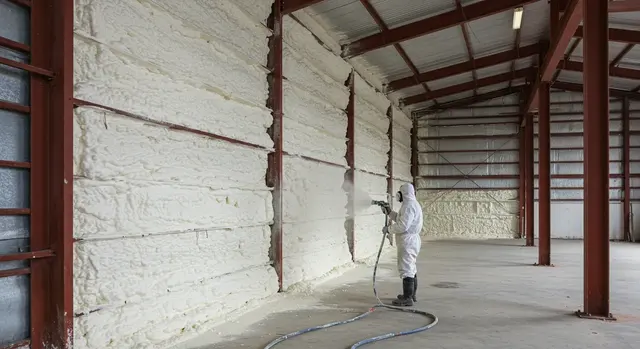
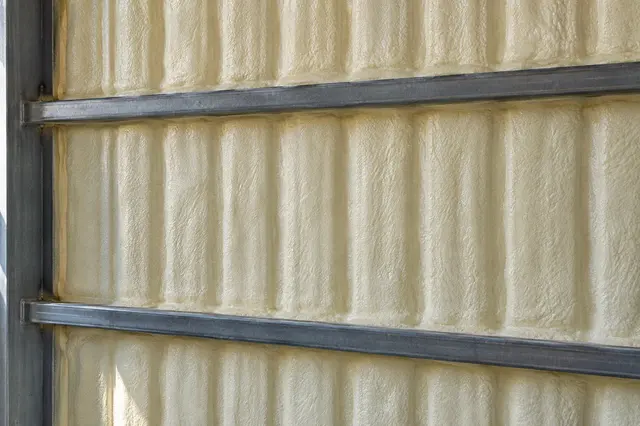
Commercial spray foam seals every crack and cavity, forming a continuous barrier against moisture and air leaks. That means less strain on HVAC systems and more consistent indoor temperatures throughout the year.
It also does two jobs in one application: high R-value insulation and an air seal. Together they support better humidity control and energy efficiency in every season.
Spray foam suits new construction, retrofits and everything in between, whether the goal is code compliance, a performance upgrade or lower energy costs.
Steady temperatures across large, open spaces and high roofs.
Comfortable shopping floors and lower heating and cooling costs.
Even temperatures and less noise between rooms for the people inside.
A sealed envelope that keeps kitchens and dining rooms comfortable.
Insulation that holds temperatures steady where processes depend on it.
Consistent indoor conditions and better protection from outdoor air.
Comfortable classrooms and quieter spaces for learning.
A moisture barrier that helps protect what’s stored inside.
Both open-cell and closed-cell spray foam are available, each suited to different goals.
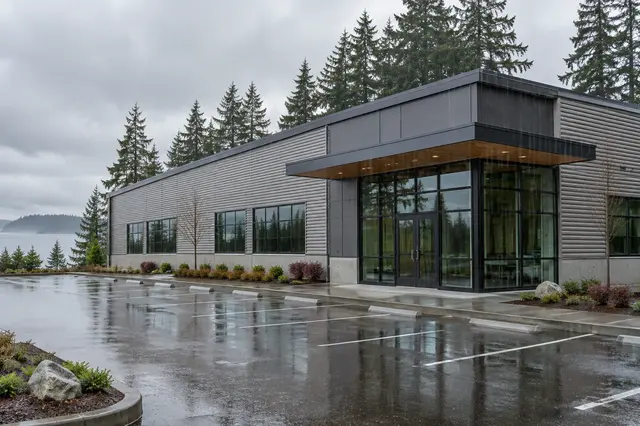
Seattle’s cool, wet winters and mild summers call for insulation that resists moisture and regulates indoor temperature efficiently. Spray foam excels in this climate, sealing out damp air and keeping interior conditions steady.
It reduces the risk of mold and mildew, a common concern in humid conditions, and gives commercial buildings of every type a practical, lasting way to keep energy costs in check.
A continuous air seal cuts the energy your building loses all year round.
Sealed walls and roofs reduce the outdoor pollutants that get inside.
Spray foam helps keep damp air out, which helps prevent mold.
Protecting the structure from air and moisture adds to its durability and lifespan.
Foam reduces noise from outside and between rooms.
It adheres to irregular surfaces for seamless insulation and eases the load on mechanical systems.
Schedule a free evaluation and get insulation that works as hard as your business does.
Material choice, coverage areas and performance goals are settled before any foam is applied, so installation is quick and causes as little disruption as possible.
Every project begins with a detailed evaluation of your building and what it needs.
We choose the material, the areas to cover and the performance goals before work starts.
The foam expands rapidly to fill cavities and create a tight, energy-efficient envelope.
Once cured, the foam forms a lasting barrier that outperforms many alternatives.
Both open-cell and closed-cell spray foam are used, depending on the building and its performance goals.
Properly installed, it lasts for decades and keeps performing without sagging or settling.
Yes. Spray foam is often used in retrofit projects, with minimal disruption to the business.
Yes. Once cured, the foam is inert and safe for the people who use the building.
Treated areas need time to cure before people return. We plan the work and the reentry time around your schedule before we start.
Warehouses, retail stores, offices, restaurants, manufacturing facilities, medical centers, schools and storage units, in new construction and retrofits.
Request a quote for commercial spray foam insulation in Seattle, WA, and surrounding areas. Contact Cascadia Spray Foam of Seattle to schedule an appointment.