Spray Foam Insulation Providing the Highest ROI for Homes
admin_cascadiaspray
March 31st, 2026
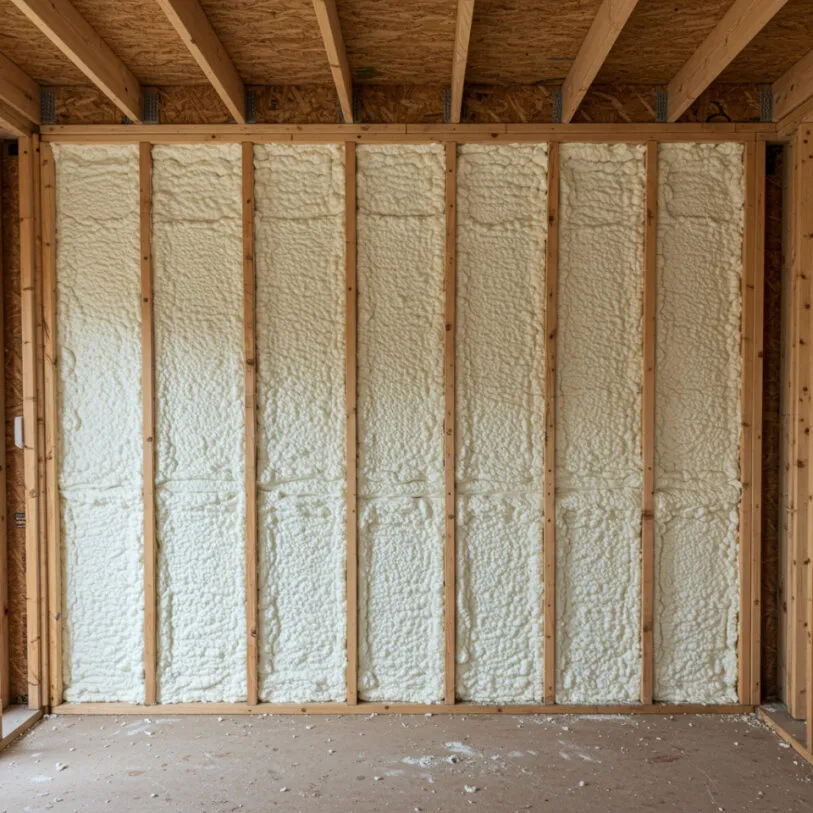
Spray foam insulation consistently delivers the highest return on investment among residential insulation options, primarily because it combines superior thermal performance with an airtight seal that no other material can match. While fiberglass and cellulose have lower upfront costs, spray foam’s ability to eliminate air infiltration and reduce energy bills by 20 to 50 percent makes it the clear financial winner over the life of a home. The right choice between open-cell and closed-cell spray foam depends on your climate zone, budget, and whether you are retrofitting an existing home or insulating new construction. Here is a detailed breakdown of why spray foam outperforms other materials and how to maximize the return on your insulation investment.
TLDR / Key Takeaways
Spray foam insulation can reduce home energy bills by 20 to 50 percent annually compared to fiberglass, with payback periods typically ranging from 3 to 7 years.
The EPA estimates homeowners save an average of 15 percent on heating and cooling costs through proper air sealing alone, and spray foam is the most effective air-sealing insulation available.
Closed-cell spray foam delivers R-5.6 to R-6.5 per inch, while open-cell delivers R-3.5 to R-3.7 per inch, both outperforming fiberglass at R-2.2 to R-3.8 per inch in equivalent cavity space. Fine Homebuilding – Understanding R-Value and Spray Foam
Whole-home spray foam installation costs range from $8,300 to $21,700, depending on size, type, and project scope, with long-term savings far exceeding the premium over cheaper materials.
Homes insulated with spray foam often see increased resale value, as energy efficiency ranks among the top priorities for modern homebuyers.
Spray foam doubles as a moisture barrier and structural reinforcement (closed-cell), reducing long-term maintenance and repair costs.
The U.S. spray foam insulation market grew to $750 million in 2024 and is projected to reach $1.01 billion by 2030, reflecting strong homeowner and builder confidence in the material, according to a report cited by Yahoo Finance – U.S. Spray Foam Insulation Market Report 2025-2030
Why Spray Foam Outperforms Traditional Insulation
The financial advantage of spray foam starts with how it works. Unlike fiberglass batts or blown-in cellulose, which are simply placed into wall and ceiling cavities, spray foam expands on application to fill every crack, gap, and void. This expansion creates a continuous air barrier that eliminates the drafts and air leaks responsible for up to 40 percent of a home’s energy loss, according to the U.S. Department of Energy – Air Sealing Your Home.
Air sealing is the single most impactful step a homeowner can take to improve energy efficiency. The ENERGY STAR – Estimated Energy Savings Methodology estimates that proper air sealing and insulation can save homeowners an average of 15 percent on heating and cooling costs, or about 11 percent on total household energy costs. Spray foam accomplishes both tasks in a single application.
Beyond thermal performance, closed-cell spray foam adds structural rigidity to walls and roof assemblies, acts as a vapor barrier, and resists moisture infiltration. These secondary benefits reduce the likelihood of mold growth, wood rot, and structural damage, which can cost thousands of dollars to remediate over time.
Open-Cell vs. Closed-Cell: Understanding the Two Types
Not all spray foam delivers the same ROI. The two main categories, open-cell and closed-cell, serve different purposes and come at different price points. Selecting the right type for each area of your home is critical to maximizing value.
Feature
Open-Cell Spray Foam
Closed-Cell Spray Foam
R-Value per Inch
R-3.5 to R-3.7
R-5.6 to R-6.5
Density
Low (0.5 lb/ft³)
High (1.5 to 2.0 lb/ft³)
Air Barrier
Yes
Yes
Vapor Barrier
No
Yes (Class II)
Cost per Square Foot
$0.50 to $1.50
$1.50 to $4.00+
Best Application
Walls, ceilings, attics
Foundations, crawl spaces, exteriors
Structural Reinforcement
No
Yes
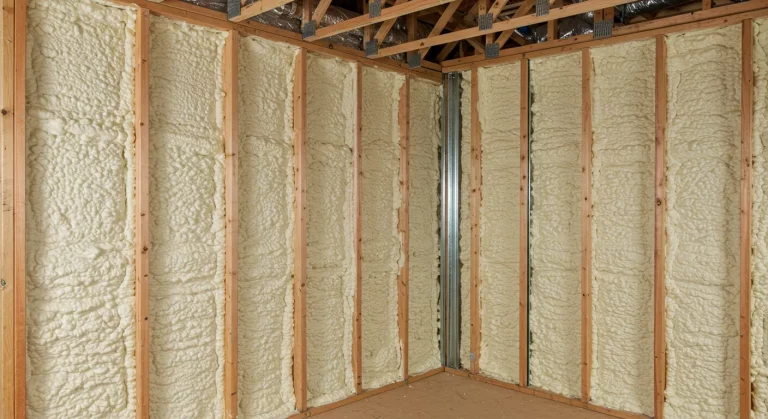
Open-cell spray foam is the more affordable option and works well in interior wall cavities, ceilings, and attics where a vapor barrier is not required. It expands significantly (up to 100 times its volume), which means excellent coverage even in hard-to-reach areas.
Closed-cell spray foam is the higher-performing and more expensive option. Its dense structure provides a higher R-value per inch, making it ideal for areas with limited cavity depth, such as basement walls, crawl spaces, and rim joists. It also adds structural strength to the assembly, which can be particularly valuable in new construction or retrofit projects where wall integrity is a concern.
Cost vs. Savings: The Real ROI Breakdown
The upfront cost of spray foam is higher than fiberglass, but the total cost of ownership tells a different story. Fiberglass insulation typically costs between $0.30 and $1.50 per square foot installed, while spray foam ranges from $0.50 to over $7.00 per square foot, depending on the type and thickness. For a whole-home project, spray foam installation generally falls between $8,300 and $21,700 (for a complete cost and performance comparison, see Terrain Insulation – Spray Foam vs. Fiberglass Cost and Performance Comparison).
Insulation Type
Upfront Cost (1,500 sq ft)
Annual Energy Savings
Estimated Payback Period
Fiberglass Batts
$750 to $2,250
5 to 10 percent
8 to 15 years
Blown-In Cellulose
$1,200 to $3,000
10 to 15 percent
6 to 10 years
Open-Cell Spray Foam
$2,250 to $4,500
20 to 30 percent
4 to 7 years
Closed-Cell Spray Foam
$4,500 to $10,500
30 to 50 percent
3 to 6 years
These figures vary based on climate, home size, existing insulation conditions, and local energy rates. However, the pattern is consistent: spray foam pays for itself faster and delivers larger cumulative savings over time.
Homeowners who have made the switch report significant results. In some documented cases, energy bills dropped by as much as 50 percent after spray foam installation, with monthly savings effectively covering the cost of the insulation investment within approximately three years.
Visual Suggestion: Cumulative Savings Over 15 Years
A line chart comparing cumulative energy savings across four insulation types (fiberglass, cellulose, open-cell spray foam, and closed-cell spray foam) over a 15-year period would clearly show how spray foam’s higher savings rate compounds over time. The fiberglass line would start higher (lower initial cost) but be overtaken by both spray foam types within the first 5 to 7 years, with closed-cell spray foam showing the steepest savings trajectory.
Where Spray Foam Delivers the Most Value
Targeting the right areas of your home for spray foam installation maximizes ROI. Applying spray foam everywhere may not be necessary or cost-effective, so a strategic approach matters.
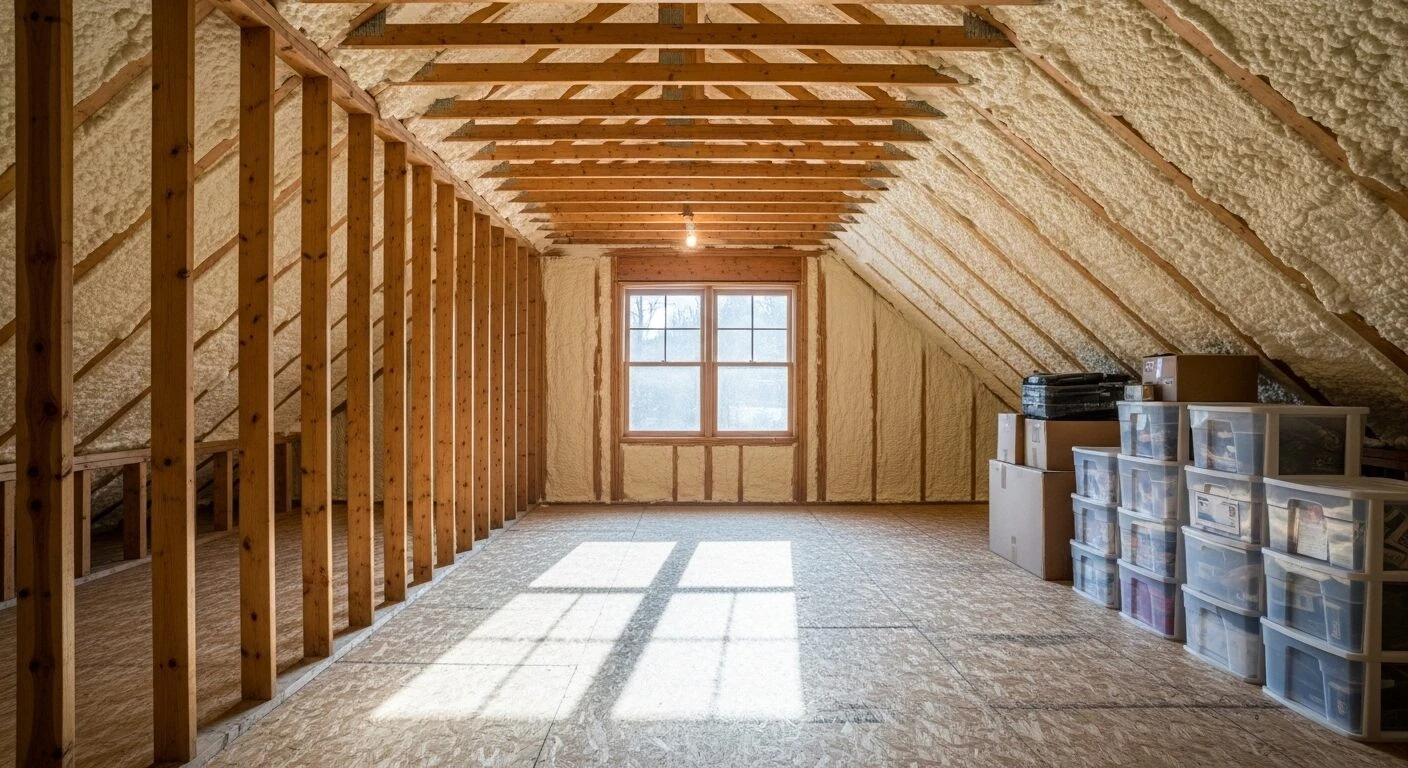
Attic and Roofline: Spray foaming the attic floor or, better yet, the roofline (creating an unvented attic assembly) eliminates heat transfer between living spaces and the attic. This is often the single highest-ROI insulation upgrade in a home, as attics are the largest source of energy loss in most residential buildings.
Rim Joists and Band Joists: These areas at the perimeter of each floor level are notoriously difficult to seal with traditional materials. Spray foam fills the irregular shapes and gaps around framing, pipes, and wiring, dramatically reducing air infiltration and thermal bridging.
Crawl Spaces and Basements: Ground-contact areas are highly susceptible to moisture and air infiltration. Closed-cell spray foam applied to crawl space walls and basement rim joists provides both insulation and a moisture barrier, protecting the home’s structural integrity while improving comfort.
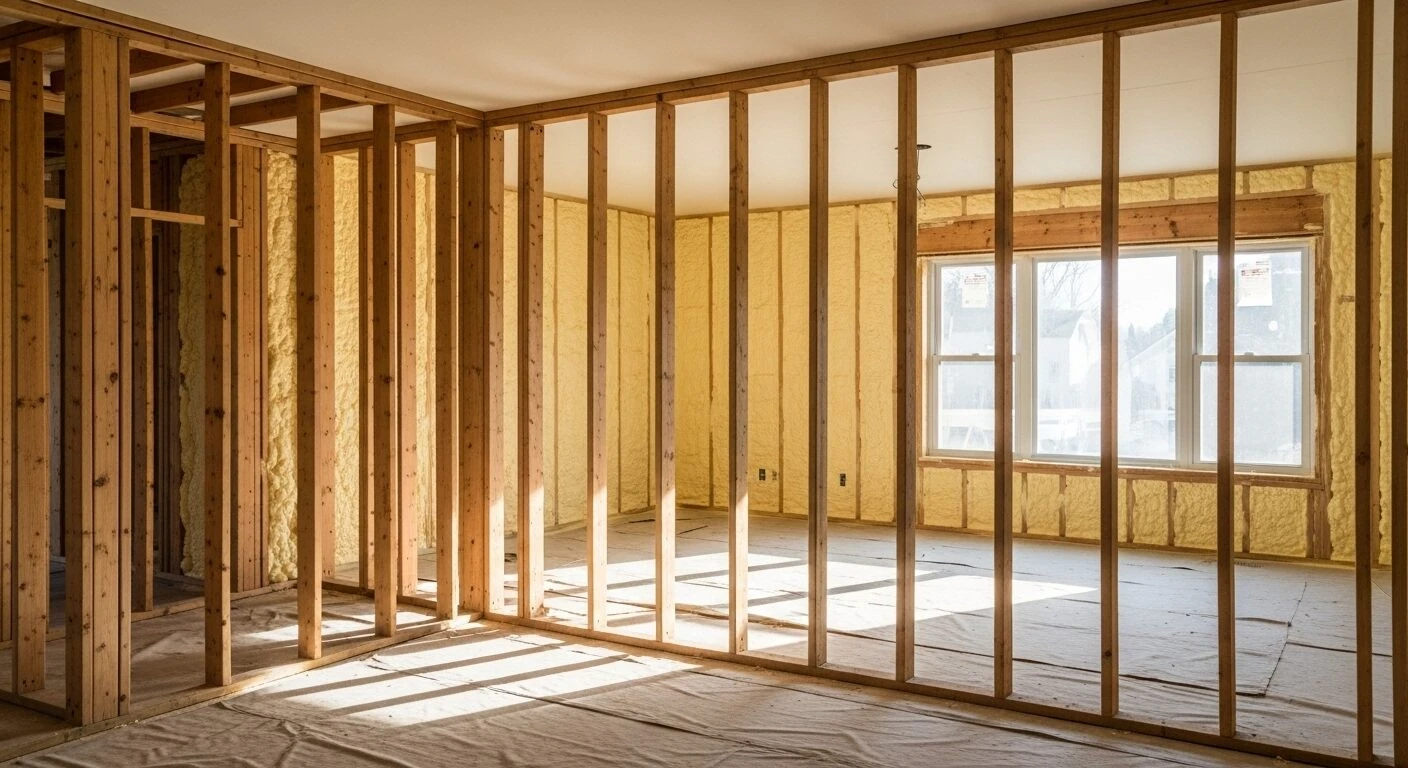
Exterior Walls: For new construction or deep energy retrofits, spray foam in wall cavities provides a continuous thermal and air barrier that outperforms fiberglass batts, which can settle, compress, and leave gaps over time.
Recommendations by Homeowner Scenario
Scenario
Recommended Approach
Key Notes
New Construction
Closed-cell in crawl spaces, rim joists, and exterior walls; open-cell in attic and interior walls
Maximizes efficiency from day one; easier to install before drywall
Existing Home Retrofit
Prioritize attic, rim joists, and crawl spaces first
Targets the highest-leverage areas without requiring wall demolition
Budget-Conscious Upgrade
Open-cell spray foam in the attic and selected air-leak areas
Lower upfront cost with meaningful energy savings
Cold Climate Home
Closed-cell throughout for maximum R-value and vapor control
Prevents condensation and moisture issues in heating-dominated climates
Mild Climate Home
Open-cell in walls and attic; closed-cell in moisture-prone areas
Saves on material costs where an extreme R-value is less critical
Additional ROI Factors Beyond Energy Savings
Energy savings are the primary driver of spray foam ROI, but they are not the only financial benefit.
Increased Home Value: Energy-efficient homes command higher sale prices. A study by theNational Association of Home Builders found that homebuyers are willing to pay a premium for homes with lower utility costs. Spray foam insulation is a tangible, documented upgrade that appraisers and buyers recognize.
Reduced HVAC Sizing: Because spray foam reduces the heating and cooling load, HVAC equipment can often be downsized. A smaller, right-sized system costs less to install and operates more efficiently, adding further savings.
Moisture and Mold Prevention: Closed-cell spray foam’s vapor barrier properties prevent condensation from forming inside wall assemblies. Mold remediation can cost thousands of dollars, and preventing it entirely represents a significant avoided expense.
Noise Reduction: Spray foam’s dense structure also provides sound-dampening properties, which adds comfort value, especially in multi-family or urban settings.
Common Mistakes That Reduce Spray Foam ROI
Even the best insulation material underperforms when the installation is flawed. Here are the most common pitfalls we see:
Hiring based on price alone: Low-ball bids often mean inexperienced installers, improper mixing ratios, or insufficient coverage. An underperforming spray foam job costs almost as much as a proper one but delivers a fraction of the savings.
Ignoring air sealing before insulating: While spray foam does seal air leaks, large gaps in the building envelope should still be addressed comprehensively as part of the overall insulation strategy.
Using the wrong type for the application: Installing open-cell foam in a crawl space where moisture control is needed, or using closed-cell everywhere when open-cell would suffice, wastes money and reduces overall ROI.
Skipping post-installation inspection: Verifying even spray thickness and complete coverage after installation catches problems before drywall or finishes are applied.
Signs You Have Found the Right Spray Foam Contractor
Choosing the right installer is as important as choosing the right material. Here are the indicators that separate quality contractors from the rest:
Detailed, written proposals that specify foam type, thickness, R-value targets, and exact areas to be treated, rather than vague estimates.
Willingness to explain the “why” behind product and application recommendations, including why one foam type is better suited to a specific area of your home.
Proof of manufacturer certifications and installer training credentials, which ensure the crew understands proper mixing ratios, temperatures, and application techniques.
References and examples of completed projects similar in scope to yours, with verifiable energy performance results when available.
Clear warranty terms covering both materials and workmanship, with a defined process for addressing any post-installation issues.
FAQs
How long does spray foam insulation last?
Spray foam insulation is a permanent installation. When properly applied, it does not sag, settle, or degrade over time. It maintains its R-value and air-sealing properties for the life of the building, unlike fiberglass or cellulose, which can compress and lose effectiveness after 15 to 20 years.
Is spray foam insulation safe for indoor air quality?
Once fully cured, spray foam is inert and does not off-gas harmful chemicals. The curing process typically takes 24 to 72 hours, during which the home should be ventilated. Reputable installers follow manufacturer guidelines for occupancy re-entry times and use low-VOC formulations where applicable.
Can spray foam be installed over existing insulation?
In many cases, spray foam can be applied over or alongside existing insulation, but it depends on the condition and type of the existing material. Wet, damaged, or moldy insulation must be removed first. An on-site assessment is the most reliable way to determine compatibility.
Does spray foam insulation require a separate vapor barrier?
Closed-cell spray foam acts as a Class II vapor retarder on its own, so no additional vapor barrier is needed when it is applied at sufficient thickness. Open-cell spray foam does not function as a vapor barrier, so a separate vapor retarder may be necessary depending on climate zone and assembly design.
How does spray foam compare to fiberglass for resale value?
Spray foam generally adds more resale value than fiberglass because it is perceived as a premium, permanent upgrade. Appraisers and buyers increasingly recognize documented energy improvements, and spray foam’s air-sealing benefits are difficult to replicate with conventional materials. Many real estate professionals note that energy-efficient homes sell faster and at higher prices than comparable homes with standard insulation.
Get Started with Cascadia Spray Foam
Making the right insulation investment starts with an accurate assessment of your home’s specific needs. Our team at Cascadia Spray Foam provides detailed evaluations to determine where spray foam will deliver the highest ROI for your property, whether you are building new, remodeling, or upgrading an existing home. We specify the right product for each application and back our work with industry-leading warranties.
Call us directly at (425) 386-3500 or email [email protected] to discuss your project. The sooner you act, the sooner your energy savings begin compounding.
Spray foam insulation consistently delivers the highest return on investment among residential insulation options, primarily because it combines superior thermal performance with an airtight seal that no other material can…
Seattle homeowners face a specific set of insulation challenges: cool, damp winters, moderate summers, older housing stock, and increasingly strict energy codes. The right insulation choice in 2026 depends on…
Closed-cell spray foam insulation delivers the highest R-value per inch of any common insulation material, creates a continuous air and vapor barrier in a single application, and actively resists moisture…