Why Open Cell Spray Foam is Preferred for Sound Dampening
admin_cascadiaspray
December 24th, 2025
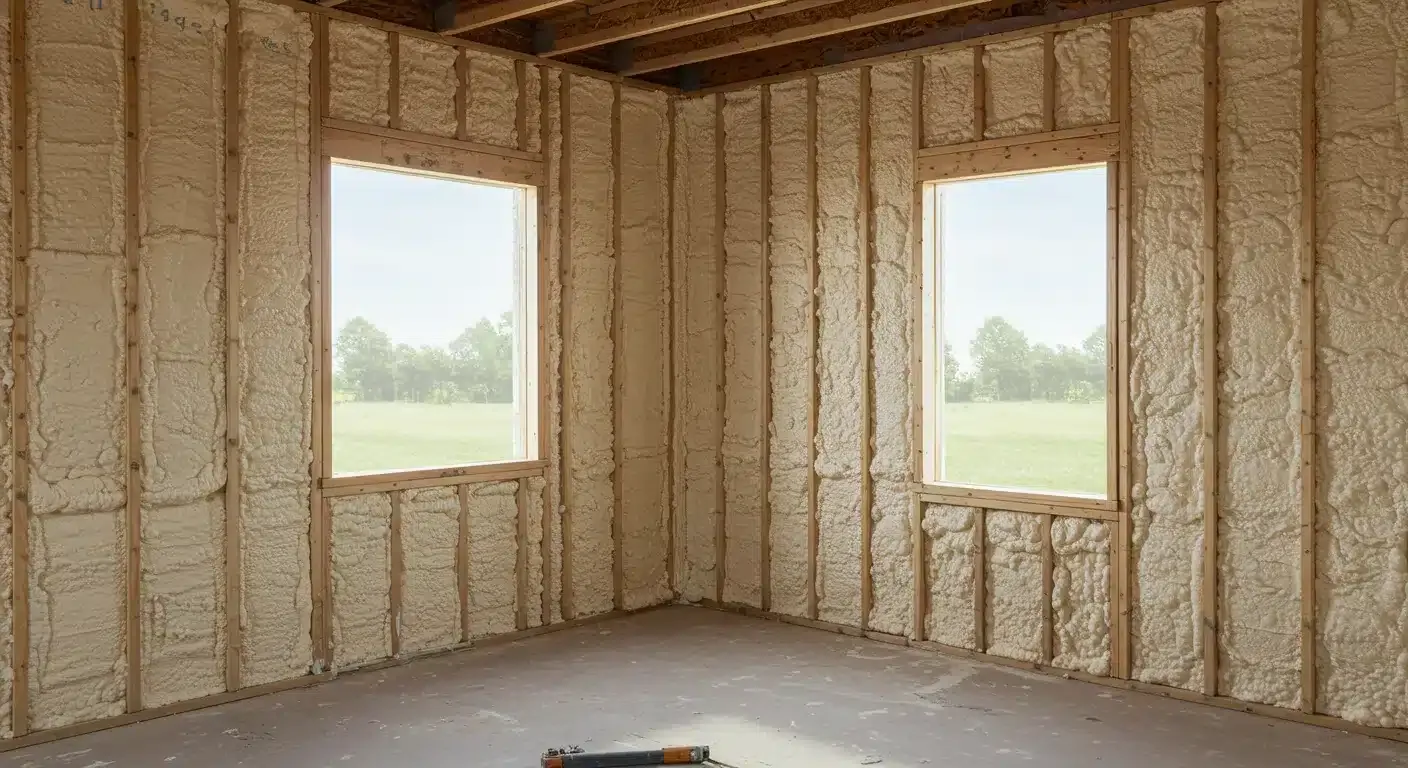
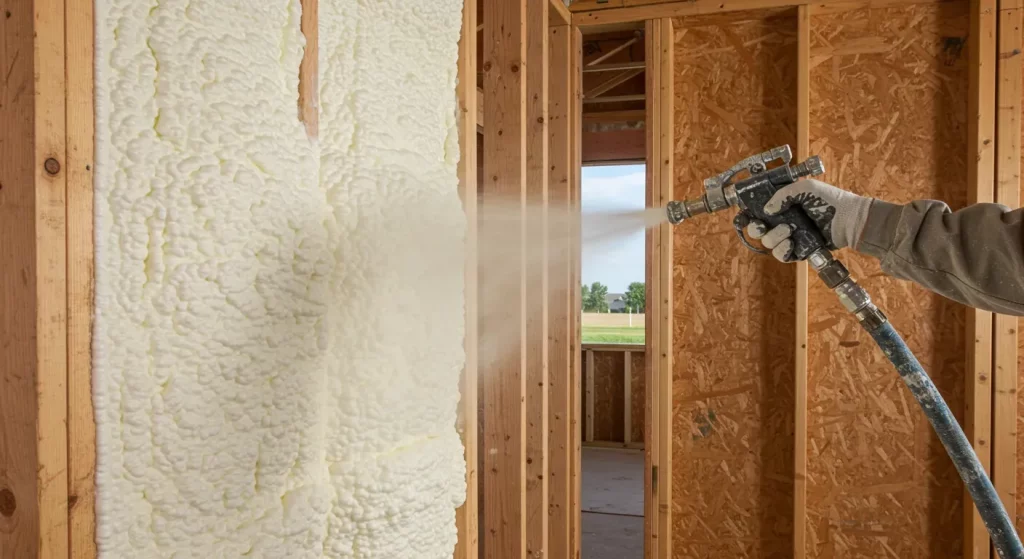
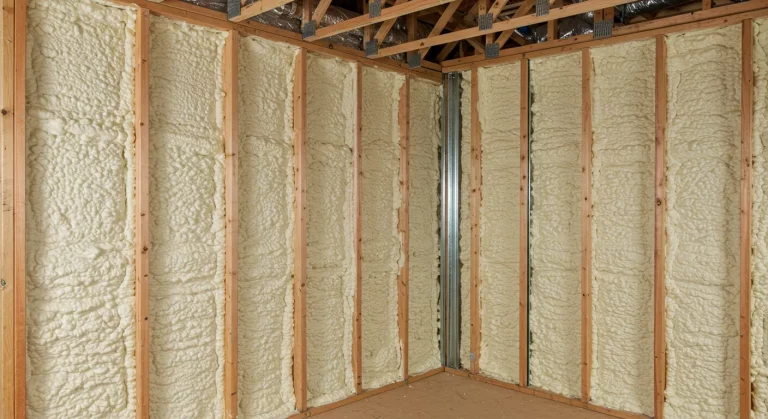
Open-cell spray foam is preferred for sound damping because its flexible, porous structure effectively traps and dissipates airborne sound waves. Unlike rigid insulation materials that reflect sound, the interconnected cells of open cell foam act as a sponge, converting sound energy into trace amounts of heat through friction. This physical property allows it to achieve high Noise Reduction Coefficient (NRC) ratings, making it a superior choice for reducing noise transfer between rooms or from the outdoors.
Building science professionals consistently choose this material for projects where acoustic comfort is a priority. Technical data from the Spray Polyurethane Foam Alliance indicates that open-cell foam provides an effective barrier against mid- to high-frequency sounds, such as human speech, television audio, and office equipment. This guide explains the technical reasons behind these performance metrics and how they apply to modern construction needs.
The Physics of Acoustic Absorption in Open Cell Materials
Sound dampening involves two primary concepts: sound transmission and sound absorption. Sound transmission refers to noise passing through a wall, while absorption refers to how much sound energy a material can soak up within a space. Open-cell foam excels at absorption because it is not a solid mass. When sound waves hit the foam, they enter the open cells and bounce around the internal matrix.
The effectiveness of an acoustic material is often measured by the Noise Reduction Coefficient (NRC). According to technical reports from BuildSite, open-cell spray foam typically achieves NRC ratings of 0.70-0.75. This means the material absorbs 70% to 75% of the sound energy that strikes it. In comparison, denser materials like closed-cell foam often have NRC ratings closer to 0.20, as their rigid surfaces reflect sound rather than absorb it.
Sound Transmission Class and Air Sealing
Another vital metric is the Sound Transmission Class (STC), which measures how well a wall assembly reduces sound passage. While the insulation material itself contributes to the STC, the ability to seal gaps is equally significant. Noise often travels through “flanking paths,” which are small holes around electrical outlets, plumbing stacks, and wall plates.
Data published by the International Code Council suggests that even a small 1% gap in a wall can reduce its overall sound-blocking effectiveness by up to 50%. Open-cell foam expands significantly upon application, filling these tiny voids and creating an airtight seal. This dual action of absorbing sound and sealing air leaks provides a more comprehensive acoustic solution than traditional fiberglass batts, which often leave gaps.
Bonus Tip: To maximize the acoustic performance of a wall, combine open-cell foam with specialized drywall or resilient channels. This approach addresses both airborne sound and vibration-based noise simultaneously.
Technical Comparison of Insulation Types for Sound Control
Choosing the proper insulation requires understanding how different physical properties impact noise. The table below outlines the differences between the two primary types of spray foam concerning acoustic performance.
Feature
Open Cell Foam
Closed Cell Foam
Acoustic NRC Rating
0.70 to 0.75 (High Absorption)
0.20 to 0.25 (Low Absorption)
Density (lb/cu ft)
0.5 lbs
2.0 lbs
Physical Texture
Soft and Flexible
Hard and Rigid
Expansion Ratio
100 to 1
30 to 1
Primary Sound Benefit
Airborne Sound Absorption
Sound Reflection/Barriers
Air Sealing Ability
Excellent
Excellent
As shown in the table, the lower density and flexibility of open-cell foam make it a better candidate for sound damping. The rigidity of closed-cell foam can sometimes allow vibrations to travel more easily through wall studs, a phenomenon known as sound bridging.
Practical Applications for Noise Reduction
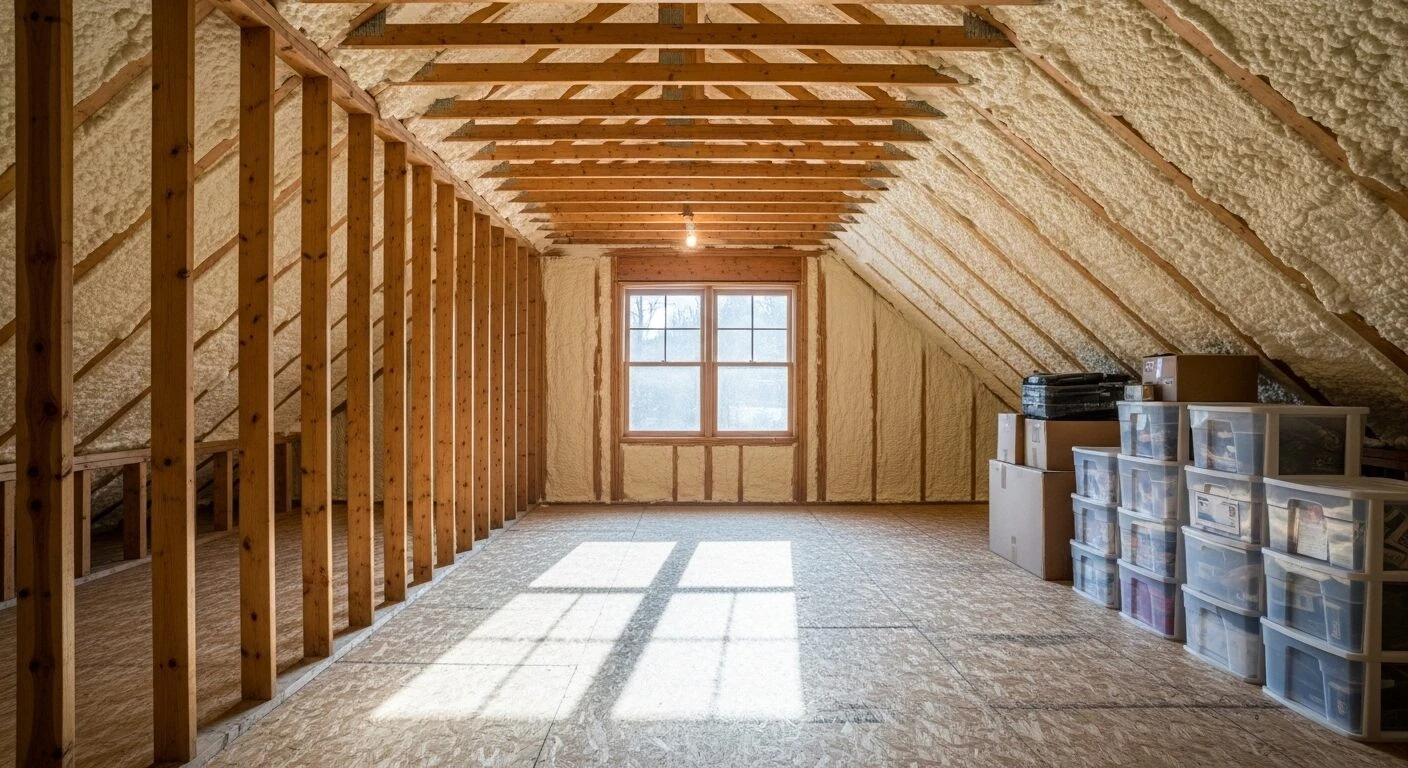
Specific areas of a building benefit more from open-cell foam than others. In residential settings, media rooms and home theaters are the most common candidates. These spaces generate high levels of airborne sound that can easily disturb other occupants. Applying open-cell foam in the interior walls and ceilings helps keep the audio contained.
Professional Work Environments
In commercial settings, privacy is a significant concern for medical offices, law firms, and executive boardrooms. Open-cell foam helps create a quieter environment by dampening footsteps, HVAC system noise, and nearby conversations. Reports from the Spray Polyurethane Foam Alliance note that high-performance insulation helps meet local noise ordinances in high-density urban areas.
Residential Sleeping Areas
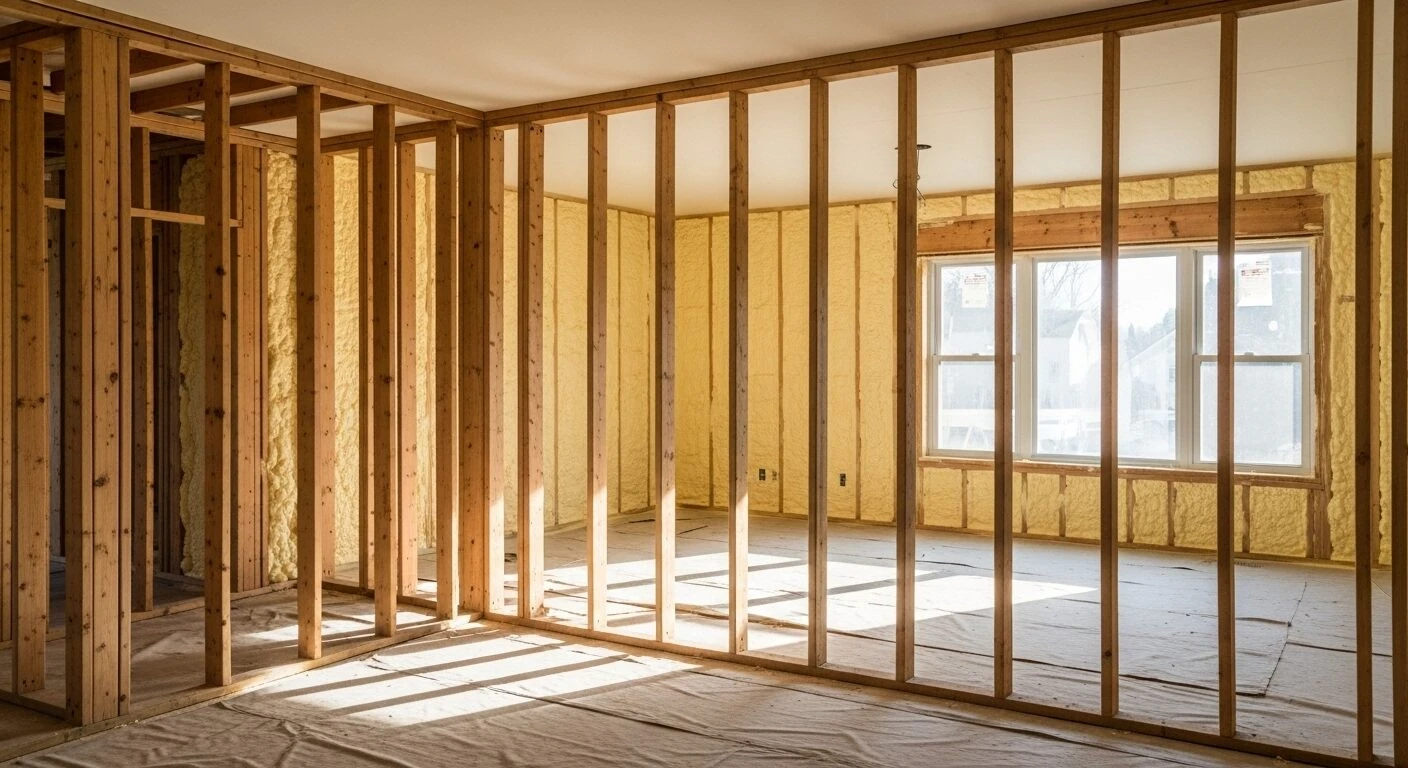
Bedrooms located near busy streets or mechanical rooms also require better acoustic management. Because open-cell foam expands to fill the entire wall cavity, it creates a consistent thermal and acoustic envelope. This prevents the “hollow” sound often associated with poorly insulated walls. Cascadia Spray Foam usually sees this application used in multi-family housing to ensure tenant privacy.
Bonus Tip: When insulating for sound between floors, ensure the foam makes full contact with the subfloor above. This helps dampen impact noise like footsteps or dropped objects, though it works best when paired with thick carpeting or acoustic underlayment.
Factors to Evaluate Before Choosing Insulation
Before deciding on a sound-dampening strategy, several variables must be considered to ensure the material fits the specific environment.
Frequency of Noise: Open cell foam is highly effective for mid-to-high frequency sounds. If the goal is to stop low-frequency thumping from a subwoofer or heavy machinery, additional mass, such as mass-loaded vinyl, may be necessary alongside the foam.
Moisture Exposure: Open cell foam is vapor-permeable. It should not be used in areas prone to direct water contact or in certain exterior applications without a proper vapor retarder. In damp basements or crawl spaces, closed cell foam is usually the better choice for moisture control.
Space Constraints: Because open cell foam has a lower R-value per inch compared to closed cell foam, thicker layers are needed to meet thermal codes. Ensure the wall studs or ceiling joists have enough depth to accommodate the required thickness for both heat and sound goals.
Structural Integrity: Open cell foam does not add structural strength to a building. If the project requires the insulation to provide racking strength for the walls, closed cell foam is the only option that offers that specific benefit.
Effective Noise Management Strategies
Acoustic comfort is often the result of several different materials working together. Looking at the entire wall assembly rather than just the insulation provides the best results. While the foam handles airborne noise and air sealing, the wall’s physical structure handles vibration.
Studies help guide builders on the minimum requirements for noise control between dwelling units. Using open cell foam is an investment in the long-term comfort of the building. It does not sag or settle over time like cellulose or fiberglass, meaning the sound-dampening properties remain consistent for the life of the structure.
Expert Solutions for Noise Reduction
How does density affect sound dampening?
Lower density materials are generally better at absorbing sound because they are less stiff. High-density materials like concrete or closed cell foam are better at reflecting sound or acting as a mass barrier. Open cell foam sits in the middle, providing enough mass to slow sound down while remaining soft enough to absorb the energy.
Will open cell foam stop my neighbors’ loud music?
It will significantly reduce the airborne components of the music, such as vocals and guitars. However, the heavy bass can travel through the wood or metal studs of the house. For total silence from a neighbor’s subwoofer, a combination of open cell foam and decoupling the wall is necessary.
Is open cell foam more expensive than fiberglass for sound?
The initial cost is higher than fiberglass batts. However, because open cell foam provides both air sealing and superior acoustic absorption in one step, it often replaces the need for multiple other products. Documentation from BuildSite shows that foam’s long-term performance and durability can offset its higher upfront price.
Does the thickness of the foam matter for sound?
Yes. A standard 3.5-inch cavity filled with open cell foam provides excellent dampening. Adding more thickness beyond the wall cavity does not always provide a linear increase in sound reduction, as the wall studs eventually become the primary path for sound to travel.
Summary of Findings
Open cell spray foam remains the top choice for acoustic management due to its porous nature and air-sealing capabilities. It addresses the two most common ways sound enters a room: through the air and through gaps in the construction. By choosing a material with a high NRC rating, property owners can create quieter, more private environments.
Individuals should evaluate their specific noise challenges, such as the frequency of the sound and the building’s structural design, before proceeding. For many residential and commercial projects, the combination of thermal efficiency and acoustic dampening makes open cell foam a high-value solution.
Contact Information
For those seeking professional guidance on insulation and acoustic performance, Cascadia Spray Foam provides technical expertise for various building types. Inquiries regarding material specifications or project assessments can be directed to (425) 386-3500 or via email at [email protected]. Cascadia Spray Foam focuses on delivering accurate information to help property owners make informed decisions about their insulation needs.
Sources
Spray Polyurethane Foam Alliance – A leading authority on the technical specifications and applications of spray foam insulation.
BuildSite – A comprehensive database for construction product data sheets and acoustic performance ratings.
International Code Council – The organization responsible for building codes and standards related to sound transmission and energy efficiency.
Spray foam insulation consistently delivers the highest return on investment among residential insulation options, primarily because it combines superior thermal performance with an airtight seal that no other material can…
Seattle homeowners face a specific set of insulation challenges: cool, damp winters, moderate summers, older housing stock, and increasingly strict energy codes. The right insulation choice in 2026 depends on…
Closed-cell spray foam insulation delivers the highest R-value per inch of any common insulation material, creates a continuous air and vapor barrier in a single application, and actively resists moisture…