How Open-Cell Spray Foam Helps Prevent Ice Dams on Roofs in Seattle, WA
admin_cascadiaspray
November 27th, 2025
Feeling a draft near your windows even when they’re shut tight? Are your energy bills climbing higher each year, no matter what you do with the thermostat? Or maybe you’re just tired of hearing every conversation from the next room over. These are common frustrations for homeowners, and they often point to a single, unseen culprit: inadequate insulation. Traditional insulation materials can leave gaps and fail to stop air movement, leading to wasted energy and a less comfortable home. This is where modern materials can make a significant difference.
Open cell spray foam insulation is a high-performance solution designed to address these problems directly. Unlike traditional insulation, it expands after being applied, creating a continuous, airtight seal that conforms to every nook and cranny of your home’s structure. This ability to stop air leakage is what sets it apart, leading to a noticeable improvement in comfort, a reduction in outside noise, and real savings on your utility bills. Understanding how it works is the first step toward creating a more efficient and pleasant living space.
This guide draws on years of professional experience to give you a complete picture of open cell spray foam. We’ll break down exactly what it is, how it performs, and where it makes the most sense to use it. You’ll learn about its unique properties, how it compares to other insulation types, what the installation process looks like, and how to evaluate its long-term value. By the end, you’ll have a clear understanding of whether this versatile material is the right choice for your home.
What Is Open Cell Spray Foam? A Foundational Look
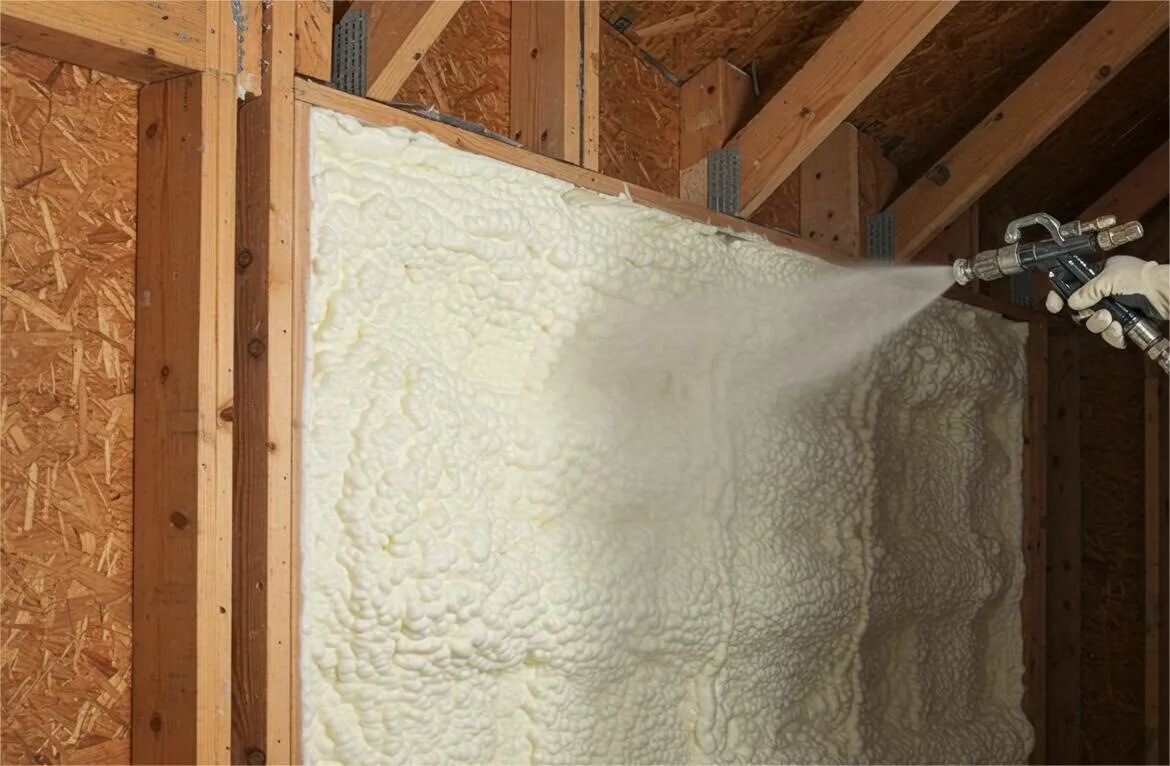
At its most basic, open cell spray foam is a type of polyurethane insulation that is applied as a liquid and expands into a soft, flexible foam. It’s created on-site by mixing two chemical components, an isocyanate and a polyol resin. When these liquids combine and are sprayed onto a surface, they react and expand up to 100 times their original volume before curing into a solid foam.
The name “open cell” refers to the material’s internal structure. Imagine a sponge. Its structure is made of countless tiny bubbles, or cells, that are intentionally left open. This is what makes open cell foam soft, light, and flexible. This structure is also what gives the foam some of its most important characteristics:
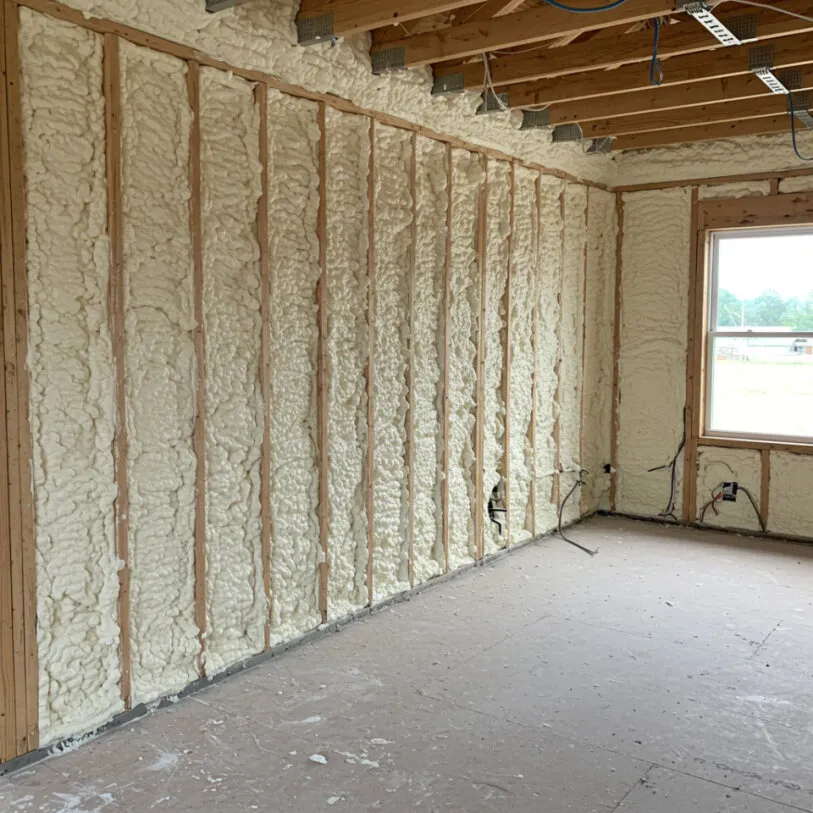
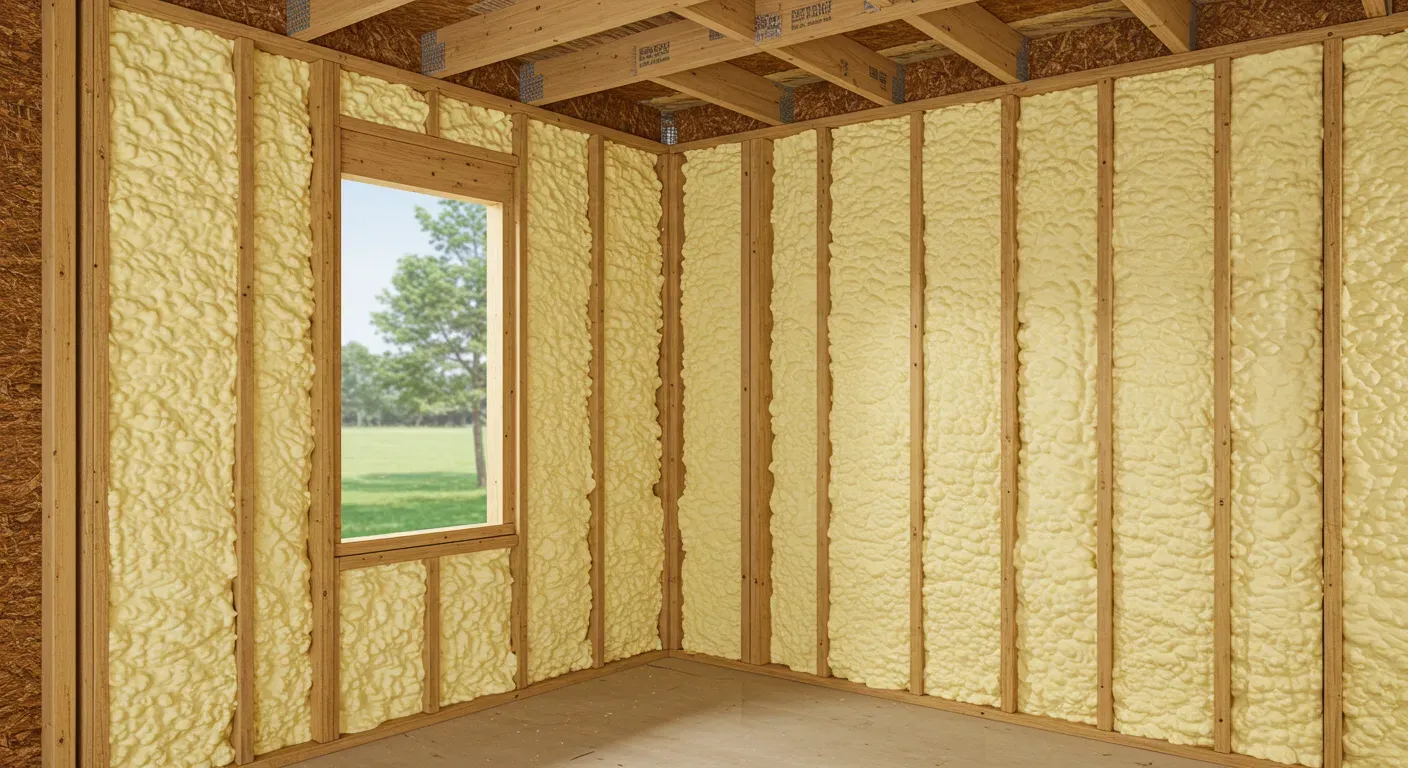
Air Sealing: Because it expands so much, it fills every gap, crack, and imperfection in the building cavity. This creates a highly effective air barrier, which is critical for energy efficiency. A large portion of a home’s energy loss is due to air leakage, and open cell foam stops that leakage in its tracks.
Flexibility: The soft, pliable nature of open cell foam allows it to flex and move with a building as it settles or expands and contracts with temperature changes. This helps it maintain its airtight seal over time without cracking or pulling away from the studs.
Vapor Permeability: The open cell structure allows water vapor to pass through it. This can be a major advantage in certain climates, as it helps prevent moisture from getting trapped inside a wall cavity, which could lead to mold or rot.
This unique combination of properties makes it a powerful tool for improving a home’s performance from the inside out.
How Open Cell Foam Improves Your Home’s Performance
Insulation performance is measured by more than just its R-value. While R-value indicates resistance to heat flow, true comfort and efficiency depend on controlling air movement, moisture, and sound. This is where open cell foam truly excels.
R-Value and Thermal Resistance
Open cell spray foam typically has an R-value of around R-3.5 to R-3.8 per inch. While this is lower than its denser counterpart, closed cell foam, the R-value alone doesn’t tell the whole story. Its real thermal performance comes from its ability to create a near-perfect air seal. According to the U.S. Department of Energy, air leakage can account for up to 40% of the energy used for heating and cooling a home. By eliminating this leakage, open cell foam can often outperform other insulation types with a higher R-value but without the air-sealing capability.
Superior Air Sealing
Think of it like wearing a wool sweater on a windy day. The sweater has a high “R-value” and is great at trapping heat, but the wind cuts right through it. If you add a thin windbreaker jacket (an air barrier), you’re suddenly much warmer. Open cell spray foam acts as both the sweater and the windbreaker, providing insulation and an air barrier in a single step. This comprehensive seal is what leads to stable indoor temperatures and lower demand on your HVAC system.
Excellent Sound Dampening
The soft, porous structure of open cell foam is fantastic at absorbing sound waves. This makes it an ideal choice for reducing noise between rooms, floors, and from the outside. If you’re looking to create a quiet home office, a peaceful nursery, or reduce traffic noise, insulating interior walls or floors with open cell foam can make a dramatic difference. Its sound-dampening qualities are far superior to traditional fiberglass batts.
Key Takeaways: Performance Beyond R-Value
Complete Air Barrier: The primary benefit of open cell foam is its ability to stop air leakage, which is a major source of energy loss.
Sound Absorption: Its soft, open-celled structure makes it an excellent soundproofing material, adding a layer of peace and quiet to your home.
Moisture Management: Its vapor-permeable nature allows building materials to breathe, reducing the risk of trapped moisture in many applications.
Comparing Open Cell to Other Insulation Materials
Choosing the right insulation depends on your budget, climate, and specific goals. Open cell spray foam is a great all-around performer, but seeing how it stacks up against other common options provides a clearer picture of its strengths.
Feature
Open Cell Spray Foam
Closed Cell Spray Foam
Fiberglass Batts
Blown-In Cellulose
R-Value per Inch
~R-3.7
~R-6.5
~R-3.2
~R-3.5
Air Barrier
Excellent
Excellent
Poor
Fair
Vapor Barrier
No (Permeable)
Yes (Non-Permeable)
No (Permeable)
No (Permeable)
Sound Control
Excellent
Good
Fair
Good
Cost
Moderate
High
Low
Low-Moderate
Structural Rigidity
No (Flexible)
Yes (Adds Strength)
No
No
This table shows that while closed cell foam offers a higher R-value per inch, open cell provides superior sound control and allows for moisture breathability at a lower cost. Compared to fiberglass, its main advantage is the integrated air seal, which is something fiberglass simply cannot provide on its own.
Expert Tip: In mixed-climate zones like the Pacific Northwest, open cell’s ability to let walls dry out can be a significant long-term benefit for the health of your home’s structure.
Ideal Applications for Open Cell Spray Foam
Thanks to its unique set of properties, open cell foam is incredibly versatile. It’s best used in above-grade applications where its air-sealing and sound-dampening qualities can be fully leveraged.
Walls, Attics, and Roof Decks
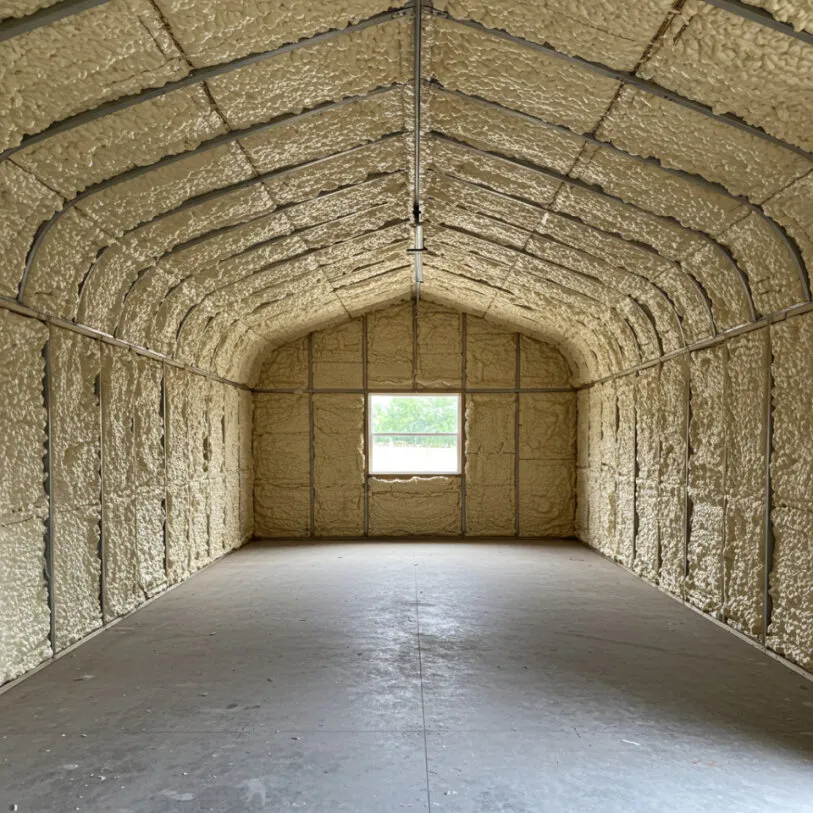
This is the most common and effective use for open cell foam. When sprayed into exterior wall cavities or between the rafters of an attic, it expands to create a monolithic seal. This application is especially effective in creating a conditioned attic space, where the roofline is insulated instead of the attic floor. This brings your HVAC equipment and ductwork inside the conditioned envelope of the home, making them operate much more efficiently. A study published by the Spray Polyurethane Foam Alliance highlights how creating an unvented, conditioned attic with spray foam can lead to substantial energy savings.
Soundproofing Interior Walls, Floors, and Ceilings
For media rooms, home offices, laundry rooms, or between apartments, open cell foam is a top-tier solution for sound control. Filling the interior wall cavities or the space between floors with this foam can drastically reduce the transmission of airborne noise, creating a much quieter and more private environment.
Rim Joists and Cantilevered Floors
The rim joist, where the framing of the house rests on the foundation, is a notorious spot for air leaks. Open cell spray foam is perfect for sealing this complex area, stopping drafts and preventing cold floors in the winter. The same applies to the underside of floors that are cantilevered or extend out over an unconditioned space.
Expert Tip: Always ensure that any surface receiving spray foam is clean and dry. Proper preparation is essential for achieving a perfect bond and an effective seal.
Understanding the Cost and Long-Term Value
The upfront cost of open cell spray foam is higher than traditional insulation like fiberglass. However, it’s important to look at the investment over the entire life of your home. The global spray foam insulation market is projected to continue growing, a trend largely driven by increasing energy costs and stricter building codes, according to research from Fortune Business Insights. This indicates a broader market recognition of its long-term value.
Costs are typically measured by the “board foot,” which is a one-foot by one-foot square at one-inch thickness. The final price depends on the total thickness required and the complexity of the job.
The return on this investment comes from several areas:
Lower Monthly Energy Bills: The superior air sealing can reduce heating and cooling costs significantly year after year. The Office of Energy Efficiency & Renewable Energy states that effective air sealing and insulation can save homeowners an average of 15% on their energy bills.
Increased Home Comfort: Stable indoor temperatures and the elimination of drafts have a value that’s hard to quantify but easy to appreciate every day.
Improved Indoor Air Quality: By creating an airtight seal, spray foam helps keep pollen, dust, and other outdoor pollutants from entering your home through small cracks and gaps.
Potential for Smaller HVAC Systems: In new construction, a home insulated with spray foam is so efficient that it may require a smaller, less expensive HVAC unit to heat and cool it effectively.
When you add up the monthly savings and the improvements in comfort and air quality, the initial investment in open cell spray foam often pays for itself over time.
The Installation Process: A Professional Job
While some home projects are great for DIY enthusiasts, spray foam insulation is not one of them. It involves mixing chemicals under specific temperature and pressure conditions and requires specialized equipment and extensive safety training.
Here’s a quick overview of what to expect from a professional installation by a team like Cascadia Spray Foam of Seattle:
Preparation: The work area is completely sealed off with plastic sheeting to protect floors, windows, and belongings from overspray. Anyone in the area must wear personal protective equipment (PPE), including a full-face respirator.
Ventilation: High-powered fans are set up to ventilate the area during and after the application, exhausting any fumes to the outside.
Application: The trained technician sprays the liquid foam onto the target surfaces. They apply it in layers to control the thickness and ensure it fills the entire cavity before expanding.
Trimming: After the foam cures (which happens very quickly), any excess that has expanded beyond the wall studs is trimmed flush, creating a flat surface for drywall to be installed.
Curing and Re-entry: The foam needs time to fully cure and off-gas. A professional installer will tell you how long you need to stay out of the area, which is typically 24 hours, to ensure all volatile organic compounds (VOCs) have dissipated.
Expert Tip: Always hire a certified and insured spray foam contractor. Ask for references and check their credentials to ensure they follow proper safety and application procedures. This is the single most important factor in a successful installation.
Frequently Asked Questions About Open Cell Spray Foam
Is open cell spray foam safe for my home?
Yes, when installed correctly by a certified professional. Modern spray foams are formulated to be stable and inert once cured. The key is the 24-hour curing period, during which the home should be well-ventilated and unoccupied. After that, the foam is safe and does not release harmful chemicals into the air.
How long does open cell spray foam last?
For the life of the building. Because it’s an inert polymer, it doesn’t sag, settle, or decompose over time like some other insulation materials. It maintains its properties and performance for decades.
Does open cell spray foam absorb water?
Open cell foam is not a vapor barrier, meaning water vapor can pass through it. If it gets directly wet from a leak, it will absorb water like a sponge but will also dry out completely once the source of the moisture is fixed, without losing its insulating properties. Its structure is not a food source for mold.
Can it be installed in an existing home?
Absolutely. It’s an excellent choice for retrofitting attics, crawl spaces, and rim joists. For finished walls, the process is more involved, typically requiring holes to be drilled to inject the foam, but it is possible with specialized slow-rise formulas.
Does spray foam have an odor?
There is a distinct odor during the application and curing process, which is why proper ventilation and a 24-hour re-entry time are so important. Once fully cured, there is no lingering smell.
Taking the Next Step Toward a Better Home
Open cell spray foam insulation offers a powerful combination of benefits. It provides excellent thermal resistance not just through its R-value but by creating a comprehensive air barrier that stops energy-wasting leaks. Its flexible, vapor-permeable structure makes it a durable and “breathable” choice for many parts of a home, while its sound-dampening qualities add an extra layer of comfort and tranquility.
While the initial cost is a consideration, the long-term returns in energy savings, improved air quality, and daily comfort make it a compelling investment in your home’s future. By understanding its strengths and ideal applications, you can make an informed decision that pays dividends for years to come. This guide should serve as your starting point for exploring how this advanced material can improve your living space.
Need Expert Guidance?
Navigating insulation choices can be complex, and every home has unique needs. If you have more questions or would like a professional assessment of your property, the experienced team at Cascadia Spray Foam of Seattle is here to help. We can provide a detailed consultation to determine the best solution for your comfort and efficiency goals. Feel free to reach out to us by phone at (425) 386-3500 or email us at [email protected] to schedule a conversation.
Sources
Spray Polyurethane Foam Alliance – Provides technical papers and research on the energy efficiency benefits of spray foam insulation in applications like unvented attics.
Fortune Business Insights – Offers market research and projections for the global spray foam insulation industry, indicating trends and growth drivers.
Open-cell foam insulation creates a breathable yet protective barrier that prevents moisture accumulation while allowing your Tukwila home to maintain proper humidity levels. This unique material works by trapping air…
Open-cell insulation provides significant environmental benefits through reduced material consumption, lower embodied carbon during production, and superior long-term energy efficiency that decreases heating and cooling demands. The material’s unique cellular…
Open-cell spray foam insulation achieves superior air sealing through its unique cellular structure that creates millions of tiny, interconnected air pockets. When applied, the foam expands to fill gaps and…