The Environmental Advantages of Choosing Open-Cell Insulation
admin_cascadiaspray
January 23rd, 2026
Open-cell insulation provides significant environmental benefits through reduced material consumption, lower embodied carbon during production, and superior long-term energy efficiency that decreases heating and cooling demands. The material’s unique cellular structure allows it to expand up to 400% when applied, reducing the amount of raw material needed per square foot compared to traditional insulation options. This efficiency, combined with its ability to create continuous air barriers, makes open-cell insulation an environmentally responsible choice for residential and commercial buildings seeking to reduce their carbon footprint while maintaining comfort and performance.
This article explains the specific environmental advantages of open-cell insulation, backed by industry data and practical insights from installation experience. Understanding these benefits helps property owners make informed decisions that align with both sustainability goals and building performance requirements.
How Open-Cell Insulation Works
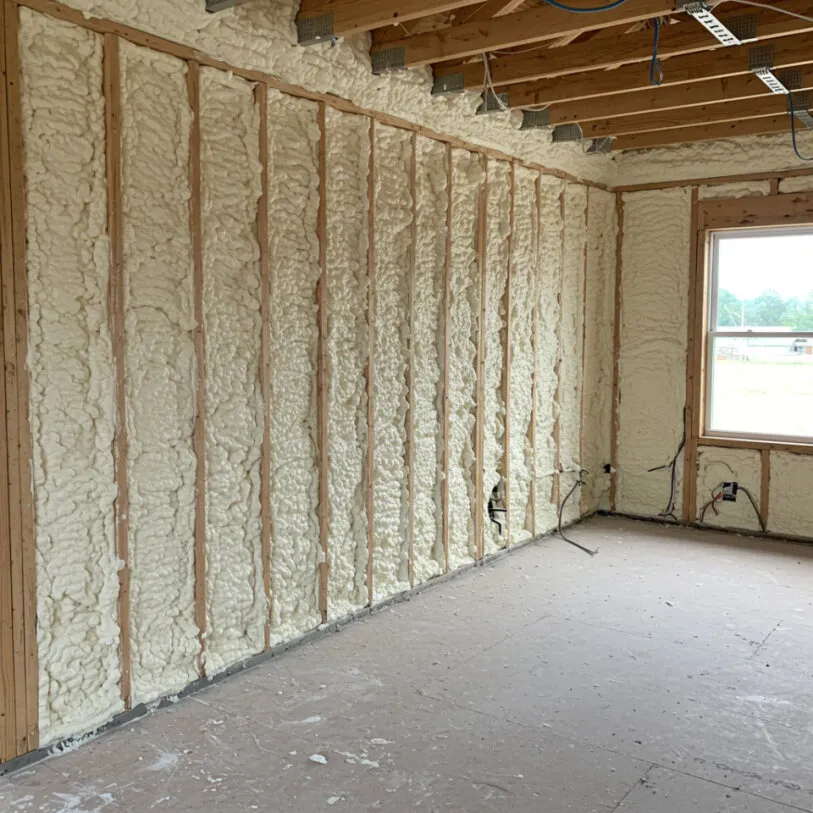
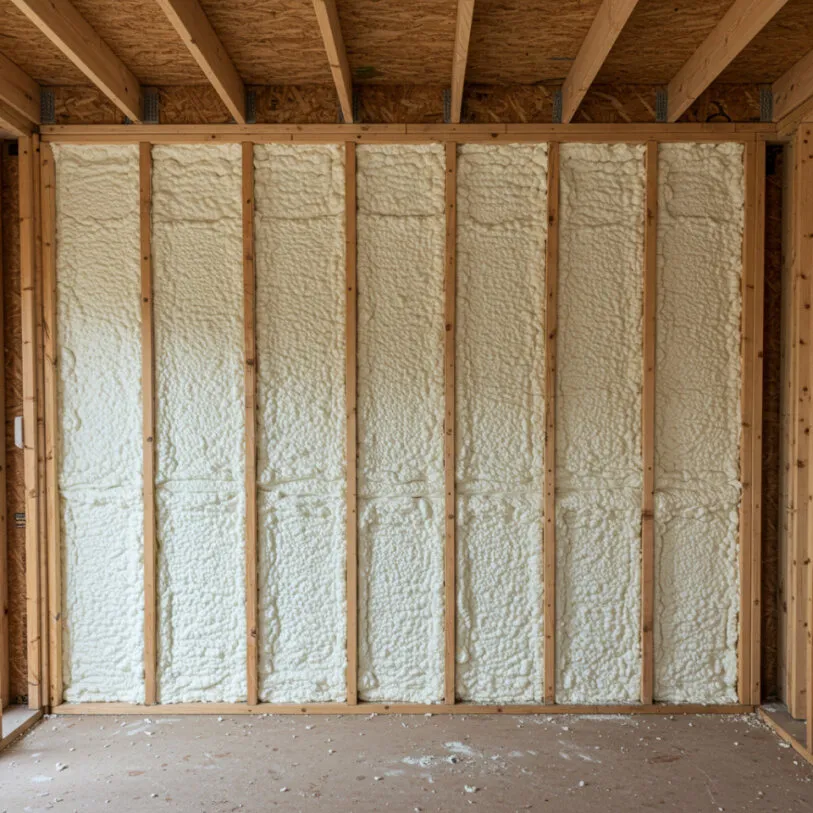
Open-cell spray foam insulation consists of tiny cells that are not completely sealed, allowing air to fill the material’s voids. When applied, it expands rapidly to fill gaps, cracks, and cavities, creating a seamless thermal envelope that eliminates air leakage. The typical R-value of open-cell insulation ranges from 3.5 to 3.8 per inch, providing good thermal performance while maintaining breathability that helps manage moisture within wall assemblies.
The installation process involves mixing two chemical components that react and expand when sprayed onto surfaces. Unlike closed-cell foam, open-cell insulation remains flexible after curing, which helps accommodate building movement without developing cracks or gaps that could compromise the thermal barrier.
Primary Environmental Benefits
The environmental advantages of open-cell insulation extend beyond its thermal performance. Research from the U.S. Environmental Protection Agency indicates that proper air sealing can reduce heating and cooling costs by up to 20%, directly lowering the operational carbon footprint of buildings over their lifetime.
Open-cell insulation uses water as its primary blowing agent instead of hydrofluorocarbons (HFCs) that have high global warming potential. This manufacturing choice significantly reduces the embodied carbon of the insulation material. According to industry data from the Spray Polyurethane Foam Alliance, modern open-cell formulations have a global warming potential that is 85% lower than earlier generations of spray foam insulation.
The material efficiency of open-cell insulation also reduces environmental impact. Because it expands dramatically during application, installers can achieve the required R-values with less material compared to traditional insulation options like fiberglass or cellulose. This efficiency translates to reduced manufacturing resources, lower transportation impacts, and smaller storage requirements on job sites.
Regional Performance Considerations
In the Pacific Northwest climate, where humidity levels fluctuate significantly, the moisture-permeable nature of open-cell insulation offers distinct advantages. The material allows walls to dry effectively, preventing moisture buildup that could lead to mold growth or structural damage. This breathability supports durable, long-lasting building assemblies that require fewer repairs and replacements over time, indirectly reducing the environmental impact of maintenance activities. Furthermore, the U.S. Department of Energy emphasizes that improving a building’s thermal envelope through high-performance insulation is one of the most effective strategies for reducing national energy waste and greenhouse gas emissions.
Comparative Environmental Impact
When evaluating insulation options, understanding the comparative environmental performance helps inform sustainable building decisions. The following table highlights key environmental metrics across common insulation types:
Insulation Type
Recycled Content
Embodied Carbon (kg CO2e/m³)
Typical Lifespan
Air Sealing Capability
Open-Cell Foam
10-15%
25-35
50+ years
Excellent
Closed-Cell Foam
5-10%
45-55
50+ years
Excellent
Fiberglass
30-70%
15-25
20-30 years
Poor
Cellulose
80-85%
10-15
20-30 years
Good
Mineral Wool
30-75%
20-30
50+ years
Poor
The data shows that while open-cell insulation has higher embodied carbon than some traditional options, its superior air sealing capabilities and longer lifespan often result in better lifetime environmental performance. The ability to eliminate air leakage significantly reduces ongoing energy consumption, which typically represents the largest portion of a building’s environmental impact.
Things to Consider Before Making a Decision
Several factors influence whether open-cell insulation is the most environmentally appropriate choice for a specific project:
Climate conditions play a crucial role in determining optimal insulation performance. In regions with extreme temperature variations, the moisture management properties of open-cell insulation become particularly valuable. Buildings in moderate climates benefit from the material’s breathability, while those in very cold or very hot regions might require additional vapor barriers depending on local building codes.
Building design and construction methods affect insulation performance as well. Open-cell insulation works best in assemblies designed for its specific properties, including proper exterior weather barriers and appropriate interior vapor control layers. Retrofit applications often benefit most from the material’s ability to fill irregular cavities and seal existing air leakage paths.
Bonus Tip: Before installation, conduct a blower door test to identify the primary air leakage paths in the building envelope. This diagnostic approach helps target insulation application where it will provide the greatest environmental benefit through air sealing.
Cost considerations should evaluate total lifecycle impact rather than initial material prices. While open-cell insulation may have higher upfront costs, the energy savings over time and reduced likelihood of moisture-related problems often provide better environmental and financial value over the building’s lifespan.
Common Questions About Environmental Impact
Is open-cell insulation made from renewable resources?
Most open-cell formulations include petroleum-based polyols derived from renewable plant oils in varying percentages. Some manufacturers offer formulations with higher bio-based content, though availability varies by region.
Can open-cell insulation be recycled?
Currently, open-cell insulation cannot be recycled through conventional programs due to its chemical composition. However, the long lifespan reduces the need for replacement, minimizing waste generation over time.
How does installation affect indoor air quality?
Professional installation with proper ventilation minimizes temporary emissions during application. Once cured, open-cell insulation is inert and does not off-gas harmful chemicals into occupied spaces.
Bonus Tip: Request safety data sheets and third-party testing results from manufacturers to verify the environmental claims of specific insulation products. Green certifications like GREENGUARD and Cradle to Cradle provide independent verification of environmental performance.
Bonus Tip: Consider the transport distance of insulation materials to the job site. Locally manufactured insulation reduces transportation emissions, improving the overall environmental profile of the project.
Making Environmentally Informed Insulation Choices
The environmental advantages of open-cell insulation extend from manufacturing through decades of building operation. By reducing material consumption through efficient expansion, using water as a blowing agent, and providing superior insulation air sealing that lowers energy demands, open-cell insulation offers a compelling environmental profile for sustainable construction projects.
Property owners should evaluate their specific climate conditions, building designs, and long-term performance requirements when selecting insulation materials. The most environmentally appropriate choice balances embodied carbon reduction with operational energy savings over the entire building lifecycle.
Connect with Insulation Experts
For specific guidance about environmental insulation choices in the Pacific Northwest region, contact Cascadia Spray Foam at [email protected] or call (425) 386-3500. The team can provide detailed information about material options, performance characteristics, and installation considerations that support sustainable building goals.
Frequently Asked Questions
How does open-cell insulation compare to traditional fiberglass in environmental performance?
While fiberglass may have lower embodied carbon per unit, open-cell insulation’s air sealing capabilities typically result in lower overall energy consumption over the building’s lifetime, making it the more environmentally responsible choice in most applications.
Can open-cell insulation contribute to LEED certification?
Yes, open-cell insulation can contribute points toward LEED certification through energy efficiency optimization, materials and resources credits for regional manufacturing, and indoor environmental quality improvements through reduced air infiltration.
What happens to open-cell insulation at the end of a building’s life?
At demolition, open-cell insulation is typically landfilled with other construction debris. However, research is ongoing into recycling technologies and reprocessing methods that could improve end-of-life environmental outcomes in the future.
Does open-cell insulation require special disposal or handling?
During installation, uncured foam and excess materials must be disposed of properly in accordance with local regulations. Once cured, the material is considered stable and can be handled like other construction waste, though specialized recycling options remain limited.
Sources
U.S. Environmental Protection Agency – Government agency providing environmental information and guidelines on energy efficiency and building performance
Spray Polyurethane Foam Alliance – Industry association offering technical data and environmental impact information about spray foam insulation products
U.S. Department of Energy – National agency providing comprehensive resources on energy-saving building practices and insulation standards.
When selecting a wall retrofit contractor in Everett, asking the right questions determines project success. The eight essential questions to ask include: What experience do you have with Pacific Northwest…
Open-cell spray foam insulation acts as an early warning system for roof leaks because its water-absorbing properties create visible stains and discoloration at the leak source, unlike closed-cell foam or…
Open-cell foam insulation creates a breathable yet protective barrier that prevents moisture accumulation while allowing your Tukwila home to maintain proper humidity levels. This unique material works by trapping air…