The Science Behind Open-Cell Foam and Its Superior Air Sealing Properties
admin_cascadiaspray
January 23rd, 2026
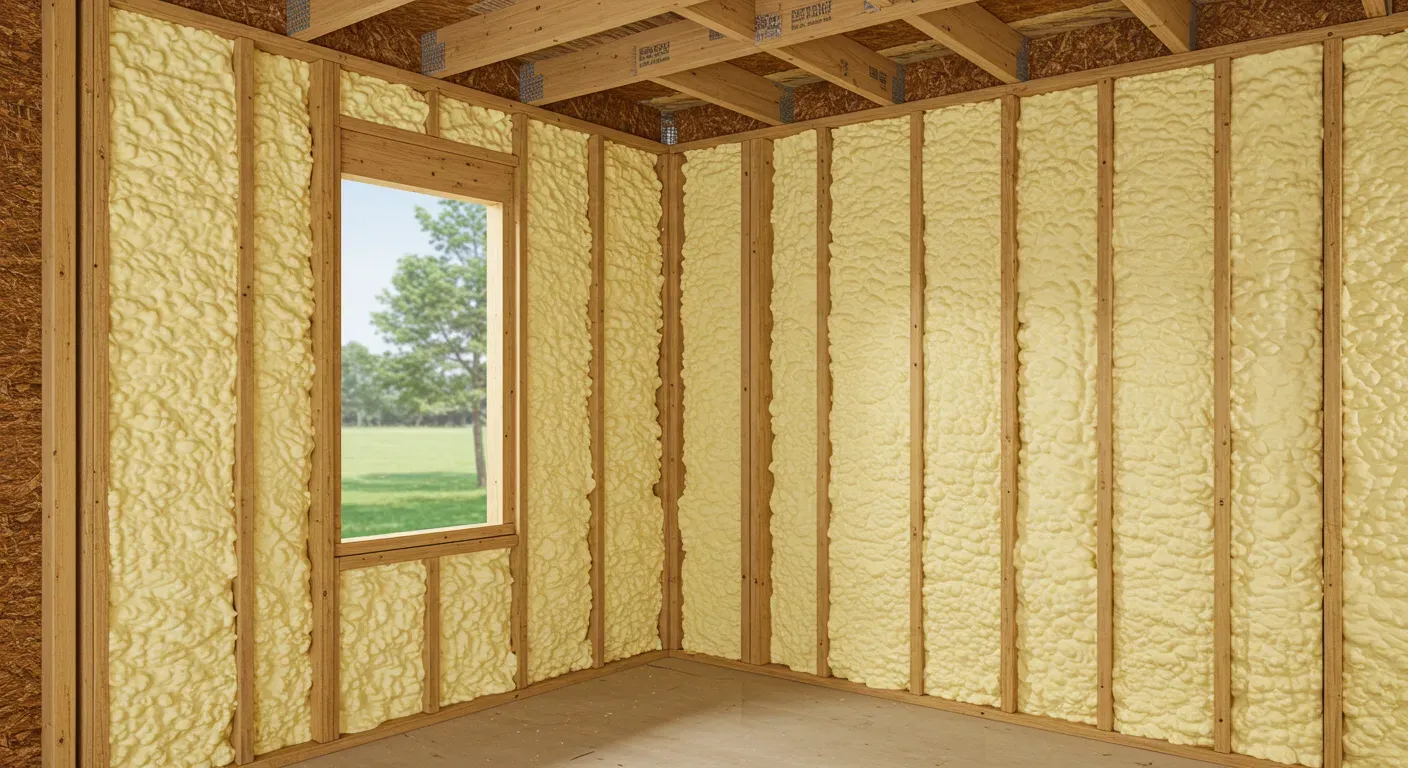
Open-cell spray foam insulation achieves superior air sealing through its unique cellular structure that creates millions of tiny, interconnected air pockets. When applied, the foam expands to fill gaps and cracks, then hardens into a semi-rigid material that physically blocks air movement while remaining vapor-permeable. This combination of complete cavity fill and breathability makes it particularly effective at preventing energy loss through air infiltration, which accounts for up to 40% of heating and cooling costs in typical homes. The following explanation covers how this material works at the molecular level, its performance advantages, and practical considerations for implementation.
How Open-Cell Foam Works at the Molecular Level
The chemistry behind open-cell foam starts with two liquid components that react when mixed. An isocyanate and a polyol resin combine with water and blowing agents to form a rapidly expanding polymer matrix. Unlike closed-cell foam that traps gas in isolated pockets, open-cell foam’s cells are deliberately designed to burst during expansion, creating an open, interconnected structure similar to a sponge. This cellular architecture gives the foam its distinctive properties: low density (typically 0.5 pounds per cubic foot), high expansion ratio (up to 100 times original volume), and the ability to block air movement while allowing moisture vapor to pass through.
The air sealing effectiveness comes from three physical principles working together. First, the foam’s expansion creates a mechanical bond with surrounding materials, eliminating the gaps where air typically escapes. Second, the irregular cell structure creates a tortuous path that significantly slows air movement through convection. Third, the foam’s elasticity allows it to maintain contact with building materials as they expand and contract with temperature changes, preserving the seal over time. According to research from the Lawrence Berkeley National Laboratory, properly installed spray foam can reduce air leakage by 85-95% compared to traditional insulation methods.
Performance Comparison and Technical Specifications
Understanding how open-cell foam compares to other insulation options helps in making informed decisions. The material’s performance characteristics vary significantly from traditional insulation products and even from closed-cell spray foam.
Property
Open-Cell Foam
Closed-Cell Foam
Fiberglass Batts
R-Value per inch
3.5-3.8
6.5-7.0
2.9-3.8
Air Barrier
Yes
Yes
No
Vapor Permeability
5-10 perms
<1 perm
50+ perms
Density (lb/ft³)
0.4-0.5
1.5-2.0
0.5-1.0
Expansion Ratio
100:1
30:1
N/A
The table above highlights key differences that affect installation decisions. Open-cell foam’s higher vapor permeability makes it suitable for interior applications in most climates, while its lower density requires less material to achieve the same cavity fill, potentially reducing costs. The U.S. Department of Energy reports that homeowners using spray foam insulation can save 15-25% on heating and cooling costs compared to conventional insulation, with open-cell foam providing particular benefits in mixed climates where both heating and cooling seasons are significant.
Bonus Tip: In the Pacific Northwest climate zone, open-cell foam excels because its vapor permeability allows walls to dry to the interior during the heating season while still preventing the stack effect that drives heat loss through air infiltration.
Installation Science and Application Techniques
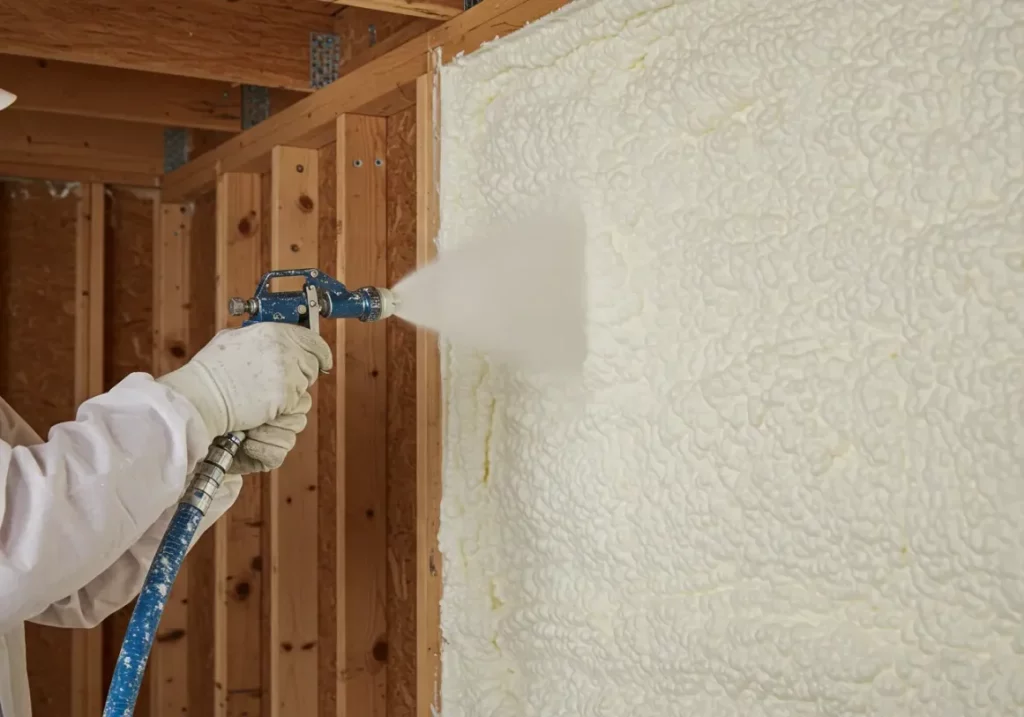
The effectiveness of open-cell foam depends heavily on proper installation technique and environmental conditions during application. Professional installers must maintain substrate temperatures between 40-100°F, with optimal results achieved around 70°F. The chemical reaction requires specific humidity levels – too low and the foam becomes brittle, too high and excessive cellular formation can occur.
Application depth matters significantly for performance. While open-cell foam can be applied up to 6-8 inches in a single pass in cavity fills, most applications use 3-4 inch depths to balance R-value requirements with cost considerations. The foam typically reaches 90% of its expansion within 30 seconds but continues to cure for 24 hours, during which it should not be disturbed.
Bonus Tip: For cathedral ceilings in cold climates, applying 5.5 inches of open-cell foam provides both the required R-value (approximately R-19) and air sealing while allowing the roof deck to dry through the insulation, preventing moisture accumulation that could lead to rot.
The air sealing performance of open-cell foam has been documented in multiple field studies. A report from the Oak Ridge National Laboratory showed that homes insulated with open-cell foam demonstrated air leakage rates 72% lower than equivalent homes with conventional insulation, even when the latter was detailed with house wrap and sealed with caulk.
Things to Consider Before Making a Decision
Several practical factors influence whether open-cell foam represents the optimal choice for a specific project. Climate plays a significant role – in very cold regions (Climate Zone 7-8), the risk of interior condensation increases with low-density insulation, potentially requiring additional vapor control measures. Building codes in some jurisdictions may require specialized vapor barriers when using open-cell foam in exterior wall assemblies.
The structural characteristics of the building also matter. Open-cell foam does not provide the same structural reinforcement as closed-cell foam, with tests showing only about 10% of the racking strength improvement. For retrofit applications in older homes, the material’s vapor permeability can be advantageous, allowing existing walls to dry rather than trapping moisture.
Bonus Tip: When retrofitting historic buildings, open-cell foam is often approved by preservation boards because it can be removed relatively easily if needed, unlike closed-cell foam, which bonds permanently to substrates.
Key Takeaways
Open-cell spray foam provides superior air sealing through its unique cellular structure that blocks air movement while remaining vapor-permeable. The material’s expansion properties create continuous seals around obstacles and penetrations that traditional insulation methods cannot match. open-cell Performance testing shows significant reductions in air leakage and energy costs compared to conventional insulation systems. When evaluating insulation options, consider climate conditions, building requirements, and long-term performance rather than initial material costs alone. The combination of air sealing, insulation value, and moisture management makes open-cell foam particularly effective for residential applications in moderate climates.
Get Professional Assessment
For personalized evaluation of your insulation needs, contact the experts at Cascadia Spray Foam. Our team can assess your specific situation, calculate potential energy savings, and recommend the most effective solution for your home or building. Email [email protected] or call (425) 386-3500 to schedule a consultation and receive a detailed analysis of your insulation options. Professional installation ensures optimal performance and long-term durability of your insulation investment.
Frequently Asked Questions
Does open-cell foam require special ventilation?
No, standard ventilation practices apply. The foam’s vapor permeability allows normal moisture movement, and it doesn’t create any unusual ventilation requirements beyond what’s recommended for your climate zone and building type.
Can open-cell foam be applied over existing insulation?
In most cases, yes. When retrofitting over existing fiberglass, the open-cell foam can be applied directly, though removal of old insulation may be recommended if there are moisture or pest issues. The foam’s expansion properties help it conform around irregular surfaces.
How long does the installation process take?
A typical 2,000-square-foot home can be insulated in 1-2 days, depending on the complexity of access. The foam expands quickly, but curing requires 24 hours before it can be covered with drywall or other finishing materials.
Is open-cell foam environmentally friendly?
Modern formulations use water as the primary blowing agent, eliminating the need for harmful chemicals. The foam’s superior air sealing reduces energy consumption for heating and cooling, resulting in lower carbon emissions over the building’s lifetime.
When selecting a wall retrofit contractor in Everett, asking the right questions determines project success. The eight essential questions to ask include: What experience do you have with Pacific Northwest…
Open-cell spray foam insulation acts as an early warning system for roof leaks because its water-absorbing properties create visible stains and discoloration at the leak source, unlike closed-cell foam or…
Open-cell foam insulation creates a breathable yet protective barrier that prevents moisture accumulation while allowing your Tukwila home to maintain proper humidity levels. This unique material works by trapping air…