If you’re protecting a home in the Seattle area, where rain is part of daily life, understanding this difference matters.
How Spray Foam Handles Water and Moisture
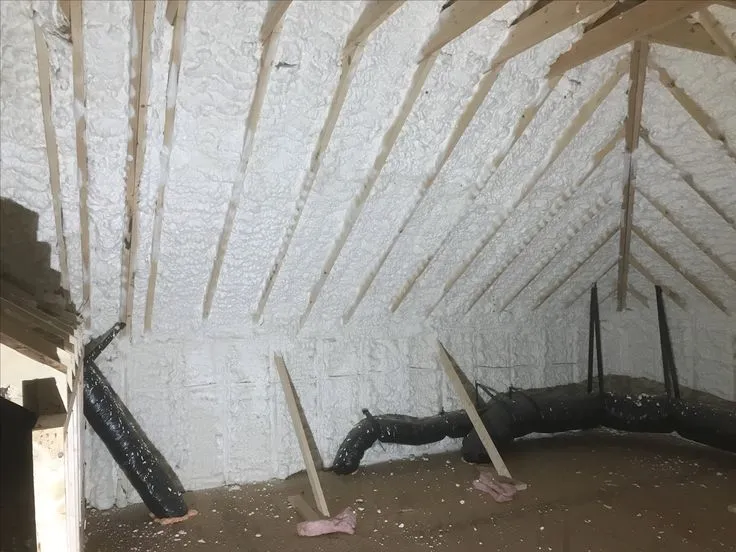
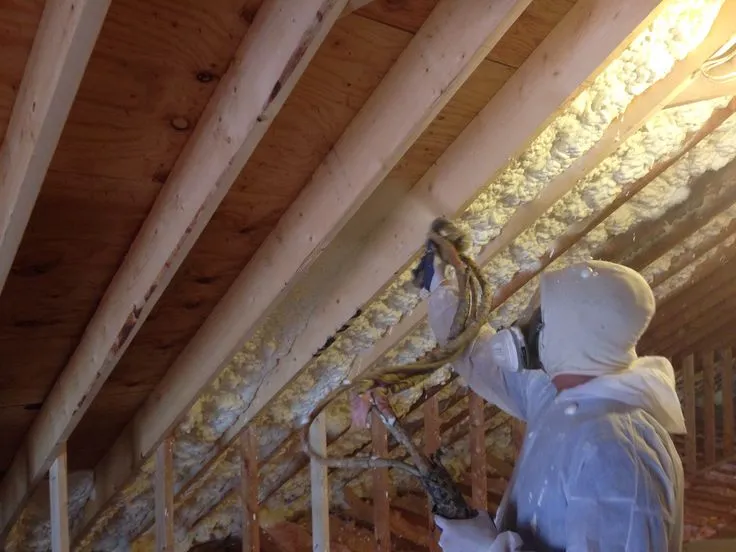
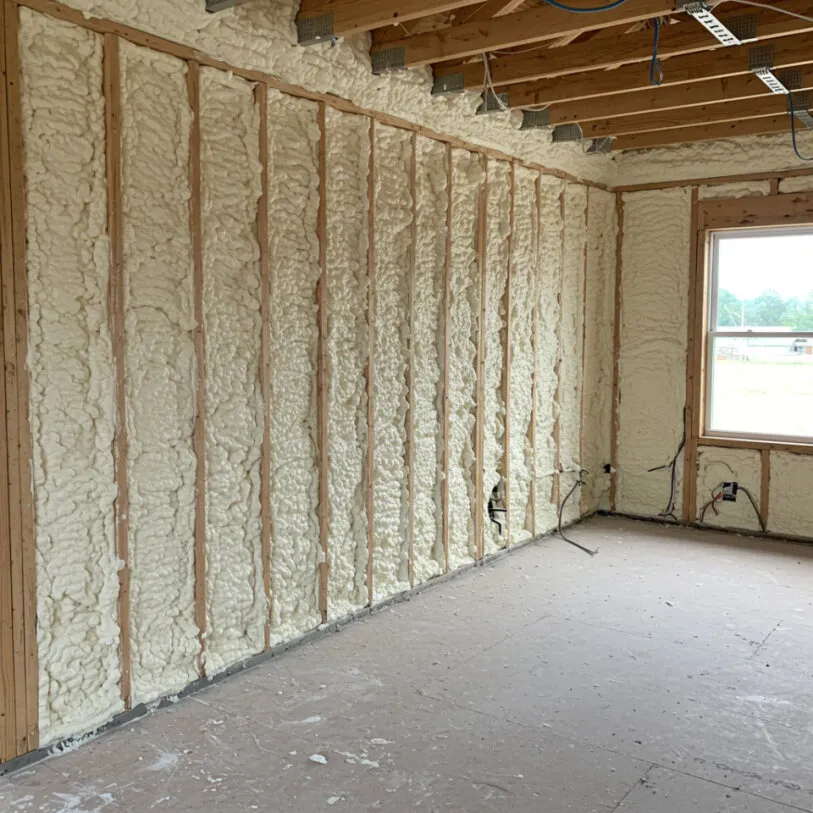
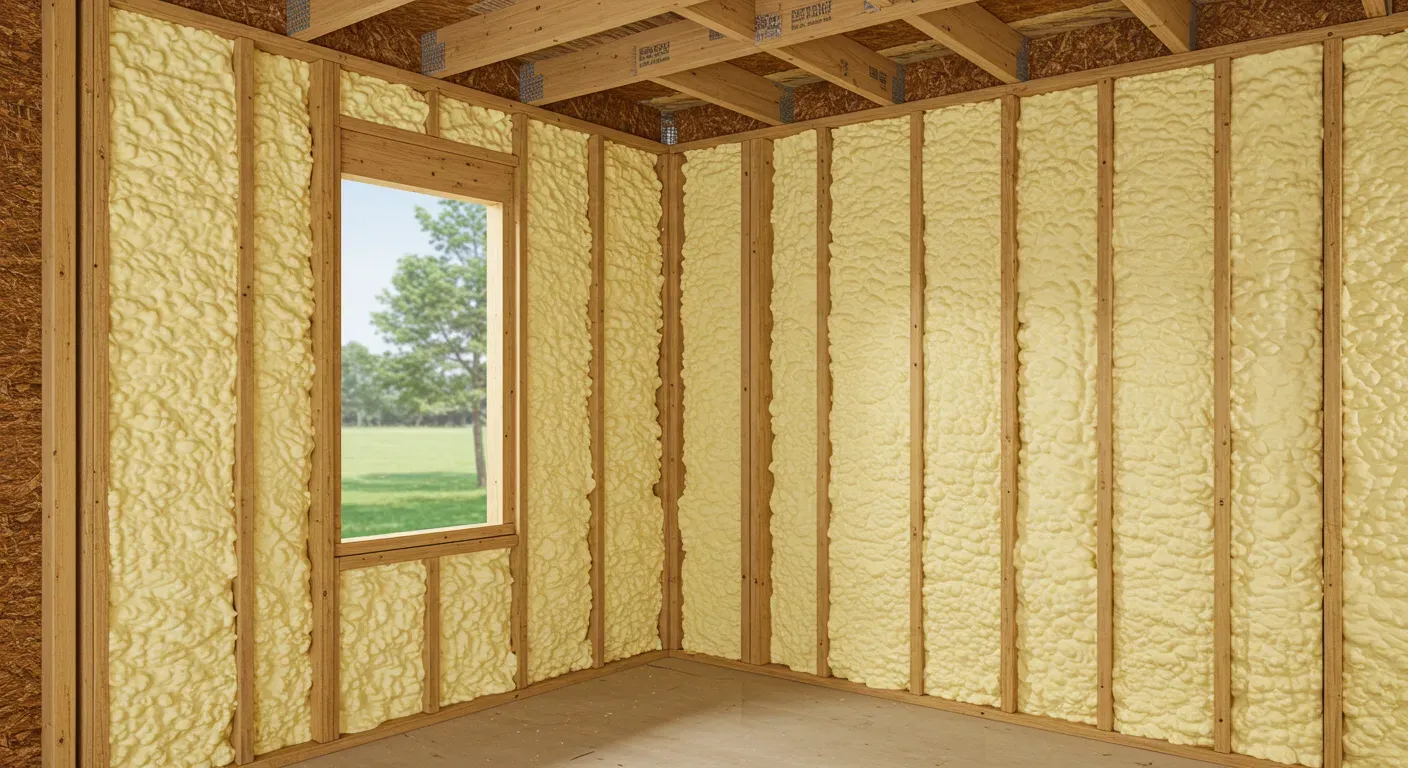
Spray foam insulation works as both insulation and an air seal. That air seal is the key to moisture control.
According to guidance from the U.S. Department of Energy, spray foam reduces air leakage, which is one of the main ways moisture enters walls and attics.
Closed-Cell vs. Open-Cell Spray Foam
Before answering “is spray foam waterproof,” you have to know which type you’re talking about.
Closed-Cell Spray Foam
Closed-cell foam has a dense structure. The cells are packed tight and filled with gas.
Resists bulk water intrusion
Acts as a vapor retarder
Adds structural strength to walls
Higher R-value per inch
In flood-prone or high-humidity areas, this is the safer choice.
It works well for sound control and interior walls but needs moisture planning.
What “Waterproof” Really Means in Construction
No insulation makes a building waterproof by itself. Waterproofing is a system.
Spray foam helps by controlling:
Air leaks
Condensation
Humidity migration
The International Code Council notes that moisture control depends on proper materials, flashing, and installation, not insulation alone.
Spray foam supports that system. It doesn’t replace drainage planes, flashing, or exterior barriers.
Spray Foam vs. Other Wall Insulation Types
If moisture is a concern, comparison matters. Here’s how spray foam stacks up against common wall insulation options.
Common Types of Wall Insulation
Insulation Type
Water Resistance
Air Sealing
Mold Risk
Fiberglass Batts Insulation
Poor
No
High if wet
Mineral Wool Insulation
Good
No
Moderate
Rigid Foam Board Insulation
Very Good
Limited
Low
Blown-In Cellulose Insulation
Poor
No
High if damp
Closed-Cell Spray Foam
Excellent
Yes
Very Low
Why Spray Foam Performs Better
Traditional insulation slows heat flow but leaves gaps. Those gaps let moist air in.
Data summarized by Building Science Corporation shows that air movement, not diffusion, causes most moisture problems in walls.
Spray foam seals those paths. That’s why it outperforms batts and blown-in products in wet climates.
When Spray Foam Is the Right Choice
Spray foam makes sense when moisture protection matters as much as energy savings.
Best Use Cases
Coastal or rainy regions like Western Washington
Crawl spaces and basements
Rim joists and attic rooflines
Homes with past mold issues
When You Still Need Extra Protection
Spray foam isn’t a substitute for:
Exterior waterproof membranes
Proper roof flashing
Foundation drainage
Think of it as a strong layer in a larger system.
Cost vs. Protection: Is It Worth It?
Spray foam costs more upfront. But moisture damage costs more long-term.
Typical benefits homeowners see
Fewer moisture-related repairs
Lower heating and cooling bills
Reduced mold risk
Longer building lifespan
In damp regions, that tradeoff usually makes sense.
Real-World Insight From the Field
In older Seattle homes, fiberglass batts often show moisture staining and sagging within 10–15 years.
Homes upgraded to closed-cell spray foam in crawl spaces often see:
Drier subfloors
Fewer musty odors
More stable indoor humidity
That’s the difference air sealing makes.
Choosing the Right Installer
Spray foam only performs well if it’s installed correctly.
A professional contractor will:
Evaluate moisture risks first
Choose the correct foam type
Apply proper thickness
Follow local building codes
For homeowners in the Puget Sound region, local experience matters.
Final Takeaway and Next Steps
Spray foam isn’t a cure-all, but it’s one of the most effective tools available for controlling moisture, air leaks, and heat loss in a home. When installed correctly, it helps create a tighter building envelope that stands up better to damp conditions, shifting temperatures, and long-term wear.
If your goal is lasting protection from moisture issues, mold growth, and rising energy bills, professional installation makes a real difference. The right foam type, thickness, and placement depend on your home’s layout, age, and local climate.
Open-cell foam insulation creates a breathable yet protective barrier that prevents moisture accumulation while allowing your Tukwila home to maintain proper humidity levels. This unique material works by trapping air…
Open-cell insulation provides significant environmental benefits through reduced material consumption, lower embodied carbon during production, and superior long-term energy efficiency that decreases heating and cooling demands. The material’s unique cellular…
Open-cell spray foam insulation achieves superior air sealing through its unique cellular structure that creates millions of tiny, interconnected air pockets. When applied, the foam expands to fill gaps and…