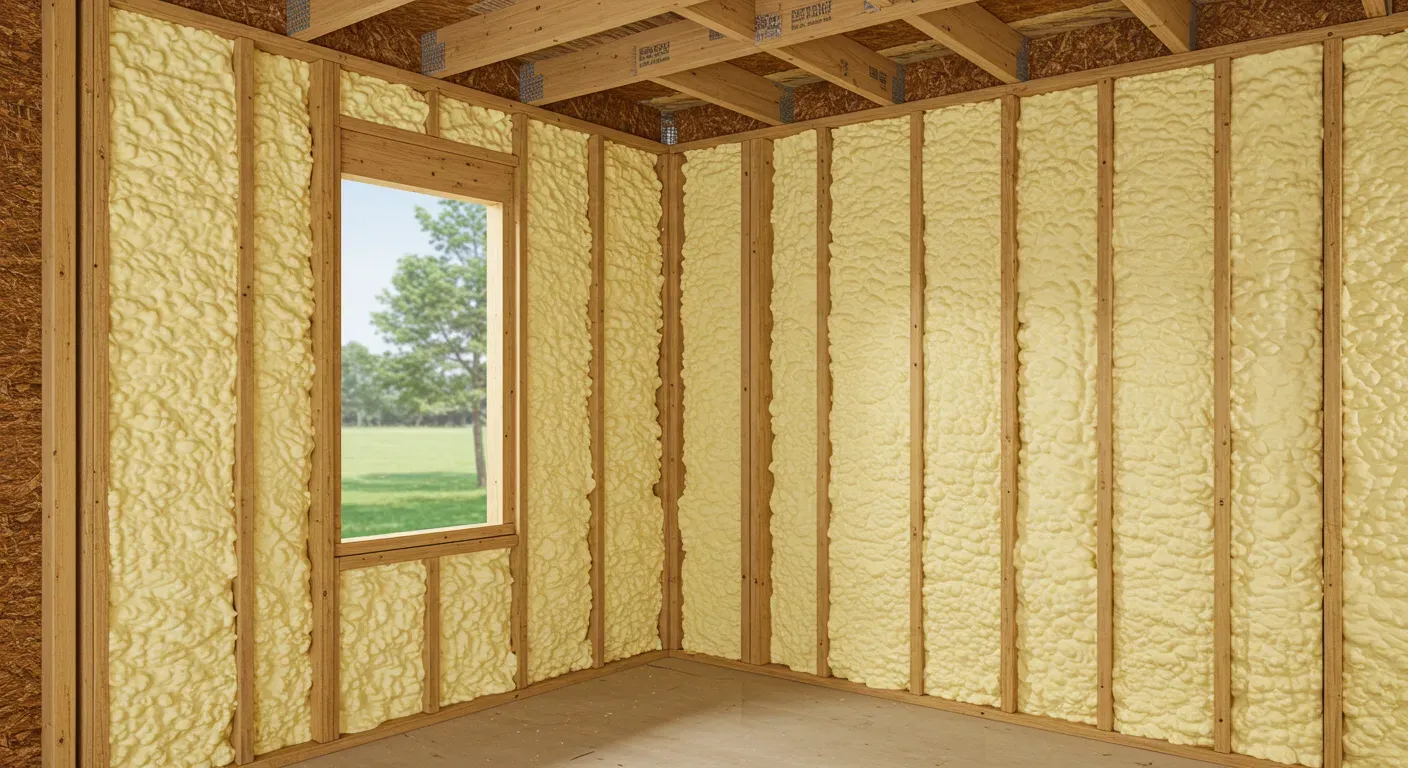
Insulating a crawl space basement is one of the smartest upgrades we can make for comfort, energy savings, and long-term home health. Done right, it keeps cold floors away, manages moisture, and lowers heating costs year after year.
Here’s the quick answer most homeowners want first:
We insulate crawl spaces by sealing air leaks, controlling moisture, and installing the right insulation on walls and floors.
Spray foam roofing is often the most effective option because it insulates and air-seals in one step.
A properly insulated crawl space helps prevent mold, rot, and winter heat loss.
Below, we’ll walk through how to insulate a crawl space basement step by step, explain what works best in real homes, and share what we’ve learned installing spray foam across Washington homes.
Why Crawl Space Insulation Matters More Than You Think
A crawl space basement sits between your living space and the ground. That makes it a major entry point for cold air, moisture, and even pests.
According to guidance from the U.S. Department of Energy, uninsulated crawl spaces can account for a significant share of heat loss in older homes, especially during colder months. Cold floors, uneven room temperatures, and high energy bills often trace back to this one area.
When we insulate correctly, we:
Reduce heat loss through the floor system
Improve indoor air quality upstairs
Protect framing from moisture damage
Understanding Crawl Space Basement Types
Before we insulate, we need to know what kind of crawl space we’re dealing with. Not all crawl spaces should be treated the same way.
Vented Crawl Spaces
These older designs rely on exterior vents to manage moisture. In practice, vents often allow cold, damp air to enter, causing condensation on the framing.
Unvented or Sealed Crawl Spaces
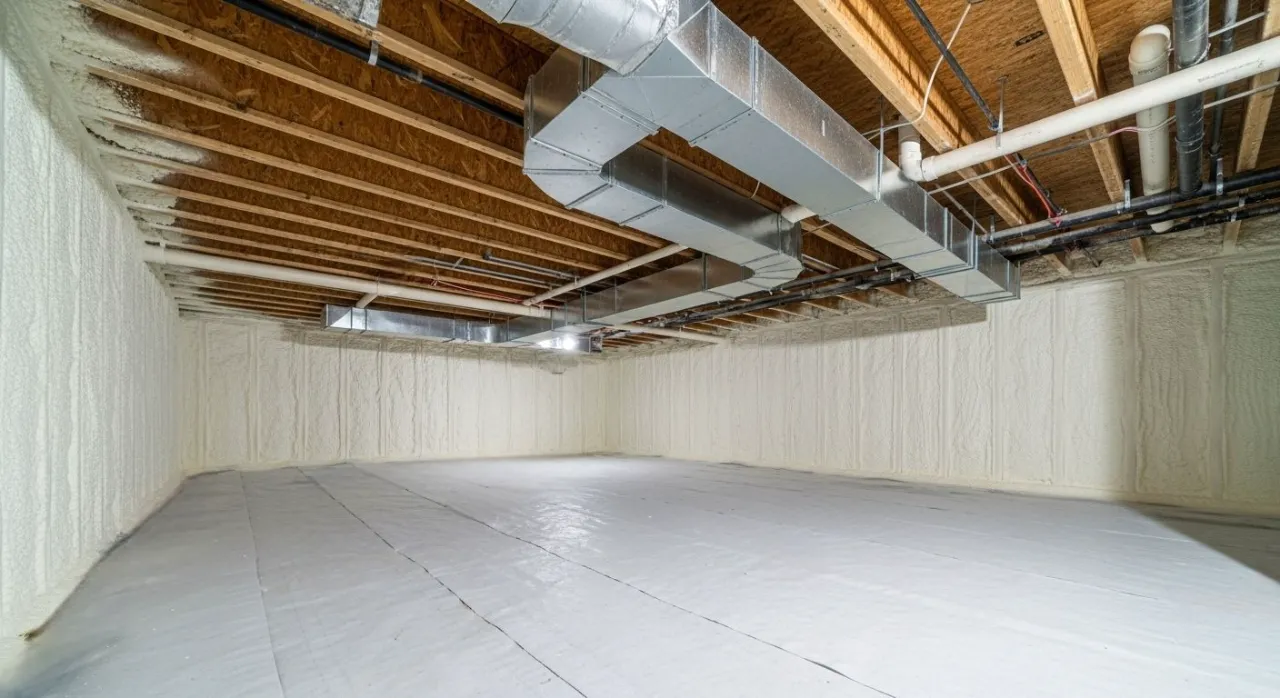
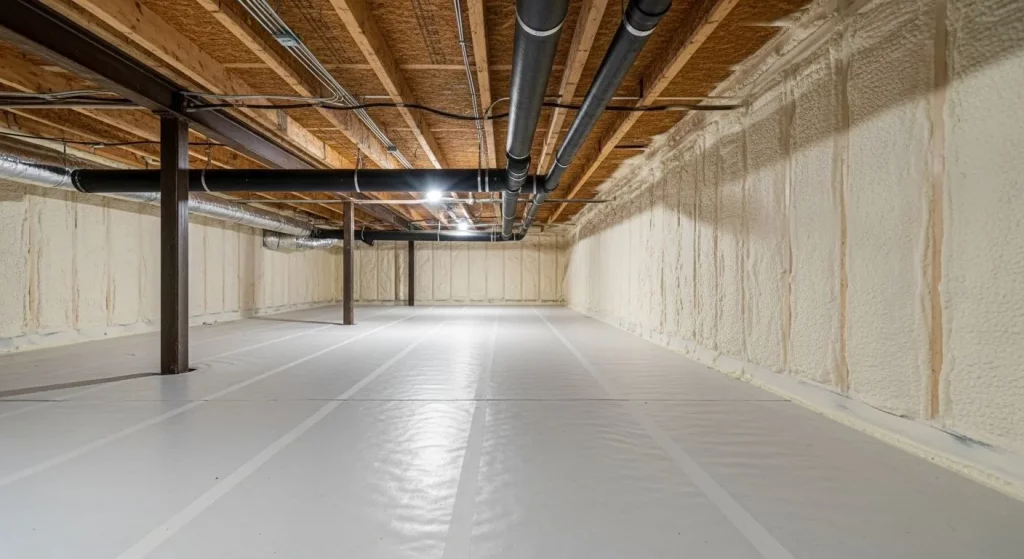
Modern building science favors sealed crawl spaces. Instead of outside air, moisture is controlled with vapor barriers and insulation on the walls.
Research summarized by Building Science Corporation shows that sealed crawl spaces consistently perform better in cold and mixed climates by maintaining stable temperatures and lower humidity.
Cheap Materials = Bad Insulation
Low-cost fiberglass batts may seem like a deal, but in crawl spaces, they often fail fast.
Here’s why we see problems with cheap insulation all the time:
Fiberglass absorbs moisture and sags
Air moves right through it, cutting real-world R-value
Rodents use it for nesting
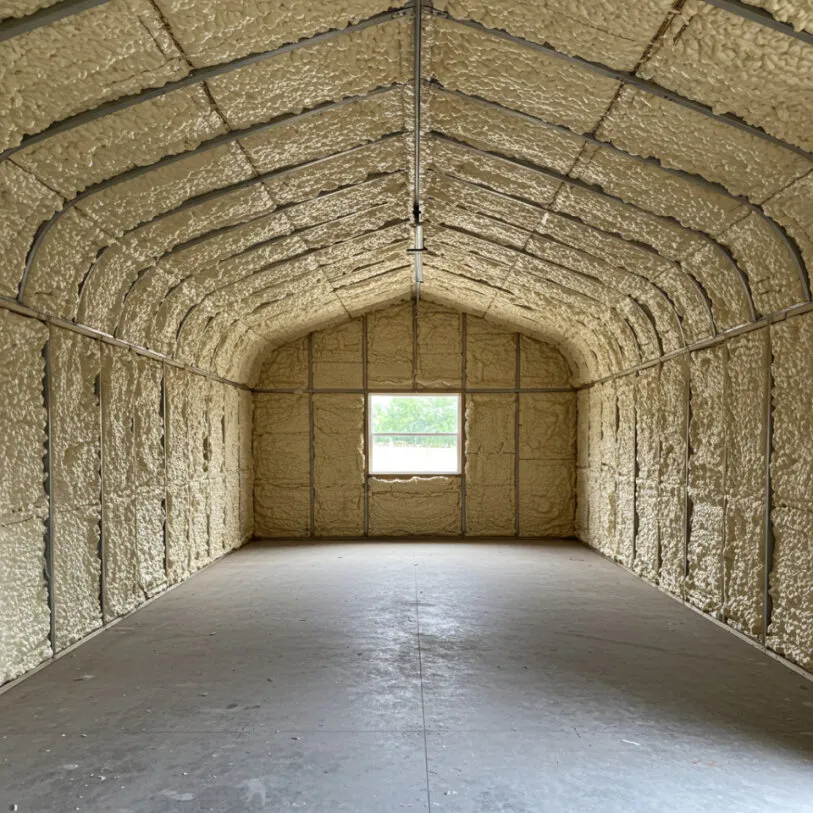
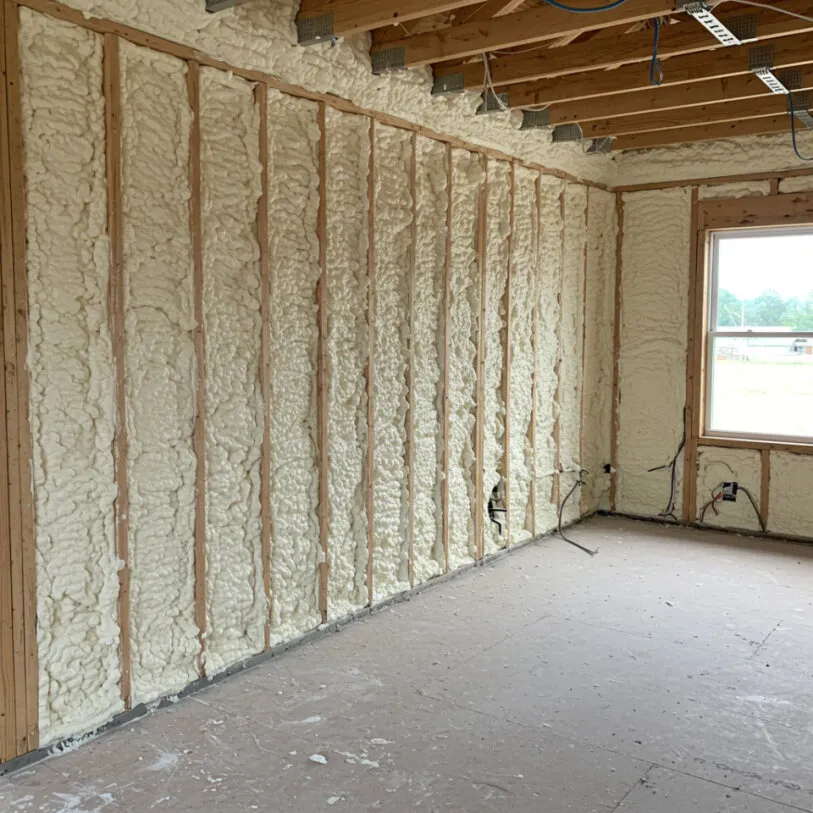
Spray foam doesn’t have these issues. It adheres to surfaces, blocks airflow, and resists moisture. That’s why we recommend it for most crawl space basement projects.
Step-by-Step: How We Insulate a Crawl Space Basement
Step 1: Inspect and Fix Moisture Issues
Insulation should never go in before moisture is handled.
This alone can dramatically lower humidity levels in a crawl space or basement.
Step 3: Air Seal the Rim Joists
Rim joists are one of the biggest air-leak zones in any home.
We typically apply closed-cell spray foam here because it:
Expands into cracks and gaps
Adds structural rigidity
Blocks cold air infiltration
This step often solves cold floor complaints almost immediately.
Step 4: Insulate Crawl Space Walls, Not the Floor
In sealed crawl spaces, insulating the foundation walls works better than insulating between floor joists.
Benefits include:
Warmer floors above
Protected plumbing
A crawl space that stays closer to indoor temperatures
Closed-cell spray foam performs especially well here due to its high R-value per inch and moisture resistance.
Step 5: Control Air and Ventilation
Some sealed crawl spaces use a small supply of conditioned air or a dehumidifier to maintain healthy humidity.
This keeps moisture levels stable without relying on outdoor air.
Best Insulation Options for Crawl Space Basements
Spray Foam Insulation
Our go-to solution for most projects.
Why it works:
High R-value in thin layers
Air sealing and insulation in one step
Long service life with minimal maintenance
Rigid Foam Board
Sometimes used on walls with sealed seams.
Pros include durability and moisture resistance, but it requires careful installation to avoid air gaps.
Fiberglass Batts
We rarely recommend these in crawl spaces.
They’re vulnerable to moisture and air movement, which reduces performance over time.
Common Mistakes We See Homeowners Make
Insulating before fixing moisture problems
Leaving vents open after insulating
Using floor insulation instead of wall insulation
Skipping air sealing at rim joists
Each of these leads to comfort issues or insulation failure down the road.
How Insulating a Crawl Space Basement Saves Money
Insulation upgrades aren’t just about comfort.
Homeowners often see:
Lower heating costs in winter
Fewer drafts and cold spots
Reduced risk of mold-related repairs
Because spray foam doesn’t settle or degrade like other materials, the savings continue year after year.
Final Thoughts
Insulating a crawl space basement isn’t just another home upgrade. It’s a foundational improvement that affects comfort, air quality, and energy use every single day.
When moisture is controlled, air leaks are sealed, and the right insulation is used, the results are immediate and long-lasting.
If you’re ready to do it once and do it right, we’re here to help.
When to Call a Professional
Crawl space work is tight, technical, and easy to get wrong.
For most exterior walls, insulation thickness depends on material. Closed-cell spray foam typically delivers strong performance at 2 to 3 inches due to its higher R-value per inch.
What Is The Best Way To Insulate Exterior Walls?
The best method combines air sealing and insulation. Spray foam excels here because it fills gaps, reduces air leakage, and maintains consistent thermal performance.
What Is The Maximum R-Value For A 2×4 Wall?
A standard 2×4 wall can reach roughly R-13 to R-15 with traditional materials. With spray foam, effective performance can be higher because air leakage is minimized.
What R-Value Is Best For Exterior Walls?
Most energy guidelines recommend R-13 to R-21, depending on climate and wall type. Performance matters more than raw numbers, which is why air sealing plays such a big role.
How Long Does Exterior Wall Insulation Last?
Quality insulation can last decades. Spray foam, when properly installed, often lasts the life of the structure with no settling or loss of performance.
Sources
U.S. Department of Energy – Federal guidance on where and how insulation impacts energy performance.
Open-cell foam insulation creates a breathable yet protective barrier that prevents moisture accumulation while allowing your Tukwila home to maintain proper humidity levels. This unique material works by trapping air…
Open-cell insulation provides significant environmental benefits through reduced material consumption, lower embodied carbon during production, and superior long-term energy efficiency that decreases heating and cooling demands. The material’s unique cellular…
Open-cell spray foam insulation achieves superior air sealing through its unique cellular structure that creates millions of tiny, interconnected air pockets. When applied, the foam expands to fill gaps and…