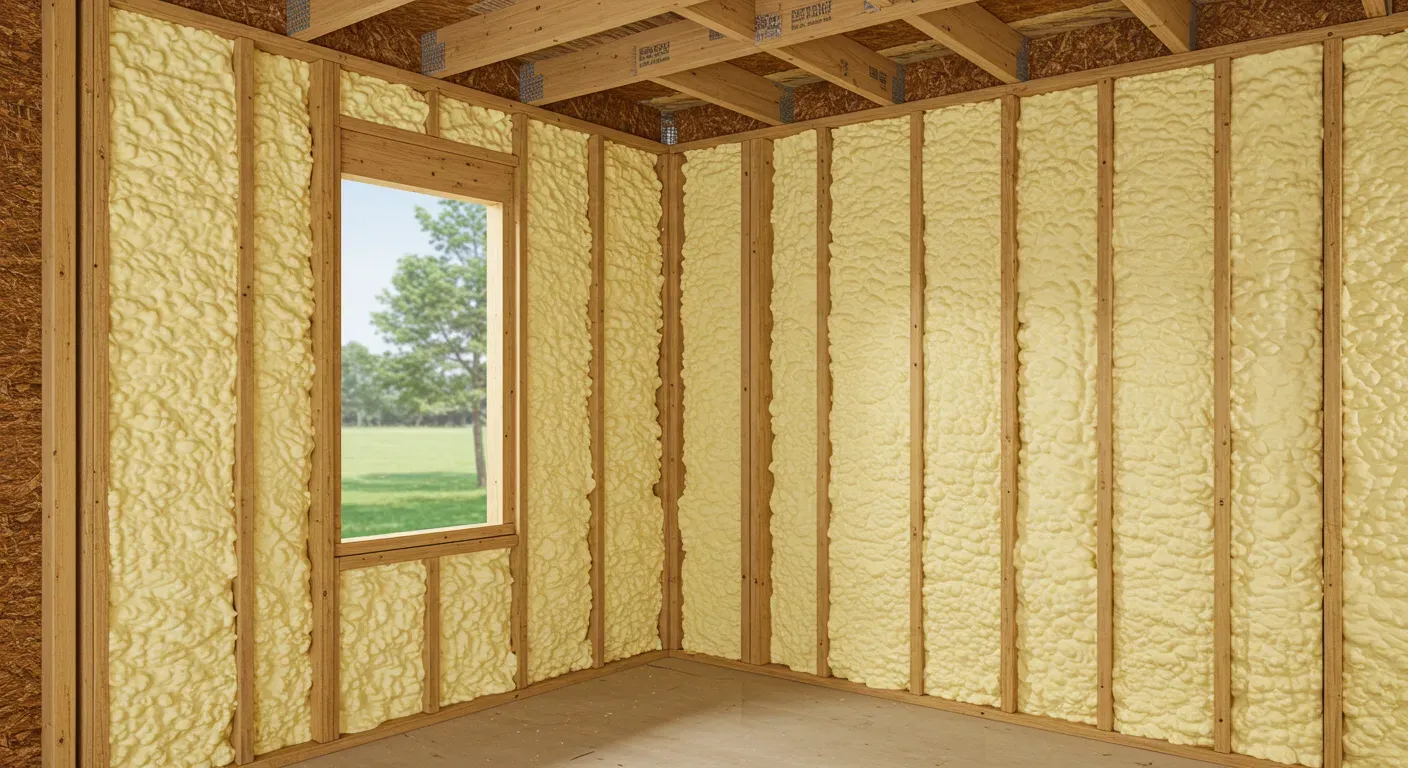
Spray foam insulation dries quickly, but full curing takes longer. In most cases, the surface hardens within minutes, while complete curing happens over several hours. The exact timing depends on foam type, thickness, and jobsite conditions.
Quick answers that matter most:
Spray foam is usually dry to the touch in 5 to 15 minutes
Full curing typically takes 8 to 24 hours
Temperature, humidity, and ventilation affect drying speed
Understanding Spray Foam Drying vs. Curing
Drying and curing are not the same, even though they are often used interchangeably. Understanding the difference helps set realistic expectations and prevents mistakes during the construction process.
Drying refers to the point at which the foam surface is no longer sticky. Curing is the chemical process that enables the foam to achieve its full strength, insulation value, and long-term stability.
What “Dry to the Touch” Actually Means
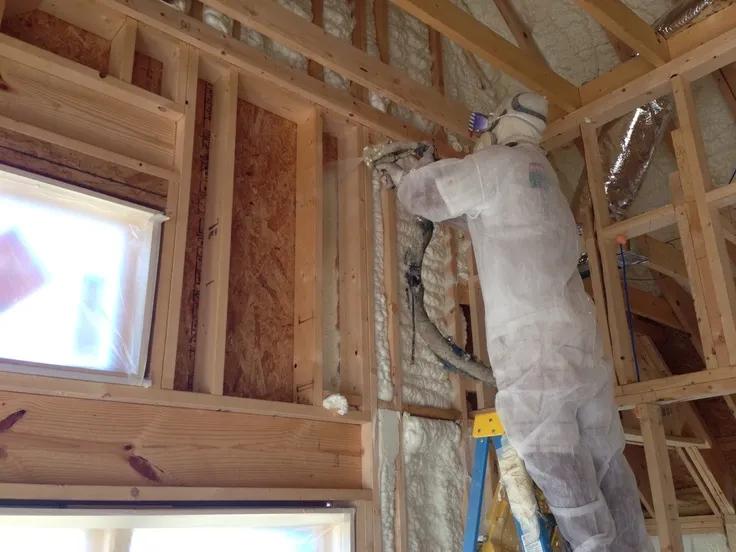
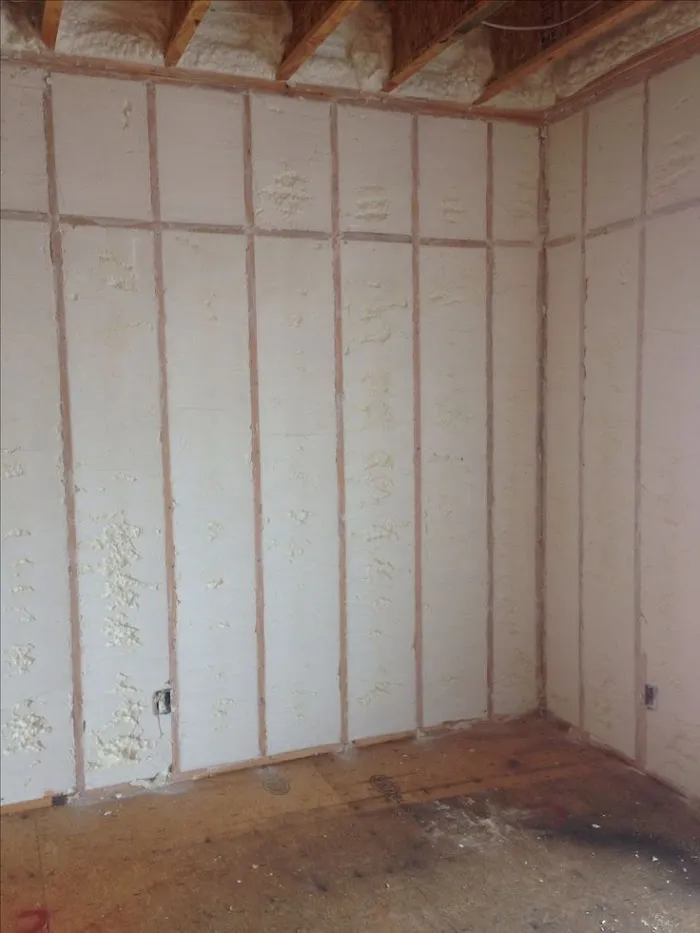
Spray foam expands and firms up very quickly after application. In many cases, it becomes tack-free within minutes. At this stage, the foam has reached its initial set but has not completed its chemical reaction.
Light contact is usually fine once the foam is dry to the touch. Cutting and trimming often start within the first hour, depending on the product and application thickness.
What Full Cure Time Involves
Curing happens as the foam completes its chemical bonding process. During this time, heat and gases are released, and the foam reaches its designed density and R-value.
According to guidance from the Spray Polyurethane Foam Alliance, most spray foam insulation products fully cure within 24 hours under standard conditions. Proper curing is critical for performance, durability, and indoor air quality.
How Long Different Types of Spray Foam Take to Dry
Spray foam insulation drying time varies mainly based on whether the product is open-cell or closed-cell. Each behaves differently once applied.
Open-Cell Spray Foam Dry Time
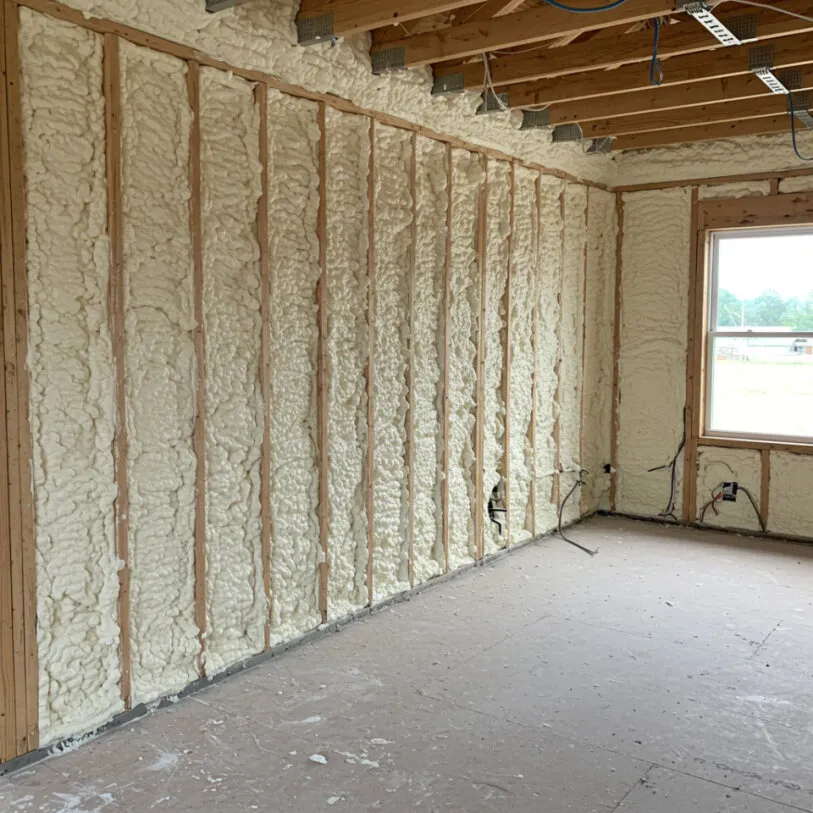
Open-cell spray foam has a lighter density and expands more aggressively. Because its structure allows air to move through it, moisture and gases escape faster.
Typical open-cell drying and curing times include:
Dry to the touch in about 5 to 10 minutes
Ready for trimming within 30 to 60 minutes
Fully cured in 8 to 24 hours
This fast turnaround makes open-cell foam common for interior walls, ceilings, and sound control applications.
Closed-Cell Spray Foam Dry Time
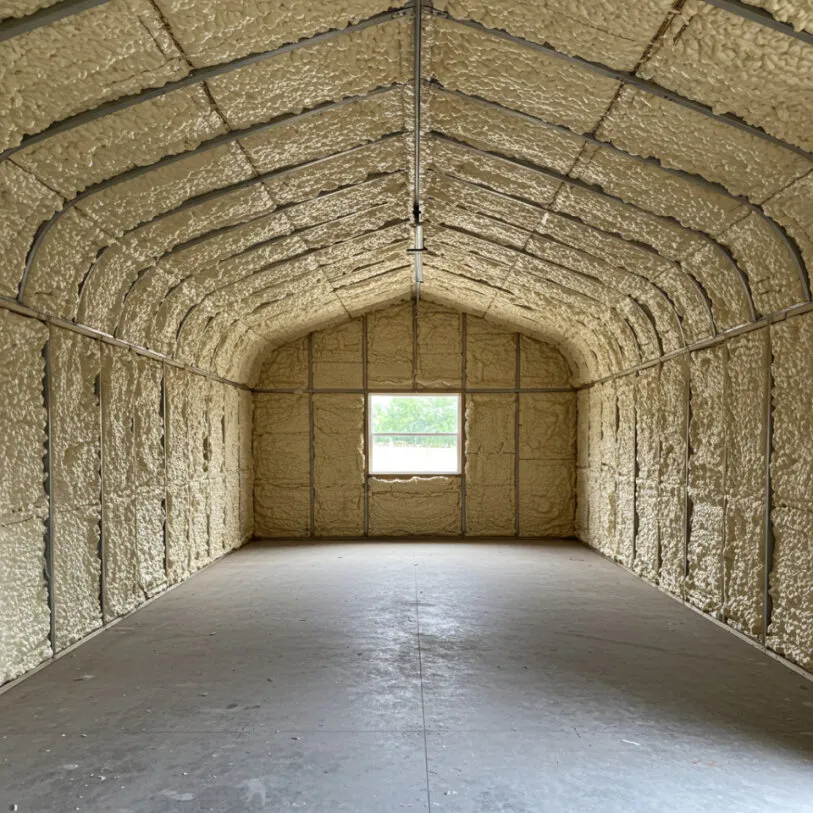
Closed-cell spray foam is denser and more rigid. It provides a higher R-value per inch and adds structural strength, but it cures slightly slower.
Typical closed-cell timelines include:
Dry to the touch in 10 to 15 minutes
Trimmable in 1 to 2 hours
Fully cured in 12 to 24 hours
Manufacturers such as Johns Manville note that closed-cell foam requires stable temperature and controlled application thickness for proper curing, as outlined in their spray foam technical documentation.
Factors That Affect Spray Foam Drying Time
Drying time is not just about the foam itself. Jobsite conditions play a major role in how fast spray foam sets and cures.
Temperature and Humidity
Spray foam performs best within a controlled temperature range. Cold conditions slow chemical reactions, while excessive humidity can interfere with adhesion and curing.
Ideal installation conditions typically include:
Ambient temperatures between 60°F and 80°F
Dry substrates with minimal surface moisture
Stable indoor air during and after application
The U.S. Environmental Protection Agency explains that poor environmental conditions can increase curing time and cause odor or performance issues in its spray polyurethane foam safety overview.
Thickness of Application
Spray foam is designed to be applied in controlled lifts. Thicker layers trap heat and slow internal curing, even if the surface feels dry.
Professional installers apply foam in stages to ensure even curing and long-term performance.
Ventilation and Airflow
Ventilation helps remove heat and gases released during curing. Good airflow shortens odor duration and improves indoor comfort after installation.
Mechanical ventilation is often used in enclosed spaces to support proper curing and re-entry timelines.
Practical Application and Performance Insight
Drying and curing times affect scheduling, safety, and follow-up work. Knowing what to expect helps avoid delays.
When Is It Safe to Re-Enter the Space?
Most manufacturers and industry guidelines recommend staying out of the sprayed area for at least 24 hours. This allows curing to complete and airborne vapors to dissipate.
For people with chemical sensitivities or respiratory conditions, waiting longer may be advisable.
When Can Other Trades Resume Work?
Once the foam has fully cured and been trimmed, drywall, electrical, and finishing work can begin. In most cases, this happens the day after installation.
Spray Foam Dry Time Comparison
Foam Type
Dry to the touch
Ready to Trim
Full Cure
Open-Cell
5–10 minutes
30–60 minutes
8–24 hours
Closed-Cell
10–15 minutes
1–2 hours
12–24 hours
Experience-Based Optimization Insight
Installers who coordinate foam application early in the day often allow follow-up trades to start the next morning without disruption.
Real-World Result or Industry Example
Residential and light commercial projects across the Pacific Northwest commonly schedule drywall installation within 24 hours of spray foam completion to keep timelines tight.
Conclusion and Final Takeaway
Spray foam insulation dries quickly, but curing takes time. While the surface may feel solid within minutes, full performance develops over the next 8 to 24 hours. Foam type, environmental conditions, and ventilation all influence the timeline.
Understanding these factors helps homeowners and builders plan work safely and get the best results from their insulation investment.
Cascadia Spray Foam of Seattle
For insulation projects that require proper curing, clean application, and dependable performance, Cascadia Spray Foam of Seattle supports residential and commercial builds throughout the region.
Open-cell foam insulation creates a breathable yet protective barrier that prevents moisture accumulation while allowing your Tukwila home to maintain proper humidity levels. This unique material works by trapping air…
Open-cell insulation provides significant environmental benefits through reduced material consumption, lower embodied carbon during production, and superior long-term energy efficiency that decreases heating and cooling demands. The material’s unique cellular…
Open-cell spray foam insulation achieves superior air sealing through its unique cellular structure that creates millions of tiny, interconnected air pockets. When applied, the foam expands to fill gaps and…