Closed-Cell Spray Foam: The Secret to Maintaining Consistent Indoor Temperatures
admin_cascadiaspray
January 23rd, 2026
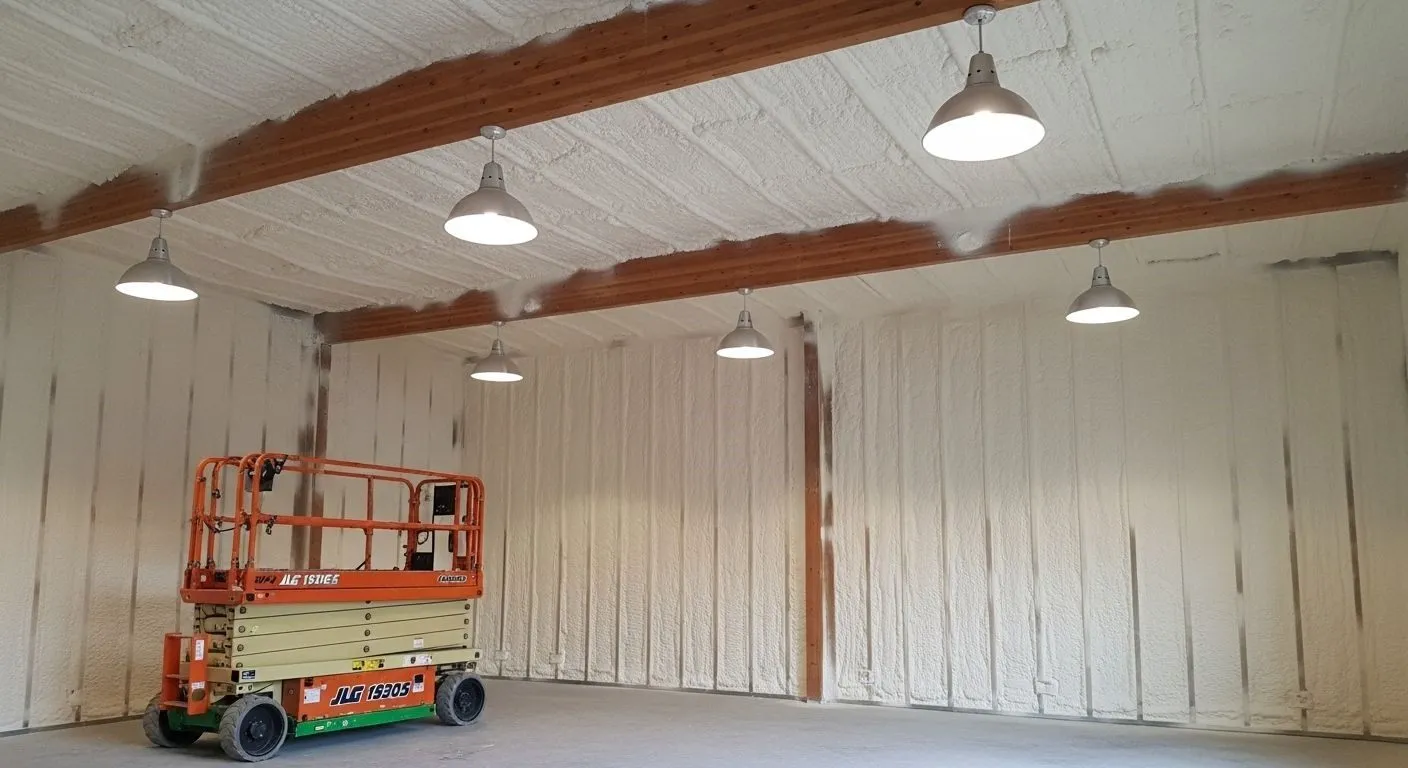
Closed-cell spray foam insulation creates an airtight seal that prevents temperature fluctuations by blocking air infiltration and eliminating thermal bridging. This insulation type maintains stable indoor temperatures year-round, reducing heating and cooling costs while improving comfort. The material’s closed-cell structure traps gas bubbles that resist heat transfer better than traditional insulation materials.
Professional insulation specialists have observed that homes with closed-cell spray foam experience fewer drafts and more consistent room-to-room temperatures. The material expands to fill gaps and cracks, creating a continuous barrier that standard insulation methods cannot achieve. This comprehensive coverage eliminates weak points where air typically leaks, addressing one of the primary causes of inconsistent indoor temperatures.
How Closed-Cell Spray Foam Works
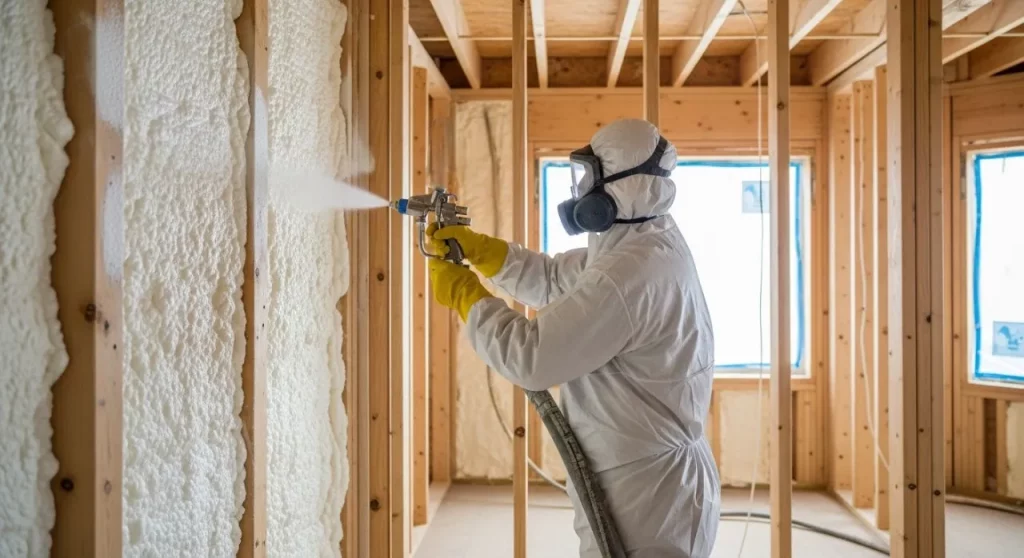
Closed-cell spray foam consists of two liquid components that combine at the application nozzle and expand immediately upon contact with surfaces. The foam creates a dense structure with millions of tiny, closed-off gas cells. These cells give the material its high R-value—typically R-6 to R-7 per inch—and prevent air movement through the insulation.
Unlike traditional insulation materials that rely on thickness for thermal resistance, closed-cell foam delivers superior performance in thinner applications. The material’s density also adds structural strength to walls and roofs, which can be particularly valuable in regions prone to severe weather conditions.
Performance Comparison Table
Insulation Type
R-Value per Inch
Air Barrier
Moisture Barrier
Closed-Cell Foam
R-6.0 to R-7.0
Yes
Yes
Open-Cell Foam
R-3.5 to R-4.0
Yes
No
Fiberglass Batts
R-2.9 to R-3.8
No
No
Cellulose
R-3.2 to R-3.8
No
Limited
The table illustrates why closed-cell spray foam outperforms traditional insulation in thermal efficiency. While the initial cost is higher, the material’s superior performance often results in faster payback through energy savings.
Market Data and Efficiency Statistics
The U.S. Department of Energy reports that proper insulation can reduce heating and cooling costs by up to 20% in existing homes. According to data from the North American Insulation Manufacturers Association (NAIMA), approximately 90% of U.S. homes are under-insulated, meaning most homeowners could benefit from improved insulation solutions.
Research published in the Journal of Building Physics shows that closed-cell spray foam can reduce air infiltration by up to 95% compared to traditional insulation methods. This dramatic reduction in air leakage directly contributes to more consistent indoor temperatures and lower energy bills.
Installation Process and Considerations
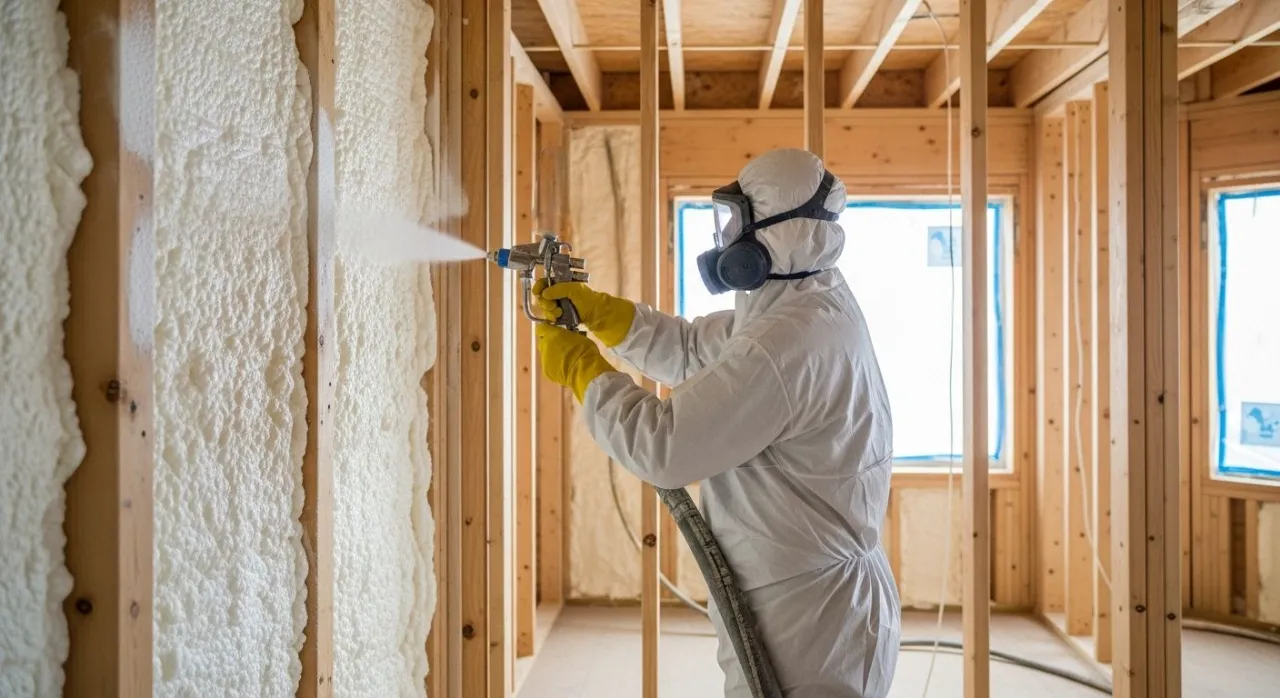
Proper installation requires specialized equipment and trained technicians. The application process involves spraying the foam mixture into wall cavities, attics, crawl spaces, or rim joists. The foam expands 30-60 times its liquid volume, filling even the smallest gaps and crevices.
Installation typically occurs during construction or major renovations when wall cavities are accessible. Retrofits in existing homes may require removing portions of drywall or accessing spaces through attics and crawl spaces. The curing process takes approximately 24 hours, after which the foam achieves its full insulating properties.
Bonus Tip: For optimal temperature control, target rim joists, attic hatches, and areas around windows and doors first, as these locations often experience the greatest air leakage.
Things to Consider Before Making a Decision
Climate plays a significant role in determining insulation needs. Homes in extreme-temperature regions benefit most from closed-cell spray foam’s high R-value and air-barrier properties. Buildings in humid climates also gain advantages from insulation the material’s moisture resistance, which helps prevent mold and mildew growth.
Budget constraints often influence insulation choices. While closed-cell spray foam has higher upfront costs, the long-term energy savings and comfort improvements typically justify the investment. Calculate potential energy savings based on your local utility rates to determine the payback period.
Building codes may specify minimum R-values for different climate zones. Closed-cell spray foam can often meet or exceed these requirements with thinner applications, preserving valuable interior space. Check local regulations before proceeding with any insulation project.
Bonus Tip: Consider combining closed-cell spray foam in key areas with less expensive insulation types in non-critical spaces to optimize both performance and budget.
Regional Considerations for Temperature Consistency
Homes in the Pacific Northwest face unique challenges with temperature consistency due to wet winters and variable humidity levels. Closed-cell spray foam’s moisture barrier properties help prevent condensation issues that can plague traditional insulation in this region.
Coastal properties benefit from the material’s resistance to salt air and moisture infiltration. The dense structure also provides better soundproofing for homes in urban or noisy environments, adding comfort beyond temperature control.
Mountain regions with extreme temperature swings between day and night see significant improvements with closed-cell spray foam. The material’s thermal mass helps moderate these fluctuations, maintaining more consistent indoor temperatures without constant HVAC adjustments.
Bonus Tip: For multi-story homes, pay special attention to floor/ceiling assemblies. Insulating these areas with closed-cell spray foam can prevent temperature variations between floors and reduce noise transfer.
Key Takeaways
Closed-cell spray foam insulation provides the most effective solution for maintaining consistent indoor temperatures by creating a complete air barrier and delivering superior thermal resistance. The material’s ability to fill gaps and eliminate thermal bridging addresses the root causes of temperature inconsistencies rather than just treating symptoms.
Homeowners should evaluate their climate, existing insulation, and budget when considering closed-cell spray foam. The higher initial investment typically pays for itself through energy savings and improved comfort within 5-7 years in most applications. Focus on high-impact areas first if budget constraints prevent a complete installation.
Get Professional Assessment
For personalized guidance on improving your home’s temperature consistency, contact the experts at Cascadia Spray Foam. Send questions to [email protected] or call (425) 386-3500 to schedule a comprehensive energy assessment. The team can evaluate your specific situation and recommend targeted solutions for optimal temperature control and energy efficiency.
FAQ Section
Does closed-cell spray foam work well in older homes?
Yes, closed-cell spray foam can significantly improve temperature consistency in older homes. The material fills gaps and cracks that develop as buildings settle and materials age. Older homes often have more air leakage points, making them ideal candidates for spray foam insulation.
How long does the insulation last?
When properly installed, closed-cell spray foam insulation lasts the lifetime of the building. The material does not settle, compress, or degrade over time like some traditional insulation options. It maintains its R-value and air barrier properties indefinitely.
Is it safe for indoor air quality?
Once fully cured, closed-cell spray foam is inert and does not off-gas harmful chemicals. The installation process requires proper ventilation and safety equipment, but the finished product contributes to better indoor air quality by preventing moisture intrusion and mold growth.
Can it help with heating and cooling costs?
Yes, the material’s superior thermal performance directly reduces heating and cooling costs. The U.S. Environmental Protection Agency estimates that homeowners can save up to 15% on heating and cooling costs by adding proper insulation and sealing air leaks.
Does it require maintenance?
No, closed-cell spray foam requires no maintenance once installed. The material does not absorb moisture, support mold growth, or provide food for pests. It remains effective without any intervention or replacement needs.
When selecting a wall retrofit contractor in Everett, asking the right questions determines project success. The eight essential questions to ask include: What experience do you have with Pacific Northwest…
Open-cell spray foam insulation acts as an early warning system for roof leaks because its water-absorbing properties create visible stains and discoloration at the leak source, unlike closed-cell foam or…
Builders in Federal Way consistently choose closed-cell spray foam for six primary reasons: superior moisture resistance in the Pacific Northwest climate, higher R-value per inch, structural reinforcement capabilities, exceptional air…