Closed-Cell Spray Foam: In-Depth Analysis of Performance, Costs, and Installation
admin_cascadiaspray
December 24th, 2025
High energy bills and drafty rooms are more than just a nuisance. They are often the result of an inefficient building envelope that lets conditioned air escape while allowing outdoor elements to seep in. When you look for a solution that provides permanent relief, closed-cell spray foam stands out as a premier option. This material is not just another type of insulation; it is a high-density barrier that addresses air leakage, moisture intrusion, and structural stability all at once.
This guide provides a thorough look at why closed-cell spray foam is a top choice for residential and commercial projects alike. You will learn about the science behind its performance, the factors that influence the overall investment, and the precise steps required for a successful installation. Whether you are a homeowner planning a renovation or a builder looking for the most effective insulation strategy, the information here serves as a definitive resource.
Over years of field experience, Cascadia Spray Foam has observed that the proper insulation choice can improve a structure’s long-term health. This guide reflects that hands-on knowledge, moving beyond basic marketing claims to examine the material’s technical reality.
Foundational Understanding: What Is Closed-Cell Spray Foam?
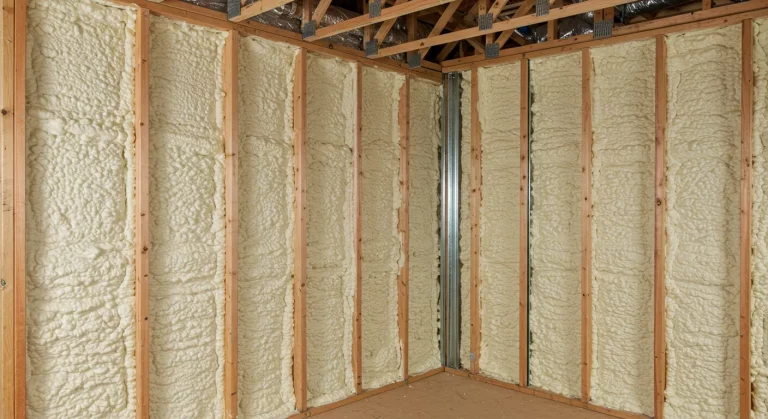
Closed-cell spray foam is a type of spray polyurethane foam (SPF) characterized by its dense, rigid structure. Unlike open-cell foam, where cells are left open and filled with air, the cells in this material are entirely closed and tightly packed. They are filled with a specialized gas that helps the foam expand and provides superior thermal resistance.
This density gives the material its name and unique properties. It typically weighs about two pounds per cubic foot. Because the cells are closed, the foam is impermeable to water and acts as a built-in vapor retarder. This makes it a popular choice for areas prone to high humidity or moisture, such as flood zones or below-grade applications.
The material is created on-site by mixing two liquid parts: an “A” side (usually isocyanate) and a “B” side (a blend of polyols, catalysts, and blowing agents). When these liquids meet at the tip of a spray gun, a chemical reaction occurs, causing the liquid to expand into foam and harden within seconds.
The Difference in Cell Structure
The primary distinction lies in the microscopic makeup of the foam. In open-cell foam, the cell walls are broken, creating a softer, more flexible material that resembles a sponge. In closed-cell foam, every cell is a tiny, intact bubble. This creates a hard, plastic-like surface once cured. This rigid nature allows the foam to add structural strength to the walls or roof decks where it is applied.
Key Takeaway: Closed-cell spray foam is a high-density insulation that doubles as an air and vapor barrier. Its rigid structure and gas-filled cells provide the highest R-value per inch of any standard insulation material.
Performance Analysis: Why It Leads the Industry
When evaluating insulation, performance is usually measured by R-value, which is the material’s resistance to heat flow. Closed-cell foam has an R-value of 6.0 to 7.0 per inch. For comparison, traditional fiberglass batts usually offer an R-value that is significantly lower per inch of thickness.
Thermal Resistance and R-Value
The high R-value means you can achieve the required building code insulation levels in much thinner wall cavities. This is particularly useful in older homes with 2×4 wall studs or in commercial buildings with limited space. According to data from the Spray Polyurethane Foam Alliance (SPFA), closed-cell foam is the only insulation that provides such high thermal resistance while also serving as a Class II vapor retarder at a thickness of just 1.5 inches.
Structural Integrity and Strength
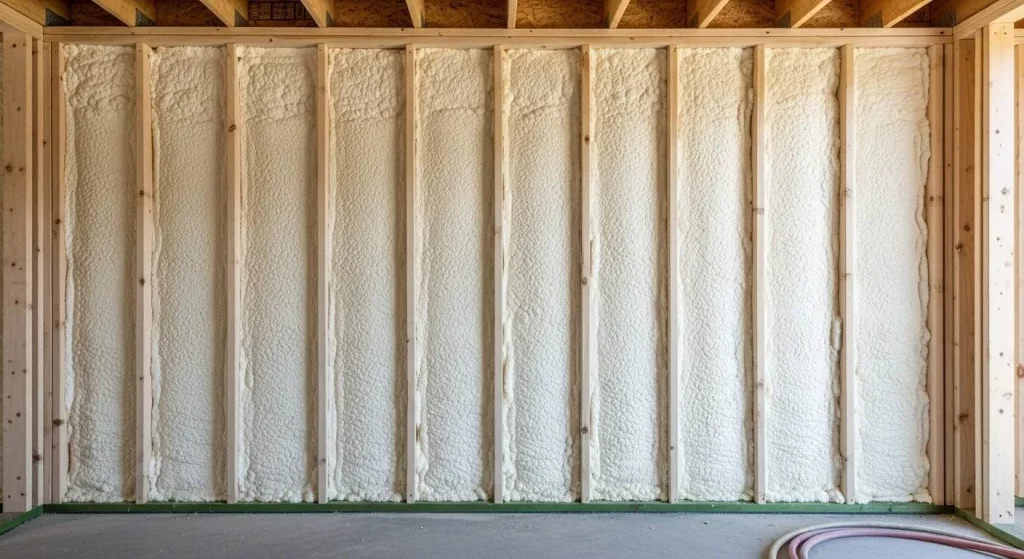
One of the most overlooked benefits of closed-cell foam is its ability to strengthen a building. Because it hardens into a dense solid, it bonds the studs to the exterior sheathing. This creates a unified structure that is much more resistant to outside forces. Walls filled with this material can have significantly higher racking strength compared to those with traditional insulation. This makes the building more resistant to high winds and seismic activity.
Air and Vapor Barrier Properties
Most heat loss in a building happens through air leakage rather than simple conduction through the walls. Small gaps around windows, doors, and electrical outlets add up to a giant open window when combined across an entire house. Closed-cell foam expands to fill every crack and crevice, creating an airtight seal.
Additionally, because it prevents water from passing through, it prevents condensation from forming inside the walls. This is a common problem in cold climates where warm indoor air hits a cold exterior wall. By stopping this moisture, the foam helps prevent mold growth and rot.
Expert Tip: In areas with high flood risks, closed-cell foam is often recommended because it does not absorb water. If a building floods, the foam stays intact and does not need to be replaced, unlike fiberglass or cellulose.
Cost Analysis: Investing in Efficiency
It is no secret that closed-cell spray foam requires a higher initial investment than fiberglass or cellulose. However, looking at the total project scope is only part of the story. To understand the actual value, you must consider the labor, the reduction in other material needs (like separate vapor barriers), and the long-term energy savings.
Variables That Influence the Total Investment
Several factors contribute to the overall resources required for a spray foam project. Because this is a high-performance material, the focus is on the total value provided over the life of the structure.
Factor
Impact on Project Scope
Notes
Application Thickness
Primary driver of material use
Determined by local building codes
Accessibility
Increases labor time
Tight crawl spaces or high ceilings
Preparation Work
Requires extensive masking
Protecting windows, floors, and fixtures
Existing Material Removal
Adds a preliminary phase
Necessary for renovation projects
Return on Investment (ROI)
While the initial commitment is larger, the monthly savings on utility bills often justify the difference quickly. Information from Energy Star suggests that homeowners can save an average of 15% on heating and cooling costs by properly air-sealing and insulating their homes. In many cases, using closed-cell foam allows for a smaller, more efficient HVAC system because the heating and cooling loads are significantly reduced.
Long-Term Value and Durability
Standard insulation materials can settle, sag, or lose their effectiveness over time if they get damp. Closed-cell foam is a permanent solution. It does not settle or degrade. Once installed, it lasts the life of the building, enhancing the property’s resale value and reducing the need for future maintenance.
Key Takeaway: While the upfront investment is higher, the combination of energy savings, reduced HVAC equipment needs, and added structural strength makes closed-cell foam a financially sound choice for many property owners.
The Professional Installation Process
Installing spray foam is not a DIY project. It requires specialized equipment that heats the chemicals to specific temperatures and delivers them at high pressure. The process is a precise science that relies on the technician’s skill.
Site Preparation
Before any foam is sprayed, the area must be prepared. This involves covering any surfaces that should not be coated, such as windows, finished floors, and mechanical equipment. Overspray is difficult to remove once it hardens, so masking is a critical step. Cascadia Spray Foam emphasizes that a clean workspace is essential for the foam to bond correctly to the substrate.
Substrate Conditions
The surface being sprayed must be dry and within a specific temperature range. If the wood or metal is too cold or too wet, the foam will not adhere properly, leading to gaps or delamination later on. According to standards from the International Code Council (ICC), wood moisture content should be verified before application to ensure a successful bond.
The Spraying Technique
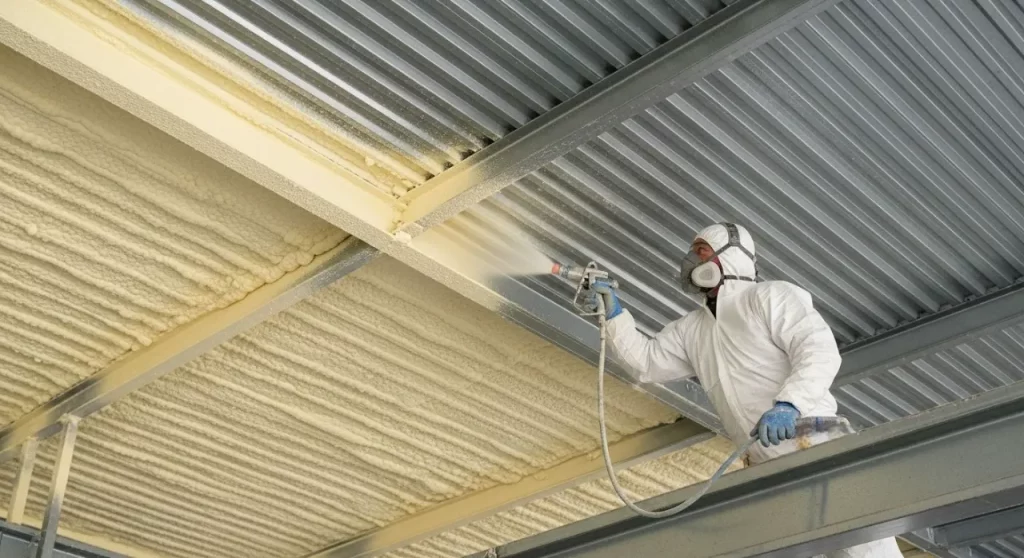
The installer sprays the foam in “lifts” or layers. For closed-cell foam, each layer is typically no more than two inches thick. This is because the chemical reaction generates heat. If the foam is sprayed too densely in a single pass, it can char or even start a fire from the internal heat buildup.
Expert Tip: Watch the “cream time.” These are the few seconds after the liquid hits the wall before it starts to expand. A skilled installer knows how to time their movements to ensure a flat, even surface that requires minimal trimming.
Curing and Ventilation
During application and for a period afterward (usually 24 hours), the foam undergoes a curing process. This is when the chemicals finish reacting, and the foam reaches its final rigid state. Proper ventilation is required during this time to move air through the space and exhaust any fumes.
Applications: Where Closed-Cell Foam Excels
Not every part of a building requires the same insulation strategy. However, there are specific scenarios where closed-cell foam is the clear winner.
Crawl Spaces and Basements
These areas are notoriously damp. Traditional fiberglass batts in a crawl space often sag and absorb moisture, leading to wood rot. Closed-cell foam is the ideal solution here because it creates a seamless barrier against ground moisture and keeps the floor above warm.
Metal Buildings and Pole Barns
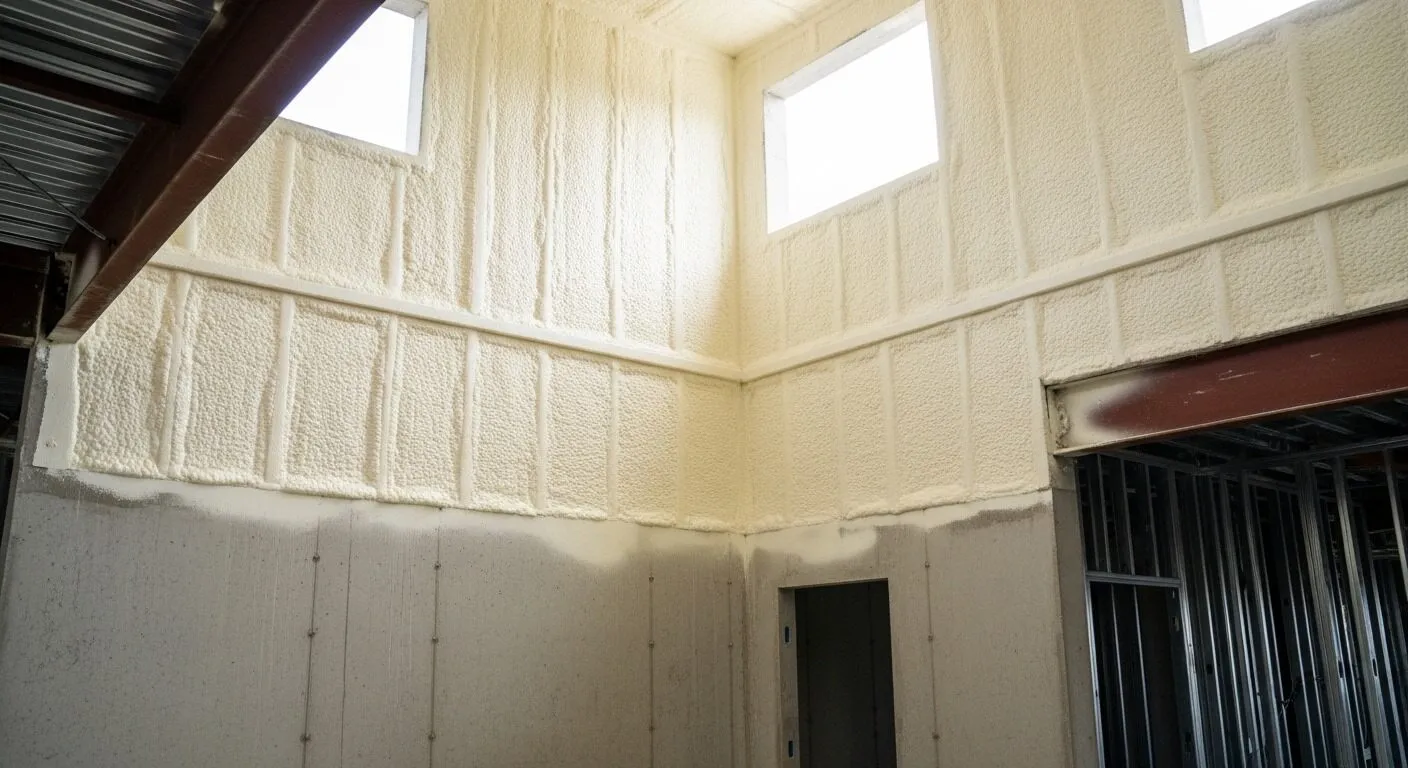
Metal is a good conductor of heat, which makes it very difficult to regulate in buildings. They also suffer from “sweating” when warm air hits the cold metal. Closed-cell foam bonds directly to the metal, eliminating the air gap where condensation forms. It also dampens sound, making the building much quieter during rain or wind.
Unvented Attics
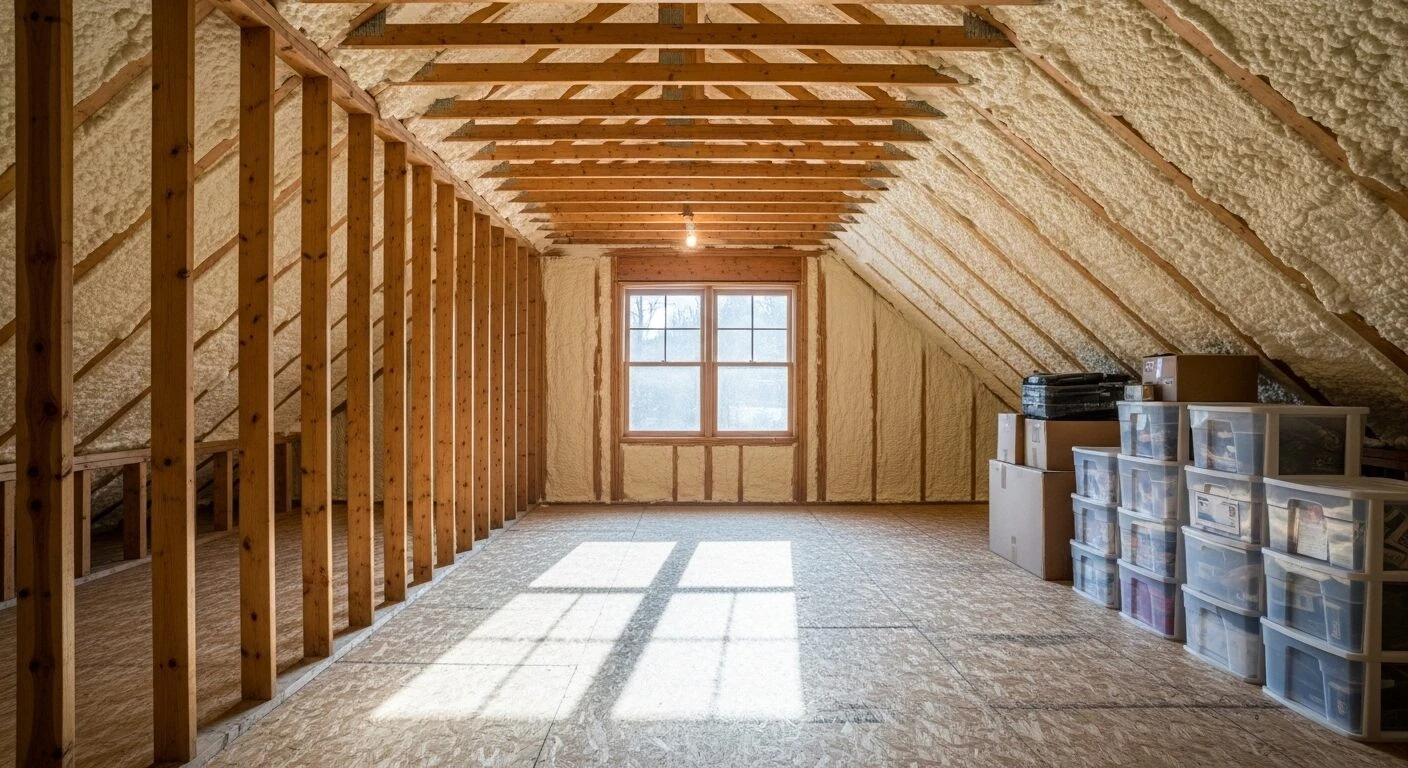
By spraying foam directly to the underside of the roof deck, you can create a “conditioned” attic. This brings your HVAC ductwork into a climate-controlled space, which improves the efficiency of your heating and cooling system. It also prevents ice dams in cold climates by keeping the roof surface at a consistent temperature.
Comparing Closed-Cell to Other Materials
To make an informed decision, you need to see how this material stacks up against the alternatives.
Feature
Closed-Cell Spray Foam
Open-Cell Spray Foam
Fiberglass Batts
R-Value per Inch
6.0 – 7.0
3.5 – 3.8
2.2 – 3.4
Air Sealing
Excellent
Good
None
Vapor Barrier
Yes (at 1.5″)
No
No
Strength
Adds structural rigidity
Flexible
None
Water Resistance
High (Hydrophobic)
Low (Absorbent)
Moderate (Absorbent)
Longevity
Lifetime of a building
Lifetime of a building
May settle or sag
While fiberglass is widely available, it does nothing to stop air movement. Open-cell foam is excellent for soundproofing and is more flexible than closed-cell foam, but it cannot be used in damp environments and lacks the structural benefits.
Overcoming Common Challenges
Despite its benefits, there are challenges associated with spray foam that need to be managed properly.
Odor and Off-Gassing
A common concern is the smell after installation. If the foam is mixed at the wrong ratio or sprayed too thick, it can result in a persistent odor. This is why hiring an experienced contractor is vital. When installed correctly and ventilated for the recommended 24-hour period, the foam becomes inert and odorless.
Temperature Sensitivity
Spray foam chemicals are sensitive to the ambient temperature. In winter, the drums of liquid must be kept warm, and the substrate may need to be preheated. In the summer, the heat generated by the foam itself must be monitored to prevent overheating.
Complexity of Future Changes
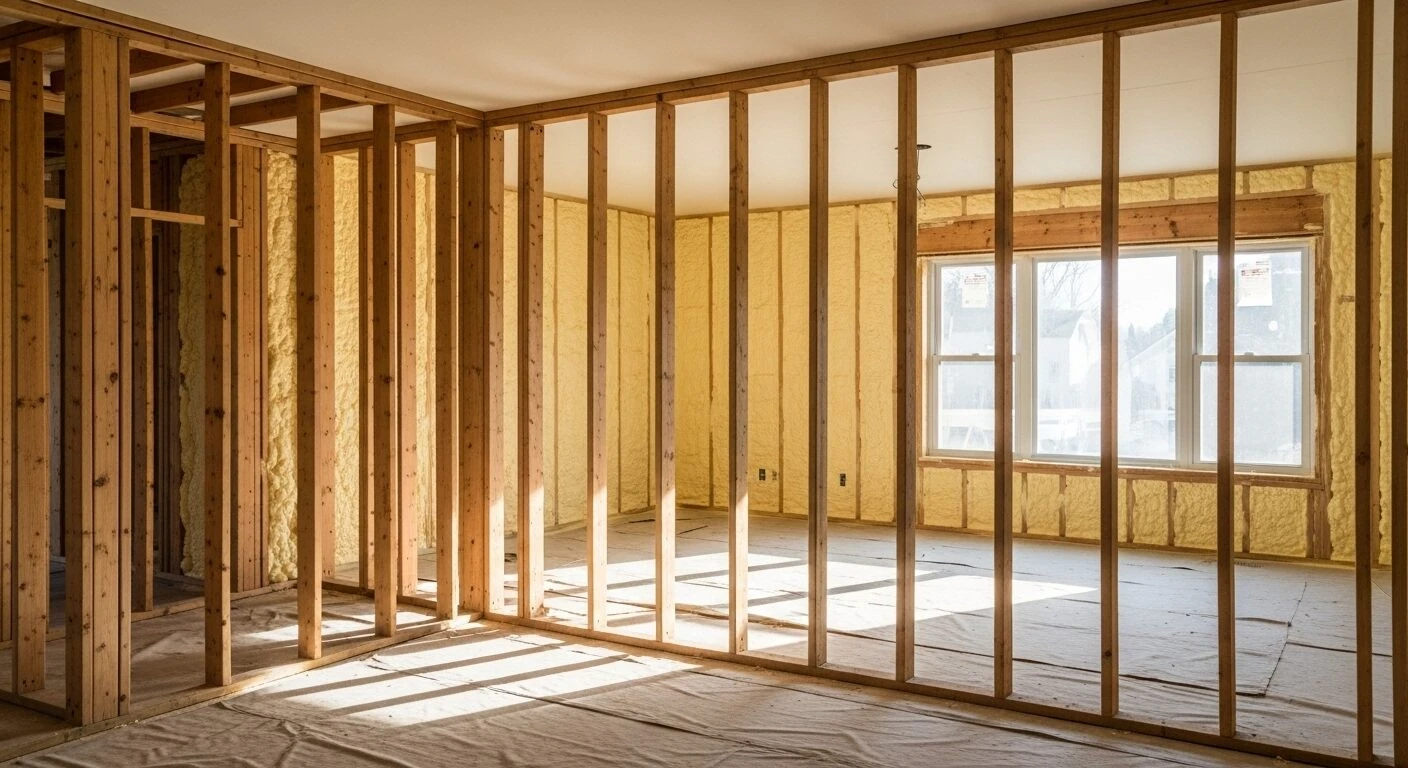
Once closed-cell foam is in a wall, it is there for good. If you decide to move an electrical outlet or add a new window later, it is more difficult than pulling out a piece of fiberglass. Planning your electrical and plumbing layouts before spraying is essential.
Expert Tip: If you are building a new home, take photos of all the wall cavities after the plumbing and electrical are in, but before the foam is sprayed. This gives you a map for any future renovations.
Environmental Impact and Sustainability
The insulation industry has moved toward more eco-friendly practices. In the past, the blowing agents used in closed-cell foam had a high impact on the atmosphere. Today, many manufacturers have shifted to modern blowing agents with very low global warming potential.
Beyond the chemistry, the most significant environmental benefit of closed-cell foam is the massive reduction in energy consumption. By using less energy to heat and cool a building, you reduce its carbon footprint for decades. Cascadia Spray Foam prioritizes these modern formulations to provide high performance without compromising environmental standards.
Improving building insulation is one of the most effective ways to reduce emissions associated with electricity generation. By sealing the building envelope, you ensure that the energy produced is used efficiently rather than wasted.
Frequently Asked Questions About Closed-Cell Spray Foam
How long does closed-cell spray foam last?
It is designed to last for the lifetime of the building. It does not settle, shrink, or lose its R-value over time. Unlike other materials, it is resistant to pests and does not provide a food source for mold or bacteria.
Is closed-cell spray foam fireproof?
While it is not fireproof, it contains flame retardants. It is tested to meet strict building codes for flame spread and smoke development. In most residential applications, it must be covered by a thermal barrier, such as half-inch drywall.
Can I stay in my house during the installation?
It is generally recommended that people and pets leave the house during the spraying process and for 24 hours afterward. This allows the foam to cure completely and any odors to be exhausted from the building.
Does it stop all sound?
Closed-cell foam is effective at blocking outside noise because it seals air gaps where sound can travel. However, because it is so rigid, it can sometimes allow vibration to pass through. If your primary goal is soundproofing between interior rooms, open-cell foam is often a better choice.
Can it be applied to a wet surface?
No. The surface must be dry. Applying foam to a wet surface will cause it to pull away from the wall as it cures, creating a gap that ruins the air seal and thermal performance.
Putting Your Closed-Cell Spray Foam Strategy into Action
Choosing the proper insulation is a decision that affects your property’s comfort and costs for years. Closed-cell spray foam offers a combination of thermal resistance, air sealing, and structural strength that other materials simply cannot match. While the initial investment is a factor, the long-term energy savings and durability often make it the most cost-effective solution.
As you move forward, use this guide to evaluate your project needs. Look at the specific areas of your building that struggle with temperature swings or moisture. Consider the structural benefits if you live in a high-wind area. Most importantly, ensure you work with a qualified team that understands the material’s technical requirements. A well-installed building envelope is the foundation of a healthy, efficient home or business.
Need Expert Guidance?
If you are ready to improve your building’s efficiency or have more questions about whether closed-cell foam is right for your specific project, Cascadia Spray Foam is here to help. Our team provides professional consultations to ensure you get the best performance out of your investment. You can reach out to us at [email protected]or call (425) 386-3500 to discuss your upcoming project or schedule an assessment.
Spray foam insulation consistently delivers the highest return on investment among residential insulation options, primarily because it combines superior thermal performance with an airtight seal that no other material can…
Seattle homeowners face a specific set of insulation challenges: cool, damp winters, moderate summers, older housing stock, and increasingly strict energy codes. The right insulation choice in 2026 depends on…
Closed-cell spray foam insulation delivers the highest R-value per inch of any common insulation material, creates a continuous air and vapor barrier in a single application, and actively resists moisture…