Understanding R-Value, How Closed-Cell Foam Provides Maximum Insulation?
admin_cascadiaspray
December 24th, 2025
The R-value is the universal rating system for thermal resistance in building materials, indicating how effectively a material resists heat transfer. Closed-cell spray foam provides maximum insulation because it achieves an R-value of 6.5 to 7.0 per inch, nearly double that of traditional materials. This efficiency stems from its high density and a structure of microscopic, individual cells filled with insulating gas rather than air. This design creates a dense barrier that prevents heat transfer by conduction while also providing a complete air and moisture seal.
Understanding these technical details helps property owners make informed choices about energy efficiency. While many products claim to provide warmth or cooling, the physical properties of closed-cell polyurethane foam make it a superior choice for tight spaces or extreme climates. Cascadia Spray Foam uses these principles to help residents achieve long-term energy savings and structural integrity through precise application. By looking closely at how R-values are calculated and how foam physics work, the reasons for this performance become clear.
Thermal Resistance and the Definition of R-Value
To understand insulation, one must first understand heat flow. Heat naturally moves from warmer areas to cooler areas. In the winter, heat escapes to the outside. In the summer, heat pushes its way into a cooled interior. R-value measures the ability of a material to resist this specific movement. A higher R-value indicates a stronger resistance to heat flow. According to the U.S. Department of Energy, the effectiveness of an insulation material depends on where and how it is installed.
R-value is not a static number that remains the same regardless of conditions. It is calculated based on the material’s thickness and chemical properties. For example, three inches of fiberglass might have an R-value of 11, while three inches of closed-cell foam could exceed 20. This difference allows for much thinner walls without sacrificing the comfort of the interior environment.
Bonus Tip: When comparing materials, always ask for the “aged R-value.” Some materials lose a small amount of their resistance over the first few months after installation. Professional data usually reflects this aged value to provide a realistic expectation of performance.
Structural Characteristics of Closed Cell Polyurethane Foam
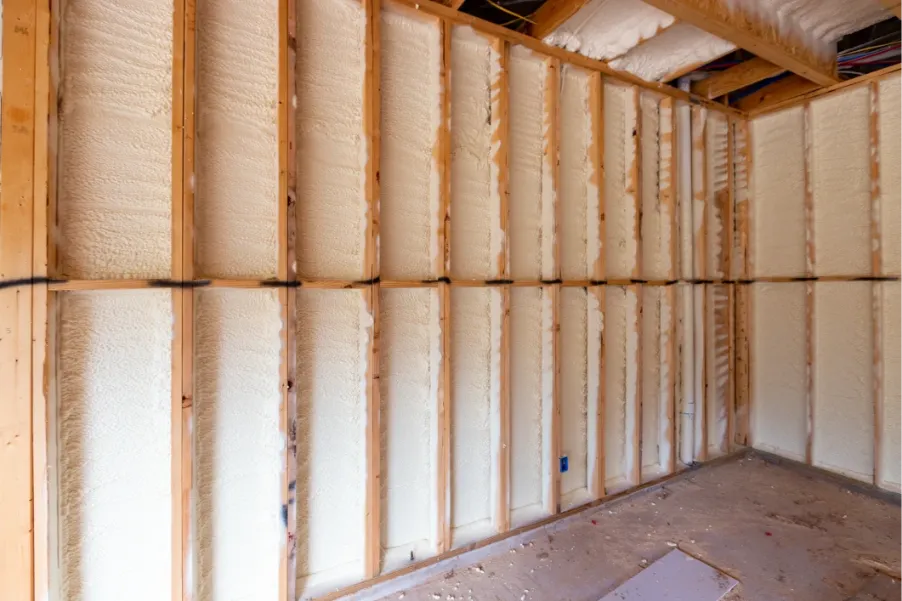
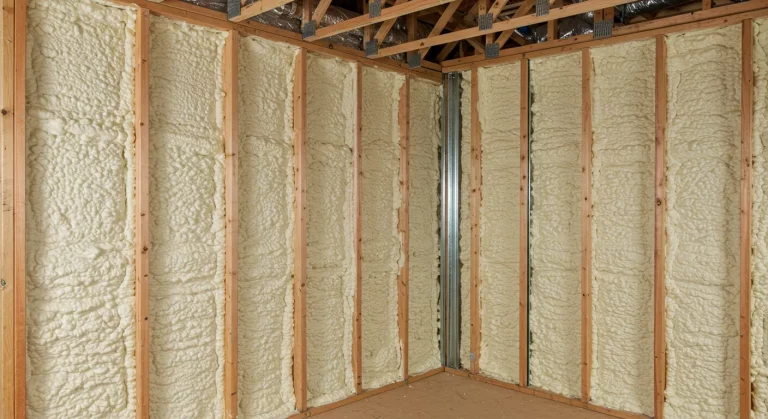
The secret to closed-cell foam‘s performance lies in its cellular architecture. During the reaction between a polyol resin and an isocyanate, millions of tiny bubbles form. In closed-cell foam, these bubbles remain intact and separate. They do not pop or connect with one another. This creates a rigid, plastic-like structure in which each cell acts as a tiny, pressurized gas pocket.
This gas, often referred to as a blowing agent, has a lower thermal conductivity than still air. Because the cells are sealed, the gas stays trapped, providing a permanent boost to the material’s resistance. Data from the Spray Polyurethane Foam Alliance shows that this density typically ranges from about 1.8 to 2.0 pounds per cubic foot. This high density makes the foam very hard to the touch and adds significant structural strength to the building assembly.
Comparing Insulation Material Performance
Choosing the right material requires a side-by-side look at how common products stack up against closed-cell technology. While traditional batts are standard, they often allow air to pass through, reducing their effective R-value in real-world conditions.
Material Type
Average R-Value Per Inch
Air Barrier Capability
Water Resistance
Fiberglass Batts
3.1 – 3.4
No
Low
Blown Cellulose
3.2 – 3.8
No
Moderate
Open-Cell Foam
3.6 – 3.9
Yes
Low
Closed-Cell Foam
6.5 – 7.0
Yes
High
This data shows that closed-cell foam provides a massive advantage in space-constrained areas. If a wall cavity is only 3.5 inches deep, closed-cell foam yields an R-value of roughly R-24. Using fiberglass in that same space would only result in R-11 or R-13. Research from the North American Insulation Manufacturers Association confirms that proper installation is the most essential factor in reaching these rated values.
Beyond Thermal Resistance Air and Moisture Control
The high R-value of closed-cell foam is only half of the story. Standard insulation materials like fiberglass act like a filter: they might slow down heat conducted through solids, but they do nothing to stop air from blowing through the walls. Air leakage can account for up to 40% of a building’s energy loss. Because closed-cell foam expands to fill every crack and crevice, it creates a total air seal.
In addition to blocking air, the closed-cell structure is impermeable to water. This makes it an ideal choice for flood-prone areas or for below-grade applications such as basements. It does not soak up water like a sponge. Instead, it rejects bulk moisture and prevents water vapor from moving through the wall. This dual-action protection prevents mold and mildew growth within the wall assembly.
Bonus Tip: If you are insulating a crawl space or basement, closed-cell foam is often the only viable option that meets building codes for vapor retardation without needing an extra plastic sheet.
Factors to Consider Before Selecting Insulation
Before deciding on a high-density foam application, several factors must be evaluated. Not every project requires the maximum R-value, and the building’s specific needs should guide the choice.
Project Budget: Closed-cell foam usually carries a higher upfront cost than open-cell foam or traditional batts. The long-term energy savings often offset this cost, but the initial investment is a factor for many.
Structural Integrity: If the building is older or has weak framing, the added rigidity of closed-cell foam can be a benefit. It can increase a wall’s racking strength by up to 300%.
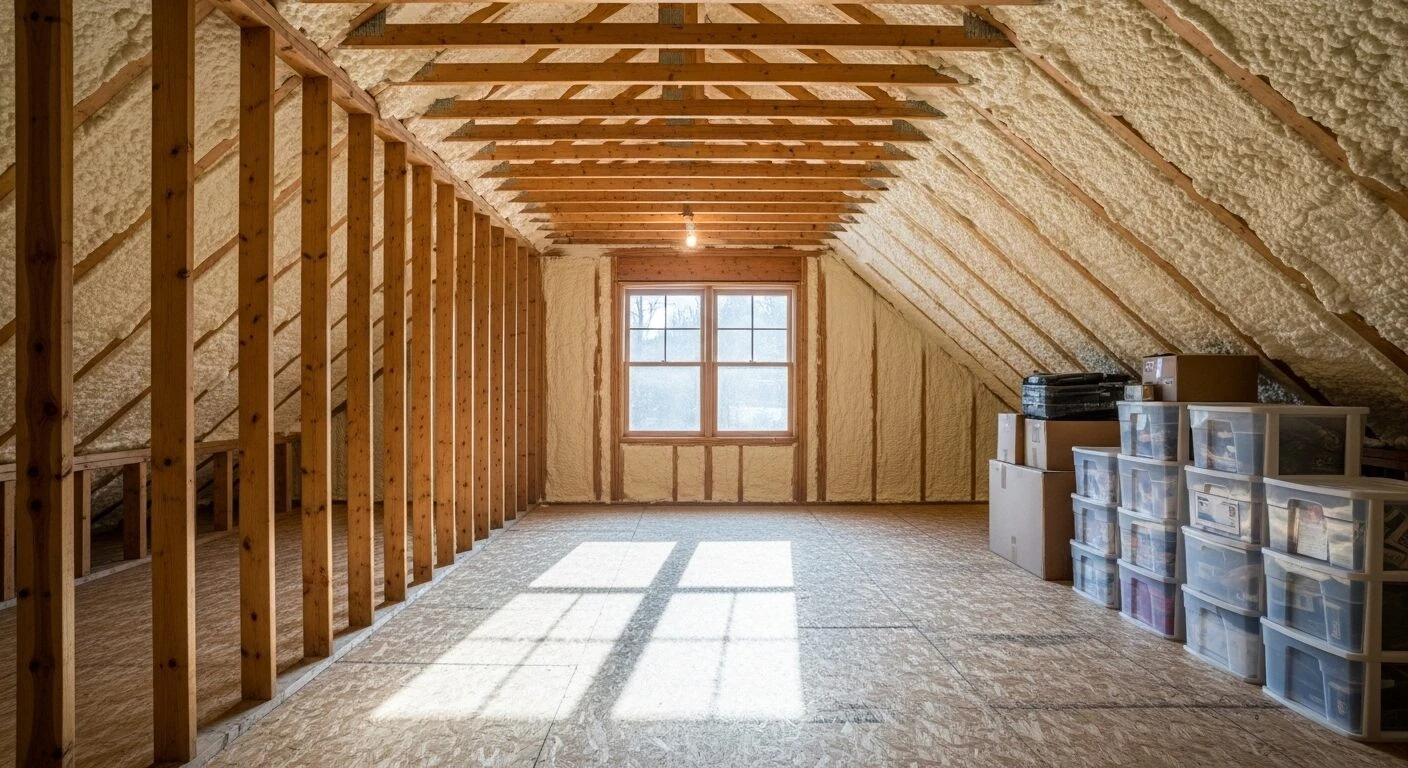
Space Availability: In narrow attic rafters or thin walls, the high R-value per inch is necessary to meet modern building codes.
Environmental Exposure: For exterior applications or areas where the insulation will be exposed to high humidity, the moisture resistance of closed-cell foam is a requirement, not a luxury.
Practical Answers for Homeowners
Does closed-cell foam provide better soundproofing than open-cell?
No, open-cell foam is actually better for sound dampening because its softer, flexible structure absorbs sound waves. Closed-cell foam is very dense and rigid, which can actually allow some sound vibrations to pass through the wall more easily than the softer alternative.
Can I install closed-cell foam myself using a kit?
While small kits exist for minor repairs, large-scale applications require professional equipment. The chemicals must be heated to specific temperatures and pressurized to ensure the correct 1:1 ratio. Incorrect mixing can lead to foam that does not cure properly or fails to reach its intended R-value.
Is closed-cell foam environmentally friendly?
Modern blowing agents used in high-quality foams have zero ozone depletion potential. Additionally, the massive reduction in energy consumption over the building’s life significantly lowers the property’s overall carbon footprint.
Will the foam damage my electrical wiring?
No, the foam is compatible with standard electrical wiring. However, the heat generated during the expansion process means it should be applied in layers to avoid overheating any sensitive components. Professional installers manage these “passes” to ensure safety.
Summary of Insulation Efficiency
Maximizing insulation involves more than just picking a high number. It requires a material that addresses conduction, convection, and moisture infiltration simultaneously. Closed-cell foam stands out because it offers the highest R-value per inch while providing a structural air and vapor barrier. This combination ensures that the interior environment remains stable regardless of outside temperatures. For those looking to optimize their building for the next several decades, evaluating the thermal resistance and density of the materials used is the most effective starting point. Focus on the long-term performance and the specific requirements of the local climate to ensure the best results.
Get Professional Assistance
Achieving a high-performance building envelope requires precision and technical knowledge. Selecting the proper density and thickness for a specific climate zone can be complicated. For expert guidance on insulation projects, contact Cascadia Spray Foam at (425) 386-3500 or reach out via email at [email protected]. Ensuring that materials are applied correctly is the only way to guarantee that the R-values listed on the package match the performance in your walls.
Sources
U.S. Department of Energy – Provides official definitions for R-value and residential insulation standards.
Spray foam insulation consistently delivers the highest return on investment among residential insulation options, primarily because it combines superior thermal performance with an airtight seal that no other material can…
Seattle homeowners face a specific set of insulation challenges: cool, damp winters, moderate summers, older housing stock, and increasingly strict energy codes. The right insulation choice in 2026 depends on…
Closed-cell spray foam insulation delivers the highest R-value per inch of any common insulation material, creates a continuous air and vapor barrier in a single application, and actively resists moisture…