7 Key Advantages of Closed-Cell Foam You Can’t Ignore in 2026
admin_cascadiaspray
January 23rd, 2026
Closed-cell foam insulation delivers seven standout benefits that make it a superior choice for modern construction: exceptional R-value per inch, complete moisture resistance, structural reinforcement, air-sealing effectiveness, long-term performance stability, space efficiency, and versatility across applications. These advantages combine to create a comprehensive insulation solution that addresses multiple building performance challenges simultaneously. The following analysis examines each benefit in detail, providing practical insights for contractors, builders, and property owners evaluating insulation options for upcoming projects.
Superior Thermal Performance
Closed-cell foam stands out with its impressive R-value of approximately R-7 per inch, nearly double that of traditional fiberglass insulation at R-3.5 per inch. This high thermal resistance means thinner applications achieve the same or better insulation results, saving valuable interior space. The material’s closed-cell structure traps gas bubbles, creating tiny air pockets that dramatically reduce heat transfer by conduction. According to research from the Building Science Corporation, this cellular structure maintains its insulating properties consistently over time without settling or compression that plagues other insulation types.
The material’s thermal performance shines particularly in climate zones with extreme temperature variations. In the Pacific Northwest, where seasonal temperature swings can be significant, closed-cell foam helps maintain stable indoor temperatures year-round. The material’s high R-value also translates to reduced heating and cooling loads, which explains why the global spray foam insulation market is projected to reach $3.8 billion by 2026, according to a Market Research Future report.
Complete Moisture Barrier
Unlike many insulation materials that can absorb and hold moisture, closed-cell foam creates an impermeable water barrier with a perm rating below 0.3. This characteristic makes it ideal for crawl spaces, basements, and other moisture-prone areas where water intrusion is a concern. The material’s resistance to water absorption prevents mold growth, wood rot, and structural degradation that often follow moisture infiltration.
The foam’s moisture-blocking properties also eliminate the need for separate vapor barriers in most applications, simplifying installation and reducing material costs. When properly applied, closed-cell foam stops both liquid water and water vapor from passing through building assemblies, creating a comprehensive moisture management system that protects the building envelope from the inside out.
Structural Reinforcement
One often-overlooked advantage of closed-cell foam is its ability to increase structural strength. With a density typically ranging from 1.7 to 2.0 pounds per cubic foot, cured closed-cell foam adds rigidity to wall, roof, and floor assemblies. Laboratory testing shows it can increase racking strength by up to 300% in wood-framed walls, making buildings more resistant to wind loads and seismic forces.
This structural benefit comes without adding significant weight to the building. For comparison, a 2-inch application of closed-cell foam adds less than 5 pounds per square foot to wall assemblies while providing substantial reinforcement. This combination of strength and low weight makes it particularly valuable for retrofit projects where adding structural elements would be impractical or expensive.
Bonus Tip: When applying closed-cell foam to existing walls during renovations, start with smaller test areas to verify adhesion and compatibility with existing materials before proceeding with full installation.
Air Sealing Excellence
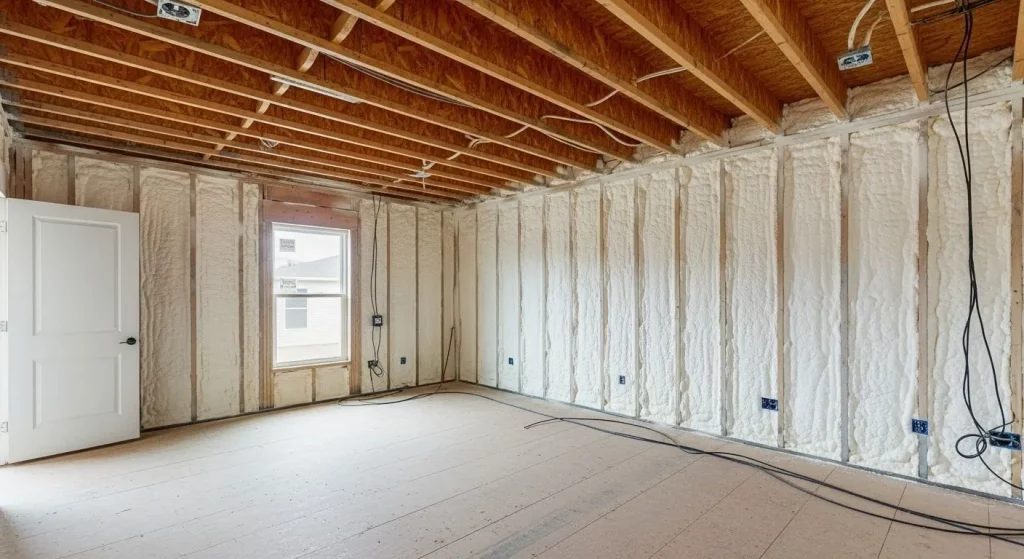
Closed-cell foam excels at eliminating air leakage, sealing gaps and cracks that other insulation materials cannot address. The material expands upon application to fill cavities completely, creating an airtight seal around pipes, wires, and other penetrations that commonly allow conditioned air to escape. Studies by the Department of Energy indicate that proper air sealing can reduce heating and cooling costs by up to 15%, making this a financially significant advantage.
The foam’s air-sealing capability also improves indoor air quality by preventing dust, pollen, and other pollutants from entering living spaces through gaps in the building envelope. This creates a healthier indoor environment while maintaining energy efficiency. For allergy sufferers and those with respiratory sensitivities, this benefit can significantly improve daily comfort and well-being.
Long-Term Performance Stability
Closed-cell foam maintains its physical properties and performance characteristics for decades without degradation. Unlike loose-fill insulation that can settle or batt insulation that can sag over time, closed-cell foam remains exactly where it was installed, understanding R-value throughout its service life. This long-term stability means the initial investment continues paying dividends for the entire building lifecycle.
The material’s resistance to pests, mold, and mildew further contributes to its longevity. Rodents and insects cannot nest in or consume closed-cell foam, eliminating a common problem that plagues other insulation types. This resistance to biological threats, combined with its moisture barrier properties, ensures the insulation remains effective and hygienic for years without maintenance or replacement.
Space Efficiency for Modern Living
The high R-value per inch of closed-cell foam translates directly to space savings in finished areas. While traditional insulation might require 6 inches to achieve R-21, closed-cell foam needs only 3 inches for the same thermal performance. This 3-inch difference can be significant in areas where every inch counts, such as:
Basement conversions where ceiling height impacts usability
Renovation projects with existing window and door dimensions
Cathedral ceilings, where the roof pitch limits cavity depth
Tiny homes and ADUs, where space is at a premium
The space efficiency also allows for deeper insulation in standard wall cavities, potentially achieving R-30 or more in 2×4 wall construction, a performance level impossible with conventional insulation materials.
Versatility Across Applications
Closed-cell foam insulation adapts to virtually any insulation challenge, making it a universal solution for new construction, renovations, and specialty applications. The material bonds effectively to wood, concrete, metal, and most other building materials, providing insulation wherever needed. This versatility includes:
Flat and low-slope roofing systems
Metal building insulation
Refrigeration and cold storage
Foundation waterproofing
Marine and RV applications
The ability to use one material for multiple insulation needs simplifies specification, reduces material inventory requirements, and ensures consistent performance across different building assemblies. For contractors and builders, this versatility translates to streamlined operations and reduced complexity in managing insulation projects.
Property
Closed-Cell Foam
Open-Cell Foam
Fiberglass Batts
R-Value per Inch
6.5-7.0
3.5-4.0
3.2-3.8
Moisture Barrier
Yes (impermeable)
No (permeable)
No (absorbs moisture)
Air Barrier
Yes
Partial
No
Density (lb/ft³)
1.7-2.0
0.5-0.8
0.5-1.0
Structural Strength
High
Low
None
Vapor Permeability
<1.0 perm
>20 perms
>10 perms
Things to Consider Before Making a Decision
When evaluating closed-cell foam for specific projects, several factors warrant consideration. First, assess the moisture conditions of the target area. While the moisture barrier properties are beneficial in most applications, certain assemblies require vapor permeability to allow drying potential. Understanding the specific drying needs of your climate zone and building design helps determine appropriate application methods.
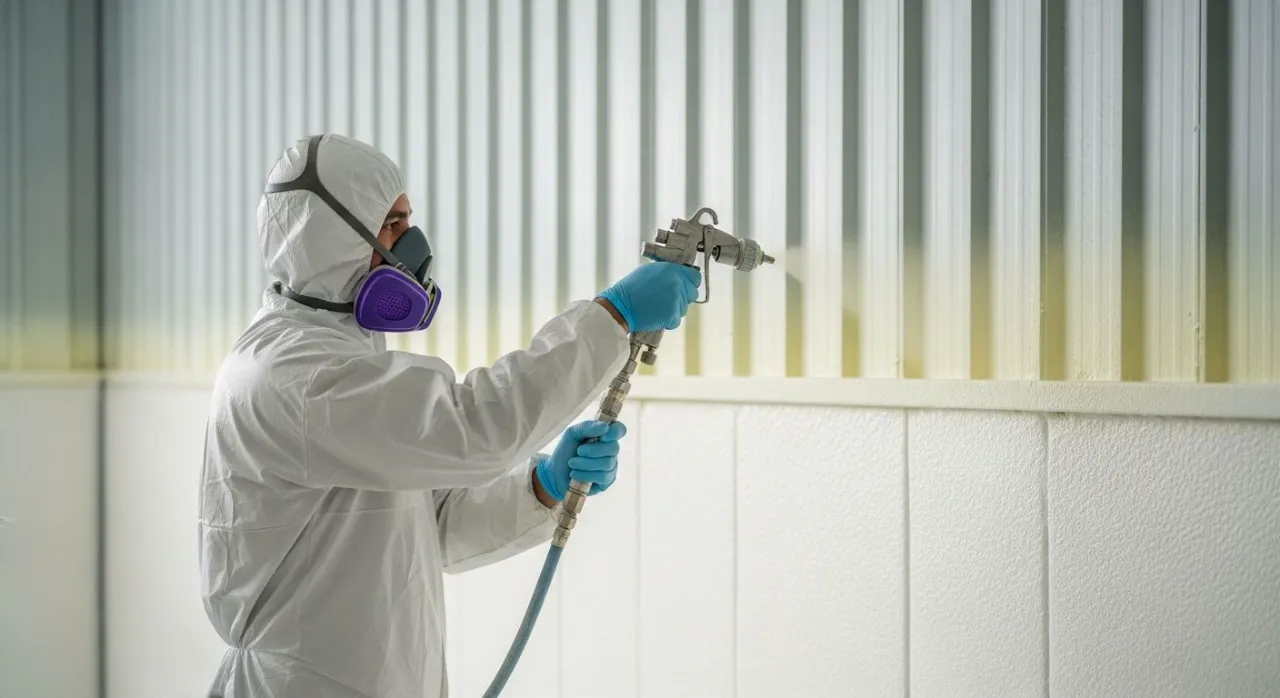
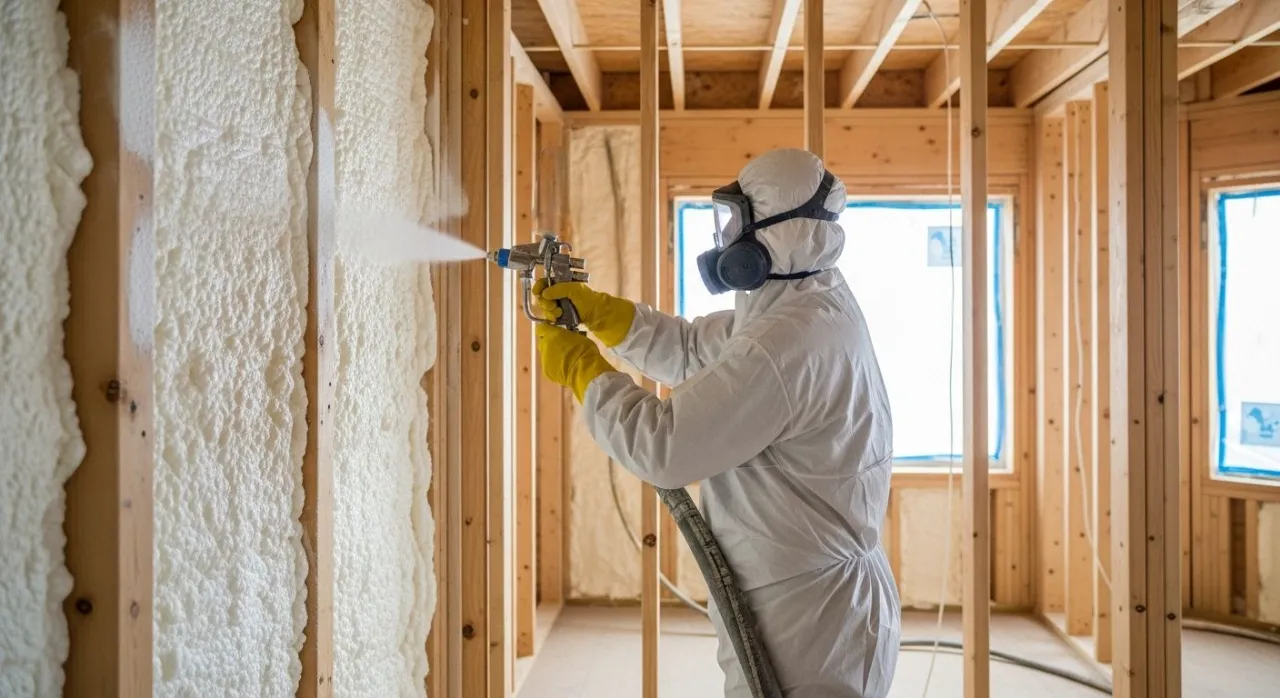
Installation requirements represent another critical factor. Closed-cell foam requires professional installation with proper safety equipment and protective gear. The material expands significantly during application, so installers must understand how to control fill rates to avoid over-expansion that could damage building assemblies. Quality installation directly impacts long-term performance, making contractor selection an important decision point.
Budget considerations should include both upfront costs and long-term savings. While closed-cell foam typically costs more initially than traditional insulation, the reduction in labor costs (no separate vapor barrier needed), ongoing energy savings, and long-term performance often result in better lifetime value. A proper cost-benefit analysis considering 20-30 year performance horizons typically favors closed-cell foam despite higher initial investment.
Bonus Tip: For retrofit applications in existing structures, consider using closed-cell foam in combination with other insulation types to optimize performance while managing costs. Strategic placement in high-priority areas like rim joists and cantilevers can deliver significant benefits without full-house expense.
How long does the foam off-gas after installation?
Modern closed-cell foam products complete their primary chemical reaction within 24 hours, with minimal off-gassing afterward. Proper ventilation during and immediately after installation ensures any initial emissions dissipate quickly. Most manufacturers recommend waiting 24-48 hours before re-occupying treated spaces, though this varies based on specific product formulations and application conditions.
Can closed-cell foam be used in existing walls?
Yes, closed-cell foam can be installed in existing walls through small holes drilled between studs, a process called injection foam insulation. This allows retrofitting existing structures without removing interior finishes. The foam expands to fill wall cavities completely, providing insulation and air sealing benefits without major renovation work.
Is closed-cell foam environmentally friendly?
While the petroleum-based raw materials raise environmental concerns, the energy savings over the foam’s lifetime typically offset the initial carbon footprint within 5-10 years. Some manufacturers now offer products with recycled content or bio-based polyols that reduce environmental impact. The long service life and energy savings contribute to overall sustainability despite the chemical composition.
Making the Right Insulation Choice for Your Project
The seven advantages of closed-cell foam, thermal performance, moisture resistance, structural benefits, air sealing, longevity, space efficiency, and versatility, make it a compelling option for many construction projects. However, the right choice depends on specific project conditions, climate considerations, and budget constraints. Evaluate your building’s unique requirements, consider long-term performance over initial costs, and consult with qualified insulation professionals to determine whether closed-cell foam aligns with your project goals and performance expectations.
Get Professional Guidance for Your Insulation Project
For specific questions about closed-cell foam applications in your construction or renovation project, professional consultation can help evaluate whether this insulation solution matches your needs. Cascadia Spray Foam offers expertise in residential and commercial insulation applications throughout the Pacific Northwest region. Contact the team at [email protected] or call (425) 386-3500 to discuss your project requirements and receive personalized recommendations based on your specific building conditions and performance goals.
FAQs
What makes closed-cell foam insulation better than other insulation types?
Closed-cell foam has a higher R-value per inch, seals air leaks, blocks moisture, and adds structural strength benefits most traditional insulations can’t provide.
Is closed-cell spray foam suitable for moisture-prone areas?
Yes. It creates an impermeable moisture barrier, making it ideal for basements, crawl spaces, and other damp environments.
Does closed-cell foam increase structural strength?
Yes. Its high density can significantly improve wall and roof strength, helping buildings better resist wind and seismic forces.
How long does closed-cell foam insulation last?
Closed-cell foam can last for decades without settling or losing performance, maintaining consistent insulation over the building’s lifespan.
Is closed-cell spray foam worth the higher cost?
Although the upfront cost is higher, long-term energy savings, durability, and moisture protection often make it a better long-term investment.
Sources
Building Science Corporation – Research organization providing scientific information on building performance and insulation materials
Market Research Future – Market analysis report on the global spray foam insulation industry projections
Department of Energy – U.S. government resource for energy efficiency information and building performance guidelines
When selecting a wall retrofit contractor in Everett, asking the right questions determines project success. The eight essential questions to ask include: What experience do you have with Pacific Northwest…
Open-cell spray foam insulation acts as an early warning system for roof leaks because its water-absorbing properties create visible stains and discoloration at the leak source, unlike closed-cell foam or…
Builders in Federal Way consistently choose closed-cell spray foam for six primary reasons: superior moisture resistance in the Pacific Northwest climate, higher R-value per inch, structural reinforcement capabilities, exceptional air…